


The first time a hummingbird paused midair in my garden, I realized something simple but important. They are not random visitors. They are precise. They return to what works. If a plant consistently feeds them, they remember it.
Over time I stopped thinking about attracting hummingbirds as luck. It became a design decision. When I choose the right flowers, plant them in thoughtful clusters, and stagger bloom times, the garden starts to hum in a very literal way. These are the eleven flowers that have earned their place in my beds because hummingbirds return to them again and again.
1. Foxglove (Digitalis purpurea)
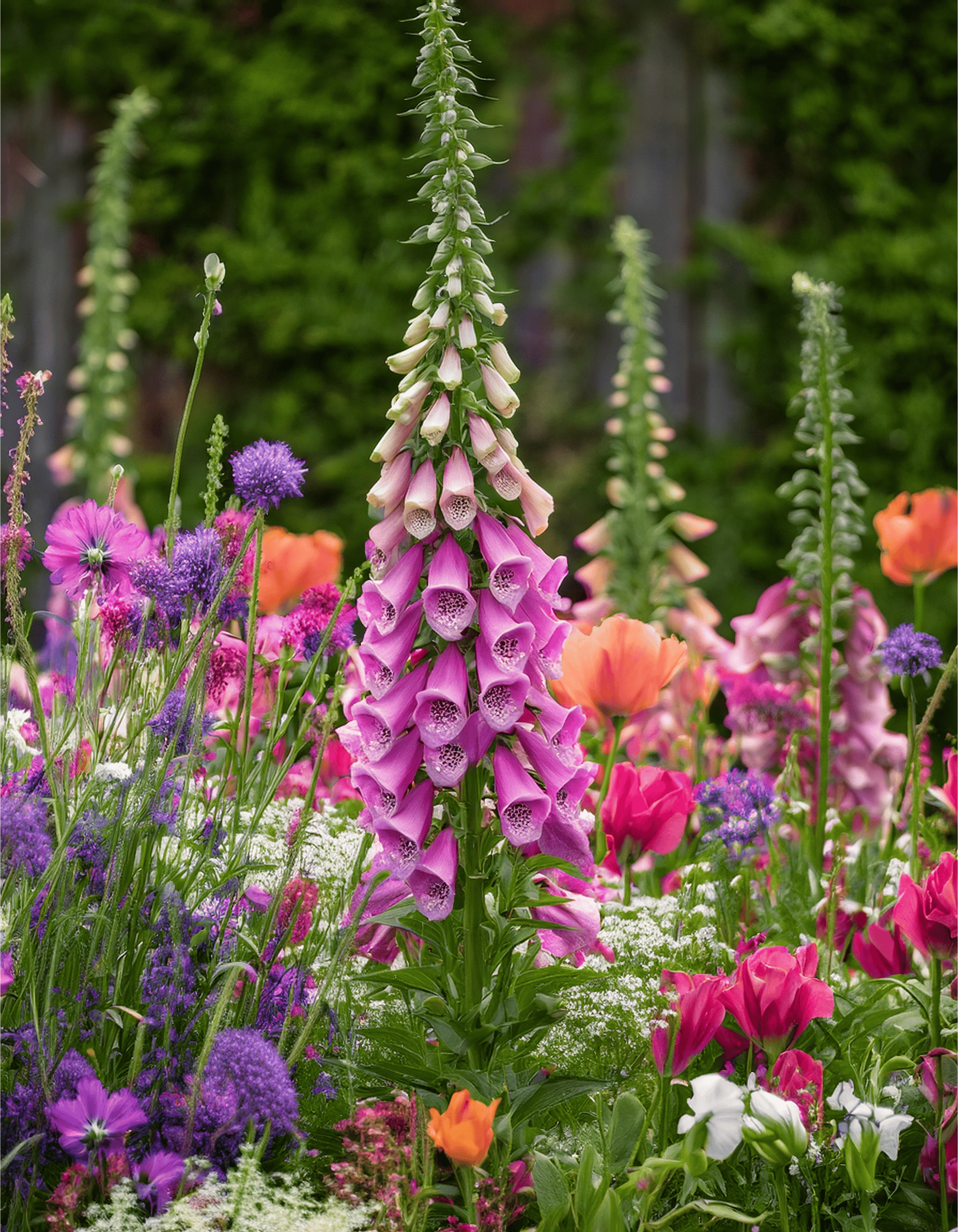
Foxglove always feels like a bold opening move. Those tall spires rise above everything else, and the tubular bells are perfectly shaped for a hummingbird’s beak. When I plant foxglove near the back of a border, it creates an early vertical anchor that catches attention from a distance.
I have noticed that hummingbirds do not just sip from one bell and leave. They often work their way methodically up the stalk. Foxglove also handles partial shade better than many nectar plants, which gives me flexibility in tighter spaces. In cooler climates, it performs well as a biennial or short-lived perennial, and once it settles in, it often self-seeds just enough to keep the show going.

2. Zinnias (Zinnia elegans)
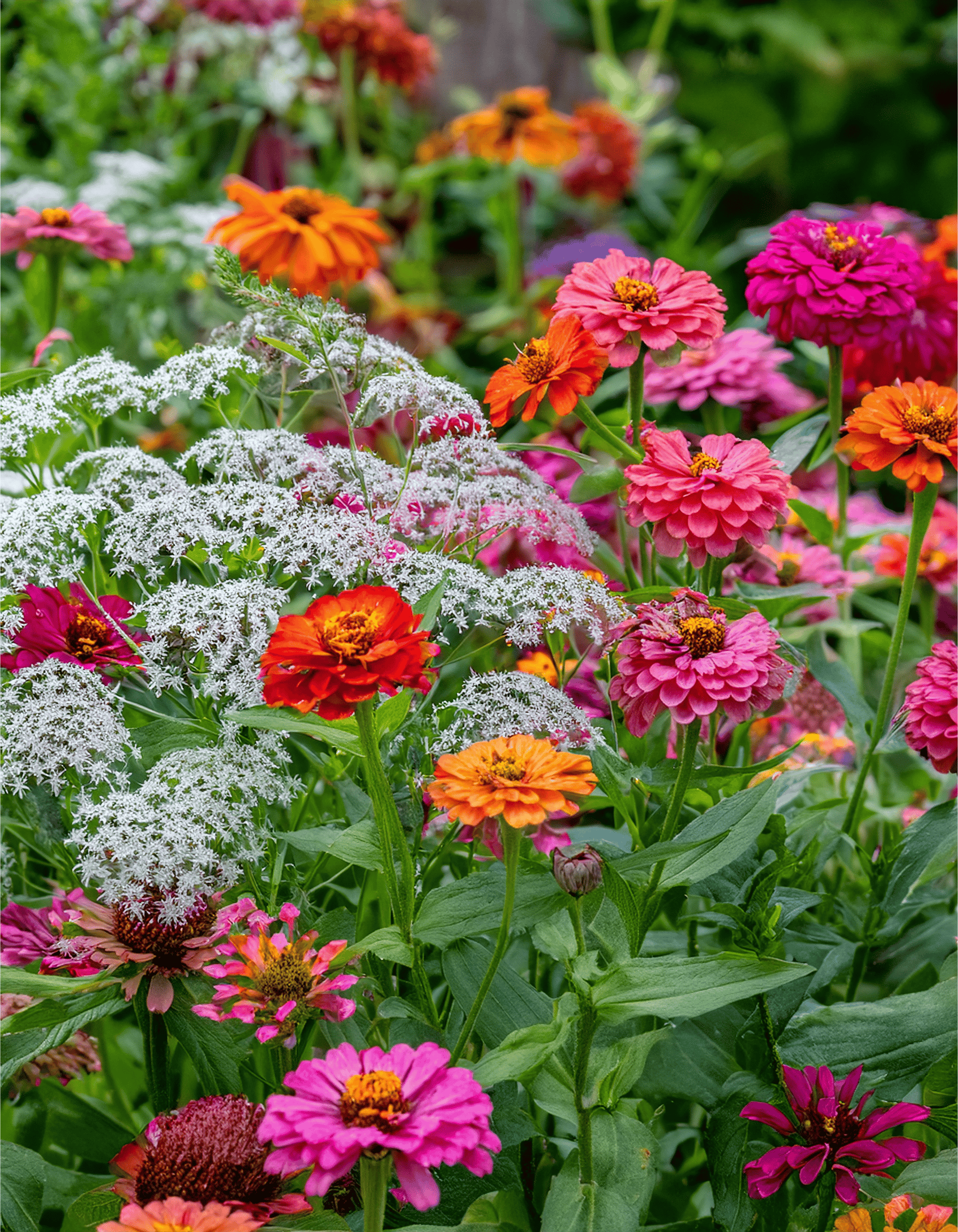
Zinnias are the most approachable plant on this list. I direct sow them once the soil warms and let them fill gaps between perennials. The bright reds, hot pinks, and oranges are especially effective at catching a hummingbird’s eye.
What I appreciate most about zinnias is their stamina. In the heat of summer, when other plants slow down, zinnias keep producing nectar. They are easy to tuck into raised beds or cutting gardens, and because they bloom steadily, they provide consistent fuel during peak hummingbird activity.
3. Bee Balm (Monarda didyma)
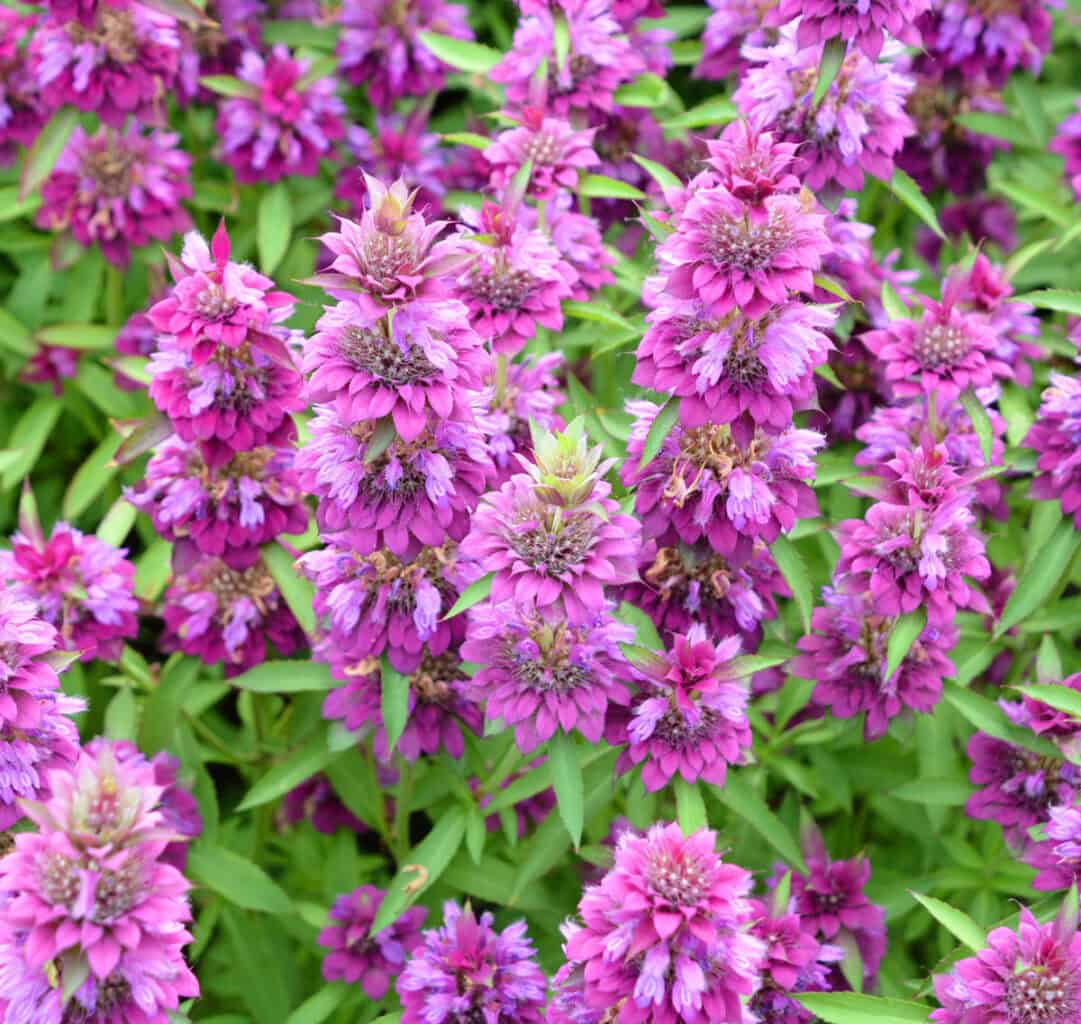
Bee balm feels built for pollinators. The shaggy, firework-style blooms are rich with nectar and easy for hummingbirds to access. When it blooms mid to late summer, activity around it increases noticeably.
I like planting bee balm in groups of three to five so it creates a visible patch of color rather than a single isolated bloom. It spreads naturally, which makes it ideal for filling larger sunny areas. Native varieties are particularly valuable, and they support not just hummingbirds but bees and butterflies as well.
4. Salvia (Salvia greggii and scarlet types)
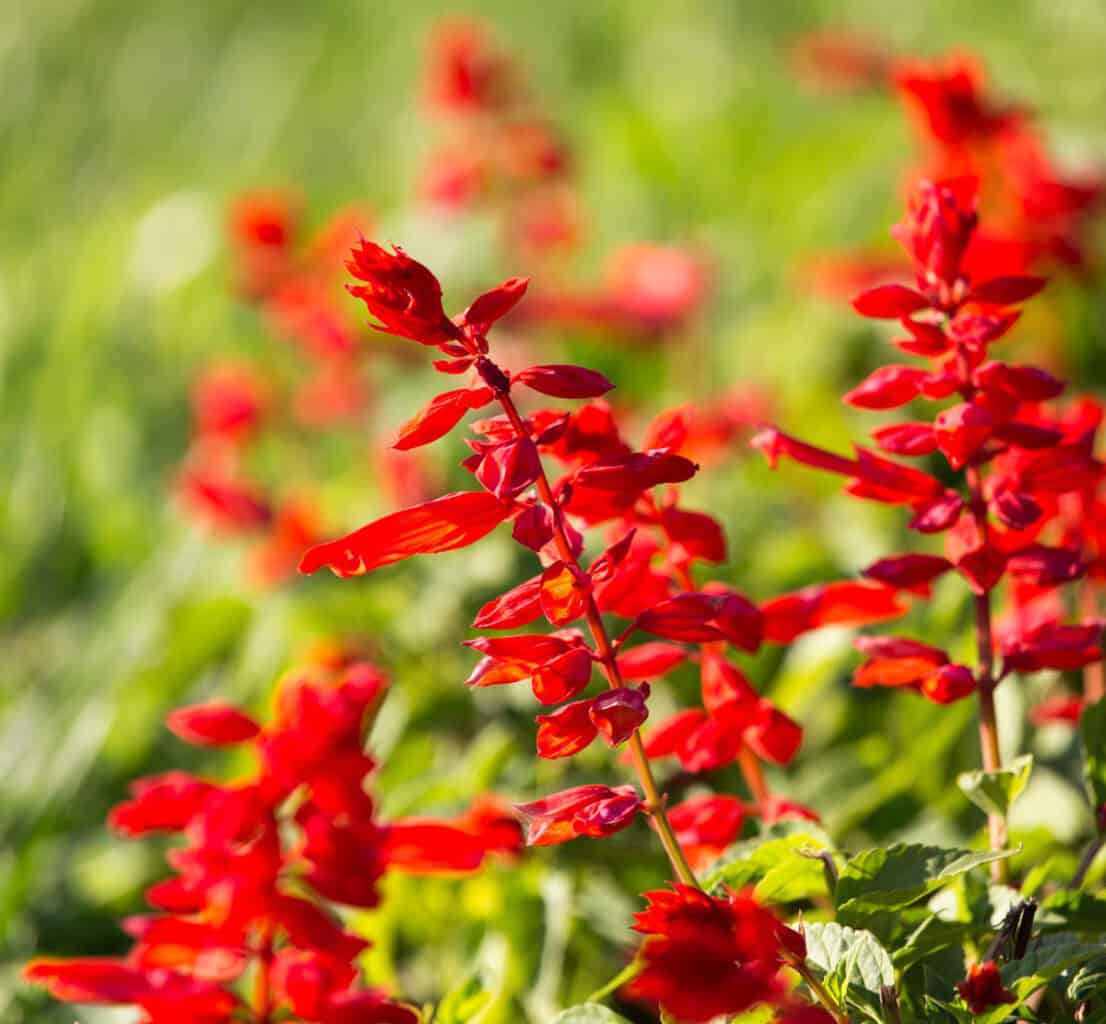
Salvia is one of the most reliable nectar producers I grow. The tubular flowers are almost tailor-made for hummingbirds. I often use red salvias in containers near patios where I can observe the activity up close.
The extended bloom season is what makes salvia essential in my garden. With regular deadheading, it keeps producing from early summer well into fall. It is also tolerant of heat and lean soil, which means I can use it in tougher spots without sacrificing nectar production.
5. Coral Honeysuckle (Lonicera sempervirens)
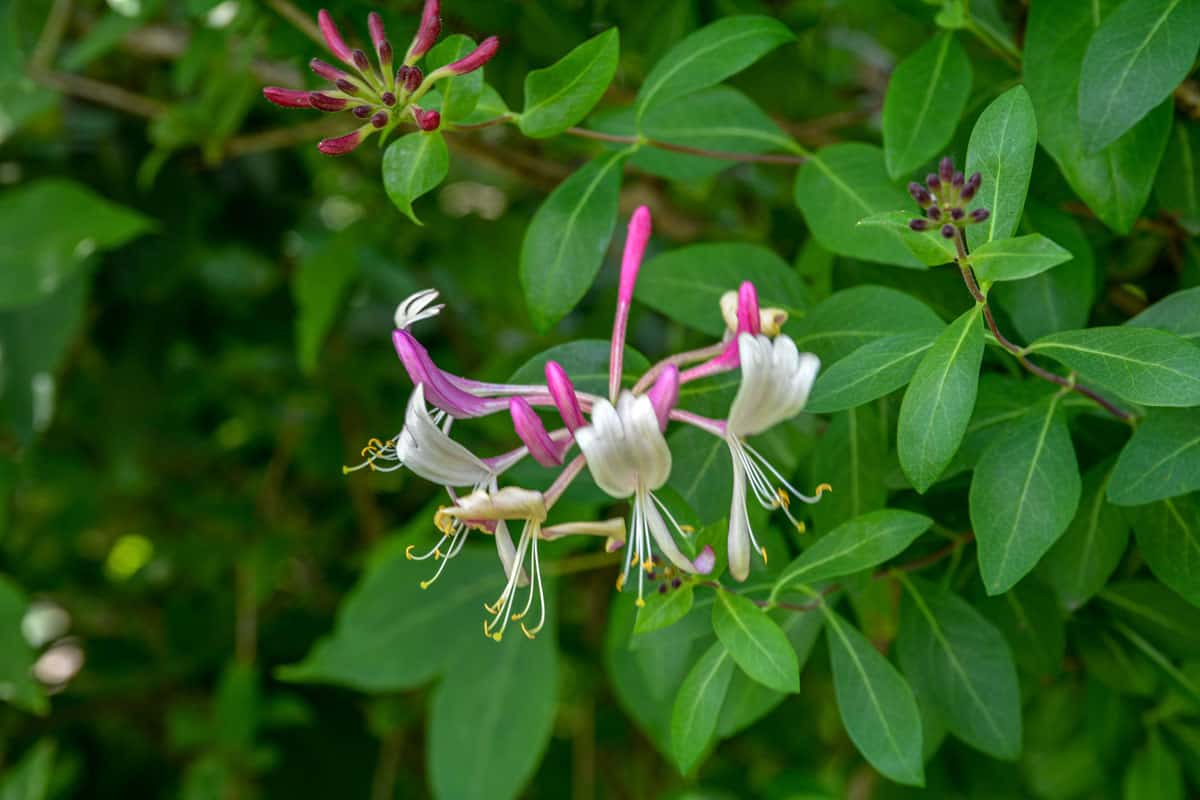
Coral honeysuckle adds height and structure while serving as a steady food source. I train it up a trellis or fence so the clusters of red tubular flowers are visible from across the yard.
Unlike some invasive honeysuckles, this native species behaves well. Hummingbirds often hover in front of the blooms, moving quickly from flower to flower. Because it flowers over an extended period, it bridges gaps between other blooming plants.
6. Cardinal Flower (Lobelia cardinalis)
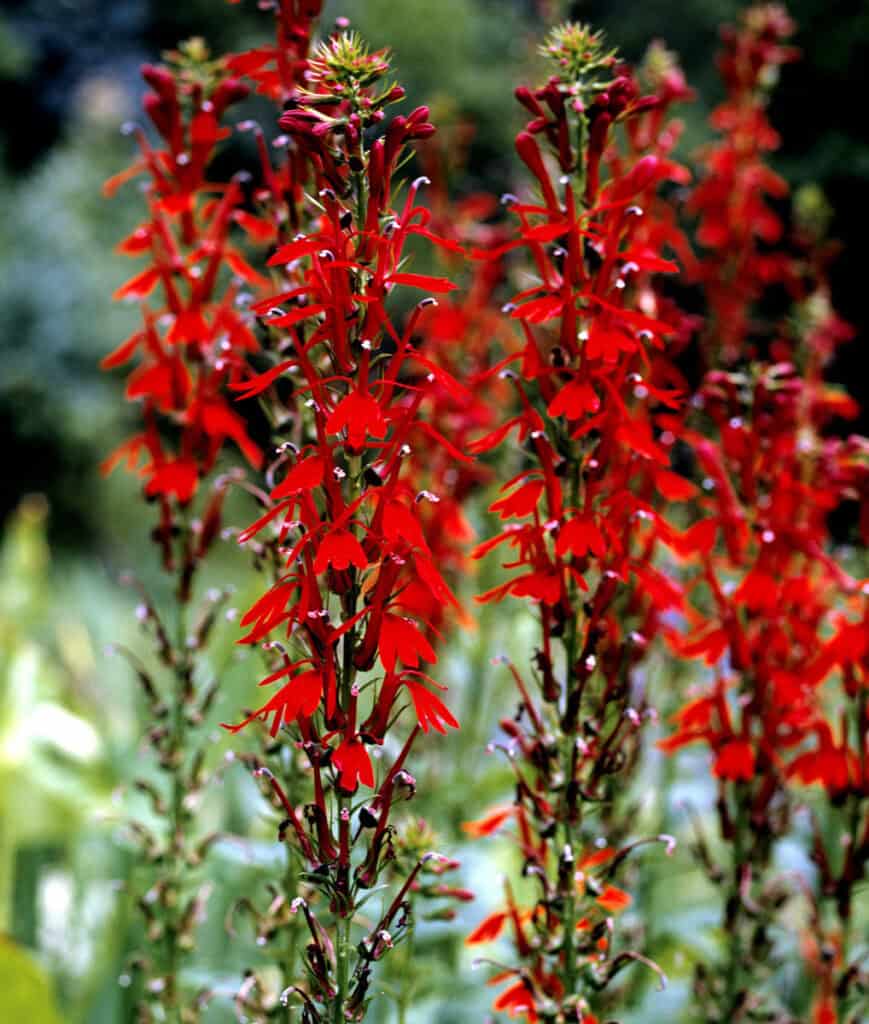
Cardinal flower is one of the most saturated reds in my garden. That intensity matters because hummingbirds are strongly drawn to red blooms. The upright spikes make it easy for them to perch and feed efficiently.
This plant prefers moist soil, so I use it near lower areas or along the edge of a rain garden. It blooms later in summer, which is critical. As migration season approaches, having late-season nectar sources helps hummingbirds build energy reserves.
7. Penstemon (Beardtongue)
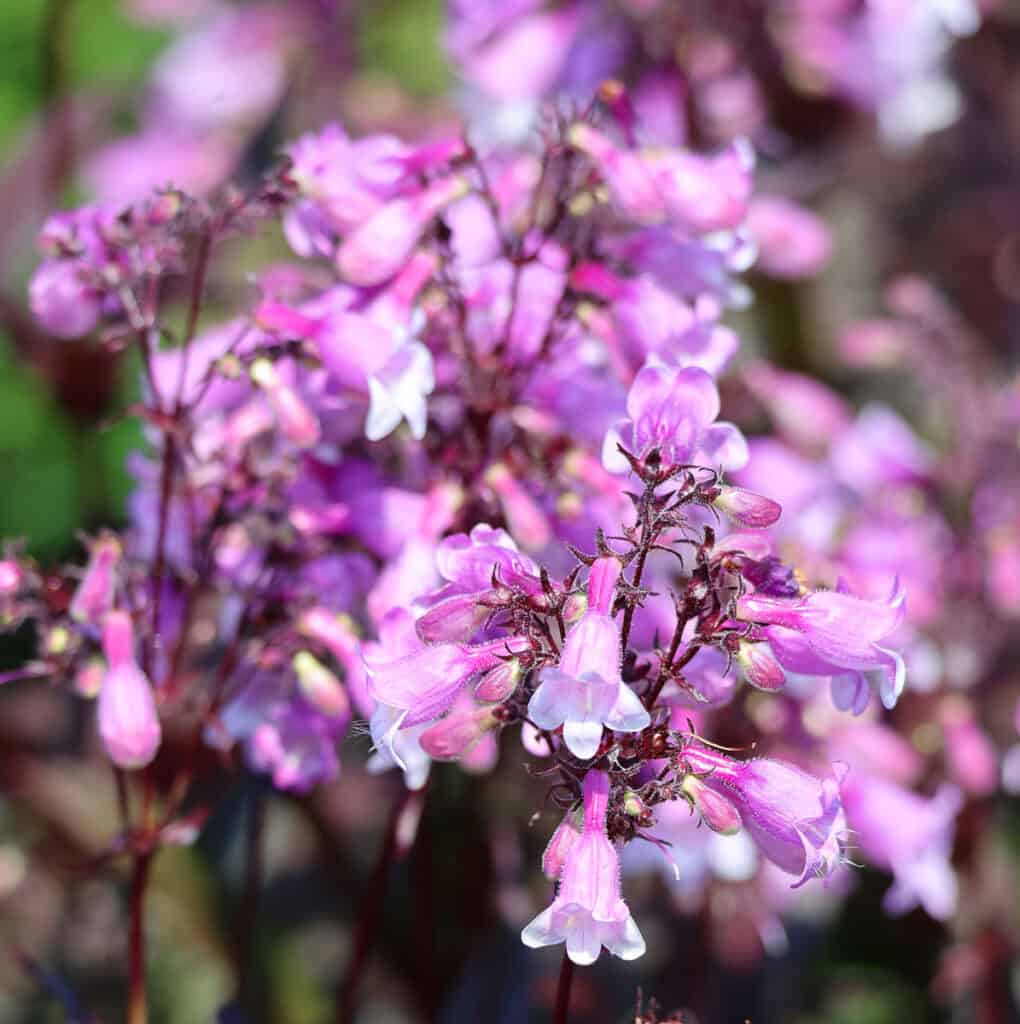
Penstemon brings a slightly wilder feel to the garden. The tubular blooms rise along upright stems, and many native varieties thrive in well-drained soil. I like incorporating it into more naturalistic plantings.
Because it handles drier conditions well, penstemon fills a niche that some other nectar plants cannot. When grouped in clusters, it becomes a consistent feeding station. The bloom shape is ideal, and hummingbirds often move through it quickly and confidently.
8. Columbine (Aquilegia canadensis)
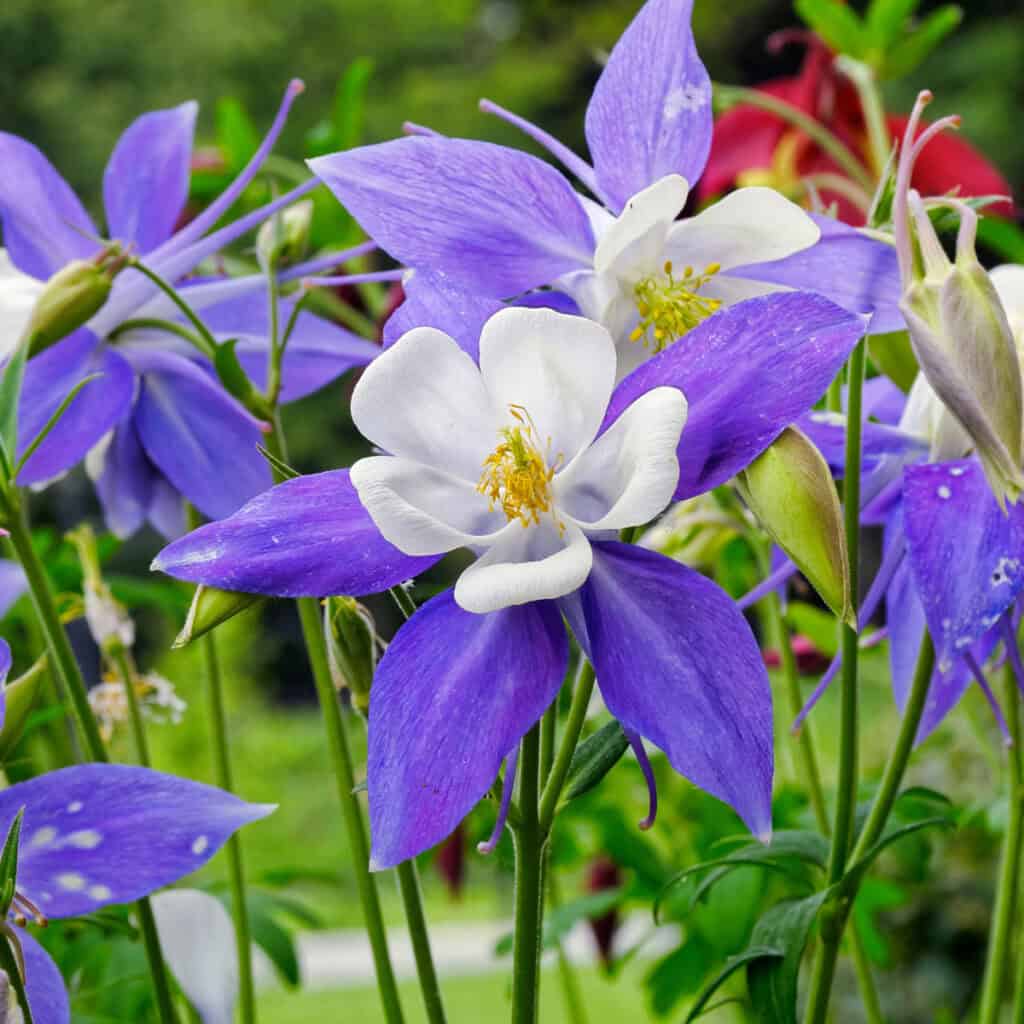
Columbine is one of the earliest nectar sources in my garden. When hummingbirds first return in spring, these delicate, nodding blooms are already waiting.
I plant native red columbine in partially shaded areas where few other nectar plants thrive. Early-season support is often overlooked, but it sets the tone for the entire season. Providing food when they arrive increases the likelihood that they will stay and revisit.
9. Trumpet Vine (Campsis radicans)
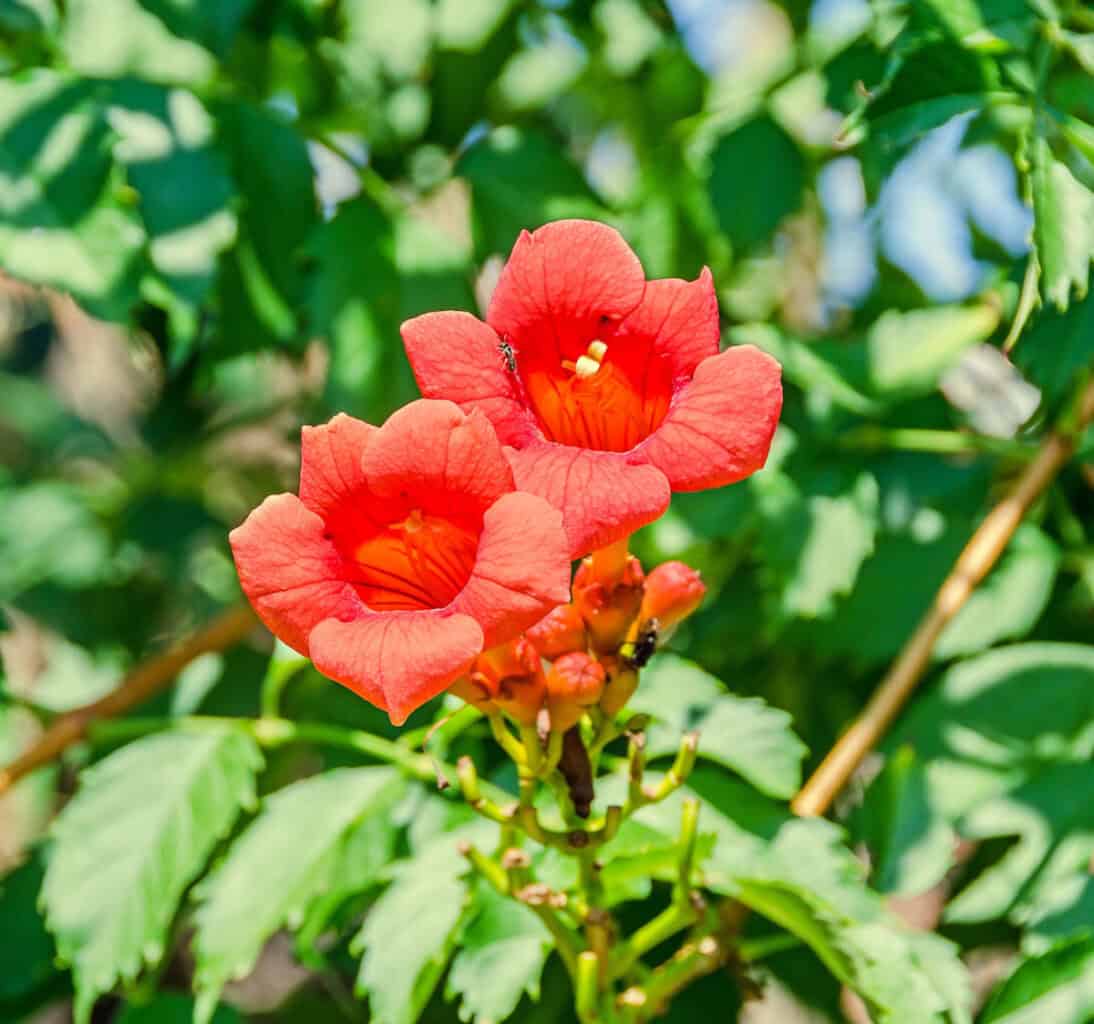
Trumpet vine is not subtle. The large, trumpet-shaped blooms are packed with nectar, and hummingbirds know it. When it is in bloom, activity increases noticeably.
That said, I give it space. It grows vigorously, so I train it where it can climb freely without overwhelming nearby plants. Used strategically, it becomes a focal point that doubles as a major nectar source.
10. Weigela
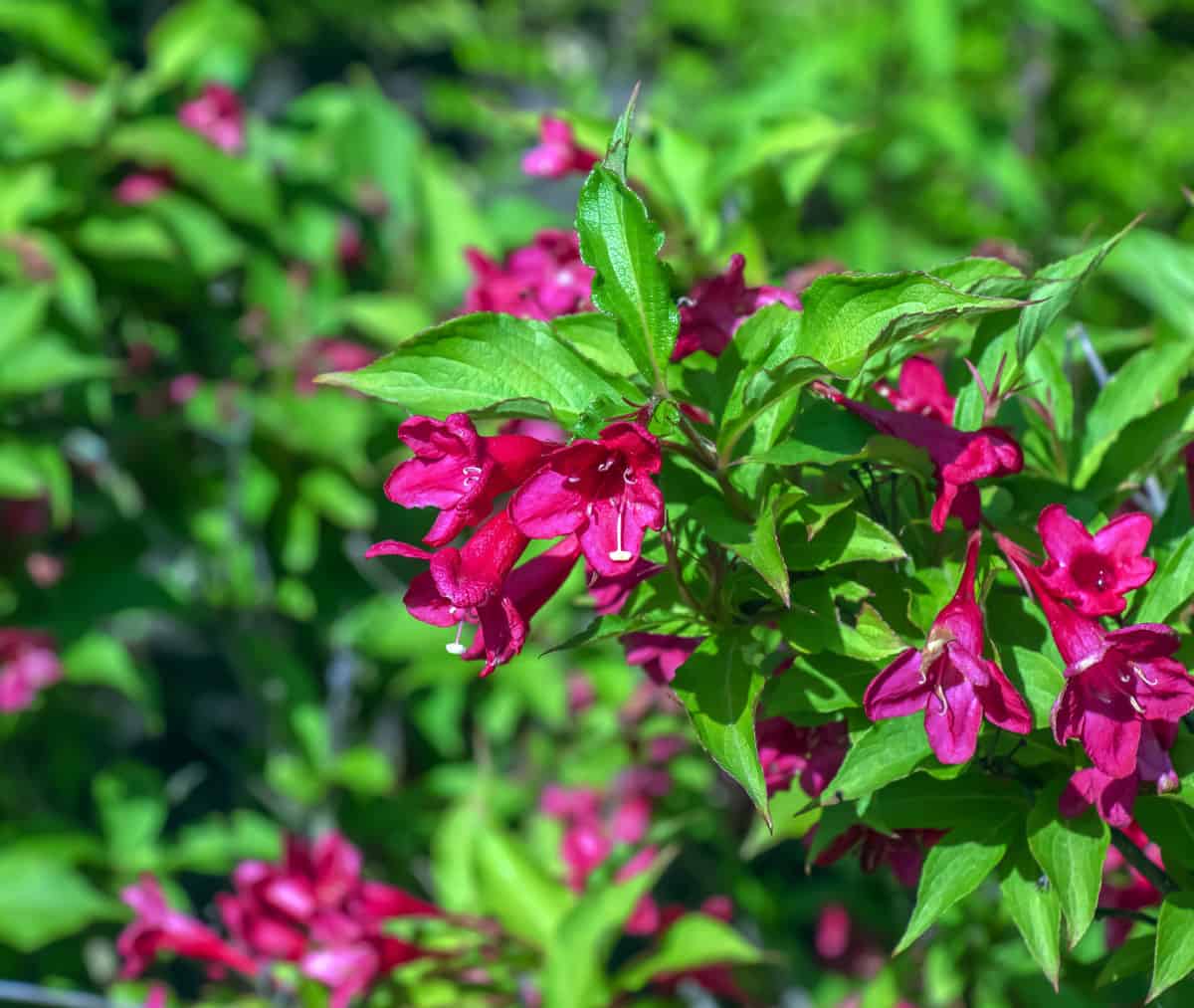
Weigela offers something slightly different. As a spring-blooming shrub covered in trumpet-shaped flowers, it provides structure and early nectar at the same time.
I use weigela as part of a layered planting strategy. Shrubs create perching opportunities and shelter, which hummingbirds use between feeding sessions. Its early bloom helps bridge the gap before summer perennials take over.
11. Crocosmia
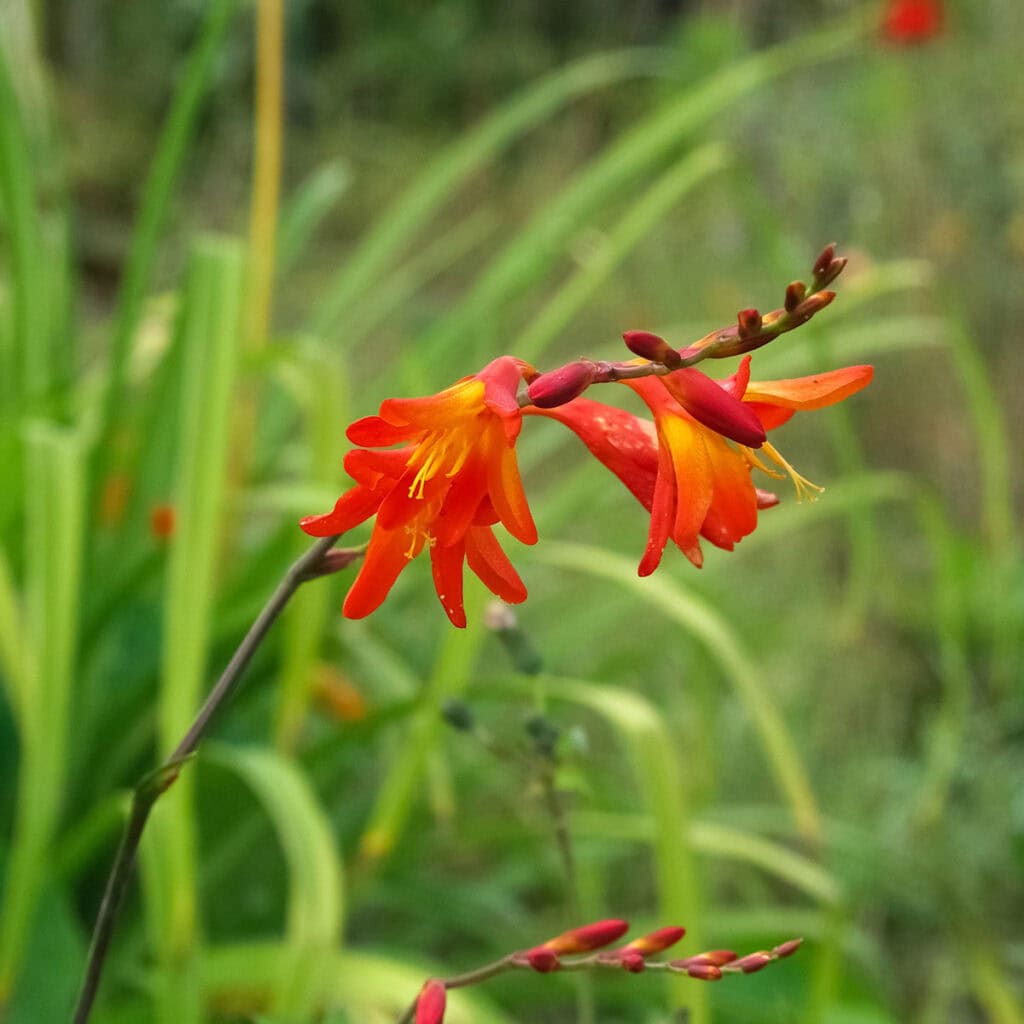
Crocosmia adds movement. The arching stems carry bright tubular blooms that hummingbirds can approach from multiple angles. I like planting it where the stems can lean slightly into open space.
Blooming mid to late summer, crocosmia helps extend the nectar season. It pairs well with bee balm and salvia, creating a dense feeding zone that keeps hummingbirds moving through the garden rather than visiting once and leaving.
How I Plant These for Maximum Impact
Over time, I have learned that planting one of something rarely makes a difference. Hummingbirds conserve energy carefully. When I plant in clusters, usually three to five of the same flower, it creates a clear visual signal and a more efficient feeding station.
I also layer heights intentionally. Tall plants like foxglove and trumpet vine anchor the back. Mid-height plants like bee balm and penstemon fill the center. Lower growers and annuals like zinnias fill the front. This layered approach creates a continuous nectar pathway rather than isolated pockets.
Bloom Succession Matters More Than You Think
To keep hummingbirds coming back, I plan for bloom succession. Early season plants like columbine and weigela provide initial fuel. Mid-season performers such as bee balm, salvia, coral honeysuckle, and penstemon carry the load through summer.
Late-season support from cardinal flower, crocosmia, and long-blooming salvias ensures nectar remains available as migration approaches. Instead of one dramatic flush of color, the garden offers steady, dependable nourishment.
Adding Structure and Perches
Flowers are only part of the equation. Hummingbirds need places to rest and observe. Small trees, shrubs, trellises, and even a few intentionally left twigs provide perching spots.
I avoid over-pruning. Leaving natural structure gives them a place to pause between feeding sessions. This makes the garden feel like a habitat rather than just a feeding station.
Water and Feeders
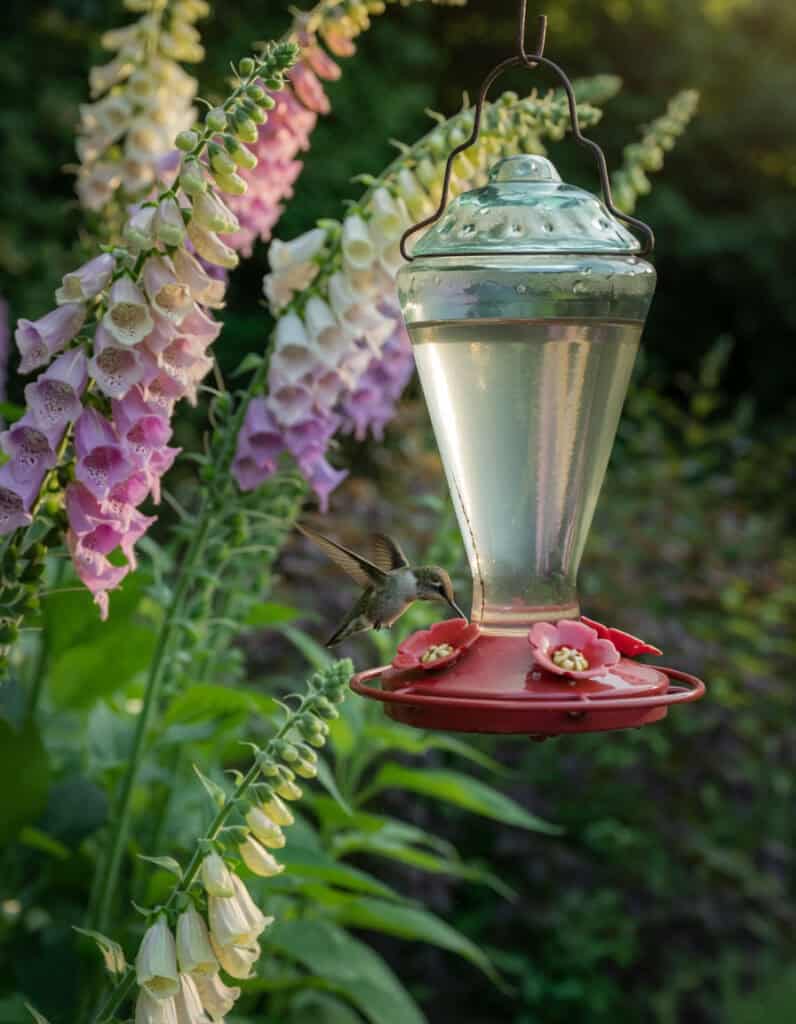
While flowers should be the foundation, I sometimes supplement with a feeder during peak migration. If I do, I keep it clean and use a simple sugar solution without dye.
A shallow water source or gentle mister can also attract attention. Moving water is especially effective. Even a small fountain can increase activity, particularly in warm weather.
Final Thoughts
Attracting hummingbirds has less to do with one special plant and more to do with consistency. When I combine nectar-rich flowers, plant them in meaningful groups, and plan for continuous bloom, the garden becomes reliable.
Once they discover a space that feeds them well, they remember it. Year after year, they return to the same flowers. Designing with that in mind transforms the garden from decorative to purposeful. And when the air starts to hum in early summer, it feels like confirmation that the planning worked.