


Ladybugs are one of the few garden visitors that everyone seems happy to see. They move quietly through the leaves, hunting aphids and other soft-bodied pests that can quickly overwhelm young plants. When I notice them on the stems of my roses or tucked into the underside of a kale leaf, it usually means the garden has found a bit of balance on its own.

Over the years I have learned that attracting ladybugs is less about buying them and more about creating a garden they actually want to live in. That means planting flowers that provide nectar and pollen while also supporting small insect populations that ladybugs feed on. A handful of plants seem especially good at bringing them in and encouraging them to stay.
1. Dill (Anethum graveolens)

Dill is one of the first plants I recommend when someone wants more beneficial insects in the garden. When it begins to flower, the plant produces flat clusters of tiny yellow blooms that are perfectly sized for insects like ladybugs to feed from.
In my garden, dill often acts as a gathering point. Aphids tend to show up on the stems, which attracts ladybugs looking for an easy meal. Once they discover the plant, they often move outward to nearby vegetables and flowers, quietly keeping pest populations in check.

2. Fennel (Foeniculum vulgare)

Fennel has a similar look to dill but grows larger and tends to persist longer in the garden. Its tall stems hold airy yellow umbels that are highly attractive to many beneficial insects.
Ladybugs seem particularly comfortable on fennel because the feathery foliage gives them plenty of places to rest and hide. I like planting fennel toward the back of a bed where it can grow freely while still serving as a hub for insect activity.
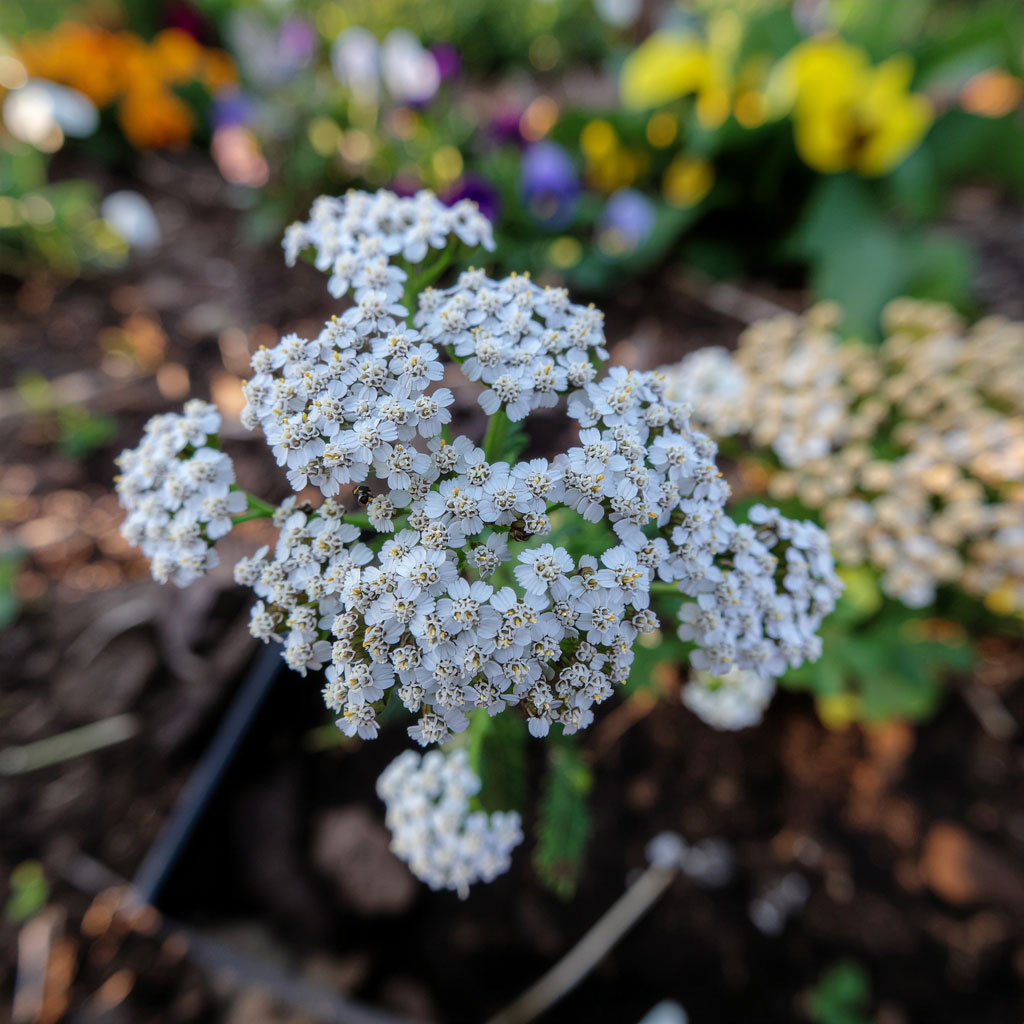
3. Yarrow (Achillea millefolium)

Yarrow is one of those plants that quietly does a lot of work in the garden. Its wide clusters of small flowers provide a steady supply of nectar, which draws in all kinds of beneficial insects including ladybugs.
As a perennial, yarrow also provides a consistent habitat from year to year. Once established, it becomes a reliable stop for insects moving through the garden during the warmer months.
4. Sweet Alyssum (Lobularia maritima)
Sweet alyssum may be small, but it is one of the most productive plants for attracting beneficial insects. Its dense clusters of tiny white or purple flowers bloom continuously through much of the growing season.
I often plant alyssum along the edges of raised beds or tucked between vegetables. The low-growing flowers create a steady nectar source while nearby plants provide the aphids that ladybugs hunt.
5. Marigolds (Tagetes spp.)
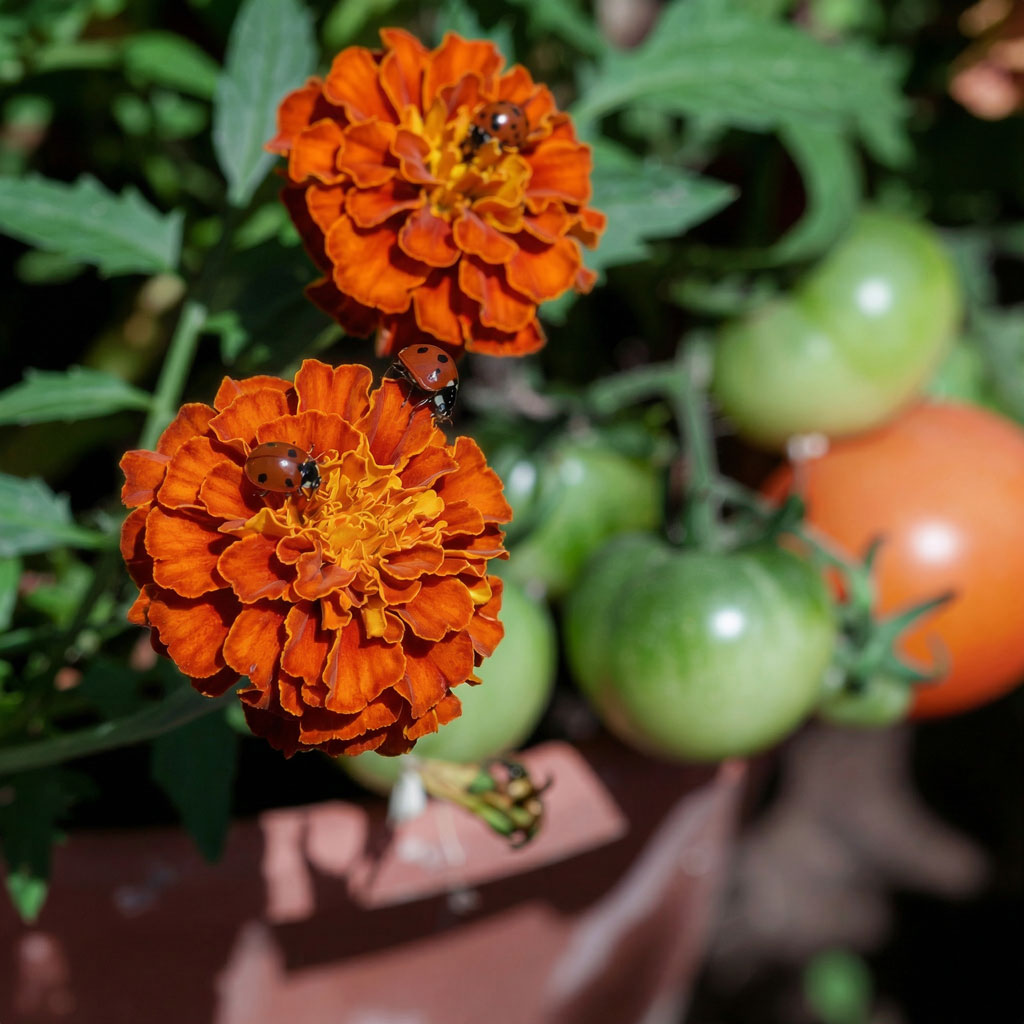
Marigolds are commonly planted in vegetable gardens, and while they are often associated with pest control, they also help support beneficial insects. Their flowers provide nectar while their foliage can host small insects that ladybugs prey on.
I like mixing marigolds among tomatoes and peppers where they add color and encourage insect activity. When ladybugs arrive to feed, they tend to patrol nearby plants as well.
6. Cosmos (Cosmos bipinnatus)

Cosmos are easy annuals that bring a surprising amount of life to the garden. Their open flowers make nectar easily accessible to insects, and the plants themselves often host small pests that ladybugs hunt.
Because cosmos grow tall and airy, they also create a layered habitat within the garden. I often notice ladybugs resting along the thin stems before moving down to search nearby plants for food.
7. Tansy (Tanacetum vulgare)/
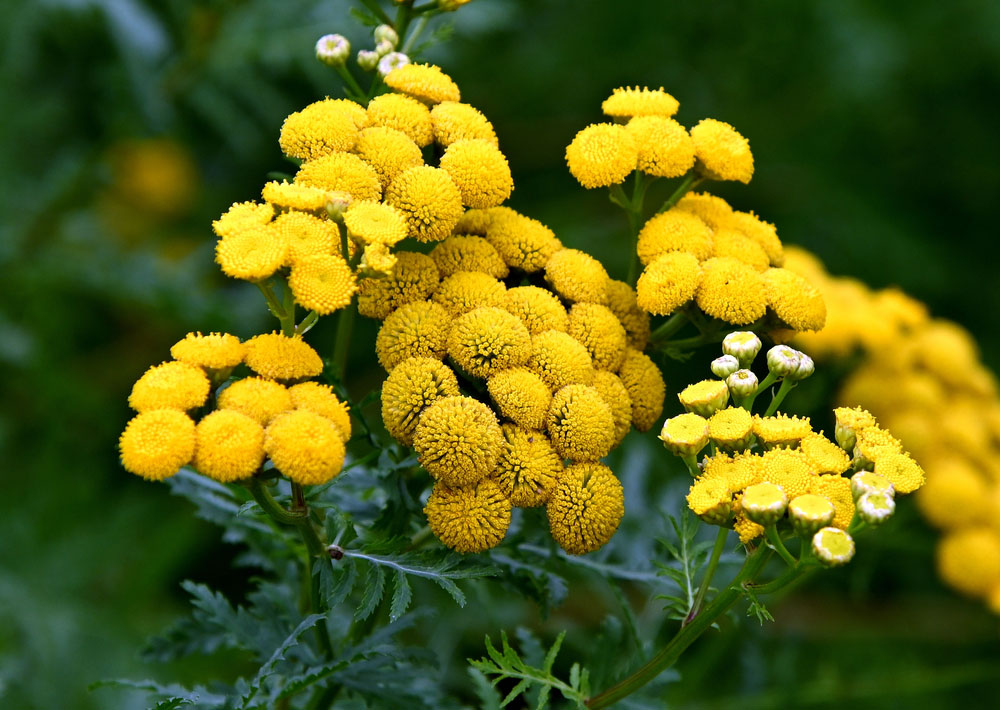
Tansy produces bright yellow button-like flowers that attract a wide range of beneficial insects. Ladybugs frequently visit the blooms for pollen and nectar.
The plant is vigorous and can spread quickly in some climates, so I tend to grow it in controlled areas or larger beds. When managed carefully, it becomes a dependable insect plant that supports natural pest control.
8. Calendula (Calendula officinalis)
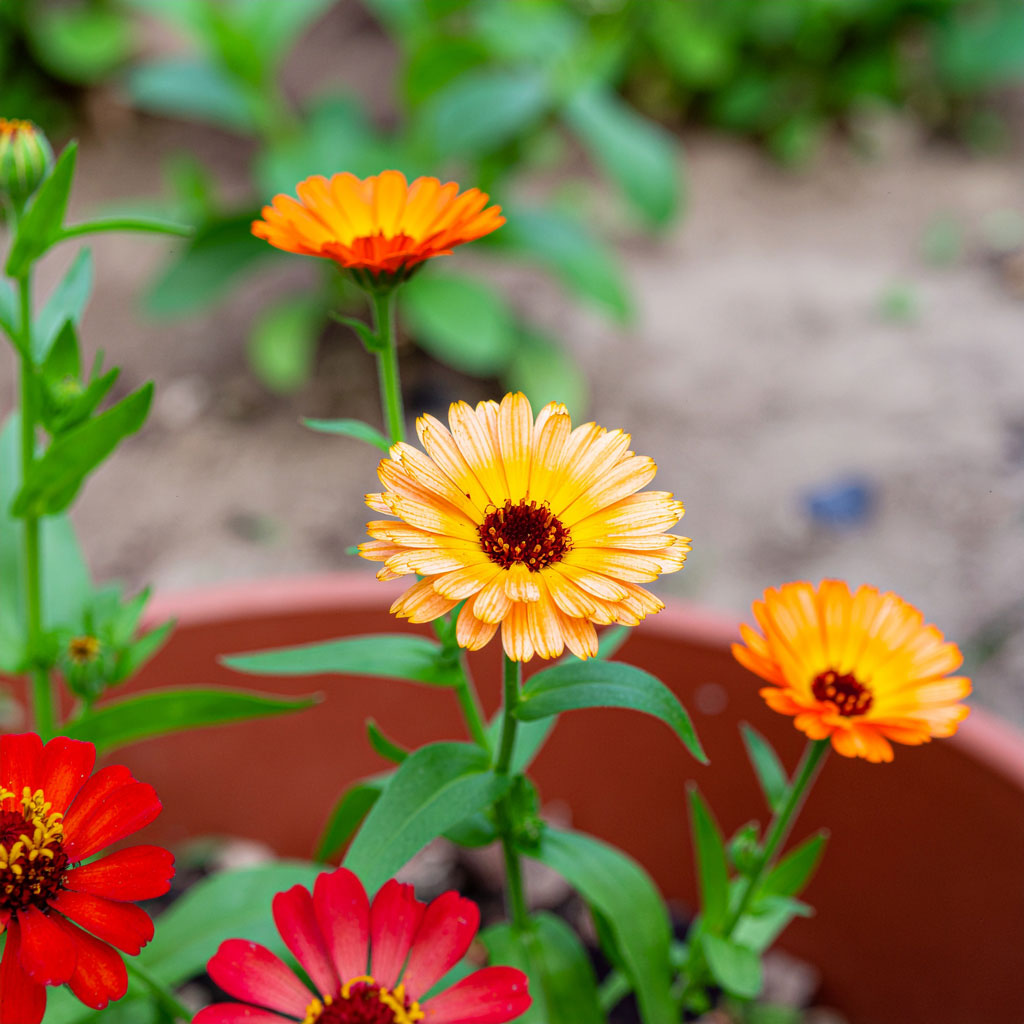
Calendula is one of the friendliest flowers a gardener can grow. It germinates easily, blooms generously, and attracts a steady stream of beneficial insects.
Ladybugs are often drawn to calendula because the plants can host small aphid colonies while the flowers provide nectar. I usually scatter calendula through vegetable beds where it quietly supports the balance between pests and predators.
9. Angelica (Angelica archangelica)
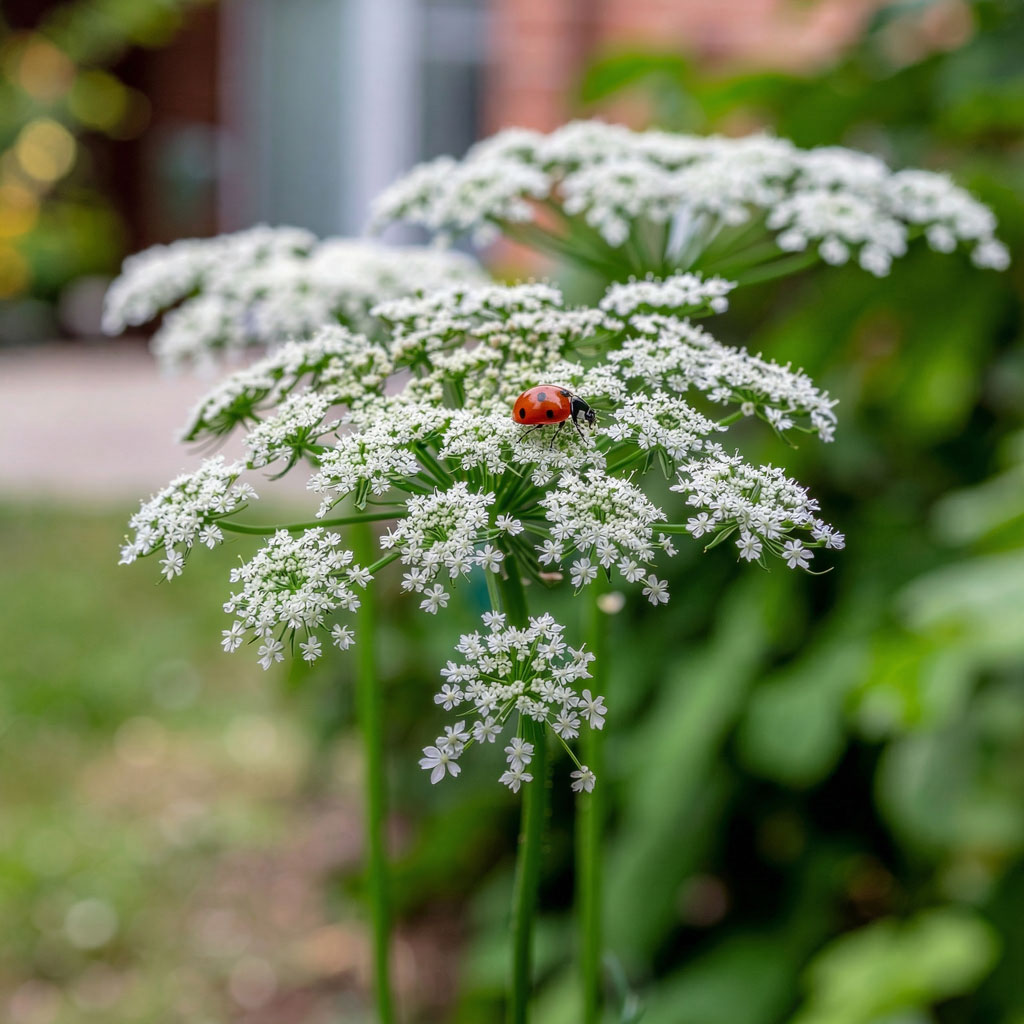
Angelica is a tall, architectural plant that produces large umbrella-shaped flower clusters. These blooms are highly attractive to many predatory insects.
When angelica is in bloom, it becomes a kind of meeting place for beneficial species. Ladybugs, lacewings, and parasitic wasps all seem to gather there, making it one of the most active plants in the garden.
10. Dandelions (Taraxacum officinale)

Dandelions are often pulled from gardens, but I tend to leave a few early in the season. They are one of the first plants to bloom in spring and provide valuable pollen and nectar when little else is available.
That early food source helps beneficial insects establish themselves in the garden. By the time vegetables and flowers begin growing strongly, ladybugs are already nearby and ready to hunt.
11. Nasturtiums (Tropaeolum majus)
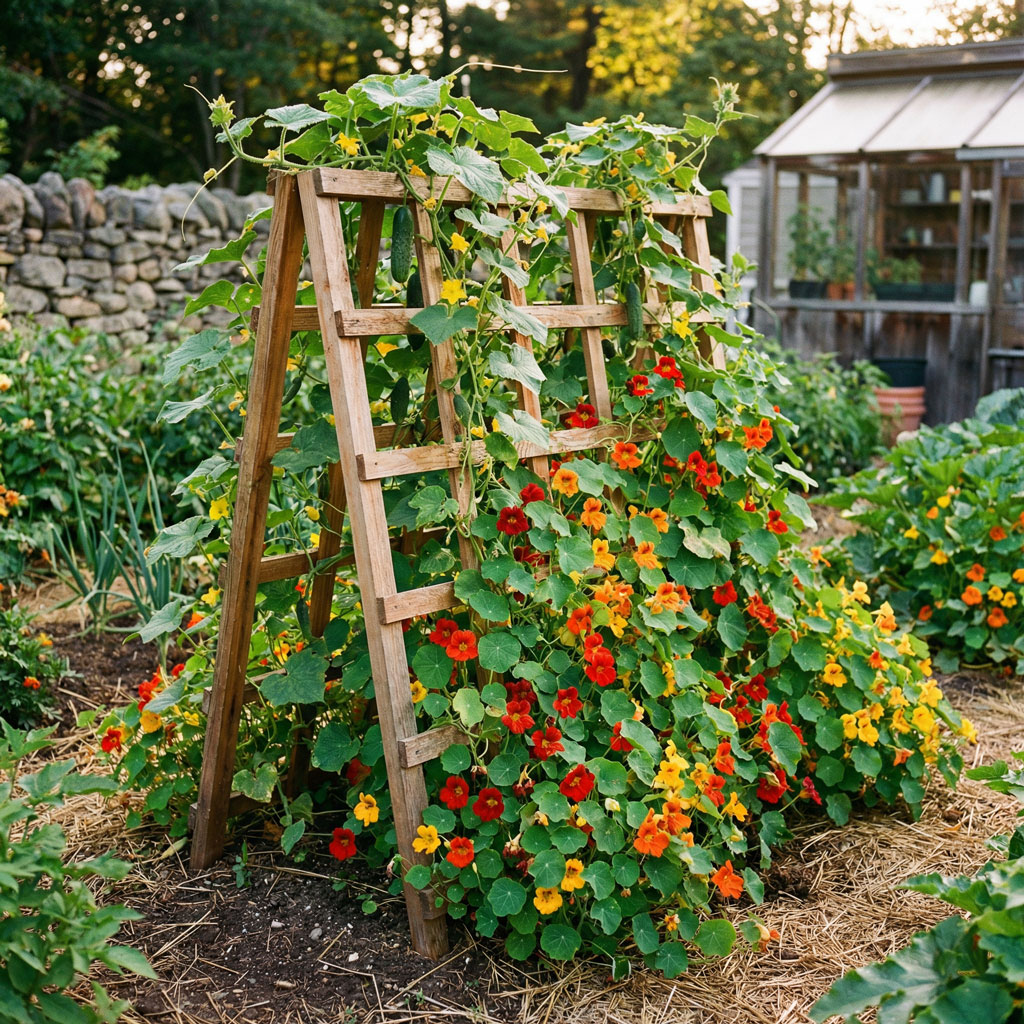
Nasturtiums are well known for acting as a trap crop for aphids. While this may sound like a problem, it actually helps attract ladybugs that feed on those pests.
I like planting nasturtiums along the edges of garden beds where they can spill over the sides. Their bright flowers draw attention, but it is the insect activity around the leaves that often brings ladybugs into the garden.
Habitat Ideas That Also Bring Ladybugs
Planting flowers that attract ladybugs is a great start, but habitat matters just as much as nectar and pollen. In my experience, ladybugs settle into gardens where there is a steady food supply and places to hide. A few simple changes to how a garden is managed can make it much easier for them to stay and do their work.
Here are a few practical ways I encourage ladybugs to remain in the garden once they arrive.
Leave Some Aphids
It can be tempting to remove every aphid the moment they appear, but ladybugs will not stay in a garden that offers no food. A small aphid population acts as a signal that the area is worth hunting in.
I usually tolerate minor aphid activity on sacrificial plants or less sensitive areas of the garden. Once ladybugs discover the food source, they often spread out and begin feeding across nearby plants.
Provide Dense Plants for Shelter

Ladybugs need sheltered places where they can rest and hide from wind, rain, and predators. Dense plantings make a big difference here.
Perennial clumps, ornamental grasses, shrubs, and thick herb patches create the kind of cover ladybugs look for. These areas allow them to stay protected while still being close to the plants where they hunt.
Avoid Broad-Spectrum Pesticides
Many insect sprays do not distinguish between pests and beneficial insects. Even organic products can remove the very insects that help keep pest populations balanced.
I try to rely on planting diversity and natural predators whenever possible. When ladybugs are allowed to establish themselves, they often handle aphid outbreaks before they become serious.
Add a Shallow Water Source

Like most insects, ladybugs need access to water. A shallow dish filled with water and small stones gives them a safe place to drink without the risk of drowning.
This does not need to be elaborate. Even a small saucer tucked into a garden bed can provide enough moisture to support beneficial insects during hot weather.
Final Thoughts
Encouraging ladybugs in the garden is less about controlling every pest and more about allowing small ecosystems to form. A few aphids, a mix of flowering plants, and places for insects to rest can quickly transform a quiet garden into one filled with helpful activity.
When these plants are scattered throughout beds and borders, they create a steady food supply that attracts ladybugs and encourages them to stay. Over time, their presence becomes one of the simplest and most effective forms of natural pest control a garden can have.