


Spring gardens have always felt like a quiet celebration to me. After a long winter, seeing that first pop of color feels like a reward for simply getting through it. I love planting wildflowers because they bring an effortless charm that formal beds can’t quite match. Wildflowers have a way of filling spaces with a storybook quality—gentle, sometimes scrappy, always surprising.

If you’re dreaming of creating your own spring wildflower garden at home, these are some of my favorite picks. Most of them are easy to find, relatively quick to grow, and will fill your garden with life and color before summer even thinks about arriving.
Quickly Find Wildflowers To Grow In Spring:
1. Lupine (Lupinus perennis)
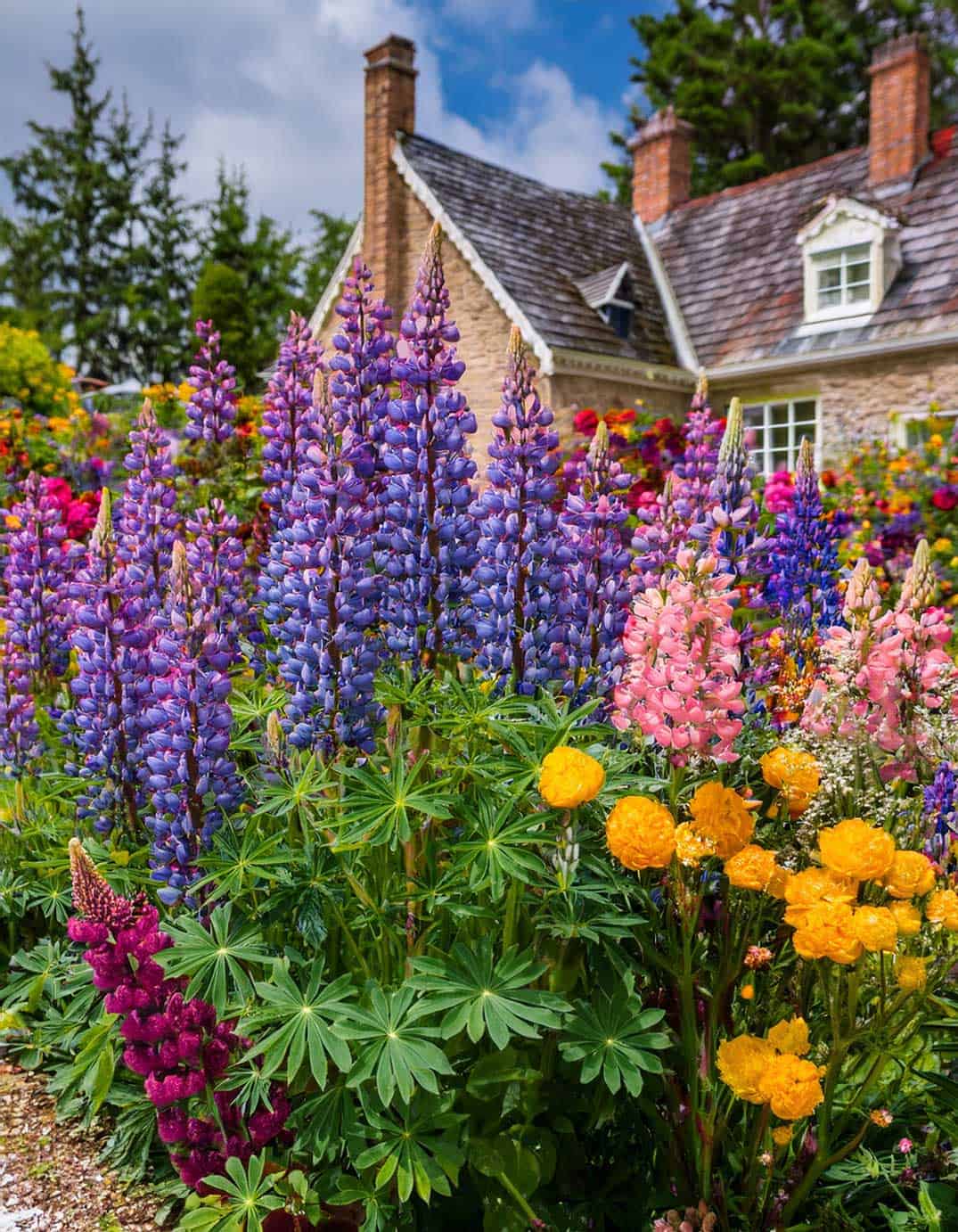
Every time I plant lupine, I feel like I’m tucking a little magic into the soil. These tall, spiky blooms seem to appear out of nowhere by mid to late spring, especially after a mild winter. Though lupines are often thought of as a second-year bloomer, I’ve had some luck coaxing early blooms with a fall sowing and a touch of patience.
Native to North America, lupines bring vertical drama to a garden that’s just waking up. Their range of purples, blues, and pinks pairs beautifully with shorter, ground-hugging flowers. Bonus? They’re fantastic for supporting pollinators early in the season.

- Bloom Time: Mid to late spring
- Grows Best In: Full sun, well-drained soil
- Quick Tip: Plant them where they’ll catch a bit of morning light—they practically glow.
2. Wild Blue Phlox (Phlox divaricata)

Wild blue phlox is like a soft mist settling over a spring garden. I love slipping it into shadier corners where it forms a low, spreading carpet of blooms. The flowers are a muted, dreamy shade of blue-lavender that feels perfectly at home under deciduous trees.
You’ll often see wild blue phlox blooming as early as April. It’s a native plant that weaves easily into wild gardens or formal beds alike, and it has a way of softening harsh edges beautifully.
- Bloom Time: Early spring
- Grows Best In: Partial shade, moist soil
- Quick Tip: Pair it with spring bulbs for a layered look.
3. Coreopsis (Coreopsis lanceolata)

Coreopsis has an unbeatable work ethic for a wildflower. Even though it’s technically more of a late-spring bloomer, I find it kicks off just early enough to bridge spring and summer gracefully. Plus, when started early or sown the previous fall, coreopsis often blooms right in its first year.
Those golden-yellow flowers seem to float above slender stems, catching every breeze. It’s a plant that brings a little sunshine even on a cloudy May morning.
- Bloom Time: Late spring
- Grows Best In: Full sun, dry or sandy soils
- Quick Tip: Deadhead lightly to encourage a second flush of blooms.
4. Columbine (Aquilegia canadensis)

There’s something whimsical about columbine. Their unique, nodding flowers with backward-facing spurs look like tiny, colorful lanterns. I always make sure to scatter a few around the edges of my spring beds where they can self-seed freely.
Columbines are fast to establish, especially when sown indoors ahead of spring or left to stratify outdoors over winter. They’re adaptable too, thriving in sun or shade, which makes them perfect for tucking into little garden niches.
- Bloom Time: Spring
- Grows Best In: Part sun to full shade
- Quick Tip: Let the seed pods dry on the plant for easy self-seeding.
5. Black-Eyed Susan (Rudbeckia hirta)

Most people think of black-eyed Susans as a summer flower, but certain cultivars can surprise you with blooms by late spring. When I sow them early, either indoors or directly into the soil just as the ground thaws, they often reward me faster than expected.
Black-eyed Susans are tough—reliable, drought-tolerant, and easy to grow from seed. Their sunny yellow petals and dark centers are the definition of cheerful, anchoring a wildflower garden with their sturdy presence.
- Bloom Time: Late spring to early summer
- Grows Best In: Full sun
- Quick Tip: Thin seedlings early—they love to spread out.
6. Shasta Daisy (Leucanthemum × superbum)

Shasta daisies aren’t technically wild, but they bring such a fresh, clean look to the spring garden that I can’t resist them. With their bright white petals and golden centers, they look like little patches of sunshine that have decided to grow roots.
Some early-blooming cultivars start opening in late spring, especially when purchased as nursery plants. If you’re sowing from seed, give them a bit of time—you might see your first blooms later, but they’re worth the wait.
- Bloom Time: Late spring
- Grows Best In: Full sun, average soil
- Quick Tip: Plant en masse for maximum impact.
7. Forget-Me-Not (Myosotis sylvatica)

There’s a nostalgic sweetness to forget-me-nots. Their tiny blue flowers almost seem to hover over their foliage, like little notes left behind by winter itself. In my garden, they fill in pathways and cracks between stepping stones.
Forget-me-nots are technically biennials but behave like self-seeding annuals once established. I like to sow them in fall for effortless spring carpets of blue the next year.
- Bloom Time: Early to mid-spring
- Grows Best In: Partial shade to sun
- Quick Tip: Let them naturalize in tucked-away corners.
8. Sweet Alyssum (Lobularia maritime)

Sweet alyssum is one of the fastest ways to get a lush, blooming groundcover in spring. Within just 4 to 6 weeks of sowing, it begins spilling its fragrant little flowers across the soil. It’s like a living lace over garden beds and borders.
While not a native, sweet alyssum is beloved by pollinators and gardeners alike for its ease and resilience. I often use it to edge paths or soften the front of wilder plantings.
- Bloom Time: Early spring (if sown early)
- Grows Best In: Full sun to part shade
- Quick Tip: Trim back after flowering for a second bloom flush.
9. Cornflower / Bachelor’s Button (Centaurea cyanus)

There’s something almost nostalgic about cornflowers. Their vibrant blue color pops vividly in a spring garden, and they’re one of the easiest wildflowers to grow. I always make room for a few rows of them in any early-season planting.
Direct sowing them into cool spring soil usually leads to blooms by mid to late spring. They mix beautifully with poppies and other simple spring annuals.
- Bloom Time: Mid to late spring
- Grows Best In: Full sun, average to poor soils
- Quick Tip: Plant in waves for staggered blooming.
10. Poppy (Papaver rhoeas or Papaver nudicaule)

Poppies feel almost miraculous in their speed. With just a bit of cool soil and a little patience, those crinkled blooms start appearing within two months. Their delicate petals catch the spring light like nothing else.
I scatter poppy seeds over bare soil as soon as the frost lifts. They don’t like being moved, so sow them where you want them to stay and let them dance in the breeze.
- Bloom Time: 55-70 days from sowing
- Grows Best In: Full sun
- Quick Tip: Sow extra thickly—their seedlings are surprisingly small at first.
11. Dame’s Rocket (Hesperis matronalis)

Dame’s rocket is often mistaken for garden phlox, and for good reason—their clusters of purple, pink, and white flowers look strikingly similar. I have a soft spot for it because it feels wild and a little unruly in the best way.
It’s worth noting that in some areas, it’s considered invasive, but in older gardens and meadows, it blends into the landscape naturally. It typically blooms in late spring, offering one more wave of color just before summer heat arrives.
- Bloom Time: Late spring
- Grows Best In: Full sun to part shade
- Quick Tip: Harvest a few for vases—they have a lovely, light fragrance.
Planting a spring wildflower garden is like writing a poem with seeds. Every flower adds its own line, its own rhythm, and its own color. These 11 choices aren’t just beautiful—they’re practical, resilient, and eager to grow.
Whether you have a big backyard or just a few containers on a patio, starting with these approachable, common wildflowers will have you surrounded by spring color in no time. Watching them bloom, each at their own pace, feels a little like watching a story unfold—one that changes slightly every year and only gets better with time.