


I’ve learned that having a designated spot for potting makes gardening tasks much easier and more enjoyable. Instead of carrying soil, tools, and plants all over the yard, I can keep everything in one place. Over the years, I’ve seen and tried a variety of setups, from simple DIY benches to more structured workstations. Each one has its own charm and practicality, depending on space, style, and the type of gardening you like to do.
Below are 12 unique potting station ideas that can be built or repurposed at home. Each one has a different angle, whether it’s maximizing space, adding durability, or incorporating a creative touch.
Quickly Find Seedling Stations:
1. Rustic Farmhouse Bench
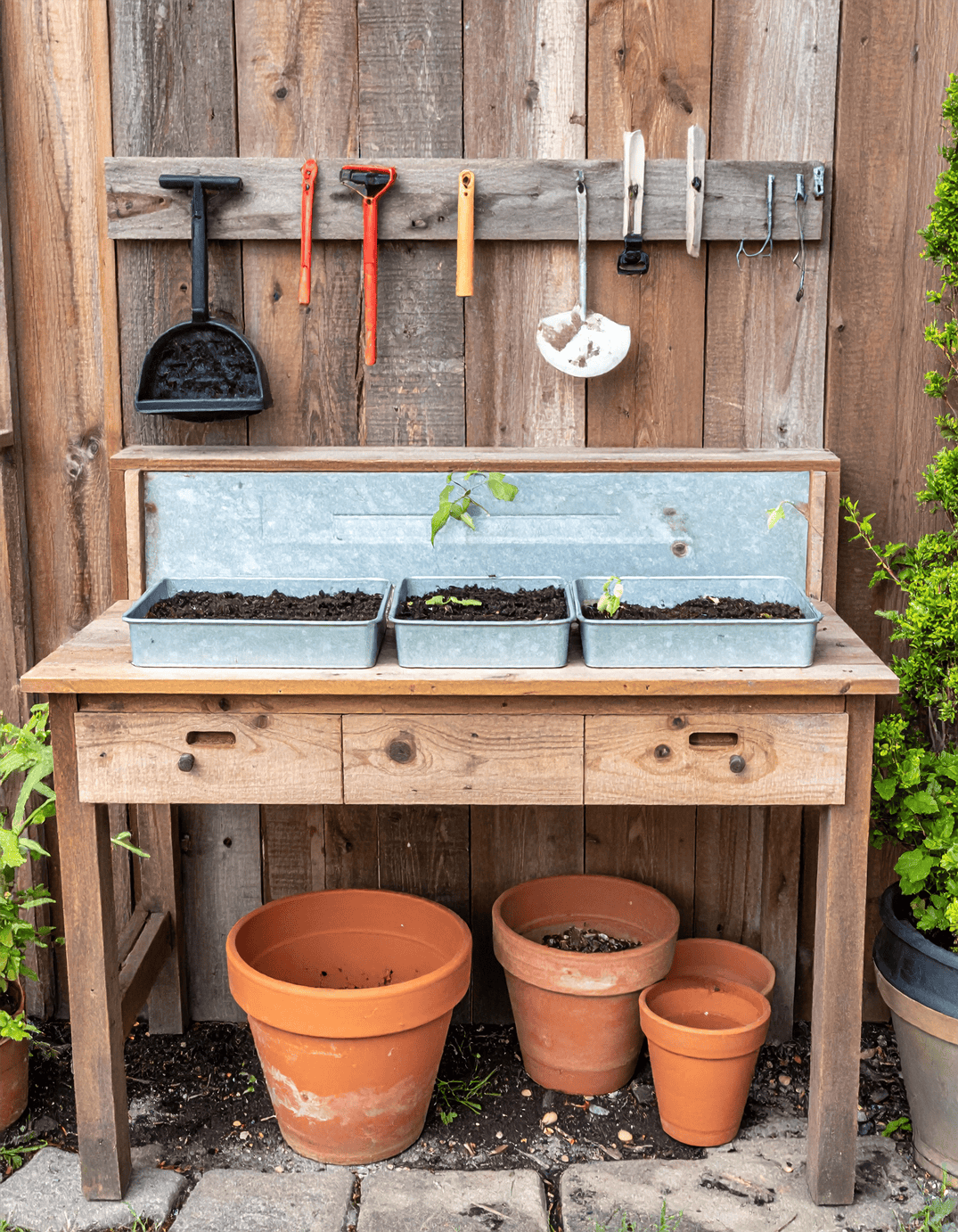
One of the simplest and most functional potting stations I’ve worked with is a reclaimed wood bench fitted with galvanized metal tubs. The tubs act as soil bins, making it easy to scoop out compost or potting mix right where I need it. Having hooks across the back for hand tools means I don’t misplace my trowel or pruners as often, and the terra-cotta pots stacked underneath give it that practical look I always associate with old farmyards.
What makes this bench so appealing is that it can be built from scraps or salvaged wood. Even an old table can be converted by cutting holes for metal tubs. It’s not fussy, and it stands up to weather and dirt without worry. For me, it strikes the right balance between rugged function and low-cost construction.

2. Compact Fold-Down Wall Station
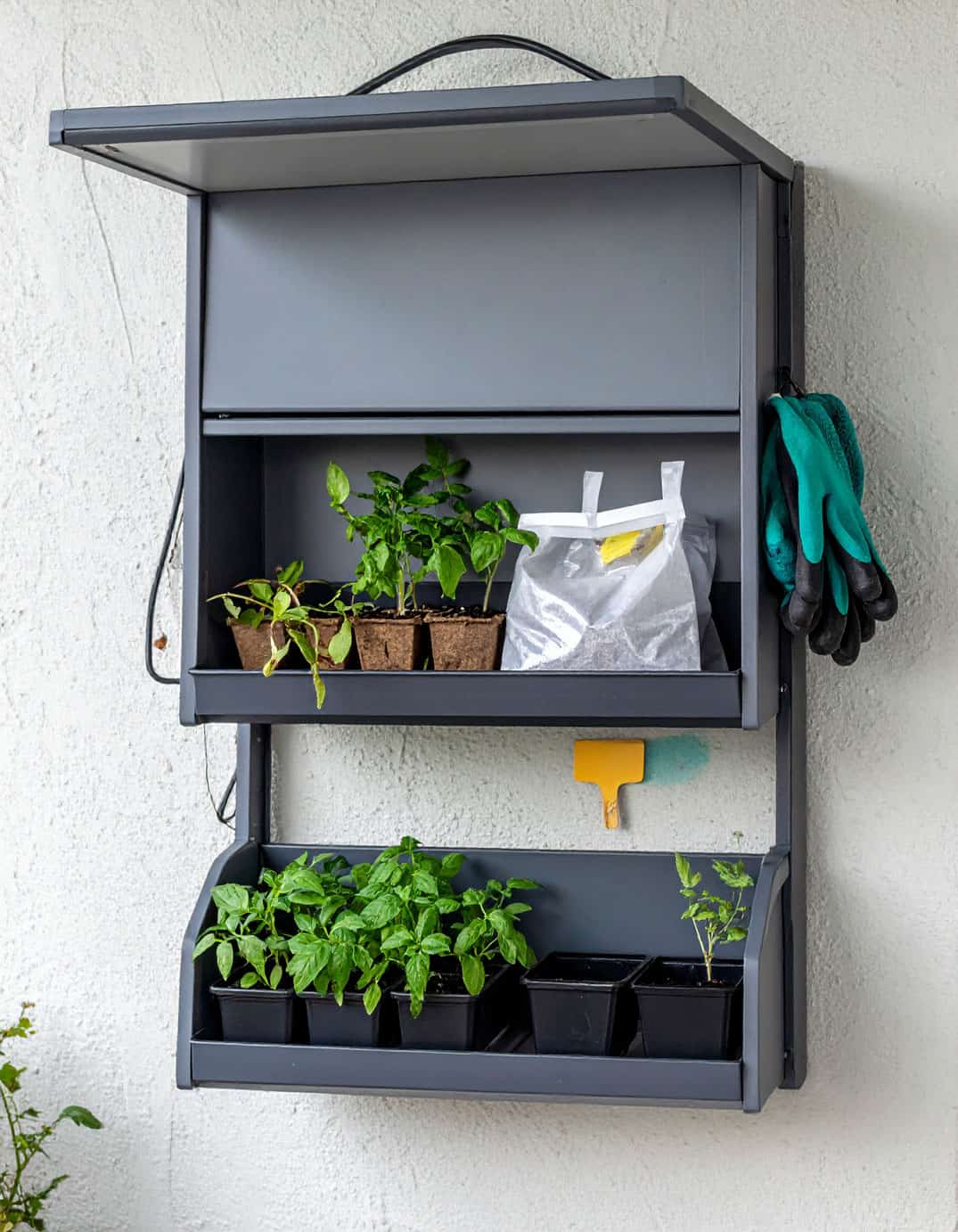
In smaller spaces, I’ve found a fold-down wall station to be surprisingly efficient. It looks like a shallow cabinet against the wall until you fold down the front panel, which becomes the work surface. Inside, there’s enough room to stash potting soil bags, twine, and even gloves.
The appeal here is its ability to disappear when I don’t need it. On a patio or balcony where space is tight, I can fold it up and keep everything neat. It also means I can mount it at a height that’s comfortable for me, which is not something every pre-built bench offers.
3. Vintage Sink Conversion
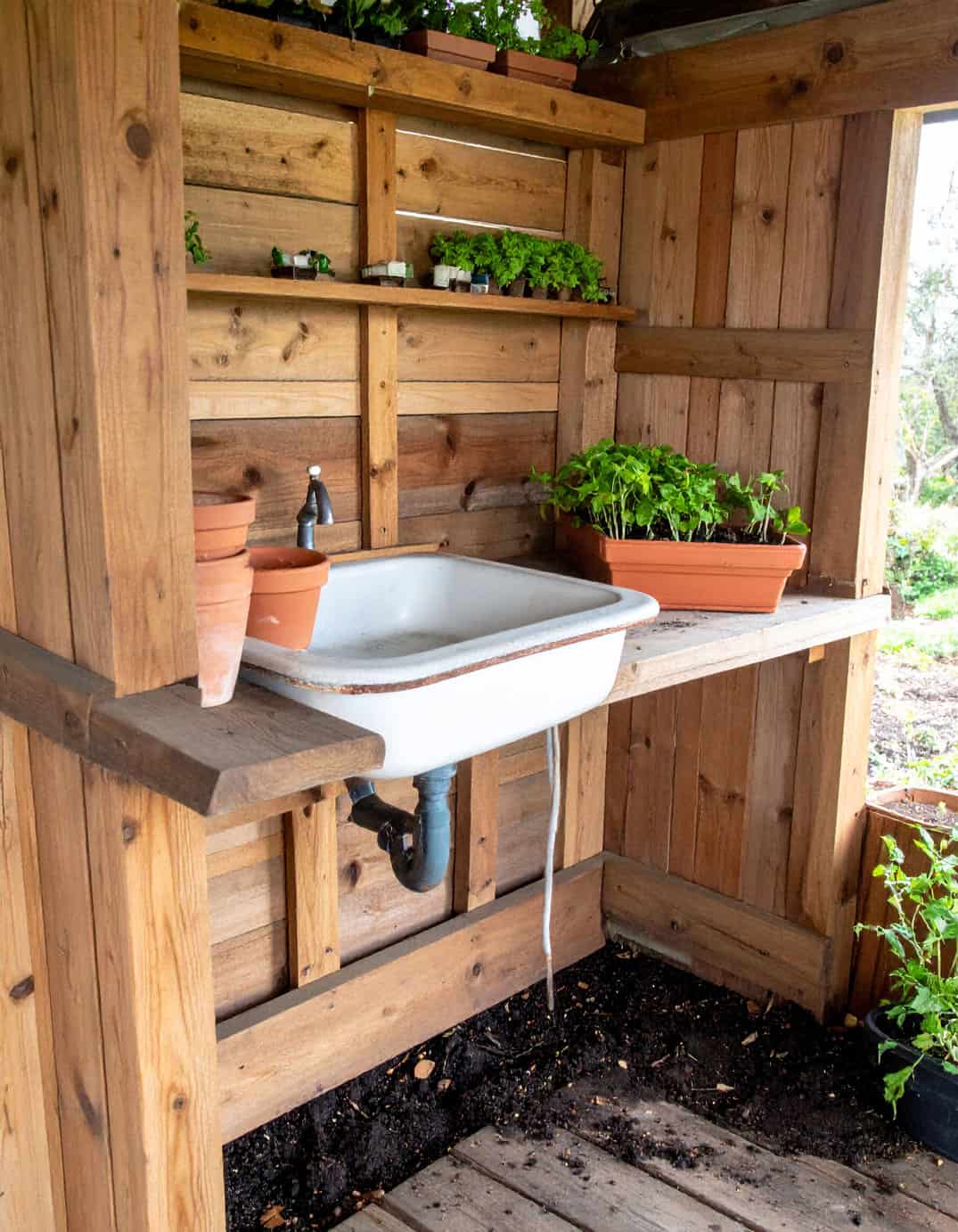
Repurposing an old enamel sink into a potting station has been one of my favorite functional projects. By hooking up a garden hose, the sink doubles as both a wash-up station and a work surface. I can rinse off vegetables, clean my tools, or soak a dry root ball without leaving the garden area.
It’s especially useful if I mount a small shelf above for seedlings or supplies. What could have been a piece of junk at the curb ends up becoming a sturdy and water-friendly centerpiece. This setup feels like it belongs outdoors while still being easy to clean up.
4. Greenhouse-Inspired Glass Hutch
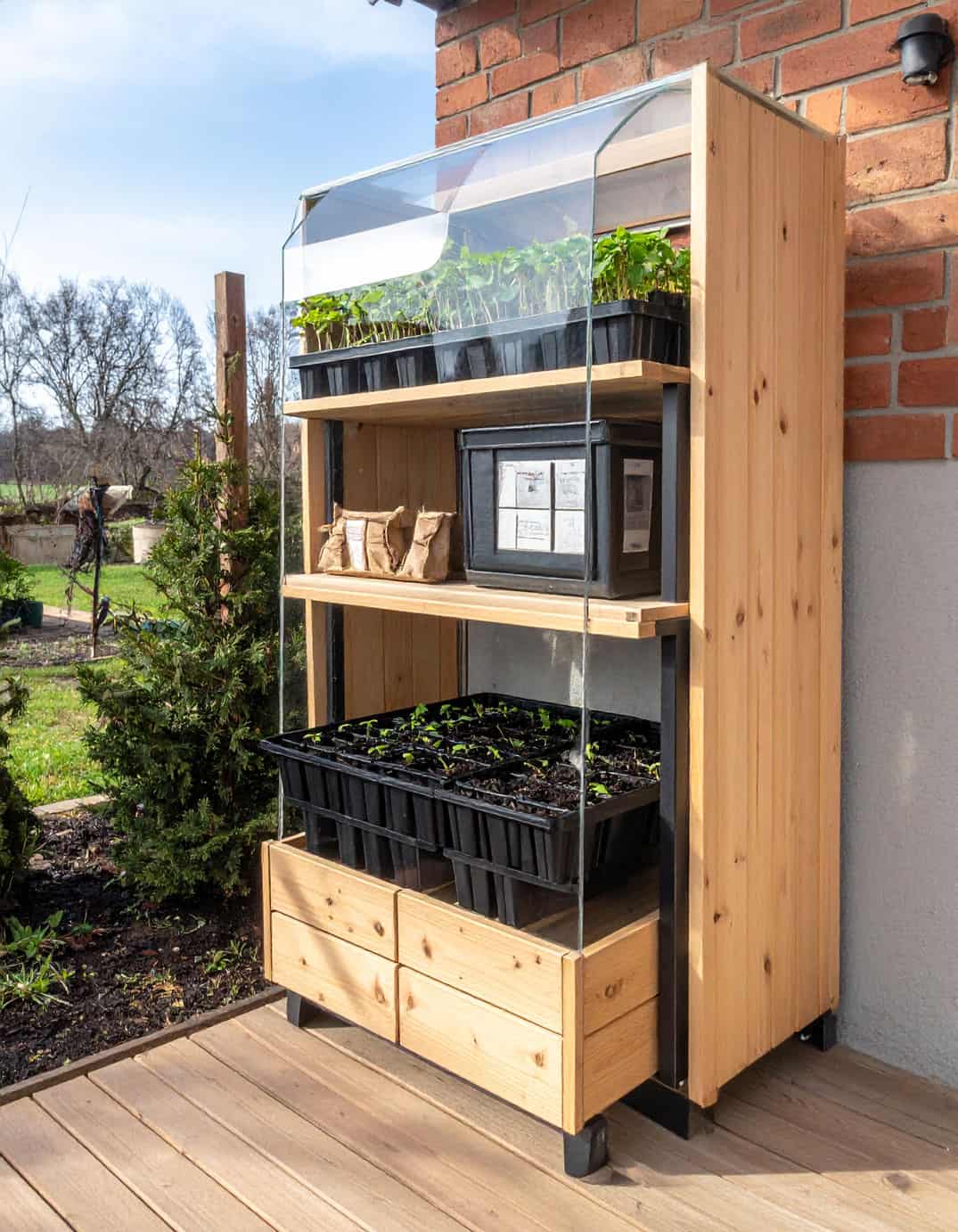
A tall glass-front cabinet with adjustable shelves makes a great option for extending the growing season. By filling the shelves with seed trays, I can keep seedlings warmer in the spring or fall. Having drawers at the base for tools and supplies keeps the whole unit tidy and contained.
I like this approach because it looks and functions like a mini greenhouse but doesn’t take up as much space as a traditional one. It’s also a good fit for decks or smaller yards where a full structure wouldn’t work. It gives me more control over young plants without having to dedicate an entire greenhouse.
5. Industrial Pipe & Wood Frame
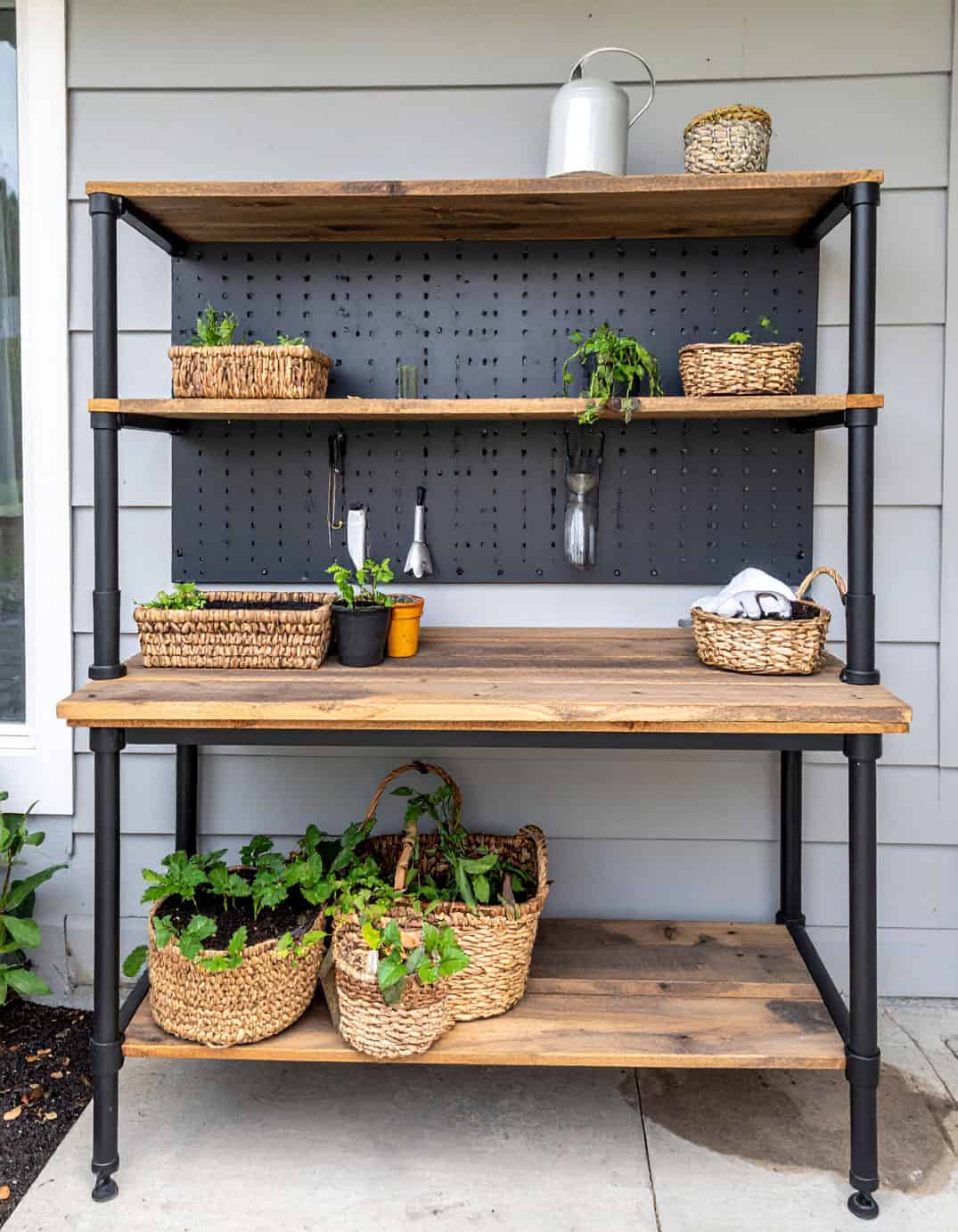
For a sturdier look, I’ve built a station using black iron pipes and reclaimed planks. The combination holds up well and gives me a long work surface, while pegboard attached at the back keeps tools and baskets organized.
This style is modular, so I can add shelves above or a rack below without changing the main frame. I like that it can be customized in size and shape, fitting into whatever spot I have available. The materials are easy to source, and the result is reliable for years.
6. Cottage Garden Arbor Station
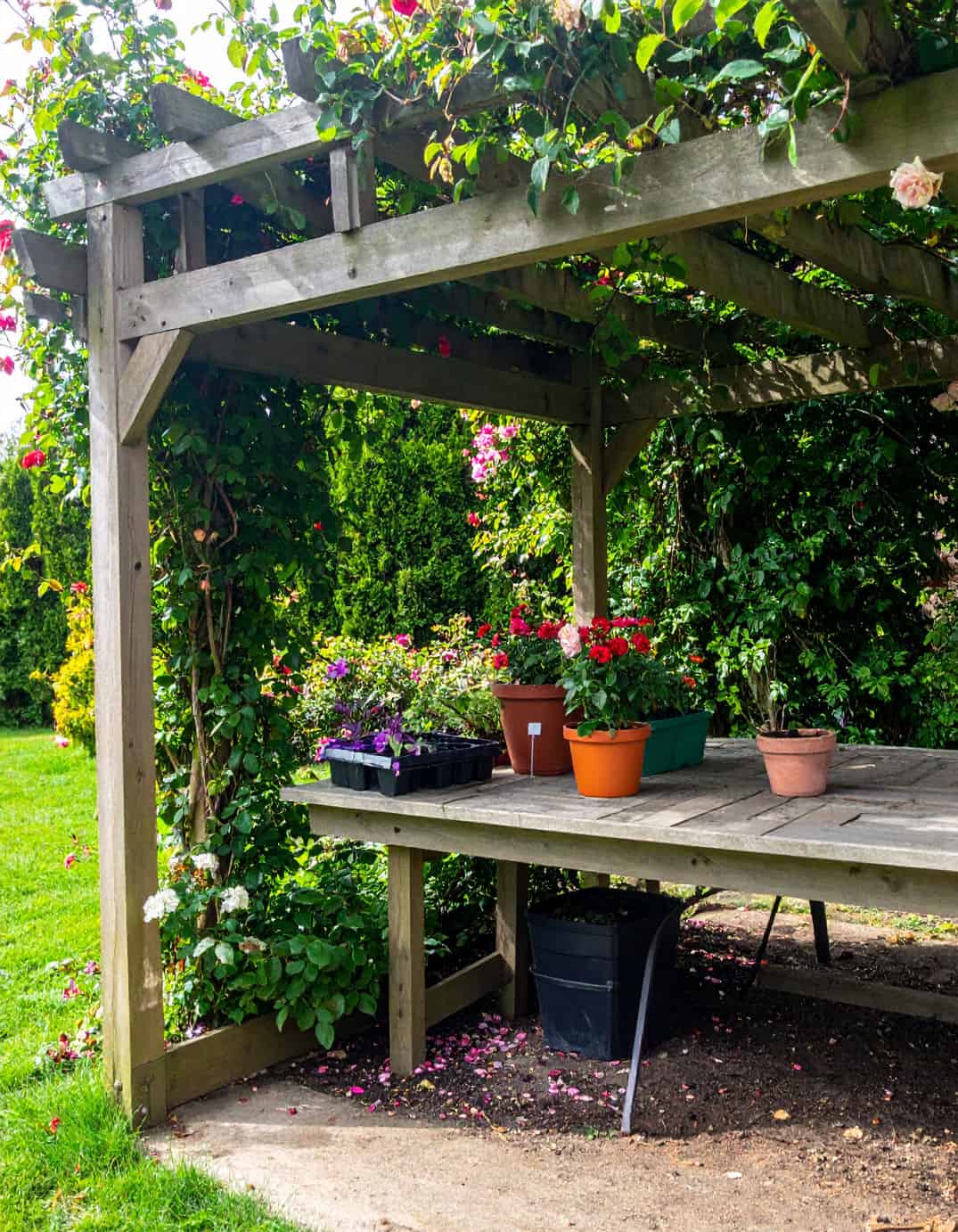
Setting up a bench under a wooden arbor has been a way for me to mix utility with garden design. When I train roses or clematis to climb over the arbor, the potting table becomes part of the landscape. Instead of just being a workbench, it feels like a hidden corner of the garden where tasks blend into the setting.
This station is simple in construction, just a sturdy table beneath the structure, but the addition of vines changes the atmosphere. It provides shade while working and a bit of shelter for tools left behind. It’s an option that works especially well in larger gardens.
7. Rolling Cart Station
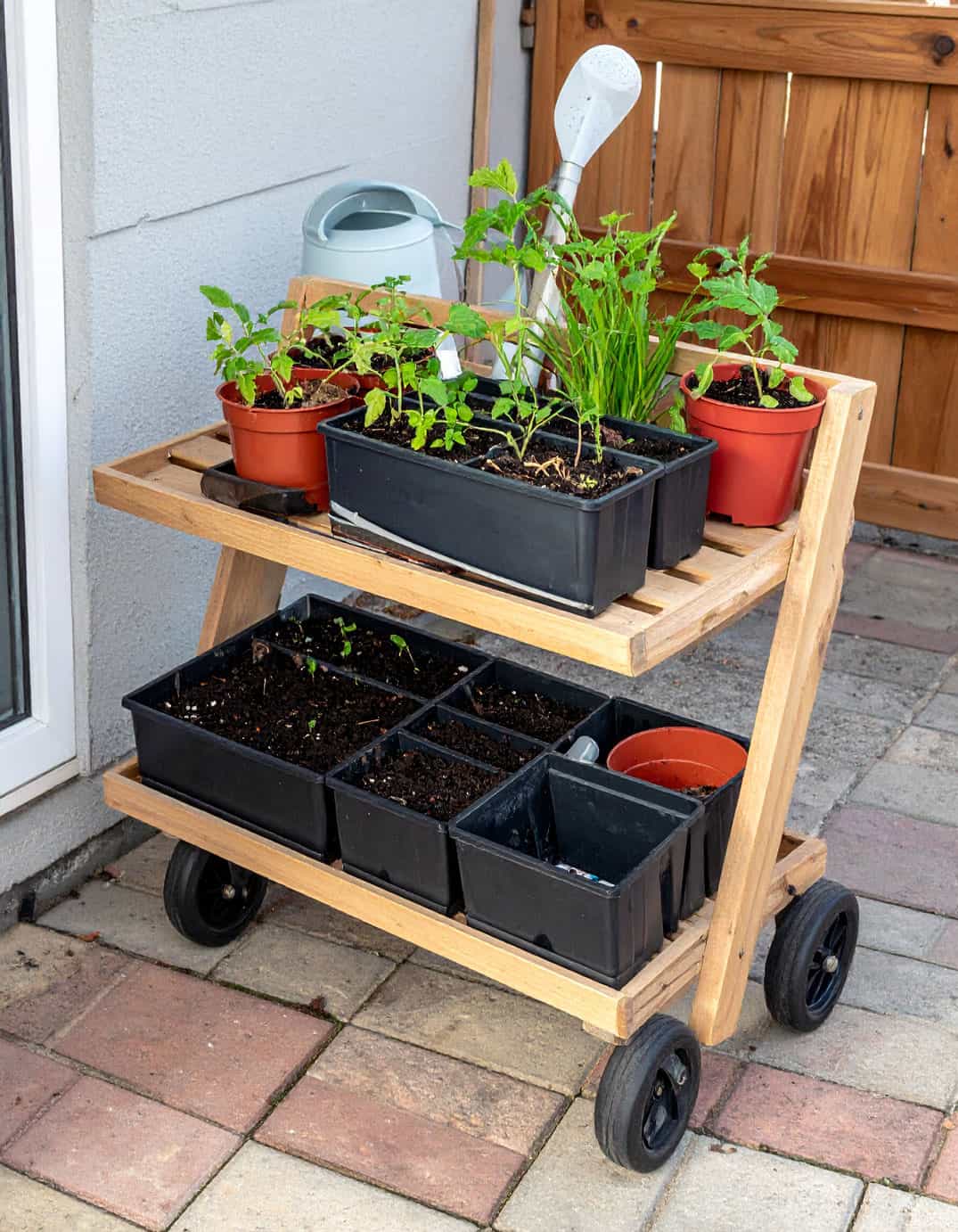
Mobility can make a big difference. I’ve used small carts with locking wheels to pot seedlings in one area, then roll the whole thing closer to the beds where I’m planting. Having multiple tiers means I can carry soil, plants, and watering cans together instead of making repeated trips.
For patios and smaller gardens, a cart can be stored against a wall when not in use. It’s not as permanent as a bench or shed station, but the portability makes it a flexible choice. I especially like it when starting large numbers of seedlings that need to be moved around to catch the light.
8. Modern Minimalist Concrete Slab
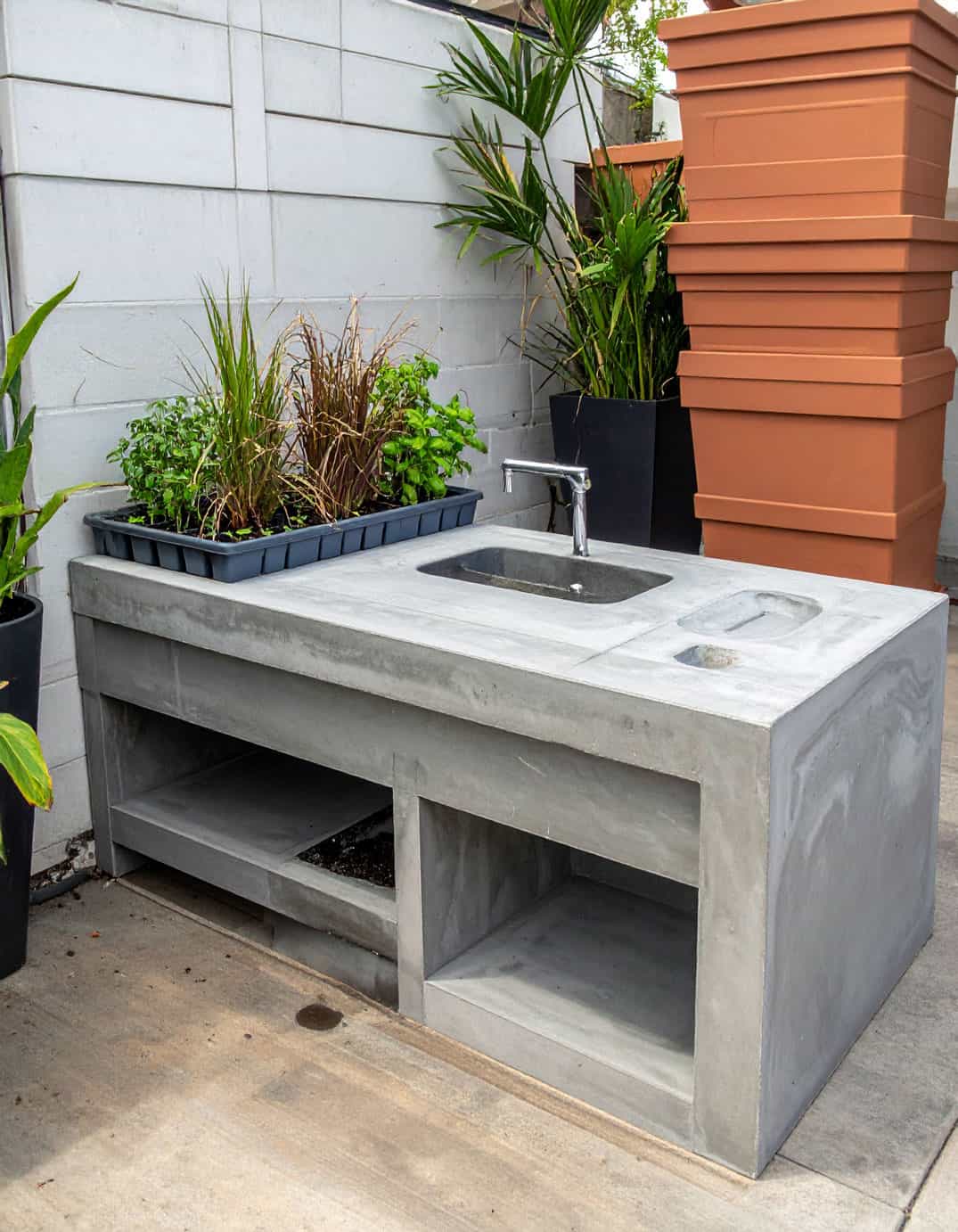
When I wanted something more permanent, I looked at poured concrete. A slab-style workstation with built-in drainage grooves and a sink can handle water, soil, and heavy use without wearing down. Open cubbies beneath make it easy to store planters or bags of soil.
Concrete feels more architectural than rustic, which fits well in modern yards. It’s also durable enough to leave outside in all seasons without concern. While it’s not as easy to build from scratch, once in place it requires little to no maintenance.
9. Repurposed Antique Dresser
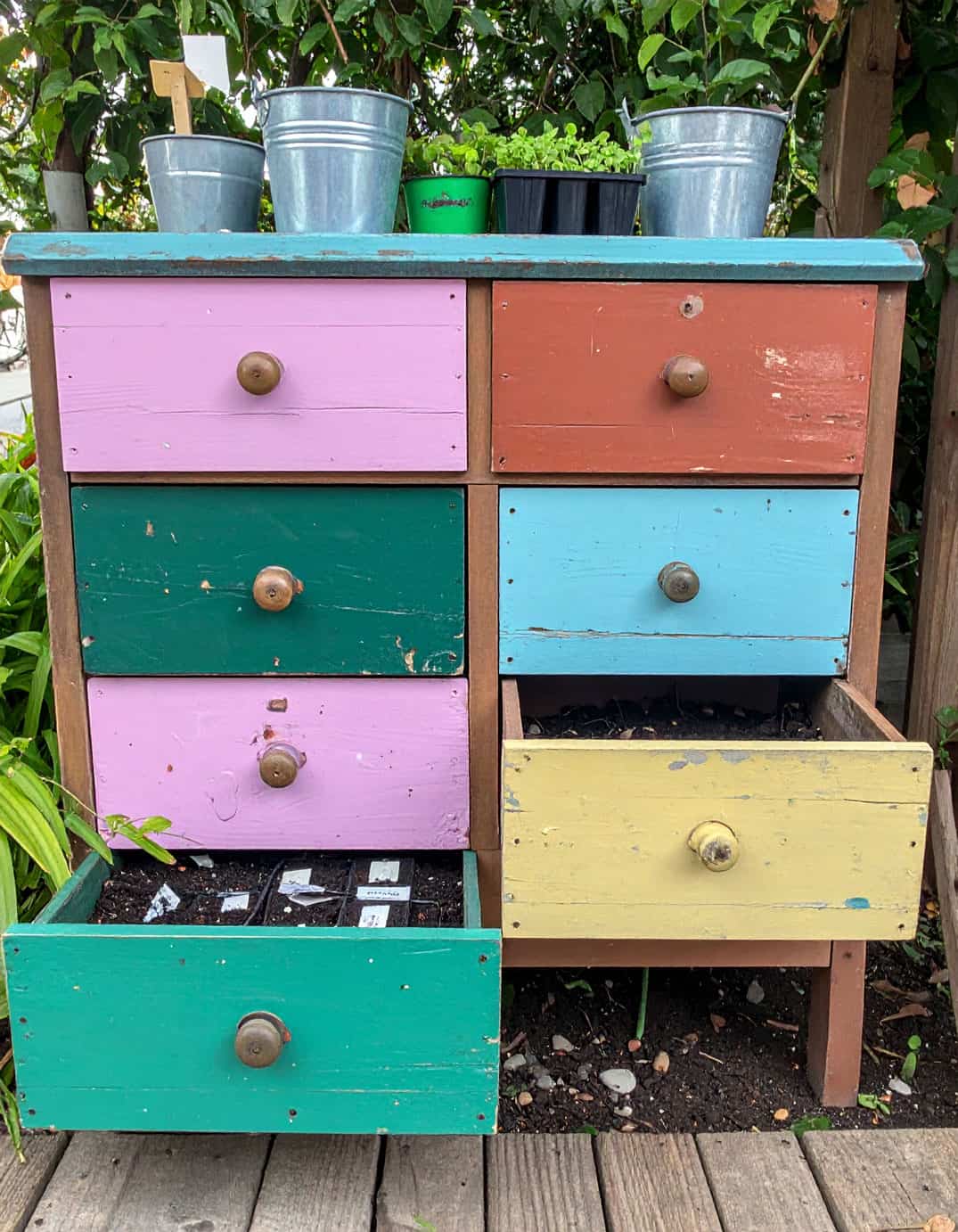
An old dresser turned into a potting station is both playful and useful. By painting the drawers in bright garden colors, I turned it into a cheerful focal point. The drawers themselves are ideal for storing soil, fertilizer, or small tools, and I’ve even lined some to use as mini planting boxes.
What I like about this idea is how it brings furniture outdoors in a practical way. Instead of sending an old piece to the dump, it gets a new life in the garden. Each time I use it, it feels like I’ve added personality to the workspace without losing function.
10. Covered Shed-Style Station
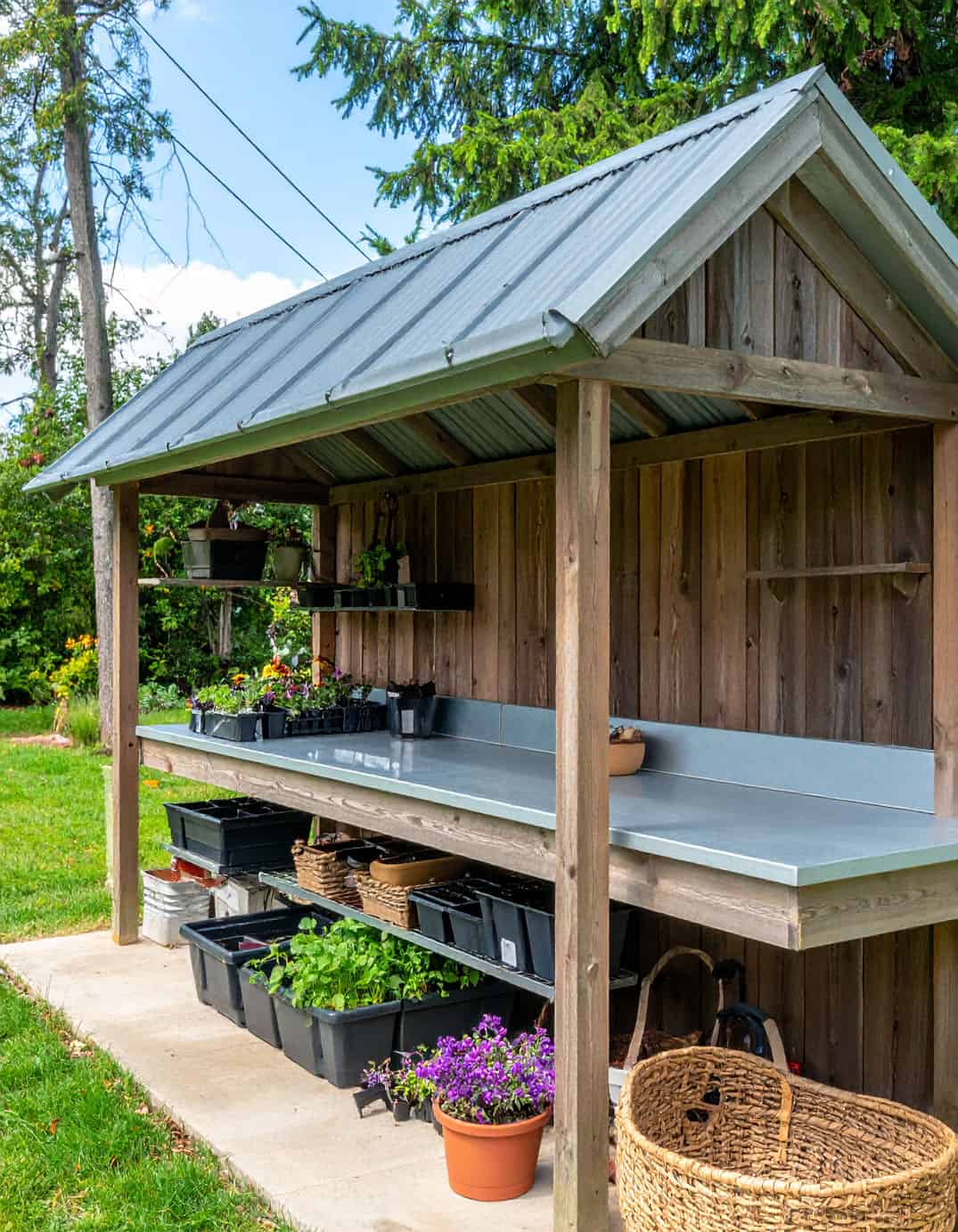
Building a lean-to style shed with a wide counter has given me shelter while potting in less-than-perfect weather. The overhead roof keeps rain off the soil and tools, while shelves along the back wall offer plenty of storage.
This kind of setup is best for people who pot often. It becomes more of a permanent fixture in the yard, not just a temporary workspace. For me, having that roof has been a big advantage during the spring when showers are frequent but there’s still plenty of work to be done.
11. Vertical Pallet Station
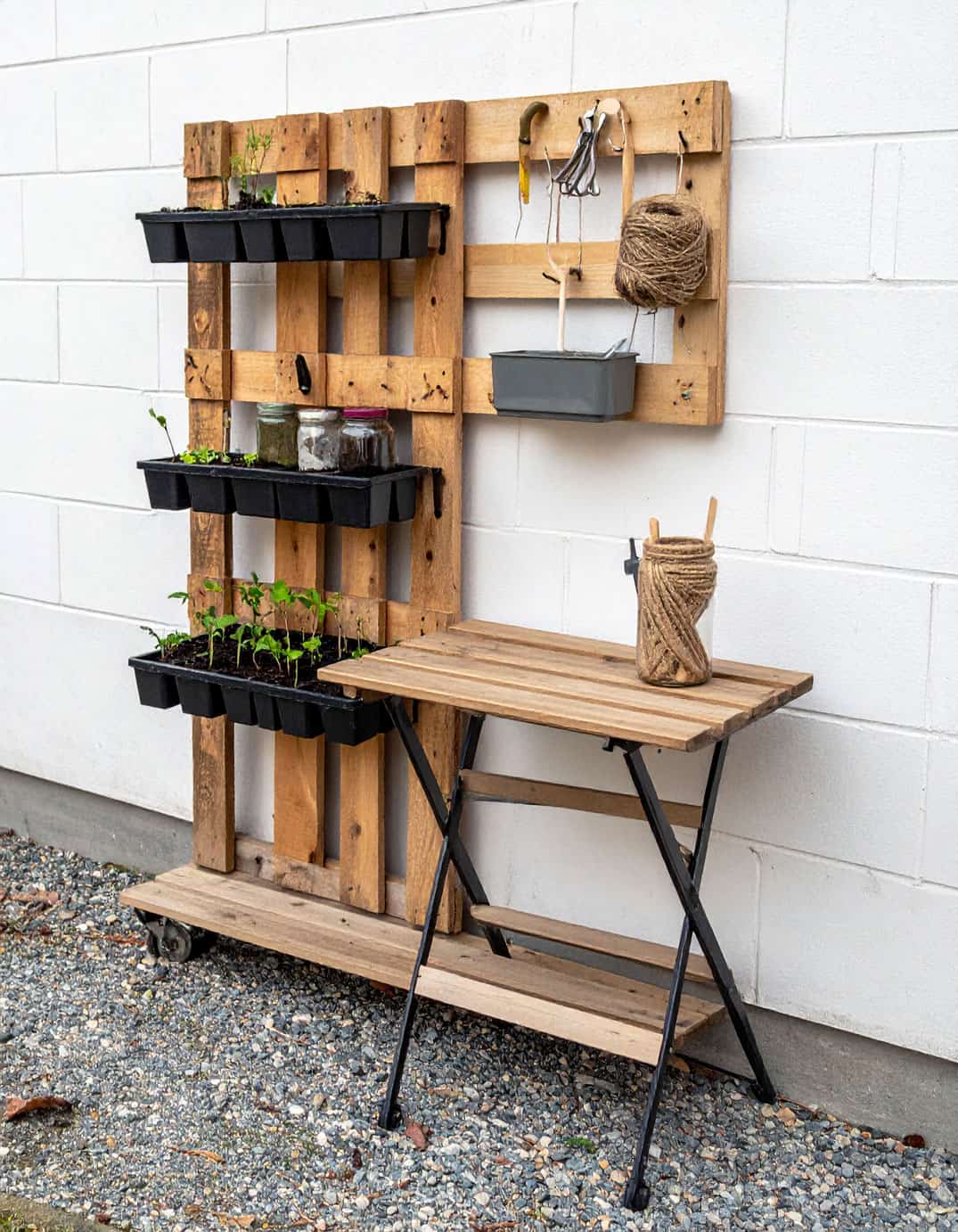
A pallet leaned and secured against a wall can become a simple but effective potting spot. I’ve attached shelves, jars, and hooks to hold tools and twine, while a small fold-out table provides just enough workspace.
This version is as low-cost as it gets and works well for tight spaces. I find it especially good for starting small herb pots or keeping seedlings in view where I’ll remember to water them. Pallets are easy to come by, so this is one of the more accessible projects.
12. Eco-Friendly Living Roof Station
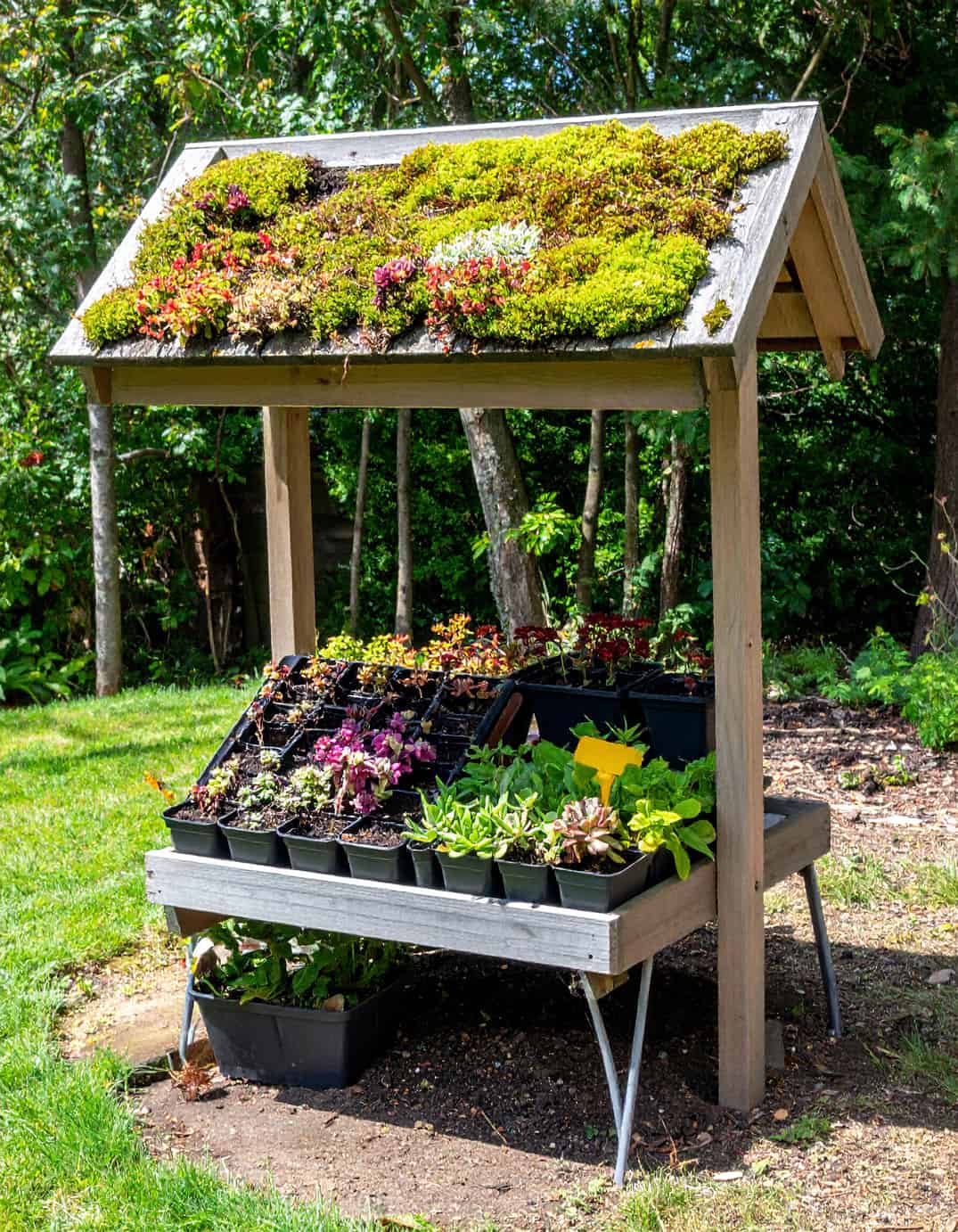
One of the more creative builds I’ve tried is a potting table topped with a green roof. By planting sedums and mosses on top, the station blends into the garden while staying fully functional below. The roof adds insulation to protect the bench beneath and provides extra planting space.
It does take a bit of planning to support the soil and plants on top, but once it’s established, the effect is both practical and natural. I like how it connects the station to the rest of the garden rather than standing out as just a workspace.
Final Thoughts
A potting station doesn’t need to be complicated or expensive. With a bit of creativity, old furniture, reclaimed wood, or even concrete can be transformed into a space that keeps gardening supplies organized and makes planting easier. Each of these 12 setups shows how flexible the idea can be, fitting into small corners, larger yards, or modern patios. For me, the right station is the one that matches how I actually work in the garden and what materials I have on hand.