


I have built, sketched, admired, and overthought more garden layouts than I can count, and keyhole herb gardens keep pulling me back in. They sit at the intersection of structure and softness, offering a clear shape without feeling rigid. What I love most is that a keyhole herb garden does not demand perfection. It invites intention, but it also leaves room for experimentation, mistakes, and personal style.
In this post, I am walking through 21 distinct keyhole herb garden ideas, each one shaped by materials, setting, and how it is meant to be used. Some lean heavily into productivity, others into atmosphere, and many live somewhere in between. I am sharing these from a first person perspective, focusing on what makes each design work and why it might fit into a real garden, not just a photograph.
1. Modern Wooden Keyhole Herb Garden With Sculptural Centerpiece
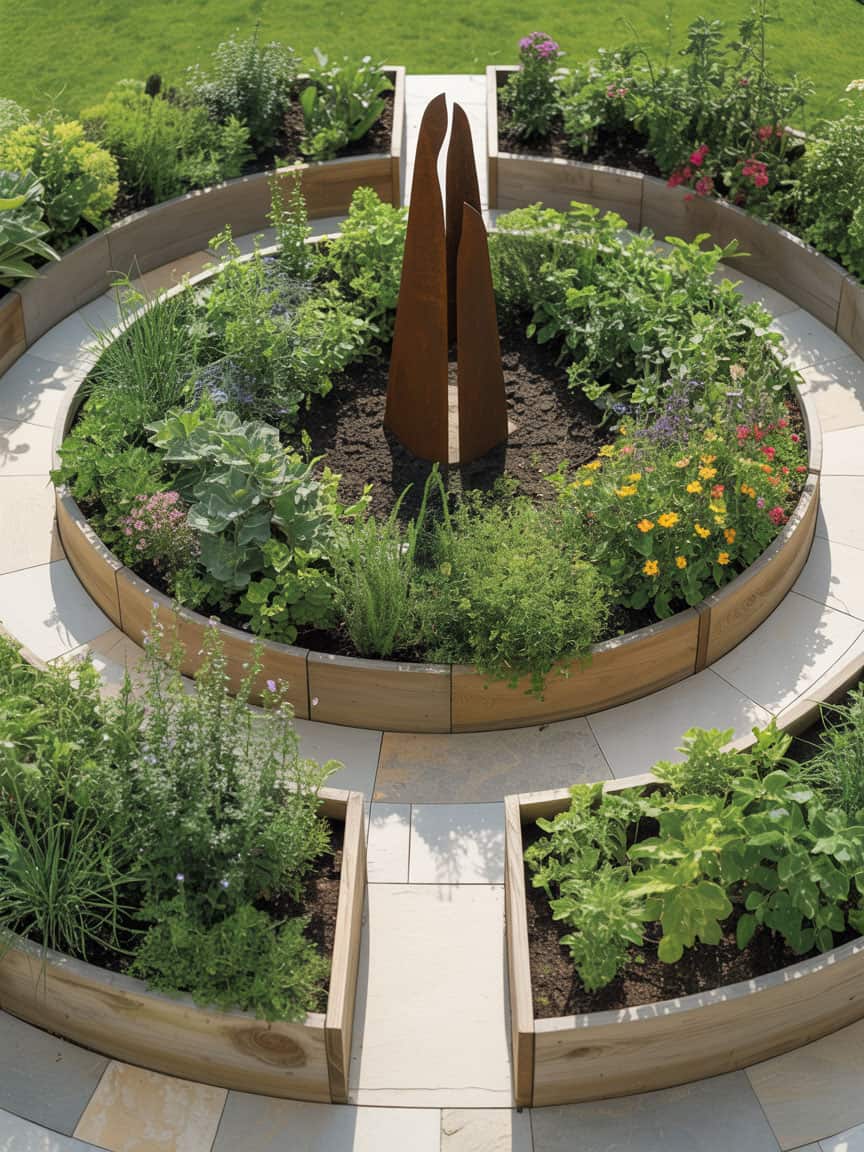
This design immediately shifts the way a keyhole herb garden is perceived. Smooth wooden walls form a clean circle, and the entry path feels deliberate rather than tucked in as an afterthought. Instead of compost at the center, a sculptural feature takes over, making the garden feel like an outdoor room rather than a utility space.
What stands out to me here is restraint. The herbs stay low and controlled, allowing the shape and center feature to lead. This is the kind of keyhole herb garden that works well near a patio or modern home, where design continuity matters just as much as harvests.

2. Raised Stone Keyhole Herb Garden With Woven Compost Tower
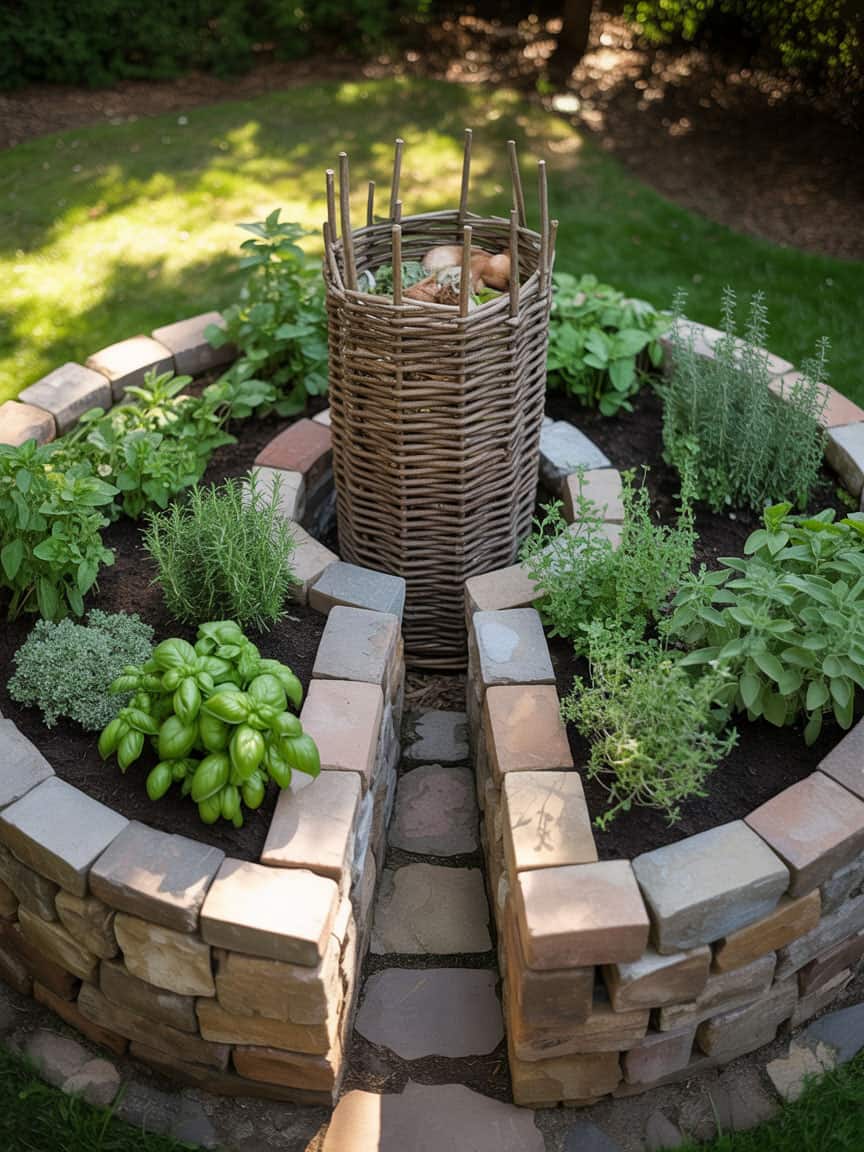
This is the keyhole herb garden that first comes to mind for many gardeners, and for good reason. The raised stone walls add permanence and make the garden comfortable to work in. The woven compost tower anchors the center both visually and practically.
I like how this design balances texture. The stone feels solid and grounded, while the woven center softens the overall look. Herbs here can be planted generously, knowing that the compost system supports steady growth throughout the season.
3. Modular Wooden Keyhole Herb Garden With Radial Planting Sections
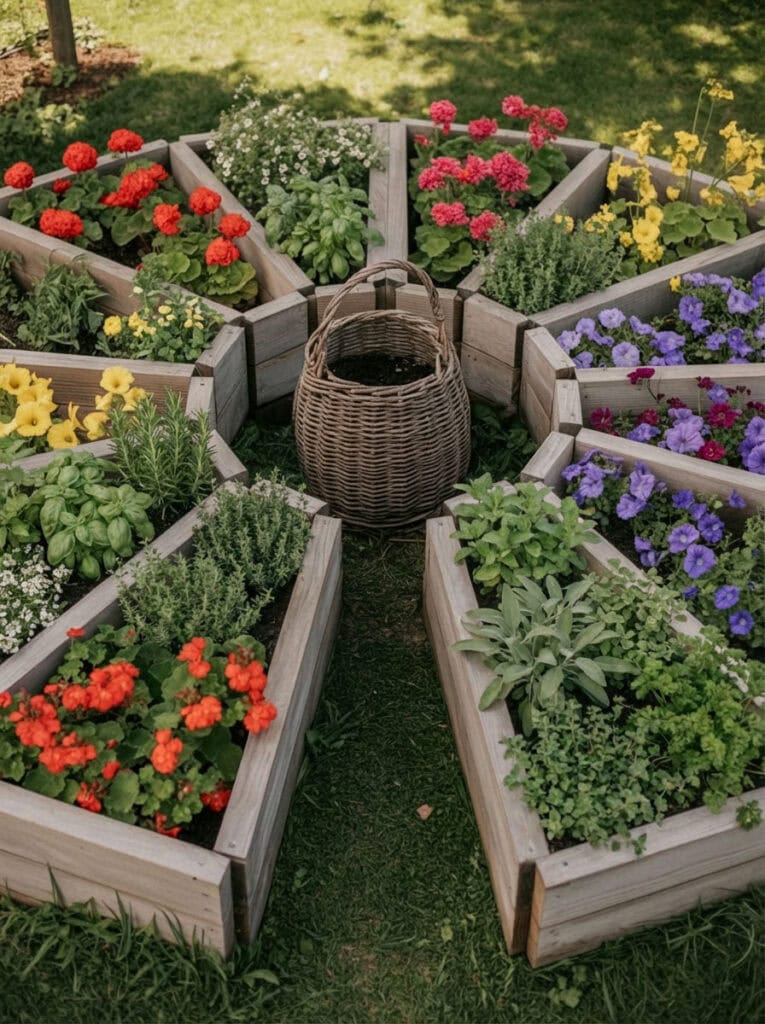
This version breaks the circle into clear wedges, and that changes everything. Each section feels intentional, almost like its own small garden. I find this especially helpful for herb organization, separating woody herbs from tender ones or grouping by flavor profiles.
The modular nature also makes maintenance easier. You can refresh one wedge without disturbing the rest. Visually, the symmetry keeps the garden readable even when plants grow at different rates.
4. Cottage Brick Keyhole Herb Garden With Flowers and Vegetables
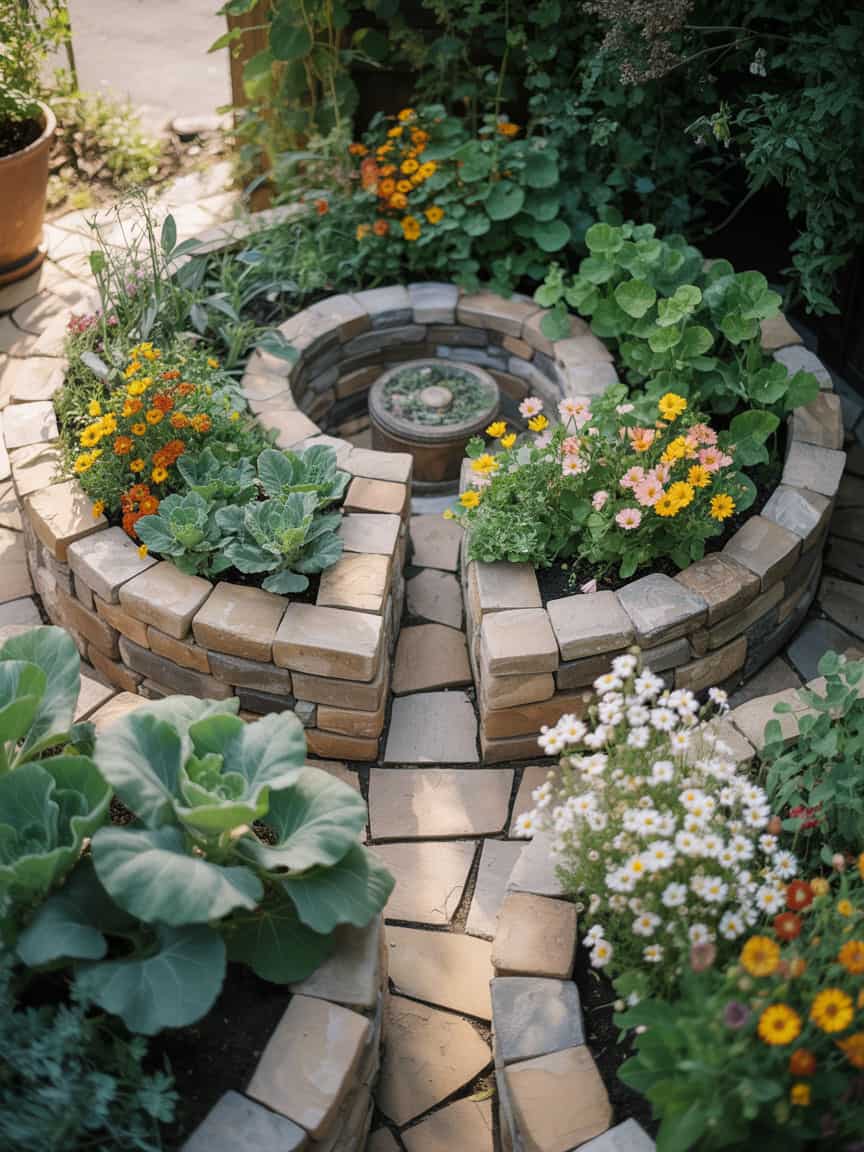
This is where rules soften. Brick walls show their age, curves are imperfect, and herbs mingle freely with flowers. I am drawn to how relaxed this keyhole herb garden feels, even though the structure is clearly defined.
In my experience, this style works beautifully for gardeners who enjoy letting plants self seed. Calendula, nasturtiums, and herbs spill into one another, creating a garden that evolves year to year without losing its form.
5. Ground-Level Keyhole Herb Garden With Soft Edged Planting
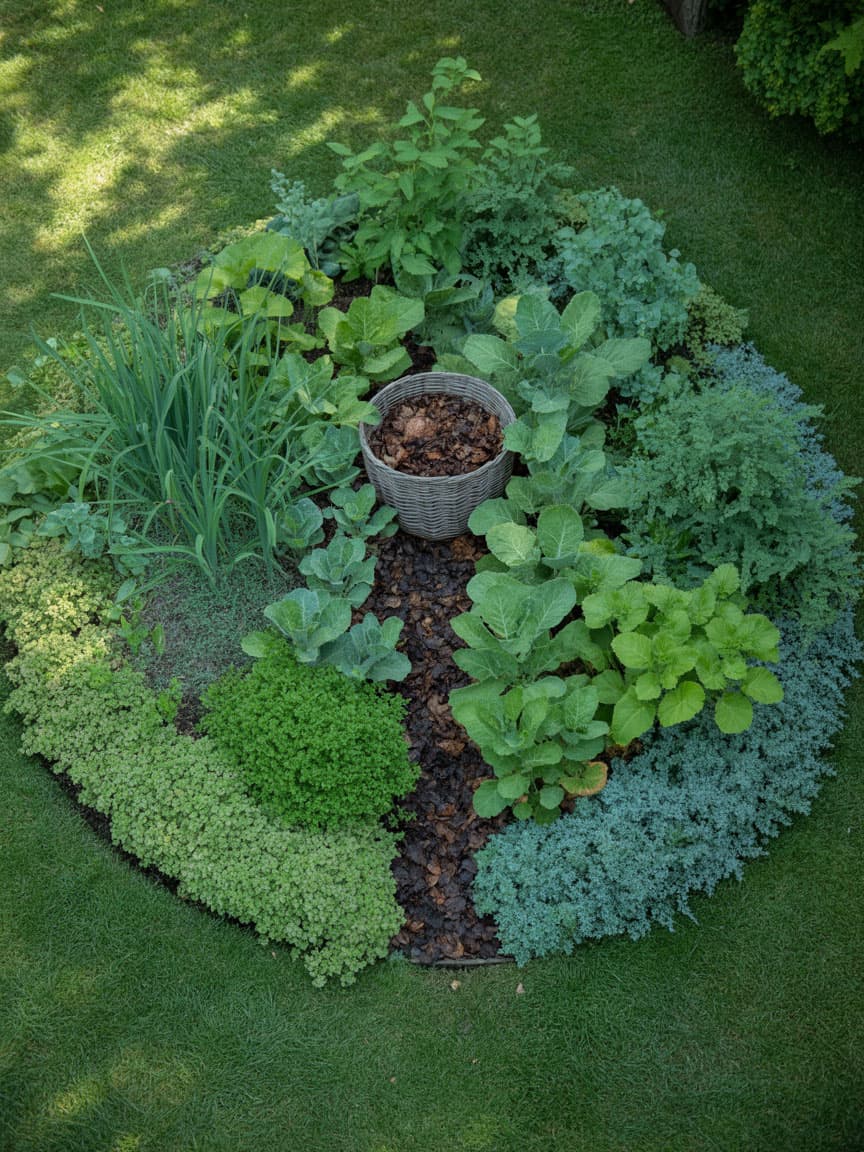
Not every keyhole herb garden needs walls. In this version, the shape is defined by planting rather than structure. A narrow path leads inward, and herbs fill the space densely, blurring the edges into the surrounding lawn.
This approach feels accessible and forgiving. It is easy to adapt, easy to change, and ideal for gardeners who want the benefits of a keyhole layout without committing to permanent materials.
6. Woodland Keyhole Herb Garden With Log Walls and Woven Compost Structure
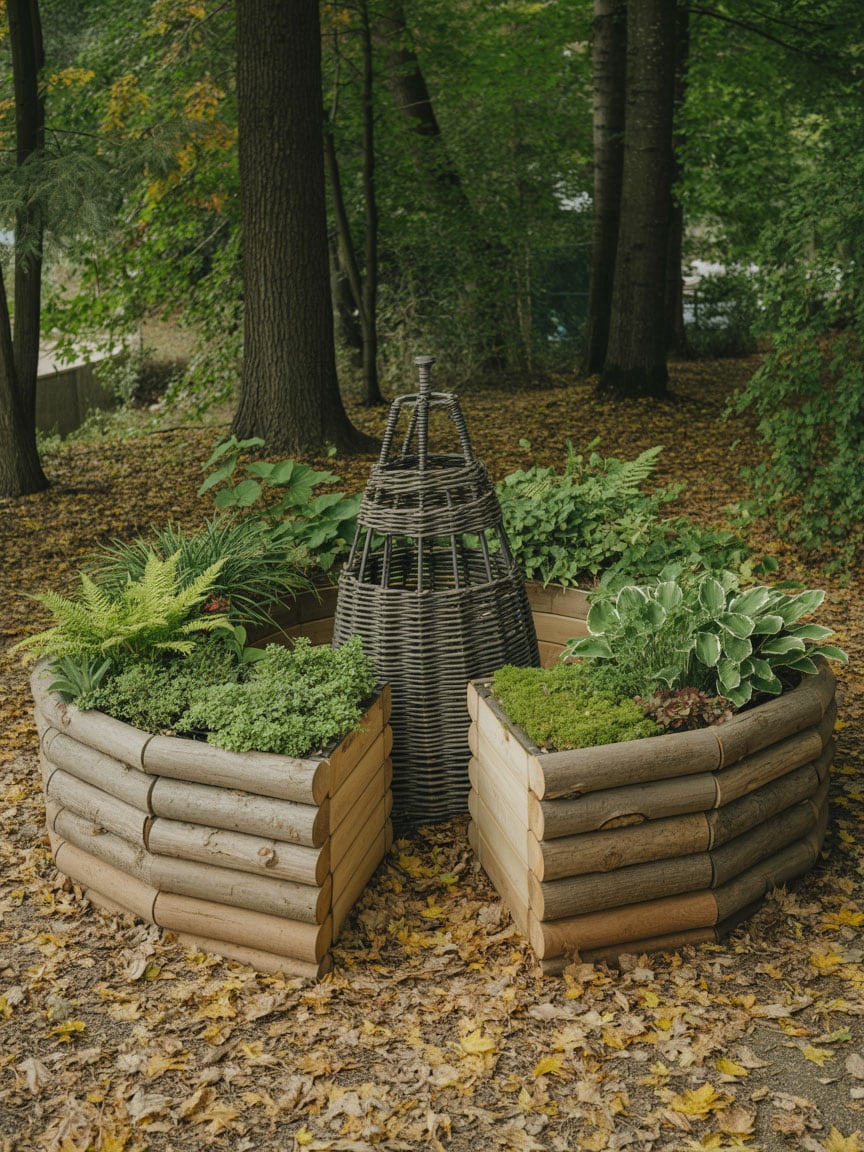
Set among trees, this keyhole herb garden feels like it belongs exactly where it is. Log walls echo the surrounding forest, and shade tolerant herbs settle naturally into the space. The woven compost structure blends in rather than standing out.
I appreciate how this design works with limited sunlight. Herbs like mint, chives, lemon balm, and parsley thrive here, proving that a keyhole herb garden does not require full sun to be productive.
7. Mediterranean Stone Keyhole Herb Garden With Culinary Herbs
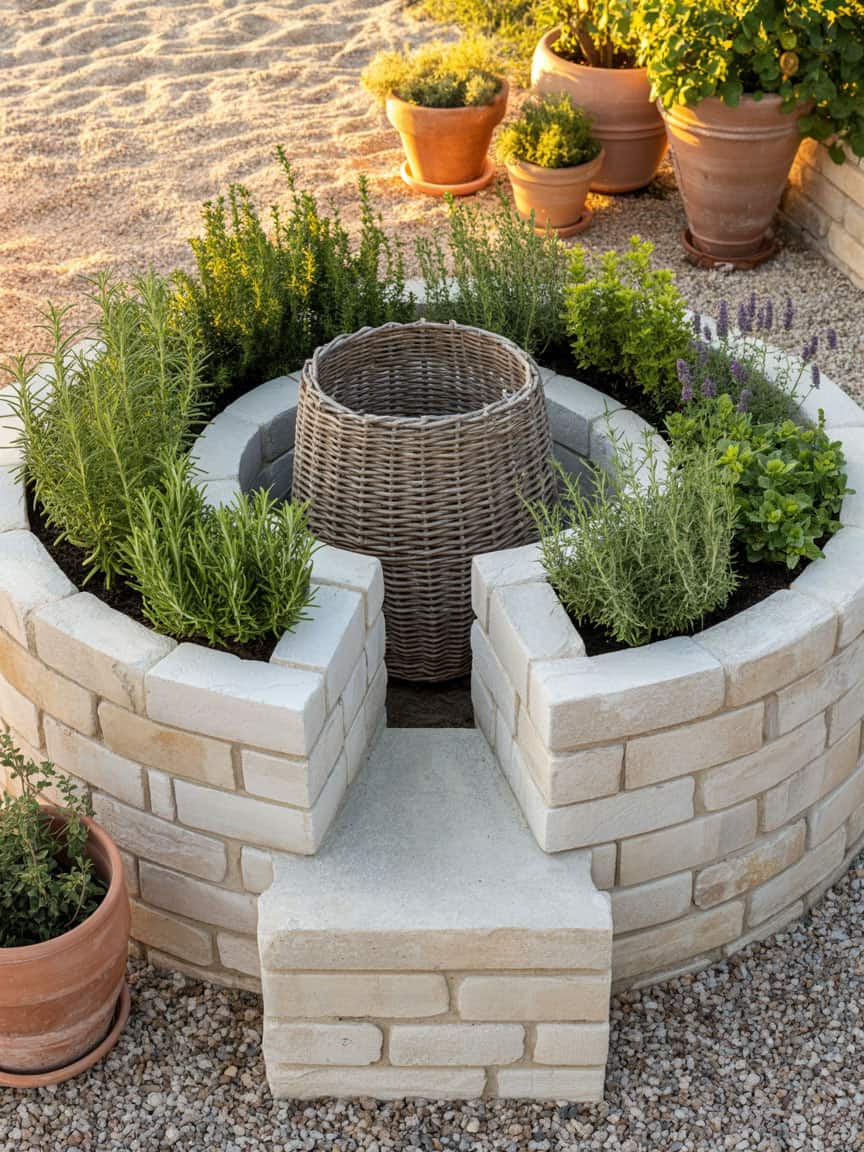
Pale stone, gravel underfoot, and sun loving herbs define this layout. The keyhole herb garden becomes a functional courtyard, designed for regular harvesting and airflow. Rosemary, thyme, oregano, and lavender all benefit from the open spacing.
This design encourages thoughtful placement. Taller herbs sit back from the path, while low growers hug the edges. It is efficient, practical, and deeply tied to how the herbs are actually used in the kitchen.
8. Water-Centered Keyhole Herb Garden With Integrated Pond Feature
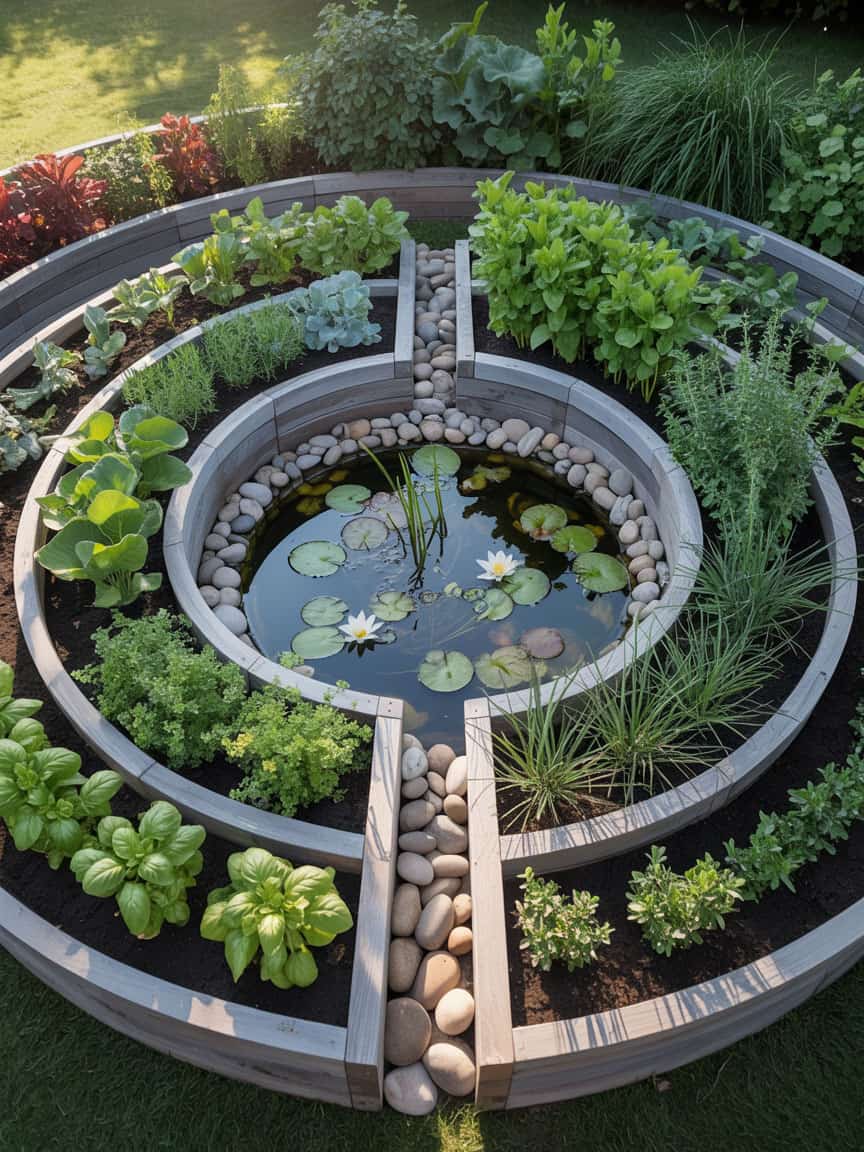
Replacing compost with water changes the energy of the garden entirely. A small pond at the center reflects light, attracts wildlife, and introduces a sense of calm. Herbs frame the water rather than competing with it.
I find this especially appealing in warmer climates. The water moderates temperature and creates a microclimate that benefits nearby plants. It also encourages you to slow down and notice the garden, not just harvest from it.
9. Pollinator-Friendly Keyhole Herb Garden With Central Bird Bath
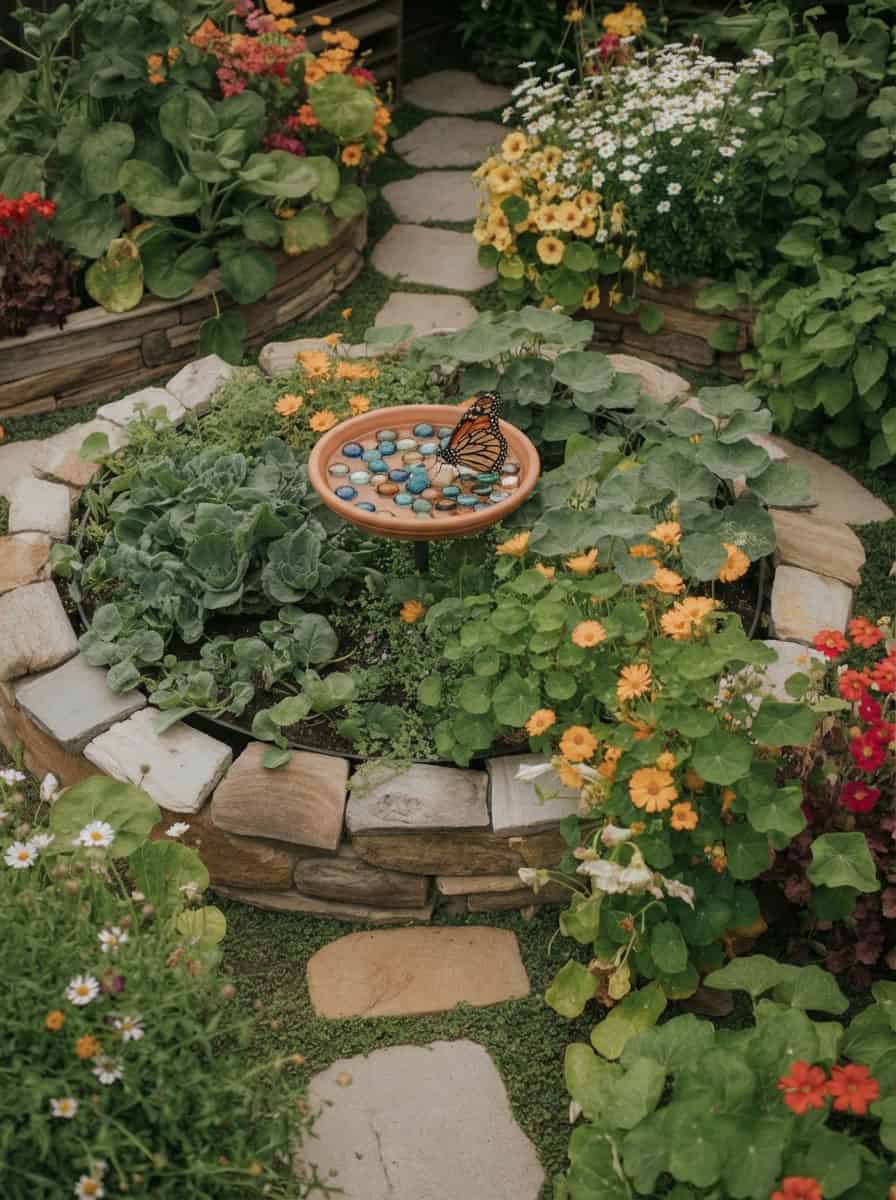
This design prioritizes life and movement. A shallow bird bath at the center invites insects and birds, while flowering herbs and companions fill the space around it. The keyhole shape keeps everything accessible without disturbing visitors.
What I like most is how layered the planting feels. Herbs provide structure, flowers add rhythm, and the water feature supports the entire ecosystem. It is productive without feeling strictly utilitarian.
10. Architectural Stone Keyhole Herb Garden With Sculptural Vertical Feature
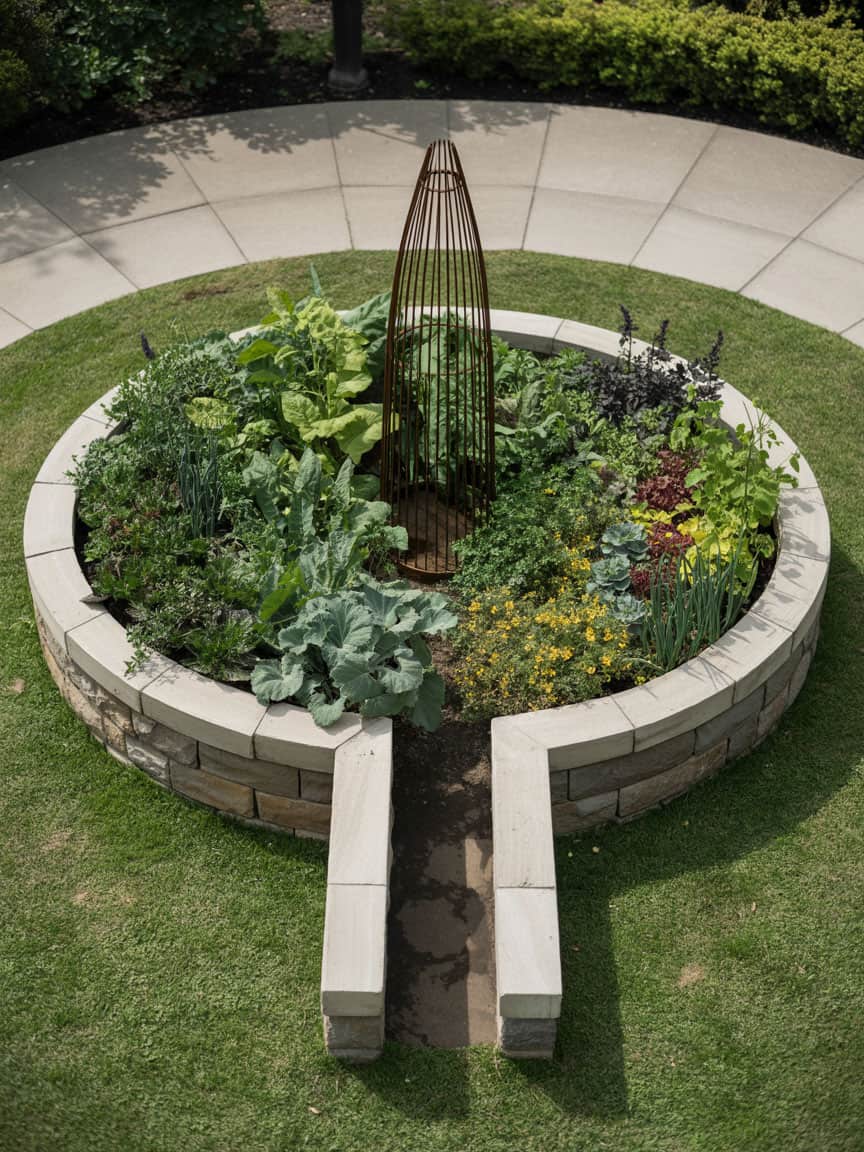
Here, geometry takes center stage. Smooth stone walls form a precise circle, and the vertical feature adds height without clutter. Herbs are planted with intention, leaving space for the structure to breathe.
This keyhole herb garden works best when simplicity is respected. Fewer plant varieties allow texture and form to shine. It feels calm, ordered, and quietly confident.
11. Mosaic Tile Keyhole Herb Garden With Culinary Herbs
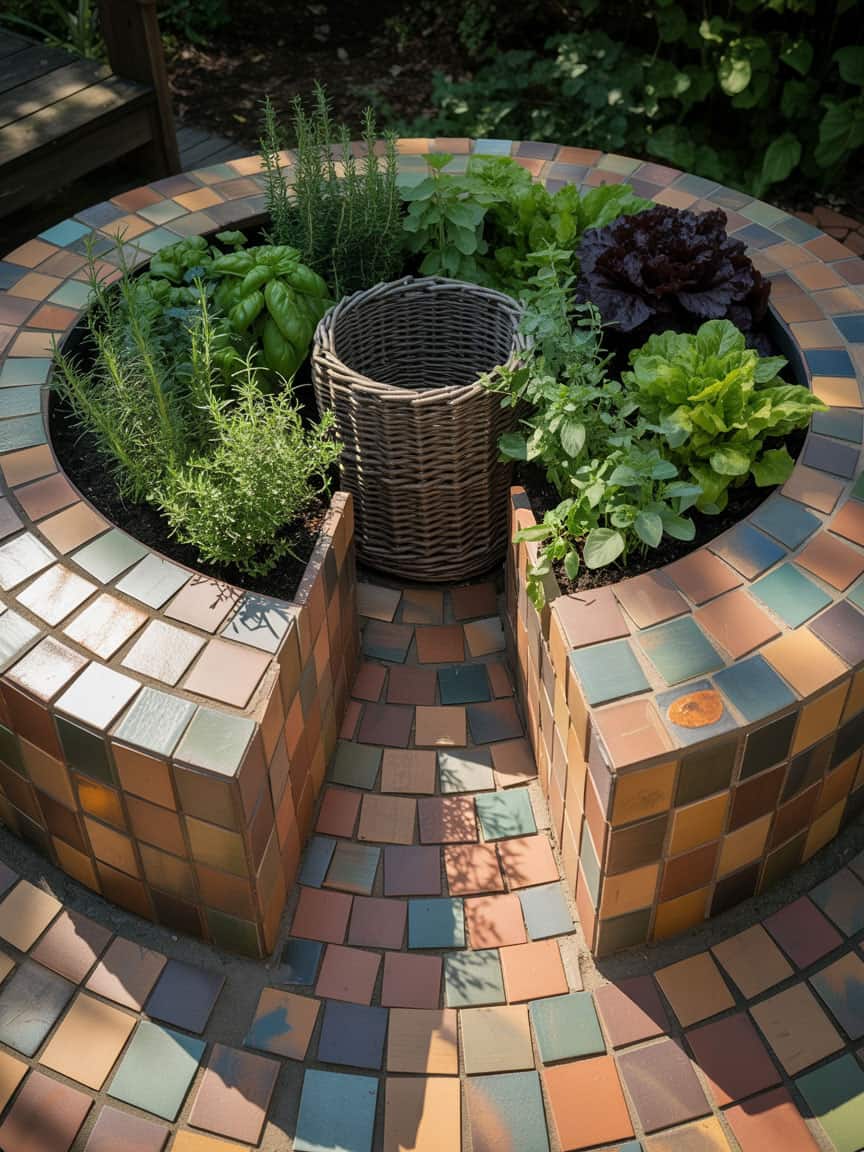
This is where artistry enters the garden. Mosaic tiles line the walls and path, turning the keyhole herb garden into a tactile experience. Herbs remain practical, but the surface details tell a story.
I find this style encourages slower interaction. You notice the patterns underfoot, the way light hits glazed tiles, and how herbs soften the edges. It is functional, but also deeply personal.
12. Compact Wooden Keyhole Herb Garden With Dense Edible Planting
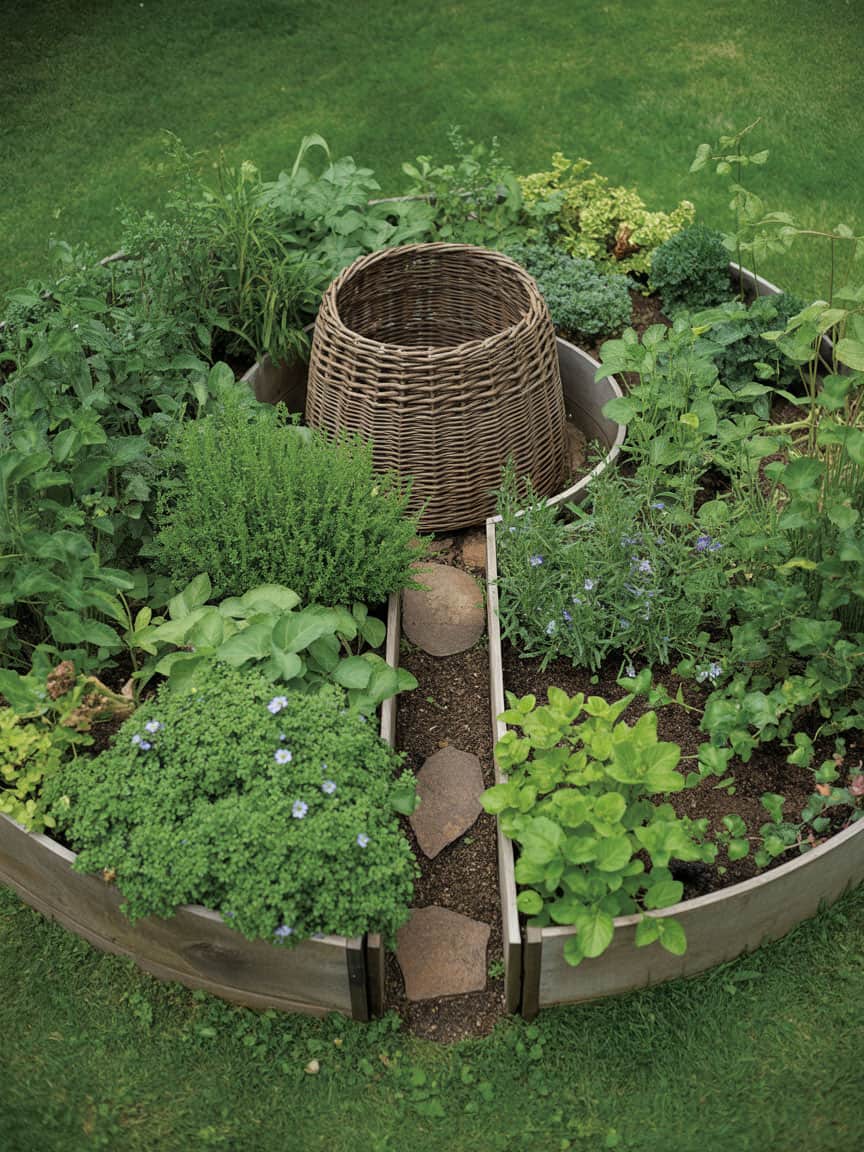
Designed for small spaces, this keyhole herb garden makes every inch count. Curved wooden walls contain dense planting, and the narrow path leads directly to the center compost basket.
What makes this work is vertical thinking. Taller herbs rise at the back, while low growers fill the front. It proves that limited space does not limit variety or yield.
13. Sculptural Wooden Keyhole Herb Garden With Minimalist Center Feature
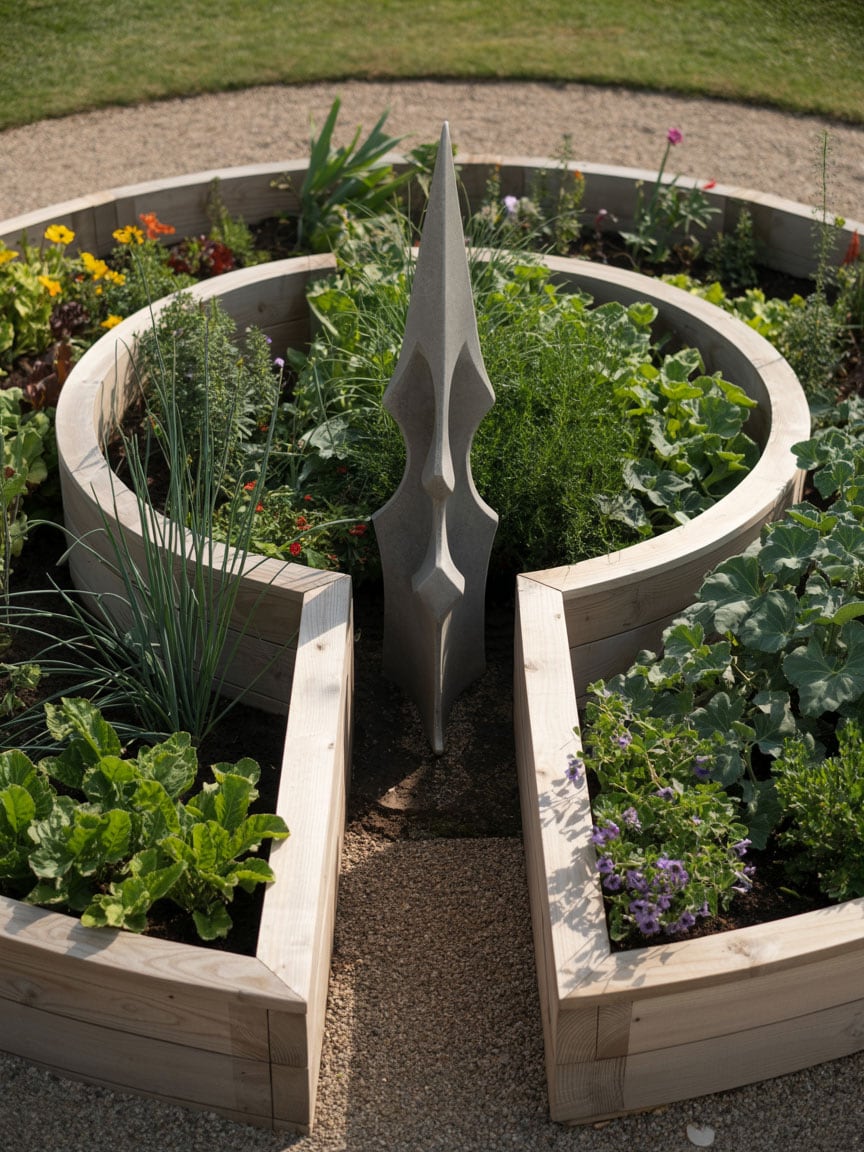
This design leans into negative space. The central feature stands quietly, surrounded by herbs that frame rather than overwhelm it. Plant choices are restrained, and spacing is intentional.
I appreciate how this garden feels deliberate without feeling cold. It invites focus, encouraging you to notice individual plants rather than a mass of growth.
14. Large Stone Keyhole Herb Garden Designed for High-Yield Harvests
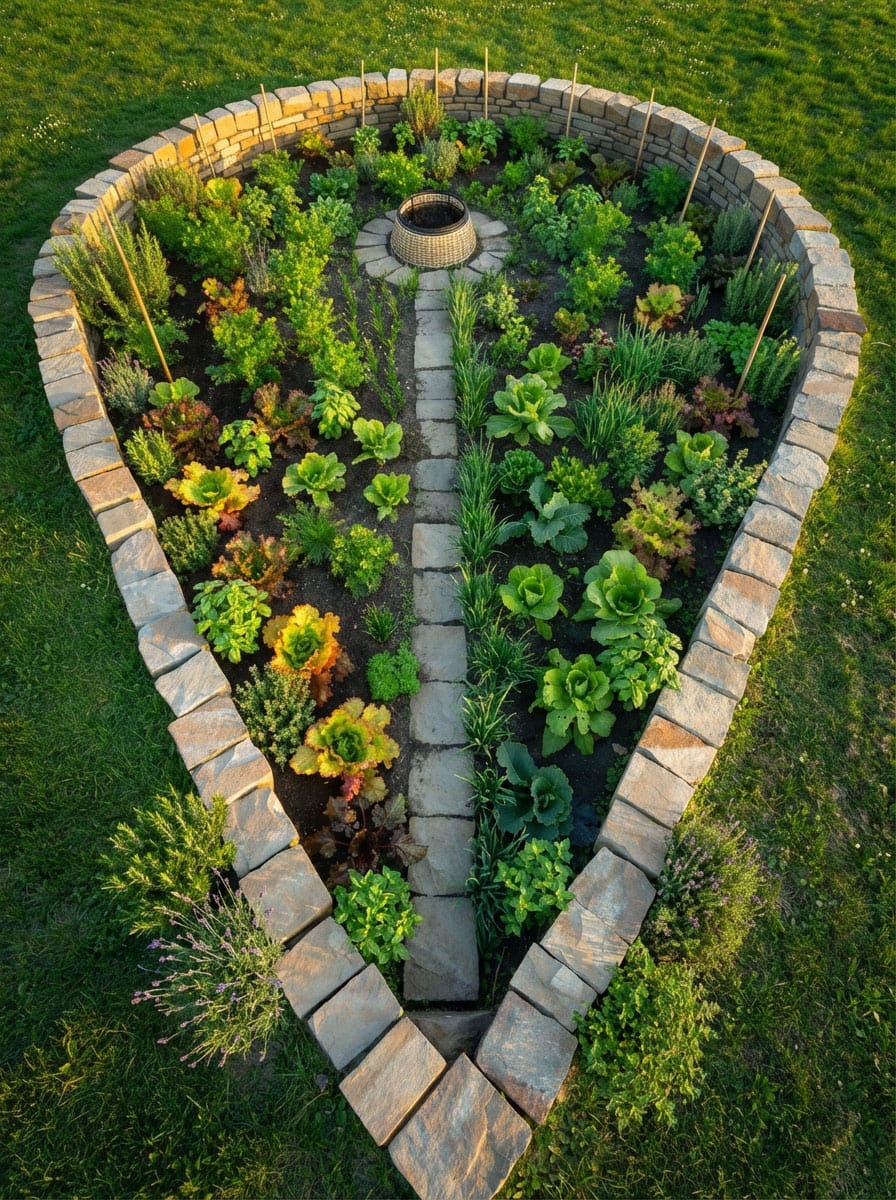
Scale changes how a keyhole herb garden functions. With more space, herbs can be planted in generous groupings, allowing for frequent harvesting without stress. The straight path ensures easy access to the center compost system.
This is the kind of garden I associate with planning and routine. It supports preservation, drying, and regular use, making it ideal for serious herb growers.
15. Traditional Raised Stone Keyhole Herb Garden With Productive Zones
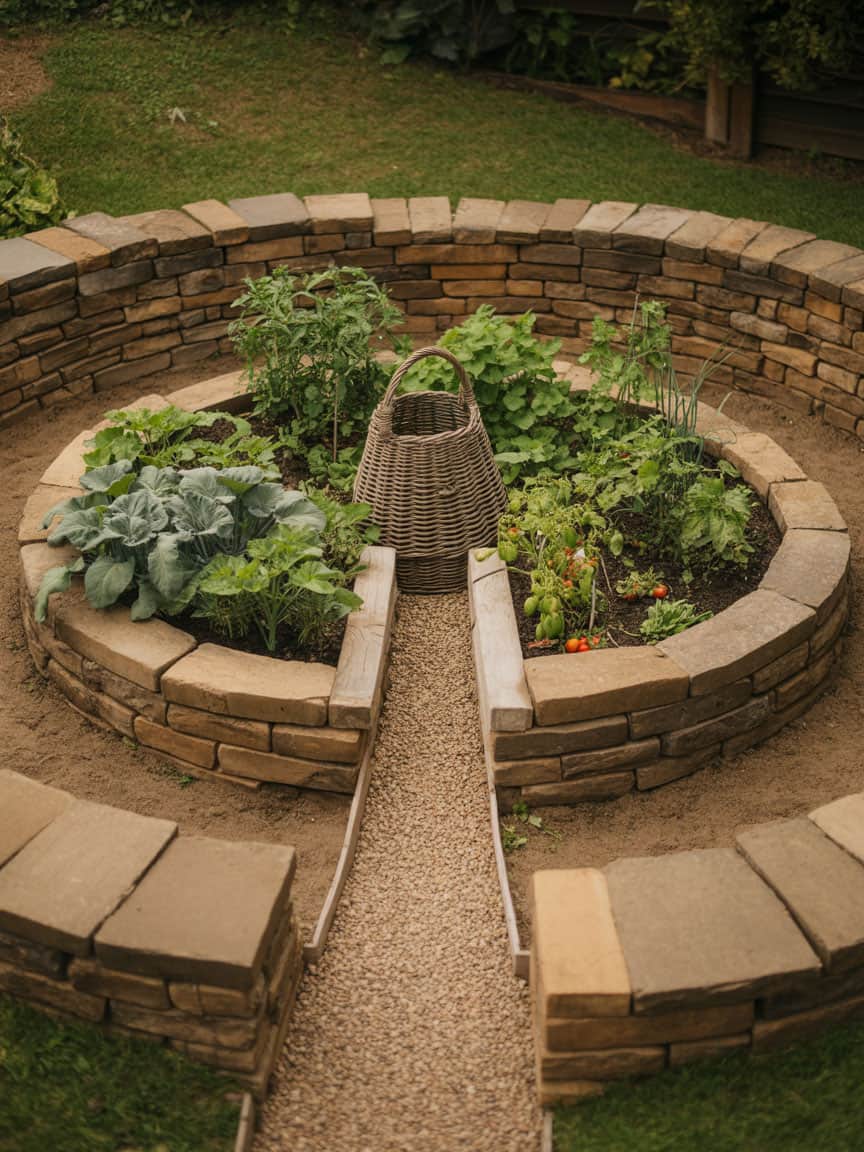
This design strikes a balance between familiarity and efficiency. Raised stone walls provide structure, while planting zones allow flexibility. Herbs rotate easily, adapting to seasonal needs.
I like how approachable this feels. It does not demand a specific style or aesthetic, making it adaptable to many landscapes and gardening habits.
16. Cottage Stone Keyhole Herb Garden With Central Water Fountain
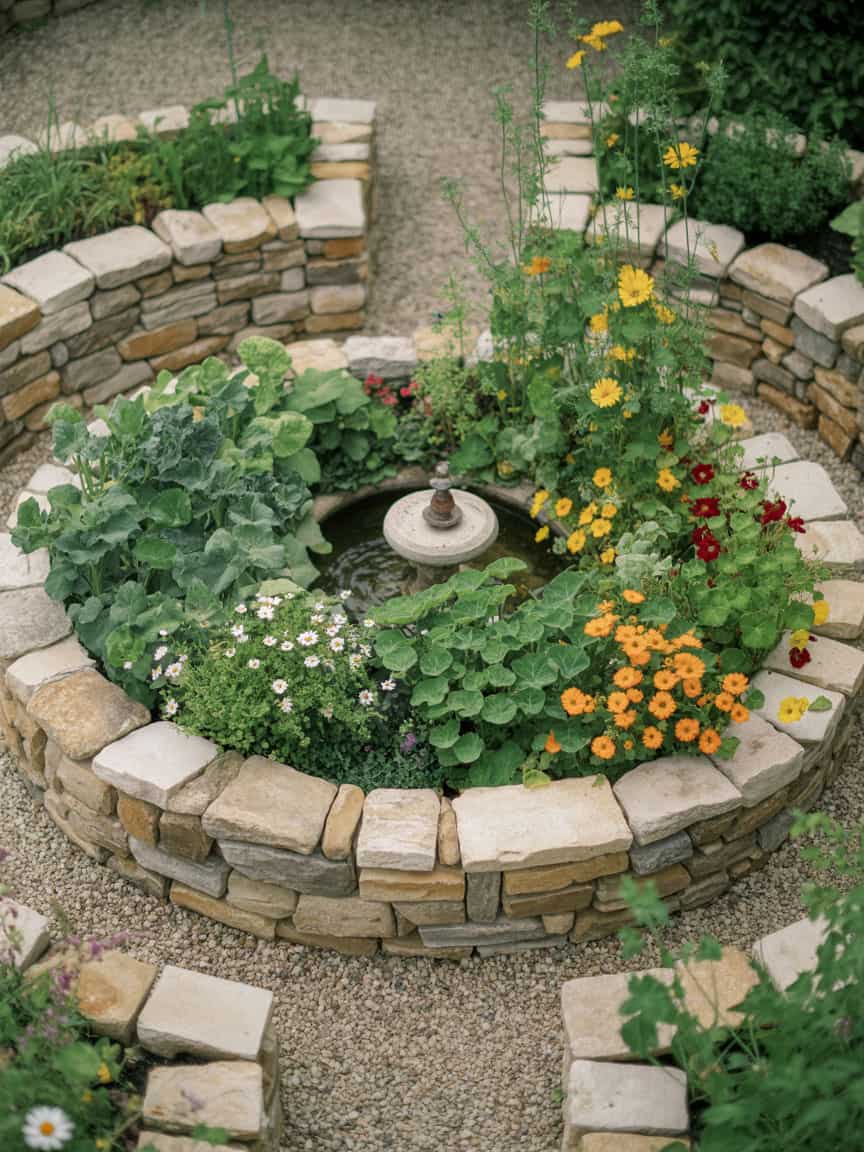
Adding a fountain shifts the garden toward atmosphere. The gentle sound of water changes how the space is used, encouraging lingering rather than quick harvesting.
Herbs here mingle with flowers, softening the stone edges. It feels like a place to pause, harvest a handful of leaves, and stay a little longer.
17. Woodland Log Keyhole Herb Garden With Shade-Loving Plants
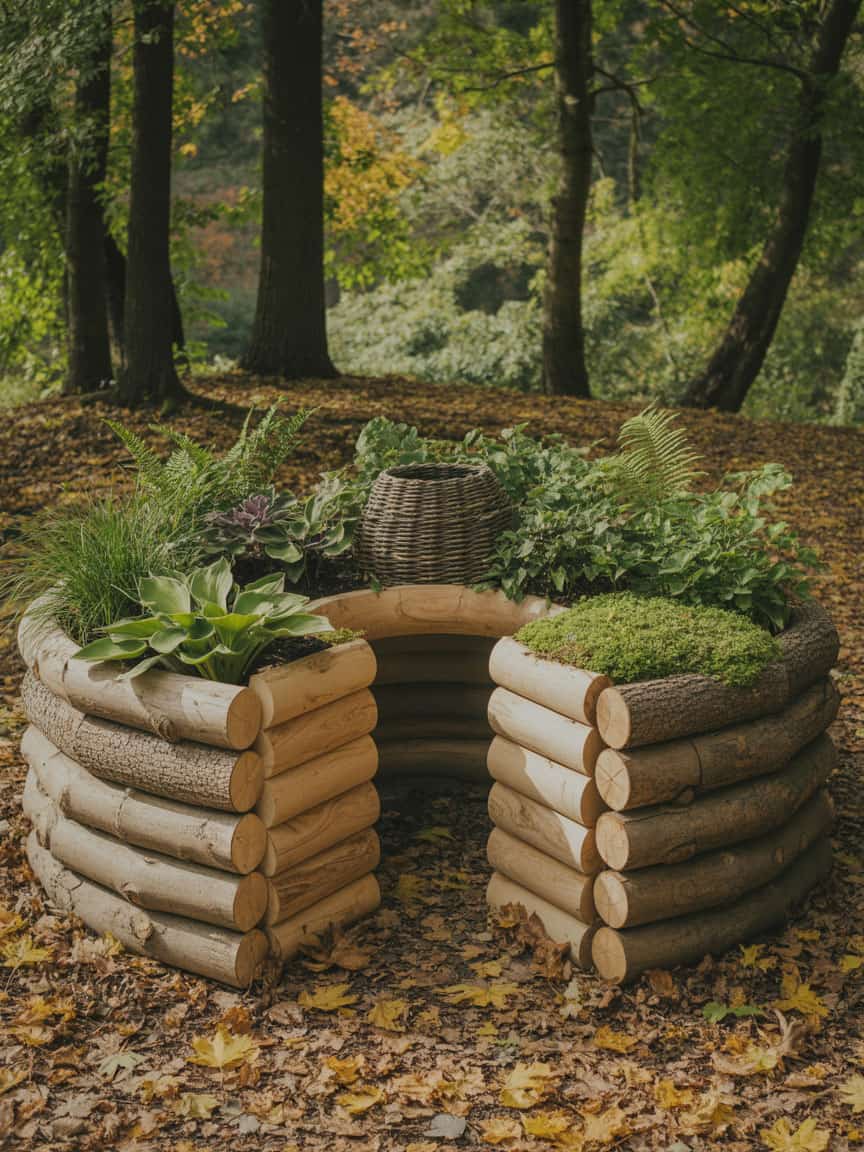
This variation emphasizes texture and depth. Round log walls create a tactile boundary, while shade tolerant herbs fill the interior. Fallen leaves become part of the design rather than debris.
I find this approach especially forgiving. It embraces seasonal change and works with natural cycles rather than against them.
18. Radial Wedge Keyhole Herb Garden With Color-Themed Planting
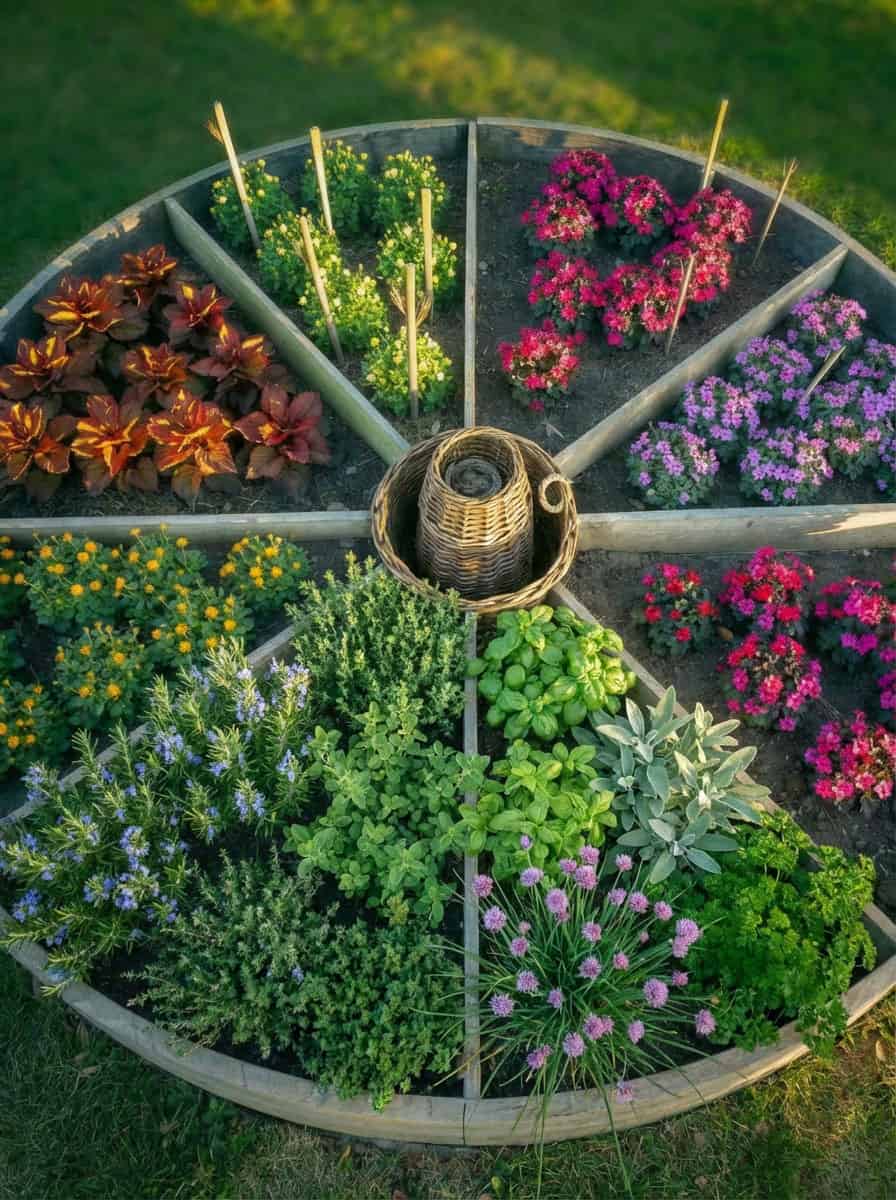
Color becomes the organizing principle here. Each wedge features a distinct palette, making the garden easy to navigate and visually engaging. Herbs are grouped not just by growth habit, but by hue.
This design feels playful and structured at the same time. It is ideal for gardeners who enjoy visual order alongside botanical diversity.
19. Pollinator-Focused Keyhole Herb Garden With Shallow Water Dish
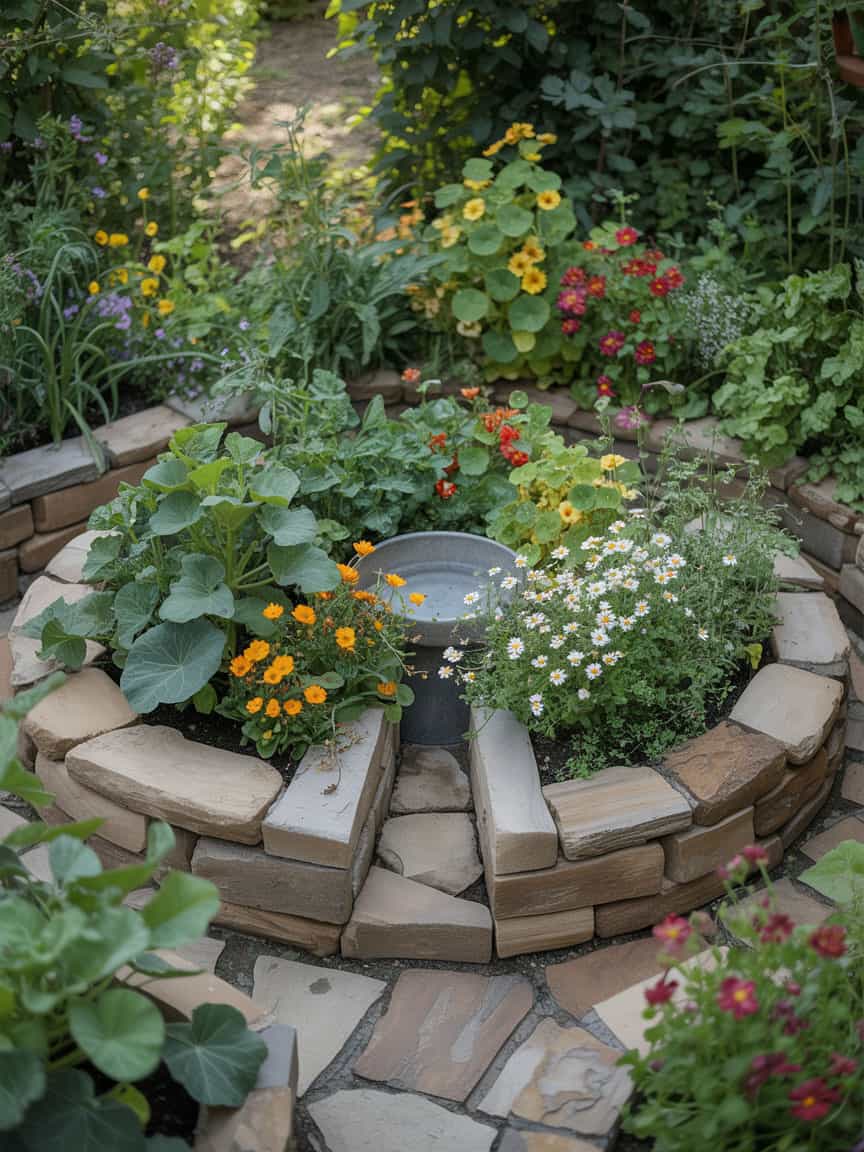
A low water dish at the center invites pollinators while keeping the garden accessible. Herbs and flowers blend together, creating a loose, layered look.
What stands out is balance. Productivity remains important, but it is supported by an ecosystem that benefits the entire garden.
20. Contemporary Multi-Bed Keyhole Herb Garden With Sculptural Centerpiece
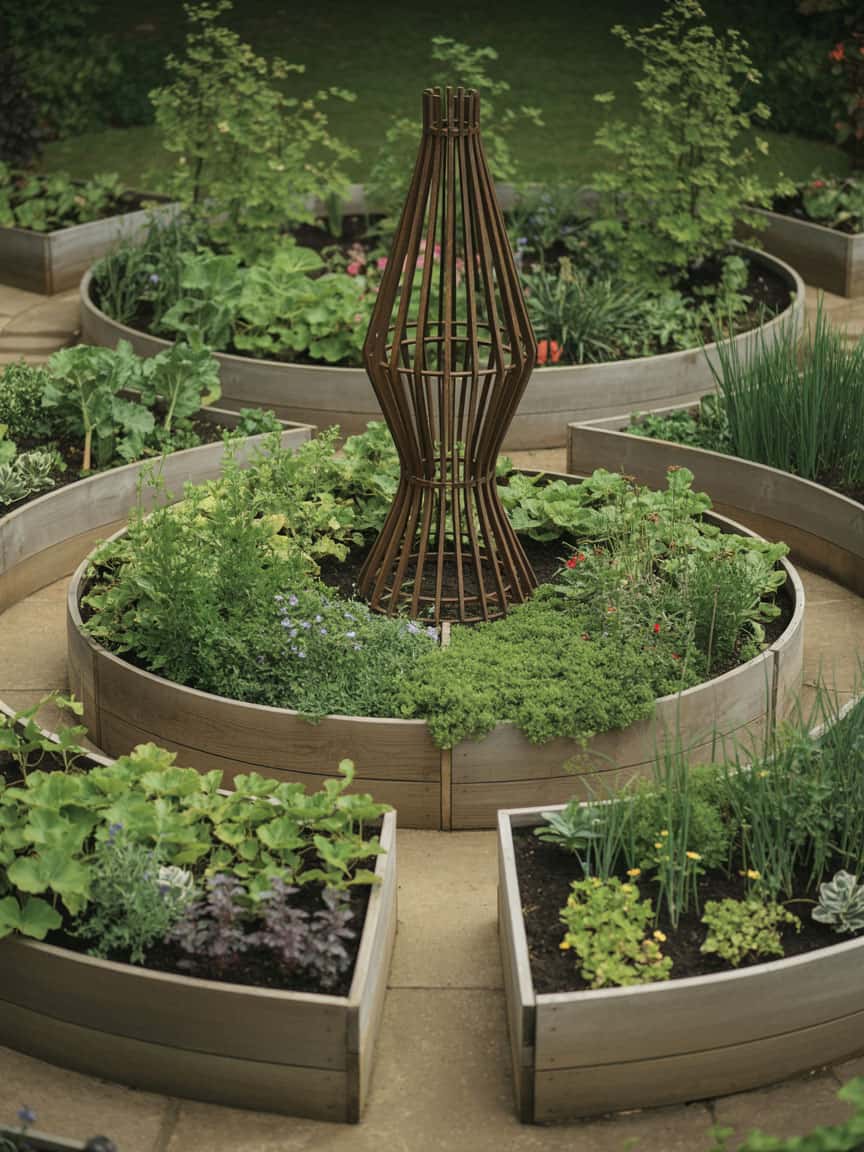
Here, repetition creates cohesion. Multiple circular beds echo the keyhole shape, forming a larger garden system. The sculptural centerpiece ties everything together.
This approach feels intentional and adaptable. You can expand or contract the system without losing clarity, making it ideal for evolving gardens.
21. Water-Lily Keyhole Herb Garden With Edibles and Herbs
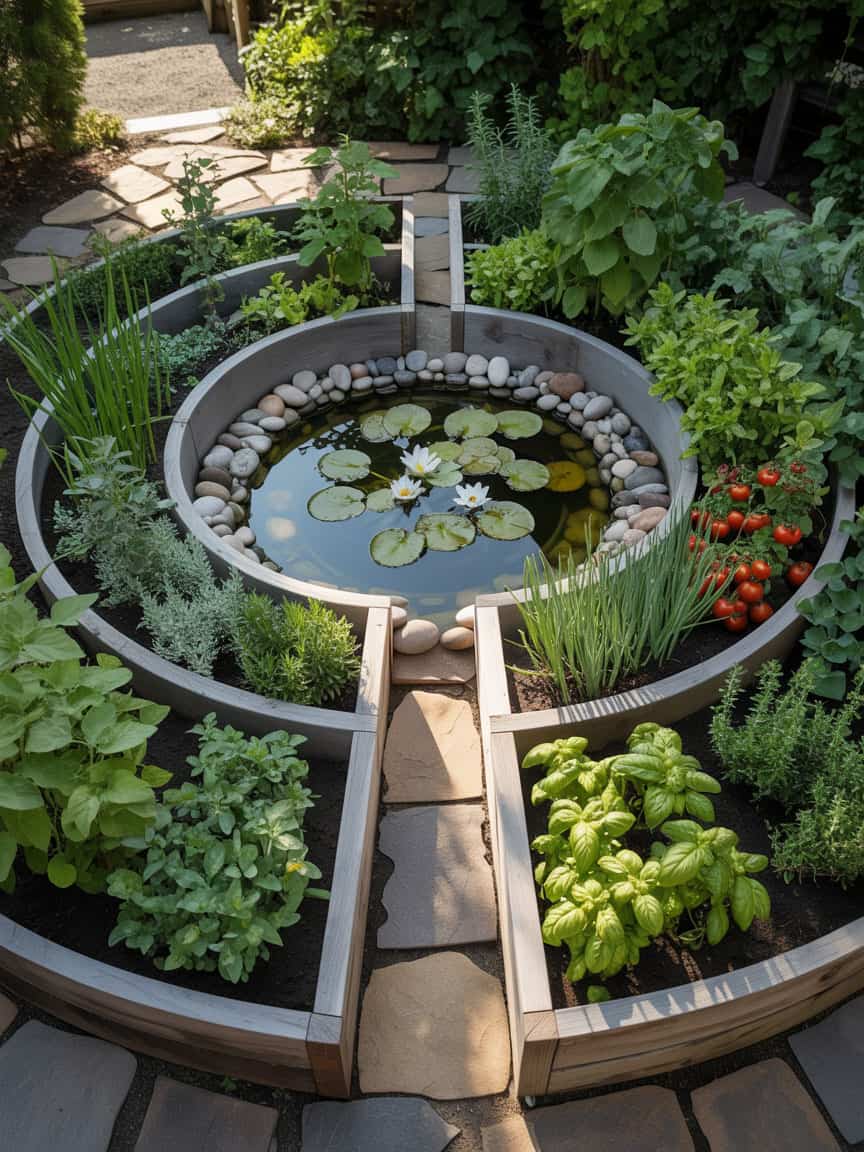
Ending with water brings the ideas full circle. A pond filled with water lilies anchors the space, while herbs and edibles surround it evenly. The keyhole path keeps access clear and defined.
I love how this design blends calm with purpose. It supports harvests, wildlife, and reflection, all within a single, thoughtful layout.
Final Thoughts
What I appreciate most about keyhole herb gardens is their flexibility. They can be bold or subtle, productive or reflective, permanent or evolving. The shape provides a framework, but the expression is entirely personal.
Whether you are working with stone, wood, water, or plants alone, a keyhole herb garden invites you to think about how you move through your space and how you interact with what you grow. Over time, these gardens do more than supply herbs. They become places you return to, season after season, with intention.