


When I plan a cut flower garden, I always start by thinking about stems that can fill a vase reliably and hold their own once harvested. It is one thing to enjoy blooms in the garden, but quite another to grow flowers that last in water, transport well, and add structure to arrangements. Many of the best options are bulbs or corms planted in fall, which set roots in cool soil and are ready to push up strong stems by spring.
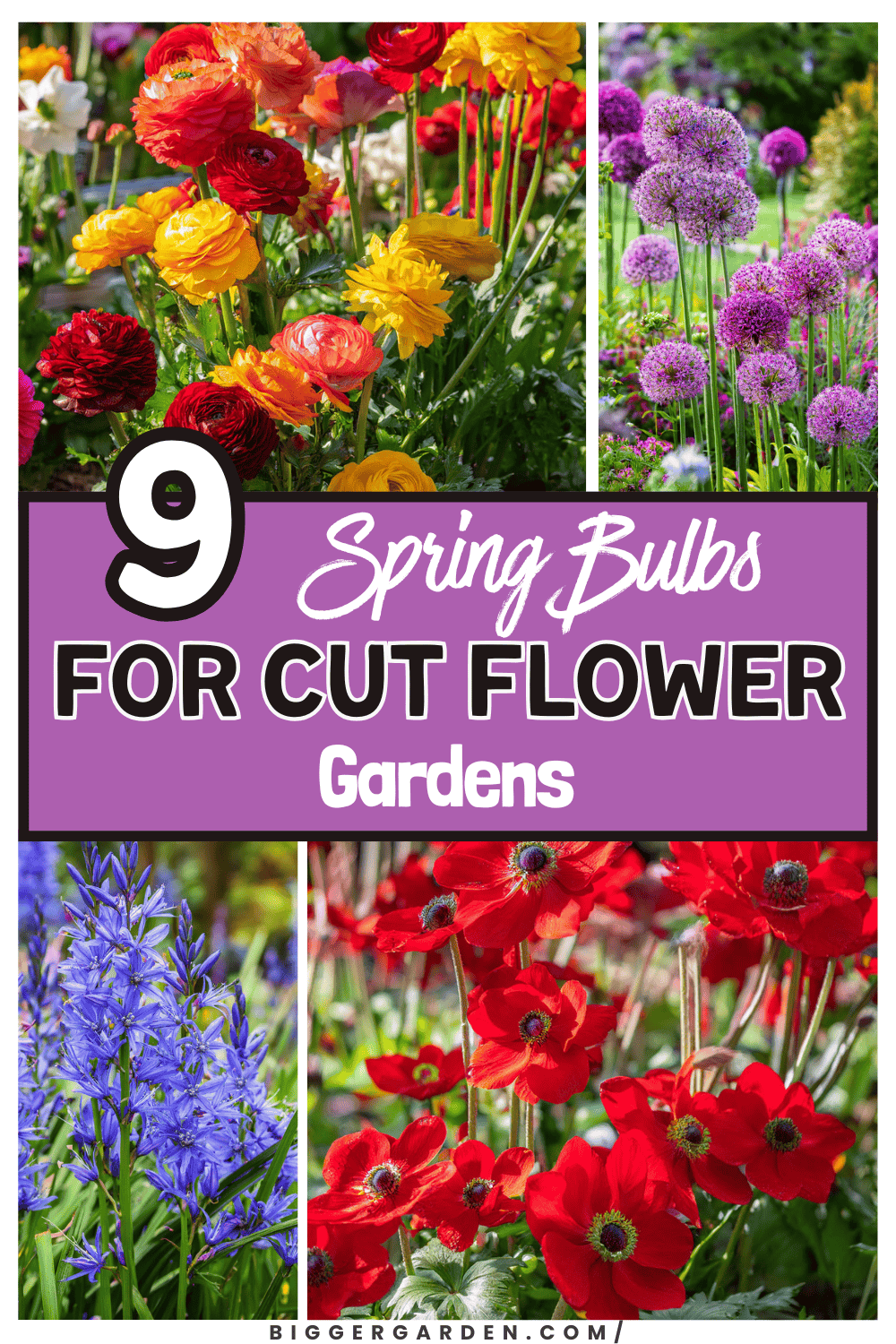
The following list comes from trial and error in my own beds and from observing what commercial cut flower growers trust. Each of these has qualities that make them practical for cutting: straight stems, dependable vase life, and a planting habit that justifies the space.
Quickly Find Spring Garden Cut Flowers
1. Ranunculus (Ranunculus asiaticus)

Ranunculus are among the most productive cut flowers I grow. From a single corm, multiple stems appear, each with densely layered petals that resemble miniature roses. They come in a wide range of colors, from soft pastels to saturated reds and oranges, giving plenty of flexibility in design.
The best stage to cut ranunculus is called the marshmallow stage, when the petals have begun to unfurl but the bloom is not yet fully open. At this point, they can last a week or more indoors. They require careful preparation, including pre-sprouting the corms and protecting them from hard frost, but the returns in usable stems make the extra steps worthwhile.

2. Ornamental Onion (Allium spp.)

Alliums are more than just garden curiosities. For cut use, I focus on large-headed hybrids such as ‘Ambassador’ and ‘Globemaster.’ They produce sturdy stems topped with spherical umbels that serve as structural accents in an arrangement.
I cut alliums when about one third of the florets are open. At that point they continue to expand in water but remain firm and long-lasting. They have a faint onion scent when first cut, but this fades with proper hydration. I have also found that their seed heads can be dried for later use, giving them an additional layer of utility.
3. Tulip (Tulipa gesneriana)
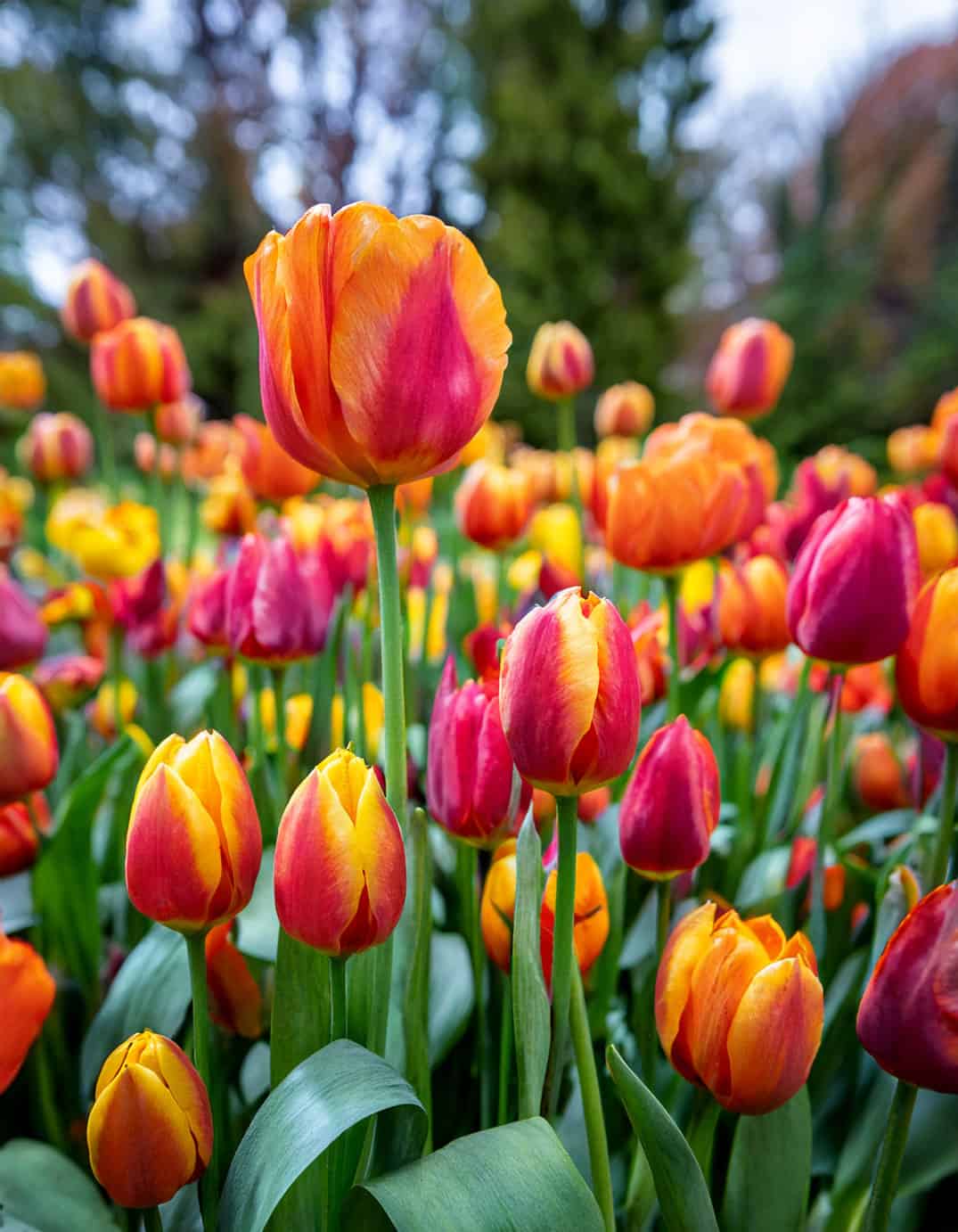
When I first started experimenting with cut flowers, tulips quickly proved their worth. The long stems are easy to harvest and condition, and the buds can be cut before they fully open, extending their time indoors. Not all tulips are created equal though. French tulips and single-late types give taller stems, while Triumph varieties such as ‘Strong Gold’ provide durability and predictable timing.
Tulips continue to grow after cutting, so I usually place them a little deeper in the vase to account for the elongation. A cool overnight rest helps them rehydrate and straighten if they arrive floppy. They also pair well with other early bulbs, making them a flexible backbone for spring arrangements.
4. Camassia (Camassia leichtlinii)

Camassia is not often listed in cut flower guides, yet it provides useful stems at a time when the spring bulb season is fading. The spikes of star-like florets open gradually, adding movement and a lighter texture compared to the bold tulips or lilies.
Unlike many other bulbs, camassia tolerates heavier soil and even damper spots. I harvest when about one third of the florets are open, which gives a good balance of color and longevity. Their soft blues and whites mix well with both early and later flowers, making them a versatile but underused option in cut gardens.
5. Anemone (Anemone coronaria)

Anemones provide a bright flush of color from compact plants. I start the corms early under protection, either in a low tunnel or a cold frame, so they can deliver blooms when little else is available. The black-centered varieties such as the ‘Mistral Plus’ series are particularly striking in arrangements.
I harvest anemones when the petals have just begun to unfold, known as the soft or saucer stage. They are surprisingly long-lasting in water for their size. Anemones prefer cool weather and may slow down as the heat builds, but during spring they can produce abundant stems from a small planting.
6. Dutch Iris (Iris × hollandica)

Dutch iris bridges a useful gap between tulips and the taller summer bulbs. The flowers have slender, upright petals that add vertical movement to a bouquet. They are inexpensive to plant, which means I can afford to set aside a bed purely for cutting without worrying about the cost of bulbs.
I harvest Dutch iris just as the buds begin to show color. At that stage they transport well and open in water indoors. The blue selections such as ‘Blue Magic’ are classic, but I also find the white and yellow types useful for balancing brighter arrangements. They are straightforward and do not demand much more than well-drained soil and a sunny site.
7. Foxtail Lily (Eremurus spp.)

Foxtail lilies are not as commonly grown, but they have unmatched scale in a cutting garden. Their tall spires of star-shaped blooms stand out in arrangements where height is needed. I plant crowns such as Eremurus robustus or hybrids sold as Eremurus × isabellinus, always on a bed of sand or grit to prevent rot.
Harvesting is best when the lower portion of florets begins to open. They continue to open upward on the stem indoors, providing a long window of use. Because they require excellent drainage, I consider them a specialty bulb, but one that is worth the space if you have a sandy bed available.

Daffodils are among the earliest cuts available, and they come with the added benefit of fragrance in certain cultivars. I lean on tazetta and jonquilla groups rather than just the standard trumpets. Varieties like ‘Avalanche’ or ‘Geranium’ produce multiple florets per stem, which increases their impact in a bouquet.
A practical detail with daffodils is their sap. When cut, they release a latex that shortens the life of other flowers if mixed immediately. I condition them in a separate container for six to eight hours before arranging. Once the stems seal, they can be combined without issue. This step may seem like an extra chore, but it makes them a dependable early-season crop for cutting.
9. Lily (Lilium orientalis and hybrids)
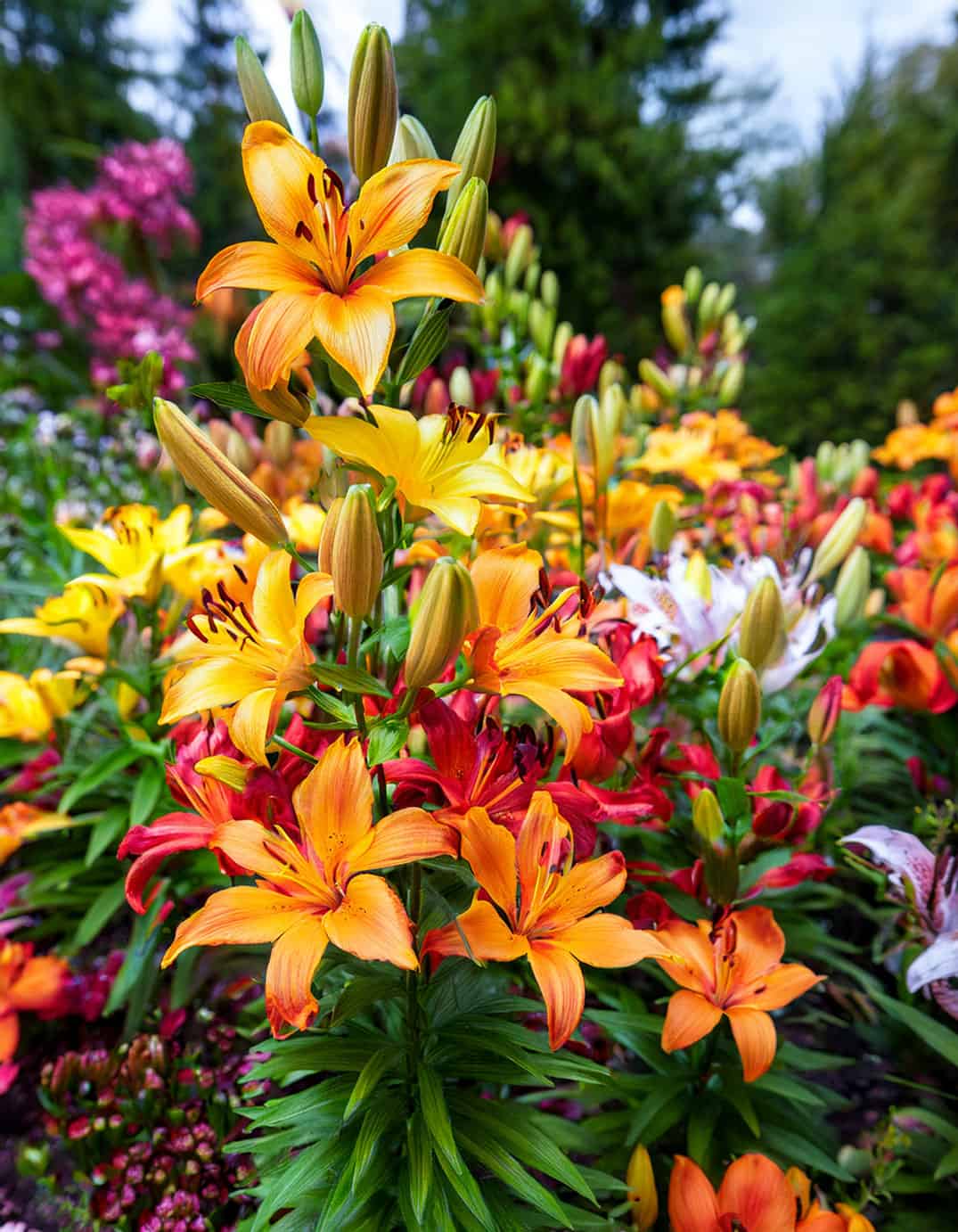
Lilies deliver premium stems once summer approaches. I value them for their longevity in water and their strong, upright stems. Oriental types like ‘Casablanca’ and OT hybrids such as ‘Conca d’Or’ produce large, scented blooms, while still holding a clean vertical line that is easy to design around.
When cutting lilies, I remove the anthers before pollen develops. This reduces staining and also improves vase life. The bulbs are perennial and can return for several years if planted deeply and mulched, though in a cut flower context I often treat them as a semi-annual investment. Their consistent performance makes them well worth including in a cutting plan.
Final Thoughts
Planning a cut flower garden around bulbs allows me to stagger the harvest window from early spring through summer. Ranunculus and anemone offer abundant early stems, tulips provide the classic mid-spring flush, and alliums and camassia carry the garden into early summer. Dutch iris and narcissus provide reliability, while foxtail lilies and oriental lilies add scale and presence later in the season.
By selecting bulbs with cutting qualities in mind, I can harvest flowers that hold well in water and provide consistent stems. The diversity of shapes, sizes, and bloom times ensures that arrangements remain varied and fresh throughout the season. With careful planting in fall and basic conditioning steps at harvest, these nine bulbs form a reliable foundation for spring cut flower production.