


When I first started growing flowers to cut, I thought the secret was simply choosing the right varieties. Over time, I realized the real difference between a garden that looks nice and one that produces consistently comes down to layout. How flowers are grouped, accessed, supported, and replaced matters just as much as what you plant.
These seven cut flower garden layouts are ideas I came to appreciate only after growing, cutting, and replanting season after season. They are not about making the garden feel rigid or industrial. They are about working with time, space, and your own energy so the garden gives back without constant friction.
Each layout below represents a different way of thinking about productivity, harvest flow, and long-term rhythm.
Quickly Find Cut Flower Layout Tips:
1. Succession Block System (High-Output Layout)
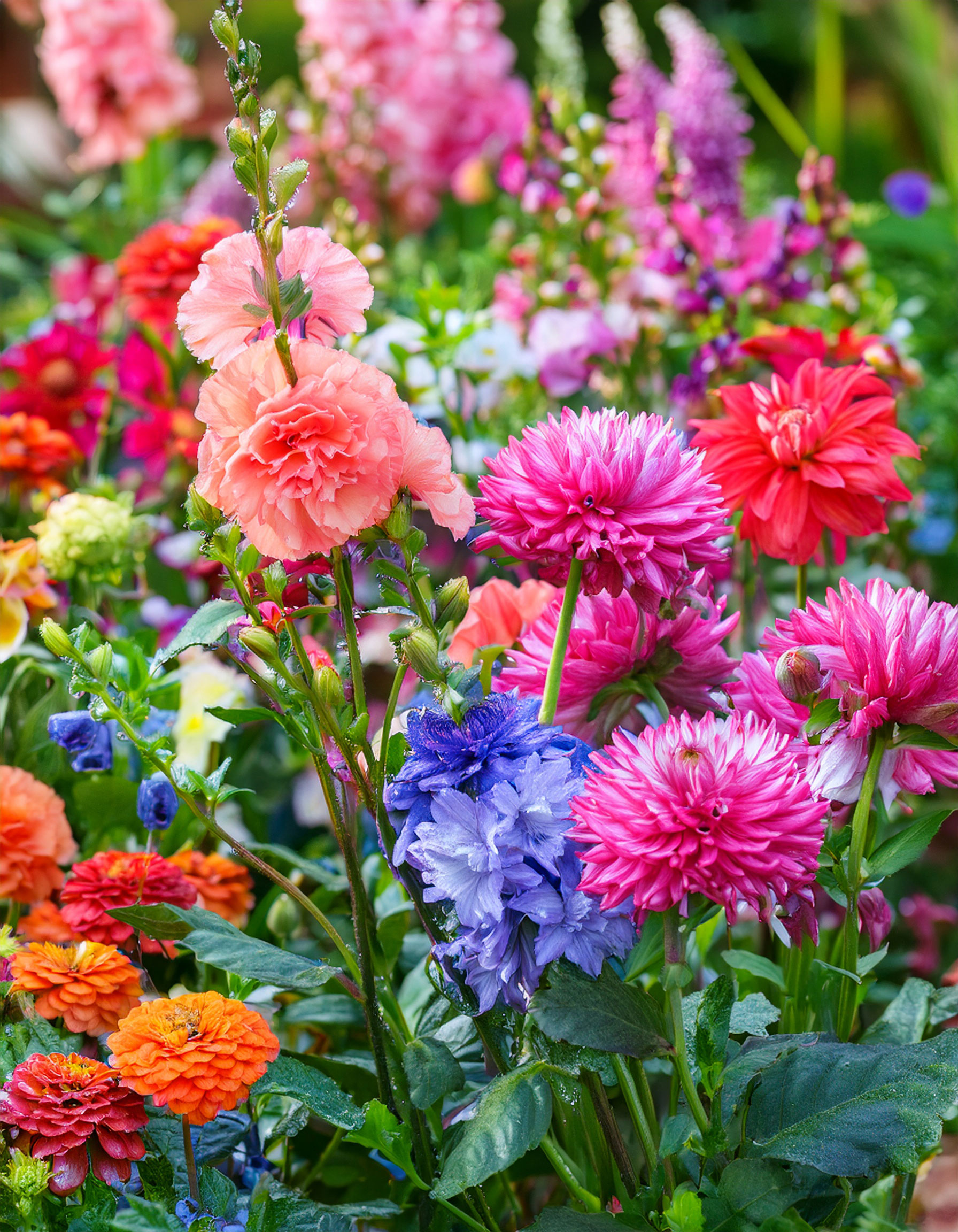
The first time I truly understood succession planting, it changed how I saw the entire garden. Instead of thinking in terms of individual flowers, I started thinking in terms of beds that had a job to do across the whole season. This layout is the backbone of a productive cut flower garden because it treats space as something that evolves rather than something that stays fixed.

In this system, the garden is divided into identical beds or blocks. Each bed is planted on a schedule instead of all at once. Early, mid, and late-season crops rotate through the same space, which keeps the garden in motion. One bed might begin with snapdragons in spring, transition into zinnias once the weather warms, and finish with mums as fall approaches. Another bed might follow a completely different sequence while still respecting the same timing logic.
Cheat Sheet #1 – Succession Blooming
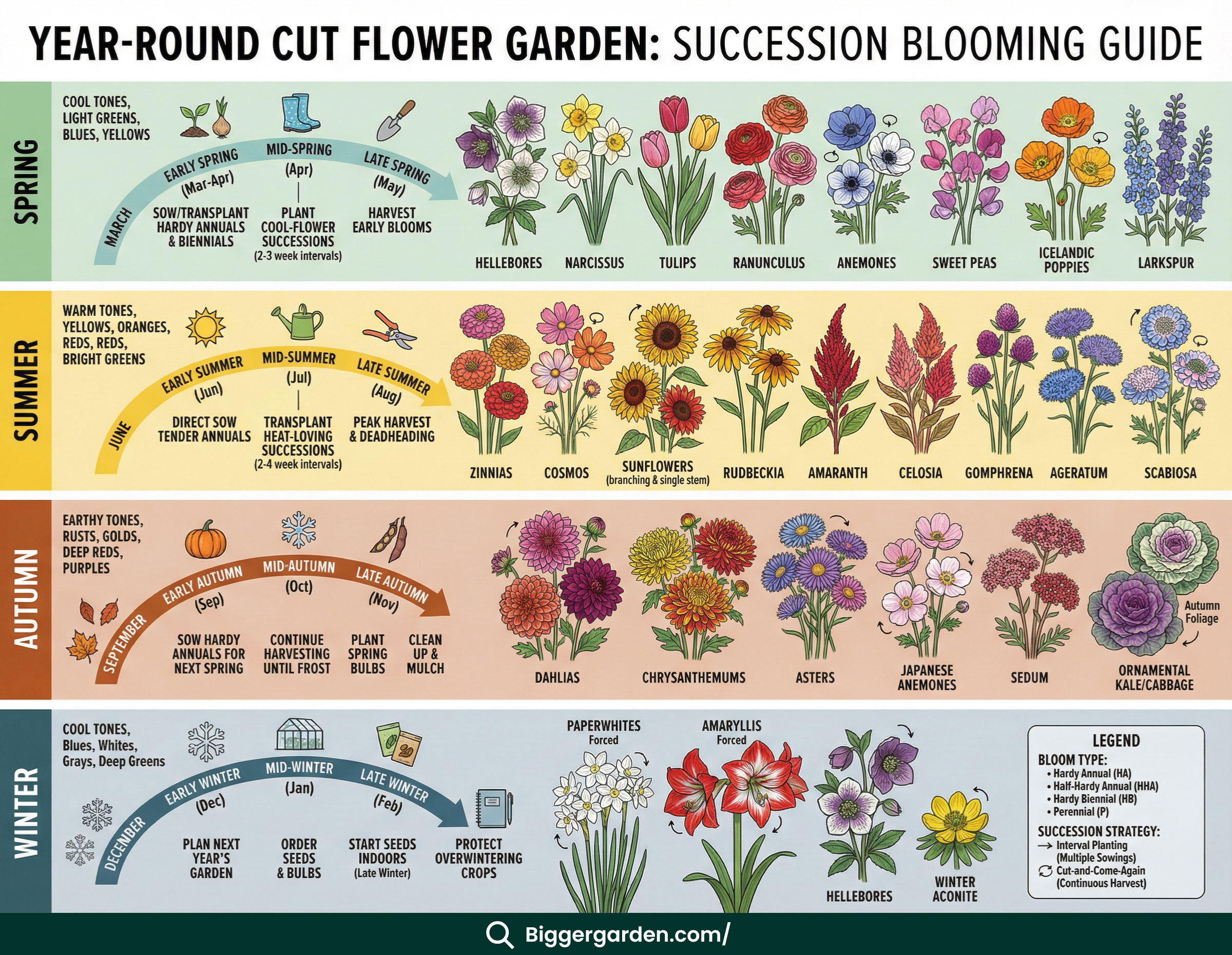
What makes this layout feel advanced is the planning it demands. You need to know when a crop will finish, how long the next one needs, and how quickly you can turn a bed over. The payoff is steady harvests without gaps. Instead of a big flush followed by weeks of nothing, the garden stays useful. Flowers like zinnias, sunflowers, cosmos, celosia, basil, and snapdragons all thrive in this system because they respond well to being part of a larger schedule rather than a one-off planting.
2. Focal–Filler–Foliage Grid

This layout came together for me the moment I realized how often I walked the entire garden just to make a single bouquet. I would cut a focal flower in one area, hunt for fillers somewhere else, then circle back for foliage. The focal–filler–foliage grid solves that problem by designing the garden around the act of bouquet making.
Instead of long rows, the garden is divided into repeating grids. Each grid contains three distinct sections. One for focal flowers that anchor arrangements, one for lighter filler blooms, and one for foliage. These sections are planted with intention so the scale, texture, and color of the plants work together naturally.
What I appreciate most about this layout is how contained it feels. I can cut an entire bouquet without leaving a small zone. Stem lengths stay consistent because plants in each grid are grown and cut under similar conditions. Color palettes remain controlled, which matters if you sell bouquets or simply want them to feel cohesive. Dahlias work beautifully as focal flowers in this layout, paired with fillers like ammi or feverfew and foliage such as basil or eucalyptus depending on climate.
3. Tall-Crop Spine with Short Crop Wings

Some gardens struggle not because of plant choice, but because of airflow and structure. I learned this the hard way with tall flowers that flopped, leaned, or mildewed simply because they were crowded or poorly positioned. The tall-crop spine layout addresses that issue directly.
In this design, one central bed runs through the garden and is dedicated to tall crops. Shorter crops are planted on both sides like wings. Paths run lengthwise along the beds, making it easy to access plants without brushing against stems. The visual simplicity of this layout is deceptive. It quietly improves plant health by allowing air to move freely and light to reach where it needs to.
This layout excels when you grow flowers that need height and support. Sunflowers, amaranth, foxglove, and tall cosmos benefit from being grouped together. Shorter wing crops like scabiosa, gomphrena, statice, and sweet peas fill out the space without competing. Over time, I noticed straighter stems, fewer broken plants, and easier netting installation simply because the garden was organized around plant structure instead of aesthetics alone.
4. Netting-Optimized Production Beds
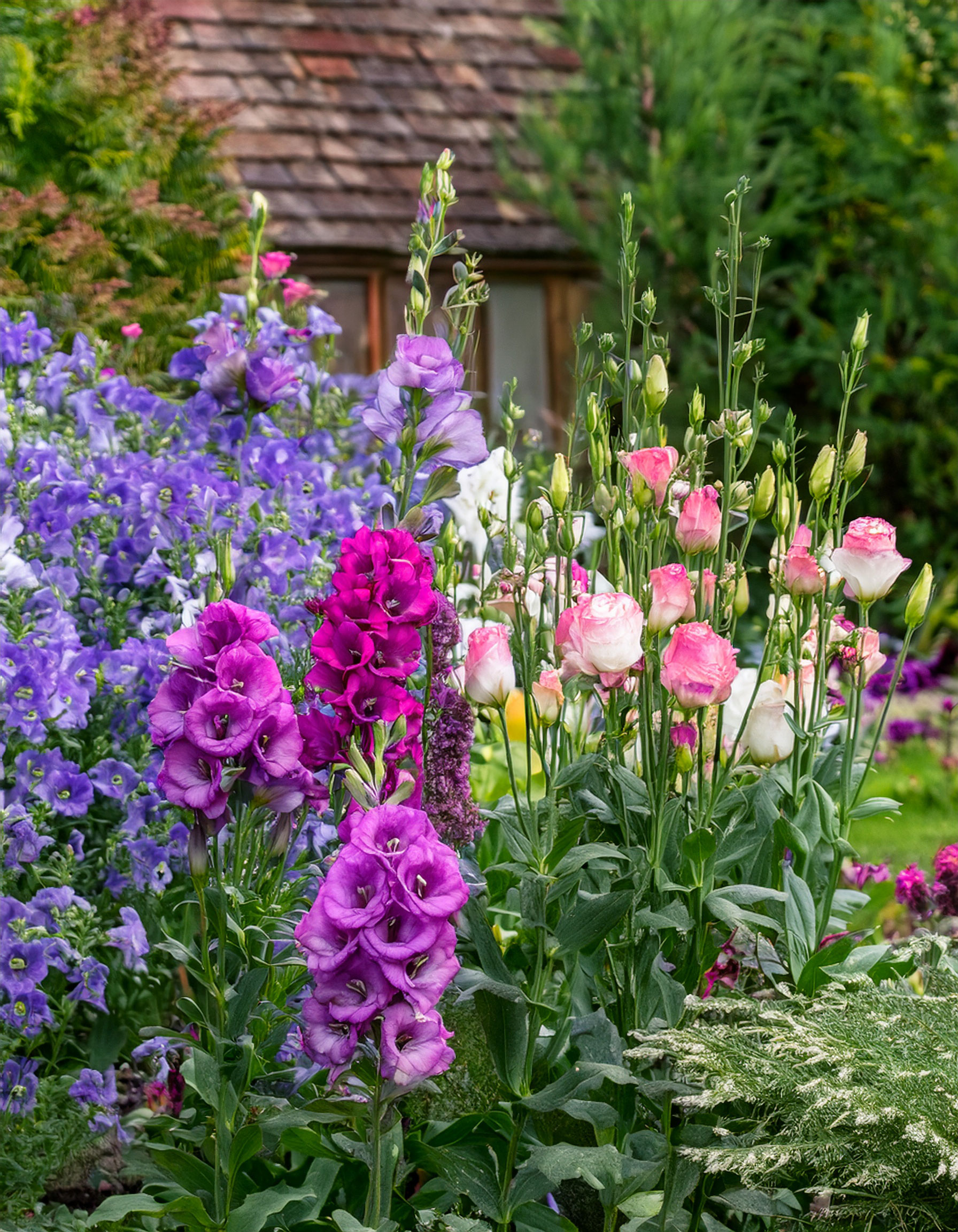
There is a point where a cut flower garden starts to feel less like a backyard project and more like a small-scale production space. For me, that shift happened when I committed to designing beds around support netting instead of trying to fit netting into existing beds.
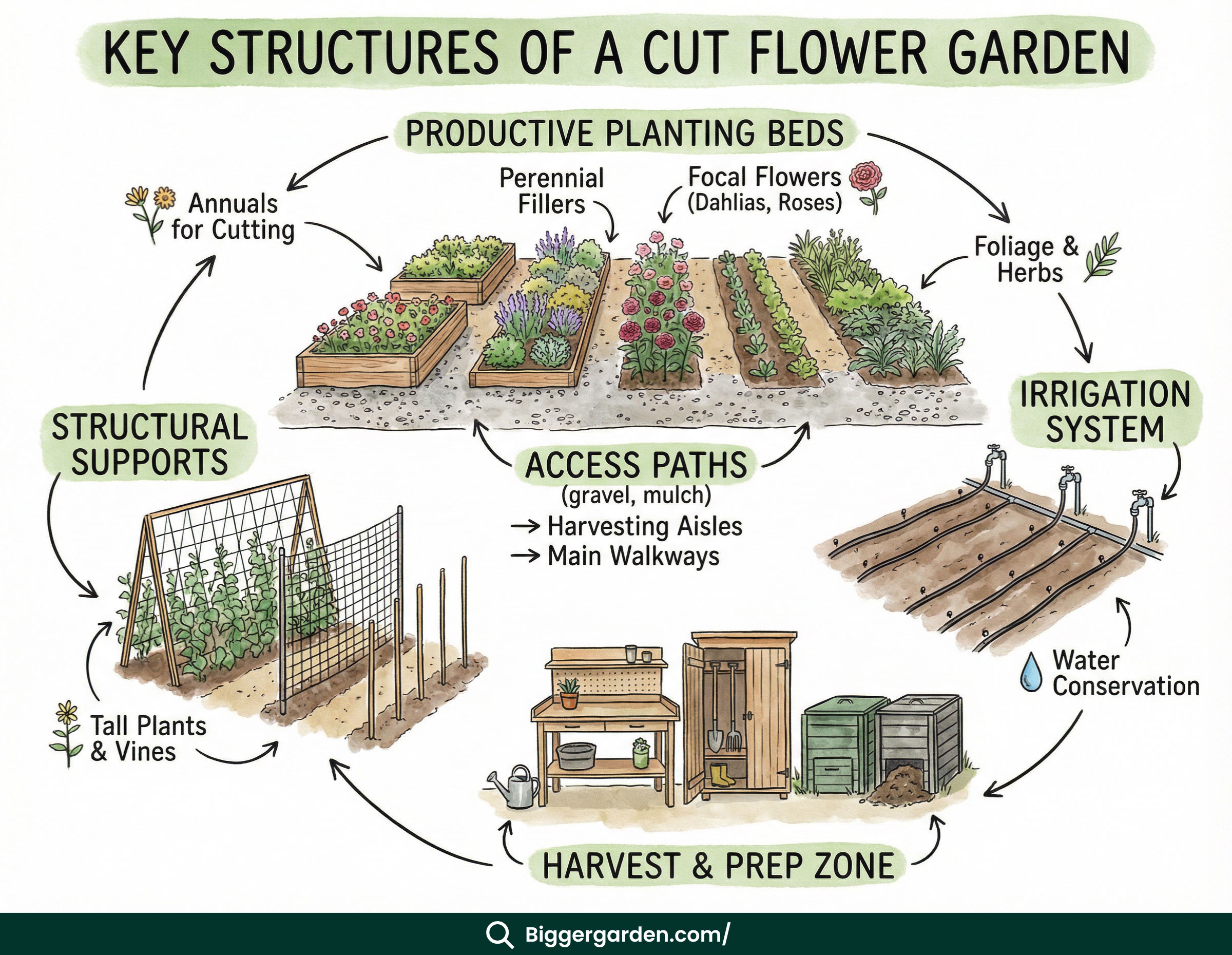
In this layout, beds are sized specifically to match horizontal netting dimensions. Netting is installed early, before plants need it, and flowers grow directly through the grid. This creates quiet discipline in the garden. Plants are guided upward naturally, stems stay straight, and heavy blooms are supported long before they become a problem.
What sets this layout apart is consistency. When every bed follows the same logic, tasks like netting, irrigation, and harvesting become repeatable. Storm damage drops dramatically, and stem quality improves in a way that is hard to replicate otherwise. Snapdragons, lisianthus, dahlias, and yarrow are especially well suited to this system. It requires commitment upfront, but once in place, it removes a surprising amount of ongoing effort.
5. Color-Cohort Production Zones

Color can quietly complicate a cut flower garden if it is not managed. I used to plant by variety, only to realize later that I was fighting my own color chaos when it came time to arrange. Color-cohort production zones flip that problem around by letting color lead the layout.
In this system, entire beds or rows are dedicated to a single color family. Bloom times are intentionally overlapped so that when one plant fades, another in the same palette takes its place. Warm and cool tones are kept separate, which prevents clashing and simplifies harvesting decisions.
Cheat Sheet #2 – Color Coordination
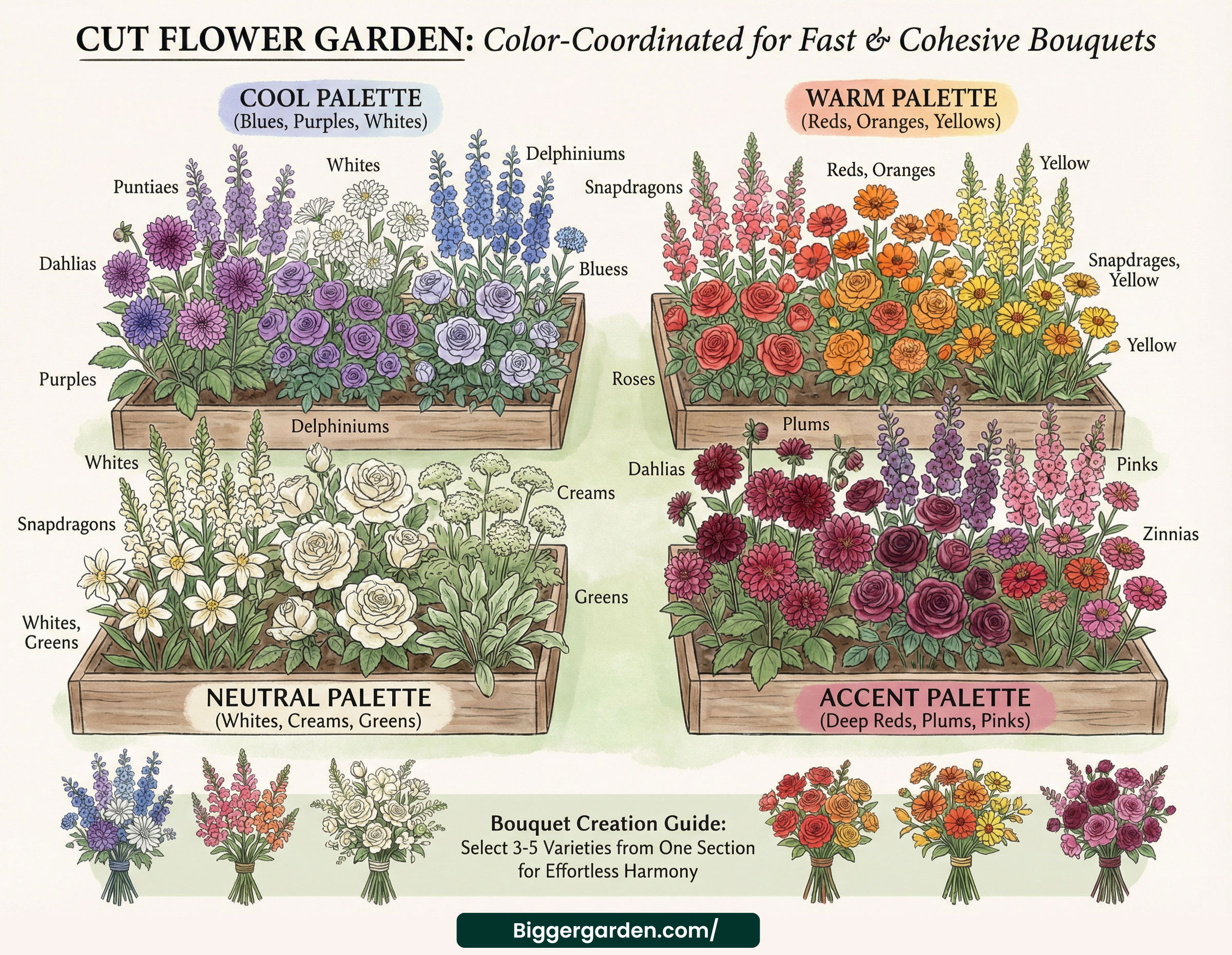
The practical benefit shows up immediately when assembling bouquets. I can walk into a single zone and pull everything I need without sorting through mismatched colors. This layout is especially useful for events, market bouquets, or consistent branding. Whites and greens might include ammi, feverfew, and bells of Ireland. Pinks and mauves could be built around zinnias, dahlias, and scabiosa. Rust and bronze tones often rely on amaranth, celosia, and rudbeckia. The field feels calmer, and so does the process.
6. Relay Planting Beds
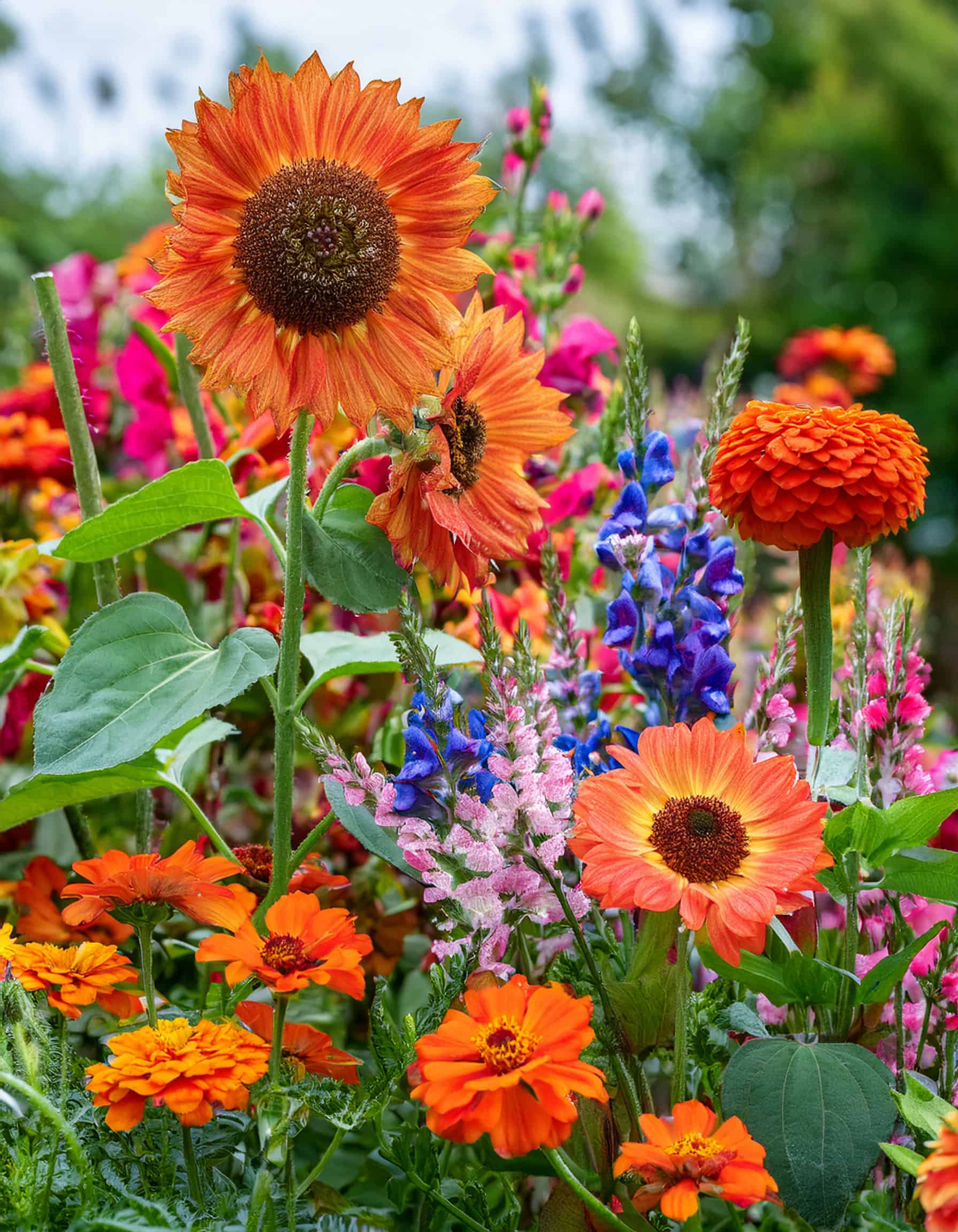
Relay planting is one of those techniques that sounds complicated until you see it in action. Once I started using it, it became hard to imagine leaving beds empty while waiting for the next planting window. Relay planting beds are designed to eliminate downtime entirely.
In this layout, the second crop is planted while the first is still growing. Timing is everything. The goal is for one crop to finish just as the next is ready to take over. This requires confidence in spacing and a clear understanding of growth habits, but the reward is continuous productivity.
One example I return to often is planting early sunflowers between young zinnias. The sunflowers finish and are cut before the zinnias need the space. Another is replacing sweet peas with basil once heat arrives. The bed never rests, but it also never feels overcrowded because each transition is planned. This layout rewards attentiveness and teaches you to see time as a design element.
7. Harvest-Flow Layout
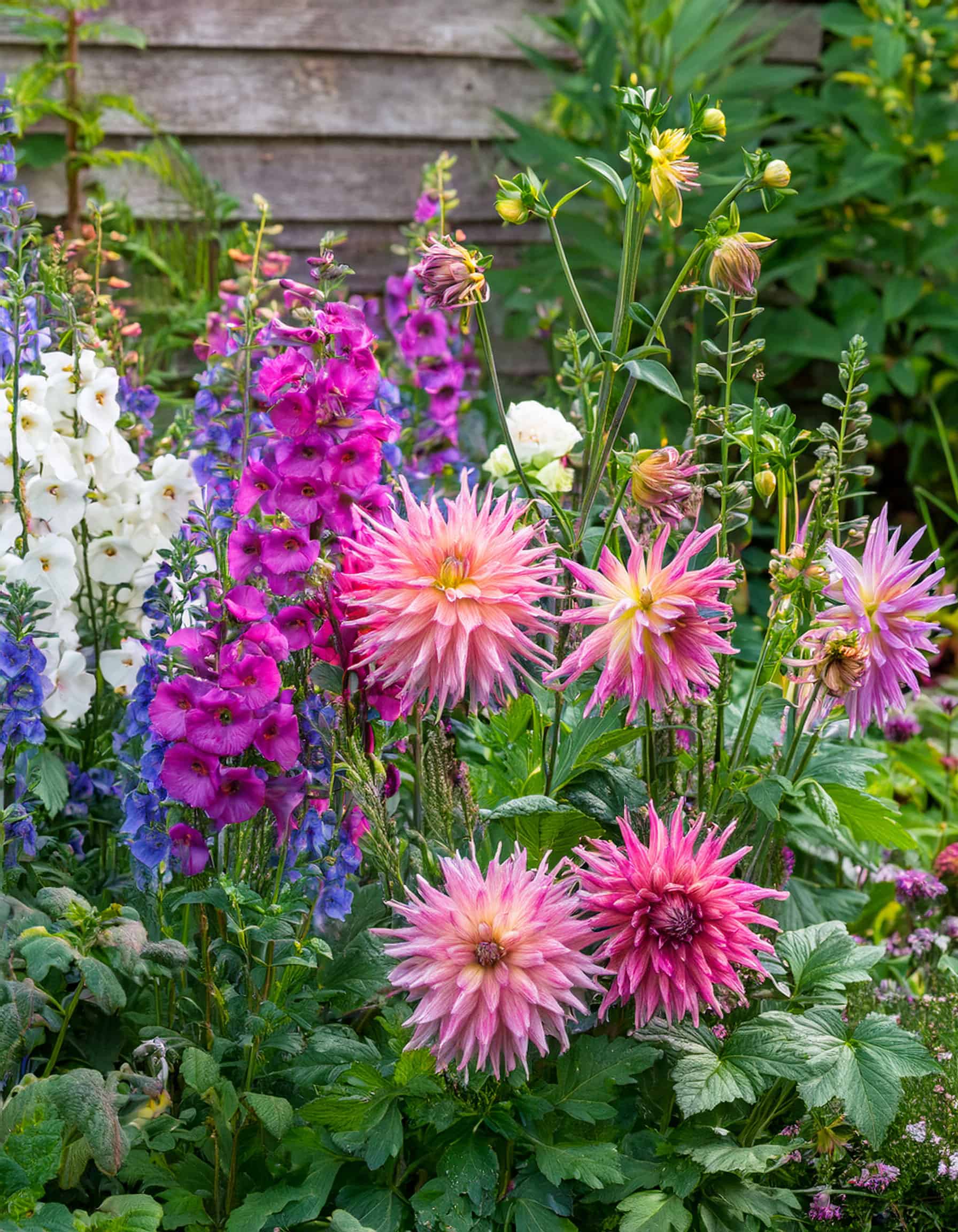
After years of cutting flowers, I started paying attention to how tired I felt after a harvest. That observation led me to rethink where things were placed. The harvest-flow layout is not about the plants themselves, but about how you move through the garden.
High-use crops are planted closest to water, shade, and storage areas. Long-stem flowers that require frequent cutting are positioned along wide paths so buckets can move easily. Specialty or low-volume flowers are placed farther out, where they do not interrupt the main harvest rhythm.
This layout becomes increasingly important the more often you cut. Small inefficiencies add up quickly when you harvest multiple times a week. By designing the garden around movement and access, fatigue drops and speed increases. It is a subtle shift, but once implemented, it changes how sustainable the work feels over an entire season.
Cheat Sheet #3 – Key Structure
Final Thoughts

Advanced cut flower garden layouts are not about making things more complicated. They are about removing friction where it quietly steals time, energy, or harvest potential. Each of these layouts approaches the garden from a slightly different angle, whether that is time, structure, color, or workflow.
I have learned that the most productive gardens are rarely the most ornamental at first glance. They are thoughtful, intentional, and responsive. When layout decisions support how you plant, cut, and replant, the garden starts to feel less like a task list and more like a system that works with you.
The best layout is the one that fits how you grow and how you use your flowers. Start with one idea, refine it over a season, and let the garden teach you what it needs next.