


Geraniums have a reputation problem dismissed as the reliable, cheerful filler in every grocery store planter. But behind those nonstop summer blooms is a secret: geraniums are one of the hardest-working bodyguards you can put in a garden, quietly producing scent compounds that confuse and repel some of the most destructive pests your vegetable patch will face. This guide covers how to keep them thriving all season, and how to place them strategically to protect the tomatoes, cabbage, and peppers you’ve worked so hard to grow.
Quickly Find Geranium Growing Tips
The Plant That Refuses to Quit
Geraniums have a reputation problem. Ask most gardeners what they think of geraniums, and you’ll hear about the fire-engine reds spilling out of a grocery store planter, or the reliable border filler that never quite gets talked about with the reverence of a peony or a rose. They’re the plant everyone has, which somehow makes them the plant nobody brags about.
But geraniums are hiding a secret behind those cheerful, nonstop summer blooms: they’re one of the hardest-working bodyguards you can put in a garden. While they’re busy looking pretty on your patio, their leaves are quietly producing scent compounds that confuse, repel, and distract some of the most destructive pests your vegetable patch will ever face.
This guide covers both sides of that story — how to keep your geraniums thriving all season, and how to place them strategically so they’re doing double duty: gorgeous on their own, and standing guard over the tomatoes, cabbage, and peppers you’ve worked so hard to grow.
The Identity Crisis: Pelargonium vs. True Geranium
Before we go further, a quick clarification that trips up even experienced gardeners: the “geranium” sold in nearly every garden center is not technically a geranium at all.
- Hardy Geraniums (Cranesbill) — true perennial Geranium species, low-growing groundcovers valued for soft, long-blooming color in borders and shade gardens.
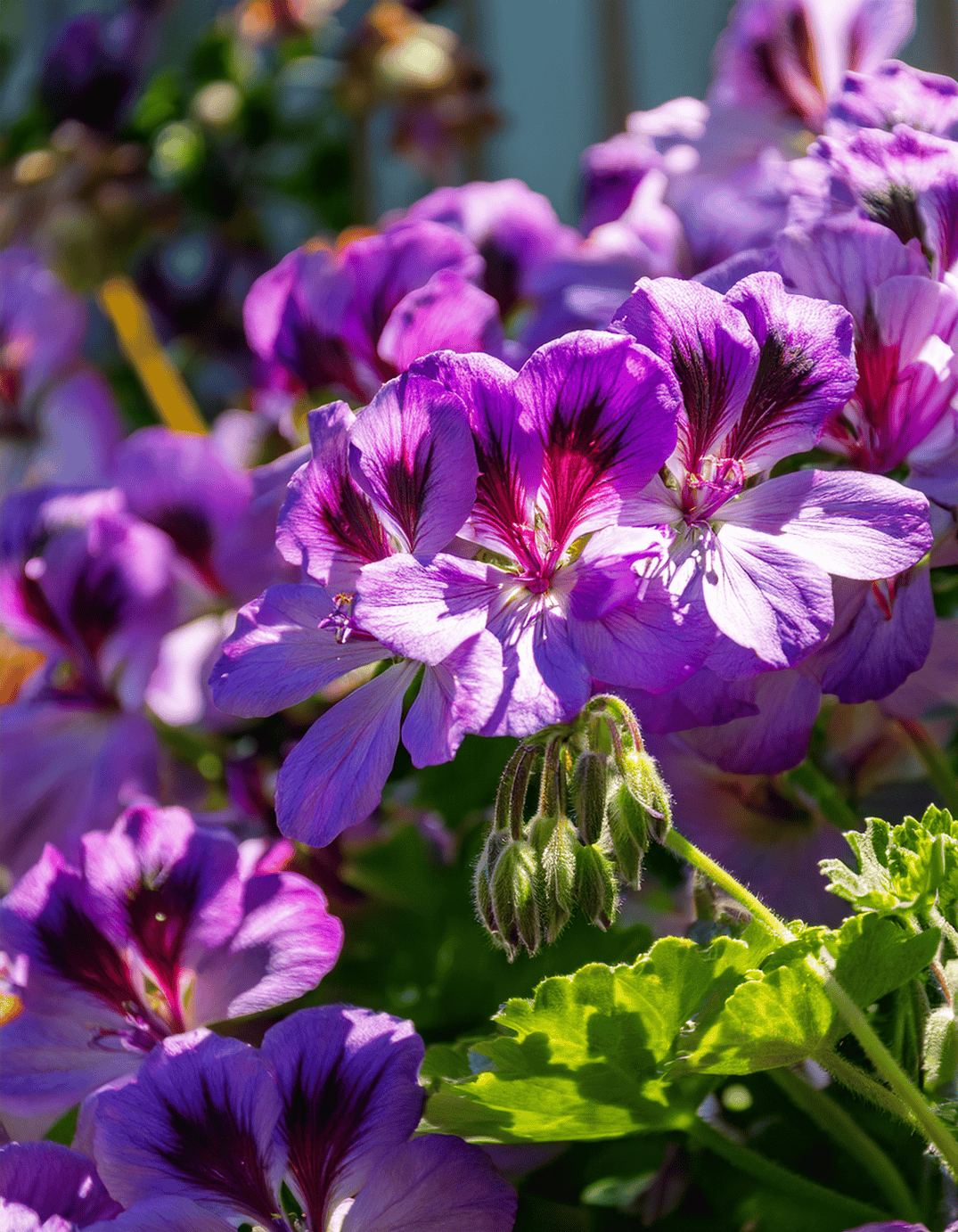
- Pelargoniums (Annual Geraniums) — the classic, showy garden center stars with the bold flower clusters and thick, rounded leaves most people picture. Botanically, these belong to a different genus entirely: Pelargonium.
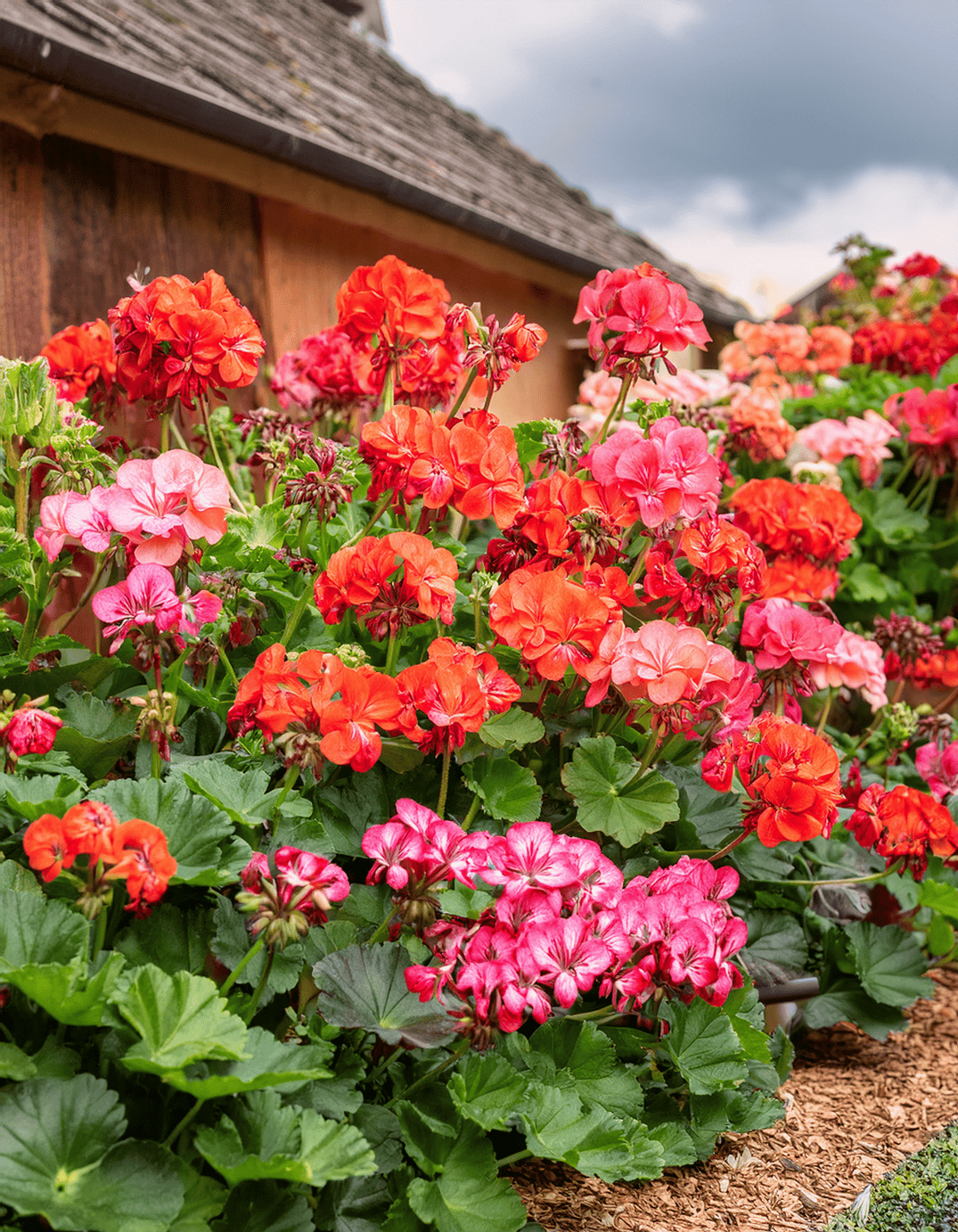
Here’s the detail that matters for this guide: it’s the Pelargoniums — the annual, garden-center variety — that pack the real pest-repelling punch. Their essential oil content is significantly higher, which is exactly what makes them useful as companion plants. Every strategy below refers to these classic annual geraniums.
The “Happy Plant” Cheat Sheet
A geranium under stress is a geranium that isn’t producing much of anything — including the scent compounds that make it useful as a companion plant. Keep them strong with three basics:
Sunlight: Aim for at least 6 hours of direct sun a day. Geraniums grown in too much shade get leggy, bloom sparsely, and produce weaker foliage oils.
Water: Let the top inch of soil dry out completely between waterings. Soggy soil is the fastest way to a sad, root-rotted plant — geraniums would much rather be slightly underwatered than overwatered.
The Secret Weapon — Deadheading: Snap or pinch off fading blooms at the base of the stem as soon as they start to fade. This single habit is what separates a geranium that blooms in bursts from one that blooms nonstop from June through frost.
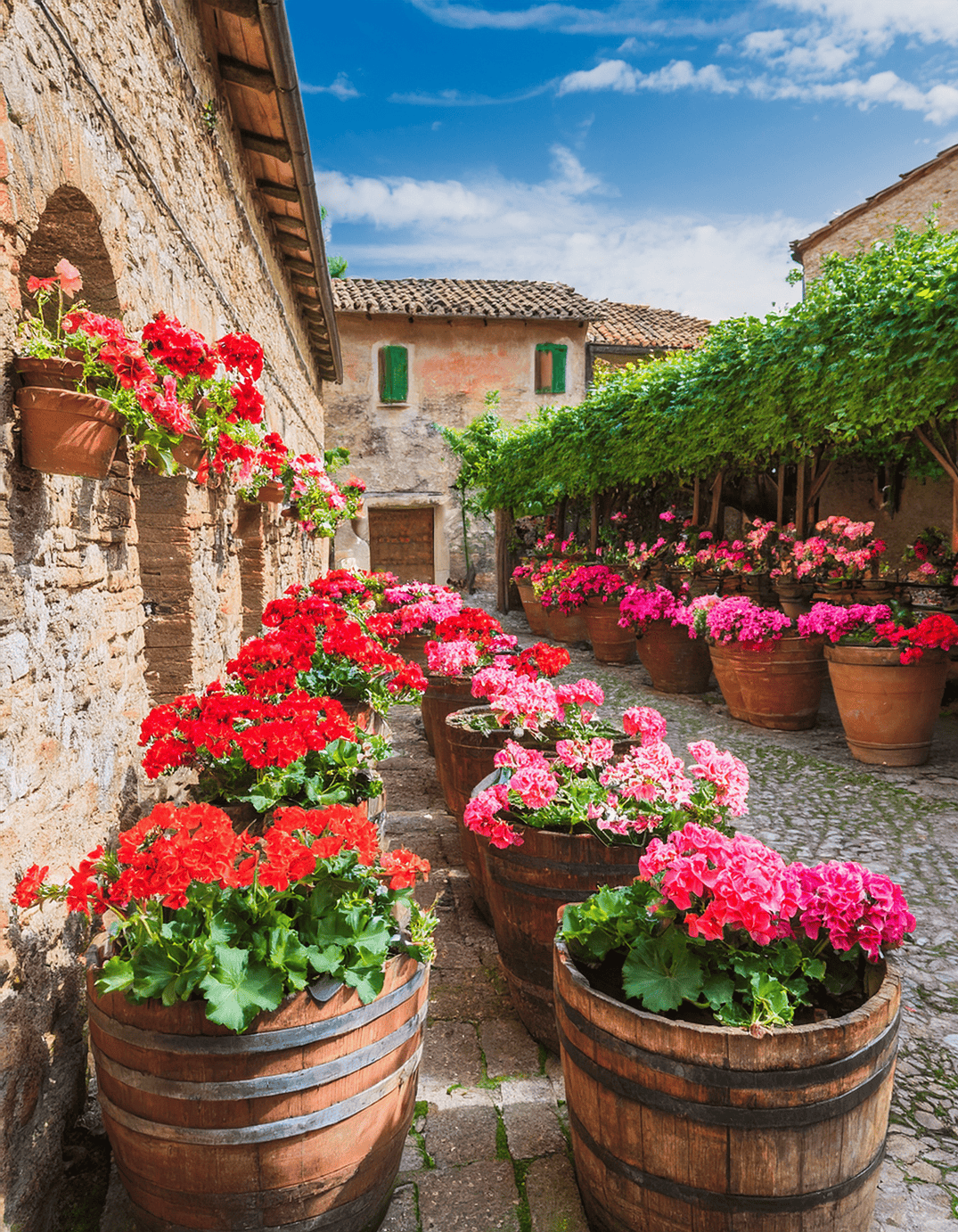
The Garden Bodyguards: Companion Planting with Geraniums
Here’s where geraniums earn their keep. Their leaves and stems produce specific essential oils and scent compounds that many insects find genuinely off-putting — strong enough to confuse a pest’s sense of smell, distract it from its intended target, or actively repel it from landing at all. Planted with intention, that quirk turns a decorative border plant into a working line of defense.
🍅 The Tomato Protection Program
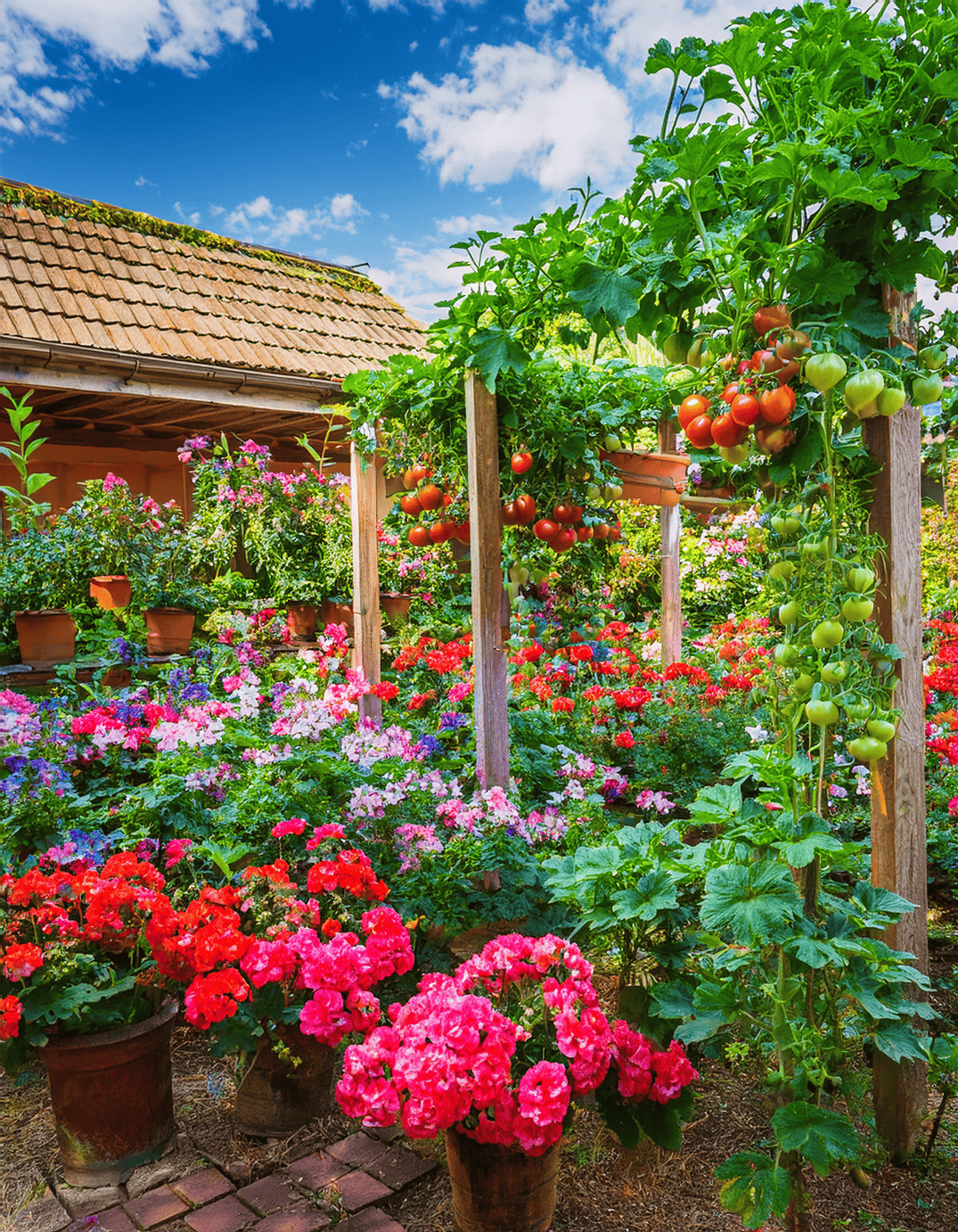
The enemy: Tomato hornworms, leafhoppers, and aphids — three of the most reliable ways to lose a tomato harvest.
The strategy: Interplant zonal geraniums directly alongside your tomato cages, spaced every few feet along the row.
How it works: Geraniums function as a trap crop for certain beetles, drawing their attention away from your tomato foliage, while their scent actively repels leafhoppers before they settle in. The result is cleaner, less stressed tomato vines that can put their energy into fruit instead of fending off pests.
🥬 The Brassica Shield (Cabbage, Kale, and Broccoli)
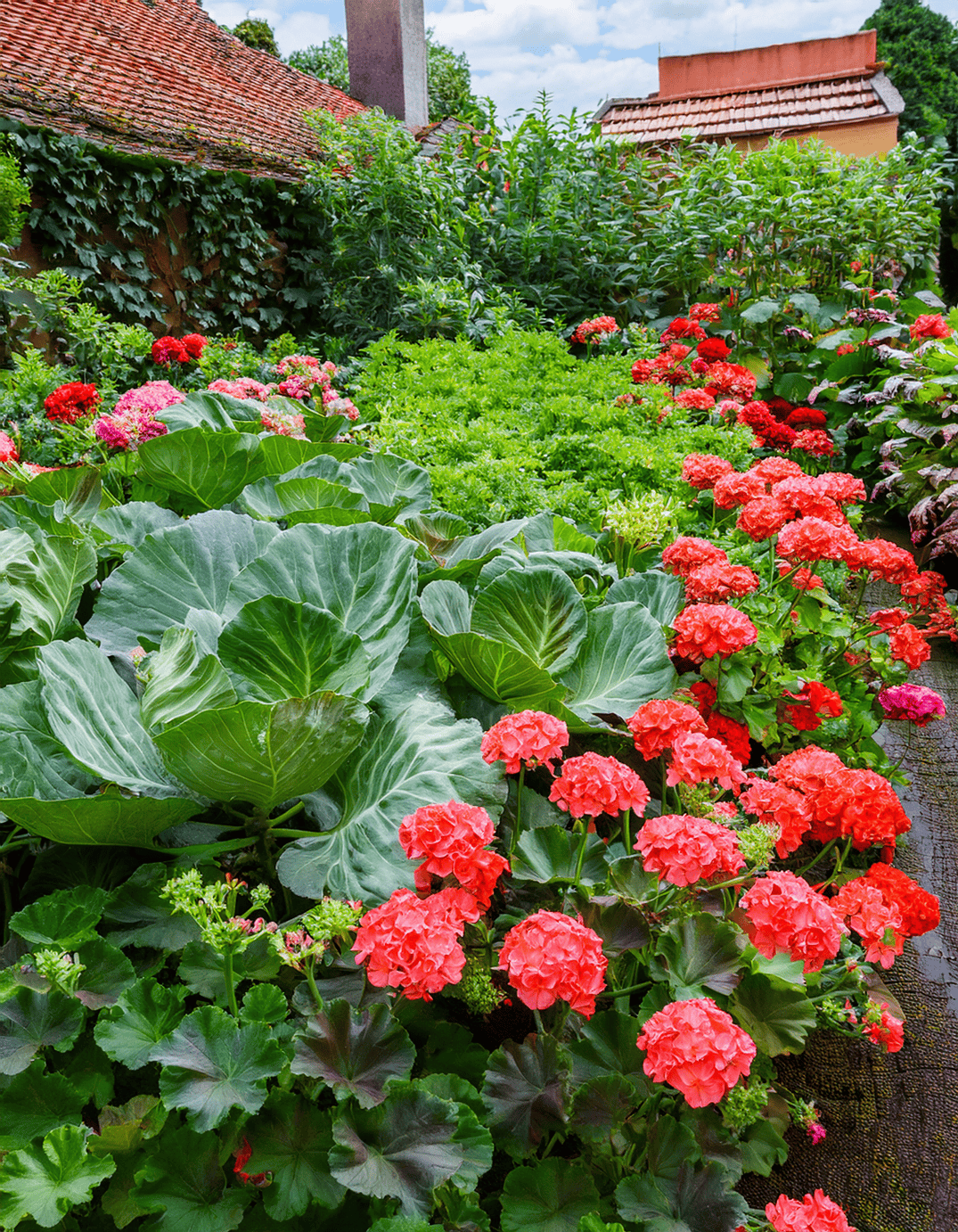
The enemy: The cabbage moth and its voracious green caterpillars, which can skeletonize a brassica bed in days.
The strategy: Tuck geraniums into the corners of your brassica beds, close enough that their scent mingles with the crop.
How it works: The strong foliage scent of the geranium masks the smell of the cabbage plants underneath, making it far harder for a cabbage white butterfly to locate a place to land and lay her eggs. No eggs laid means no caterpillars to fight later.
Pro tip: Scented-leaf geraniums — especially lemon or mosquito varieties — are particularly potent for this job. Crush a leaf as you walk by to release an extra burst of pest-repelling aroma into the air around the bed.
The Ultimate Defense Wall: Geraniums + Marigolds
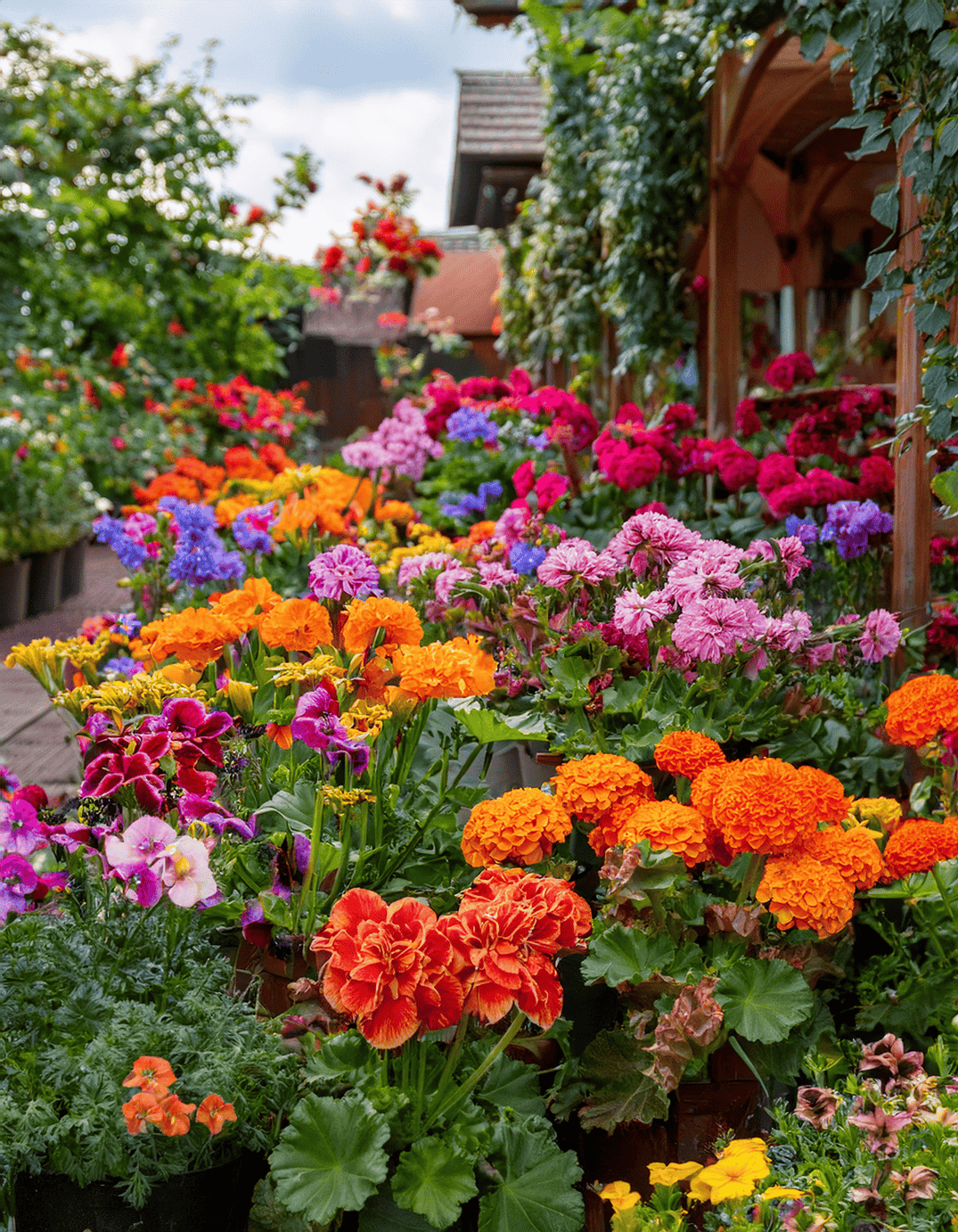
Combine geraniums with another garden classic, and you get something close to a virtual forcefield around your vegetable beds. Here’s why the two work so well as a team:
| Plant | Primary Targets Repelled | Best Veggie Partners | Secret Superpower |
|---|---|---|---|
| Geraniums | Cabbage worms, hornworms, Japanese beetles, leafhoppers | Tomatoes, cabbage, peppers, corn | Acts as a “trap crop” — luring beetles away, which then falter or drop off after feeding on the leaves. |
| Marigolds | Root-knot nematodes, whiteflies, aphids, squash bugs | Tomatoes, cucumbers, squash, potatoes | Strong scent creates a literal “scent barrier” that masks vulnerable veggies from pests searching by smell. |
The Scent Barrier Strategy: Plant a border of alternating marigolds and geraniums around the perimeter of your vegetable beds. The result is a confusing wall of fragrance that throws flying pests off course before they ever reach your crops — no sprays required.
Troubleshooting Common Geranium Grievances
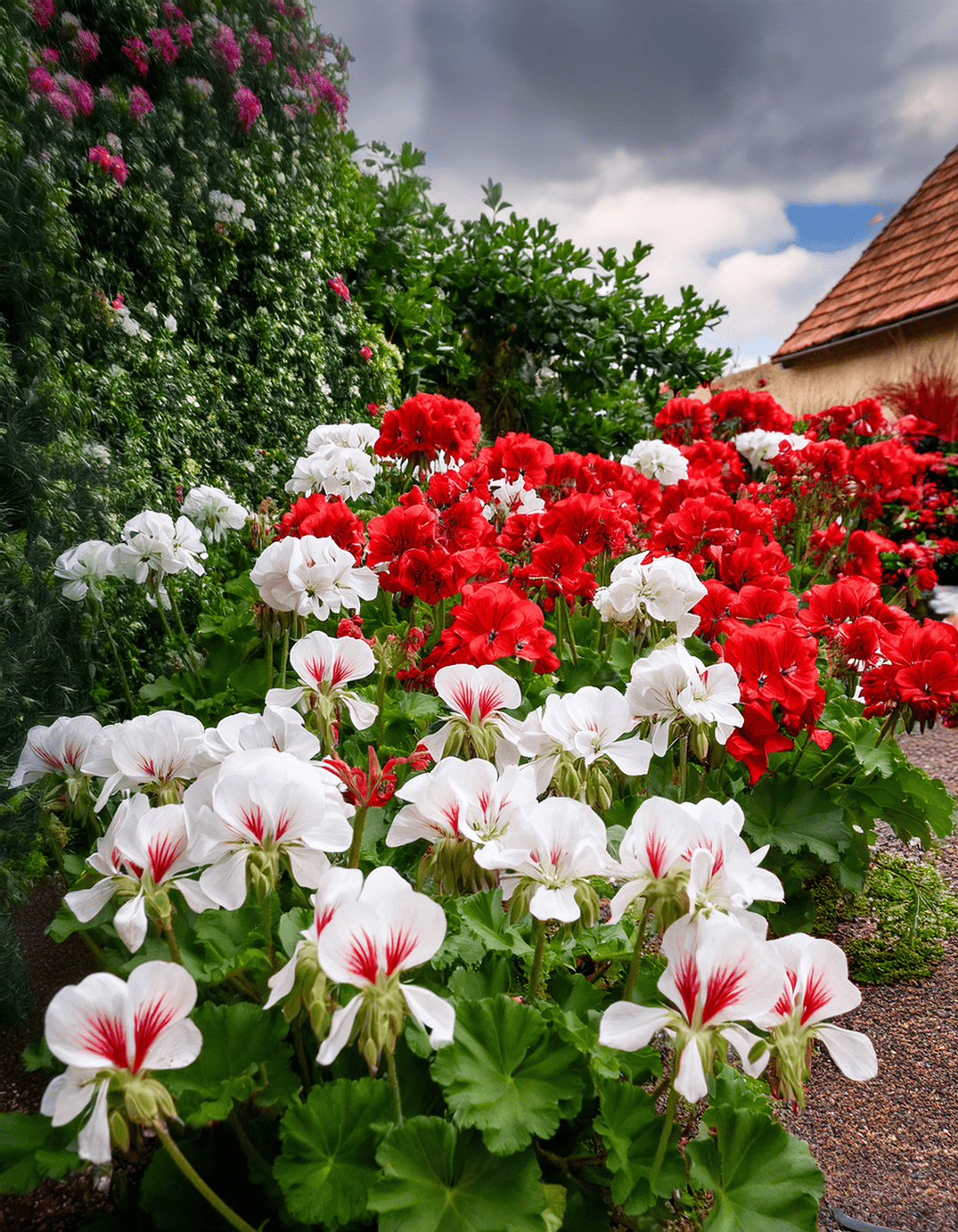
Even bodyguards get sick sometimes. Use this quick reference to keep your geraniums in fighting shape:
- Yellowing lower leaves: Almost always overwatering. Back off the hose and let the soil dry out more between waterings.
- Spindly, tall stems: A sign of low light. Move the plant somewhere it can get closer to that 6-hour sun minimum.
- Holes in the flower buds: Likely the tobacco budworm. Hand-pick the caterpillars off at dusk, when they’re most active and easiest to spot.
Form, Function, and Foliage
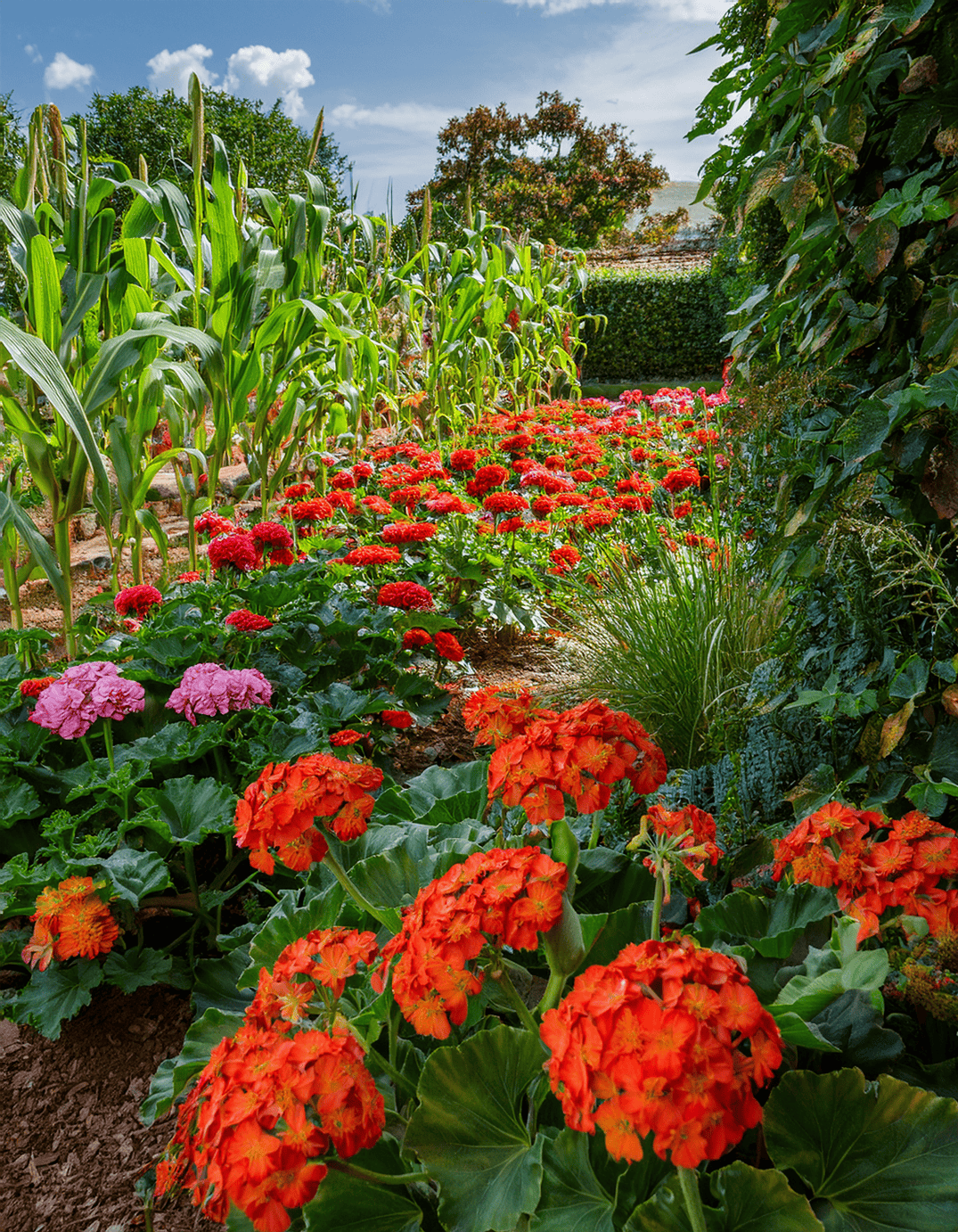
Geraniums prove you don’t have to choose between beauty and utility in a backyard garden. They’ll fill your pots and borders with color from June through frost, and while they’re doing it, they’re quietly working the perimeter — confusing pests, luring beetles away from your crops, and masking the scent trail that leads straight to your cabbage. Few plants earn their keep as thoroughly as this one.