


Lupines are the undisputed royalty of the late-spring garden. Those tall, colorful spires practically stop traffic when they’re in bloom — but here’s the catch nobody tells you when you buy your first lupine: their moment in the spotlight doesn’t last long. Once those spires fade, you’re left staring at a bare, awkward gap in the bed.
The good news? The secret to a stunning lupine garden isn’t just growing lupines well — it’s knowing who to plant alongside them. Pair them with the right companions and you’ll have a bed that either shares the spotlight during peak bloom or smoothly takes over the show once the lupines are done. Below are 9 companion plants that will keep your garden looking good from spring all the way through fall.
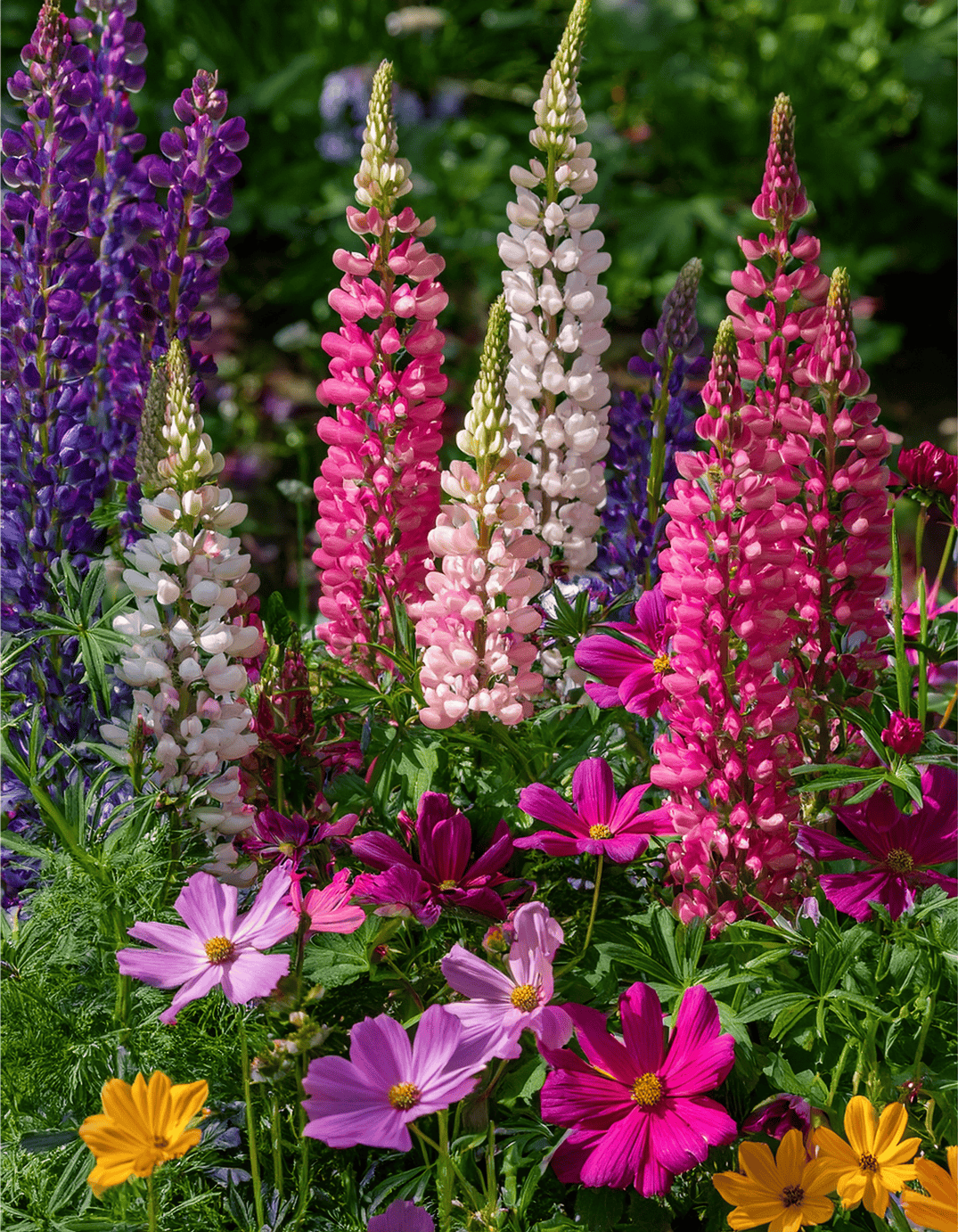
At a Glance
- Lupines are stunning late-spring bloomers (2–4 feet tall) that need full sun and well-draining, slightly acidic soil (pH 6.0–6.5) to thrive.
- Plan for the “lupine slump”: Cut plants back after they bloom and use companion plants to hide the bare, awkward gap they leave behind.
- Stagger your bloom times: Plant early and mid-summer bloomers like coreopsis and daylilies immediately in front of lupines to seamlessly take over the spotlight.
- Play with contrasting shapes: Offset the sharp, vertical spikes of lupines with round alliums, delicate poppies, or flat-topped yarrow.
- Enjoy the free fertilizer: Because lupines are legumes, they naturally fix nitrogen into the soil, giving a healthy nutrient boost to any companion plants sharing the bed.
Lupine Care Basics: The Setup
Sun and Soil
Lupines want full sun and well-draining soil to really thrive. They’re not picky about much else, but get these two things right and you’re most of the way there.
Soil pH
Aim for slightly acidic soil, somewhere in the 6.0–6.5 range. If your soil leans alkaline, a bit of soil amendment before planting will save you headaches later.
🐝 Fan Favorite

“Feed the Bees” Garden Sign
Show your support for pollinators with a vibrant, hand-illustrated sign that does more than just look beautiful. Every purchase directly funds planting a native tree to help rebuild the Monarch Corridor—giving butterflies vital habitat, and giving your garden a meaningful pop of color.
Delivered in 5–7 days
- Hand-illustrated design
- Recycled aluminum — won’t fade, rust, or crack
- Plants 1 real tree in the Monarch Corridor
🦋 Every sign funds a tree planted in the North American Monarch Corridor — at no extra cost to you.
The “Lupine Slump”
Here’s the thing about lupines that catches a lot of gardeners off guard. After they bloom, you need to cut them back, and that leaves a very visible hole in the bed right when everything else is hitting its stride. That’s exactly why companions matter so much here — plant the right mix and you never have to look at that gap.
Oriental Poppy
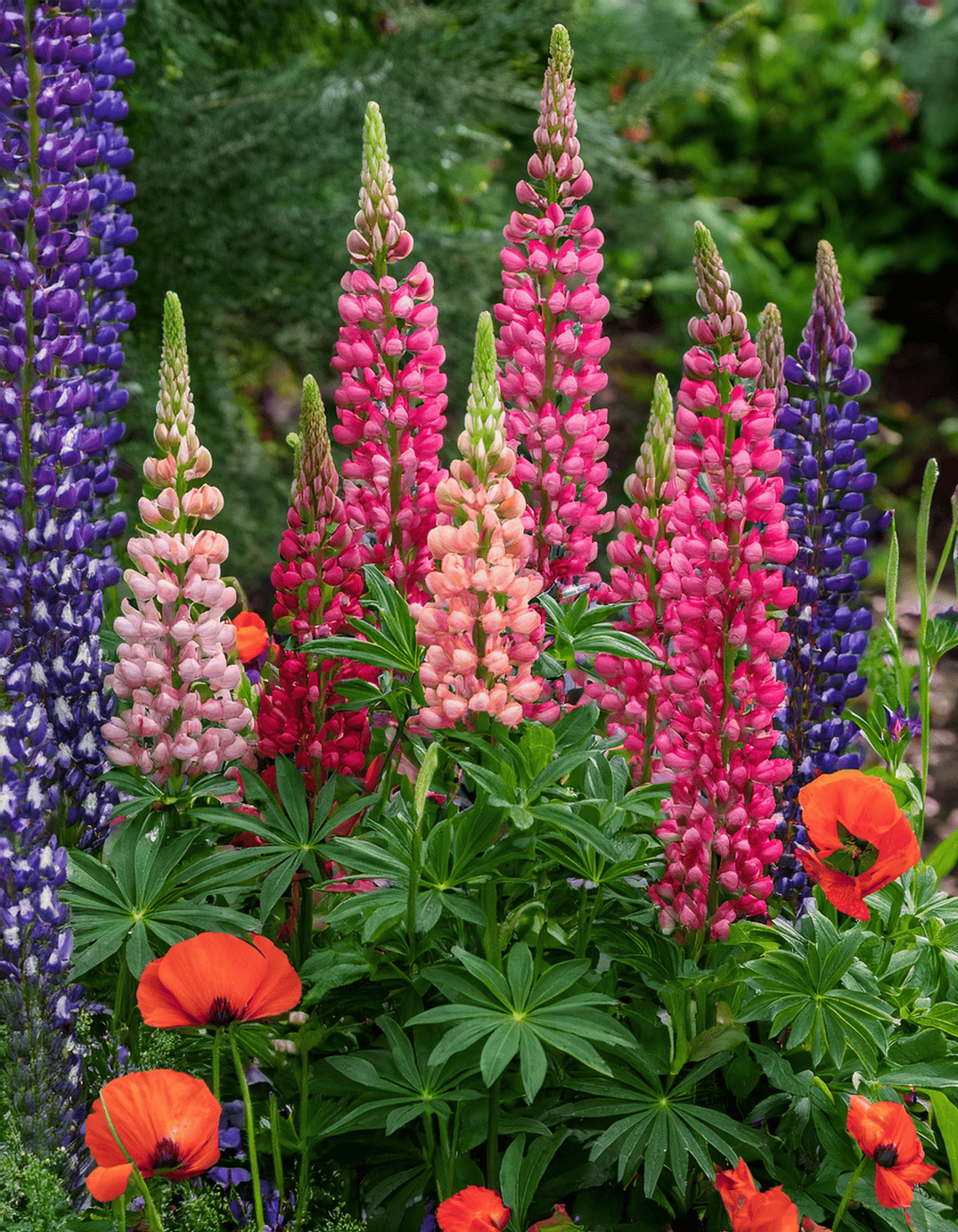
Oriental poppies bloom right alongside your lupines in late spring, and the contrast between them is one of the best pairings you can plant. Those big, delicate crepe-paper poppy bowls sit right next to the tight, orderly spikes of the lupines, and the difference in texture makes both plants look even better than they would on their own.
For a bold color pop, try classic orange poppies against purple lupines — it’s a combination that reads as intentional and designed, not accidental. Plant them side by side in the middle of your border so neither one gets overshadowed by taller or shorter neighbors.
Salvia
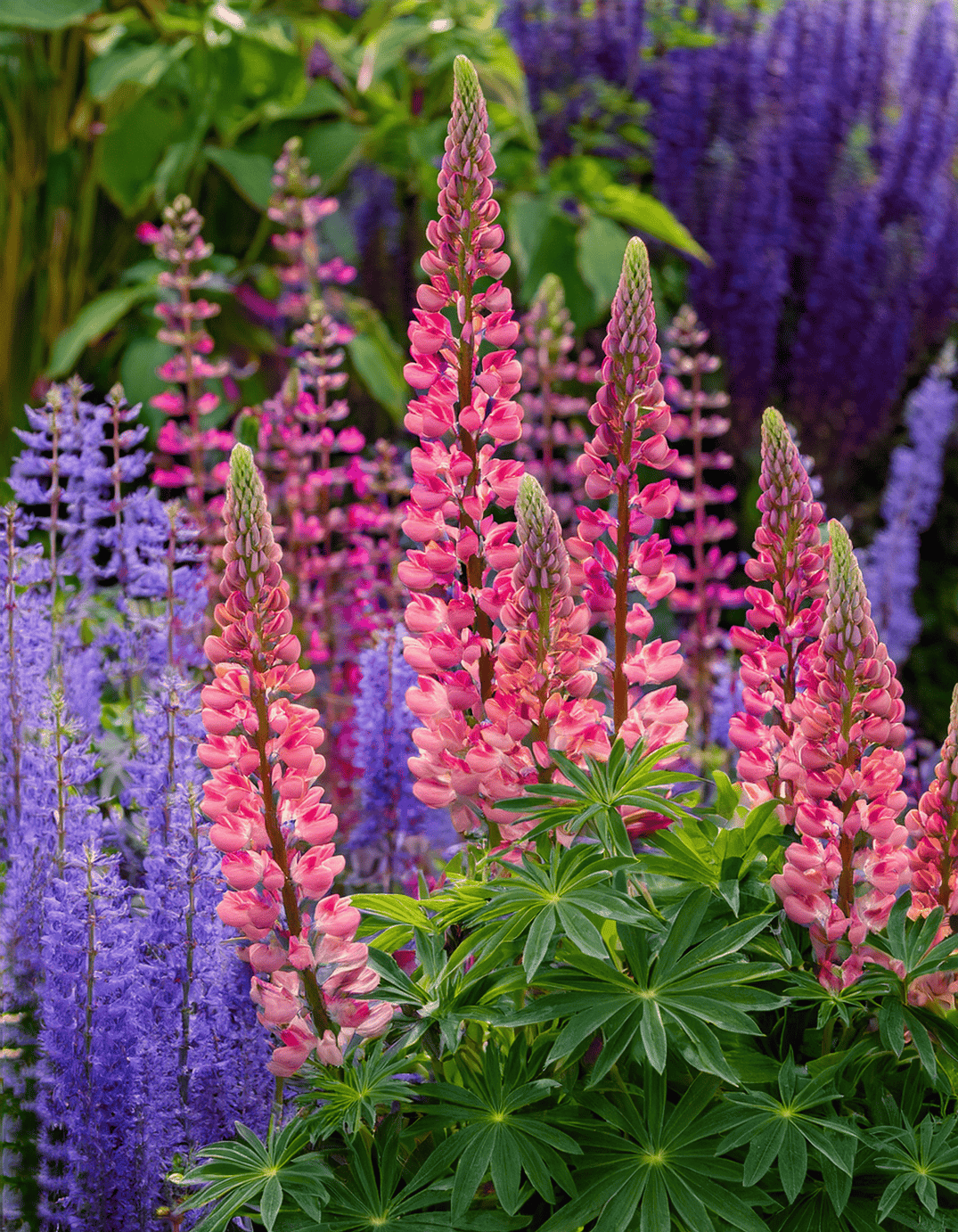
Salvia starts blooming with your lupines in late spring and just keeps going through summer, which makes it one of the better long-haul companions on this list. It’s also a spike-former like lupines, but the flowers are finer, denser, and richer in color, so you get a layered look rather than a repeat of the same shape.
Pair blue or purple salvia with blue or purple lupines for a sophisticated, monochromatic bed that still has plenty of texture variation. It works best up front, at the edge of the border, where its lower profile won’t get lost.
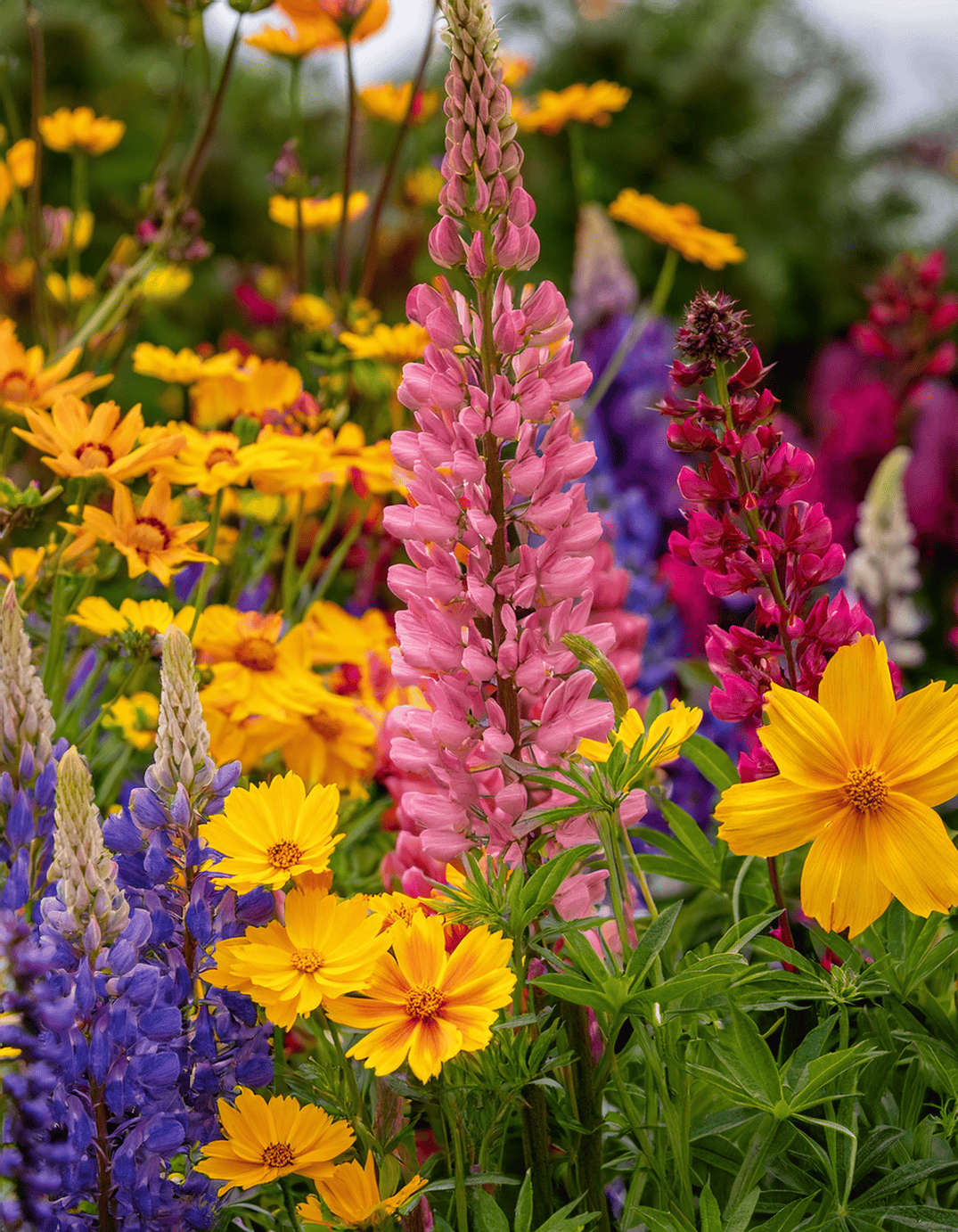
Coreopsis
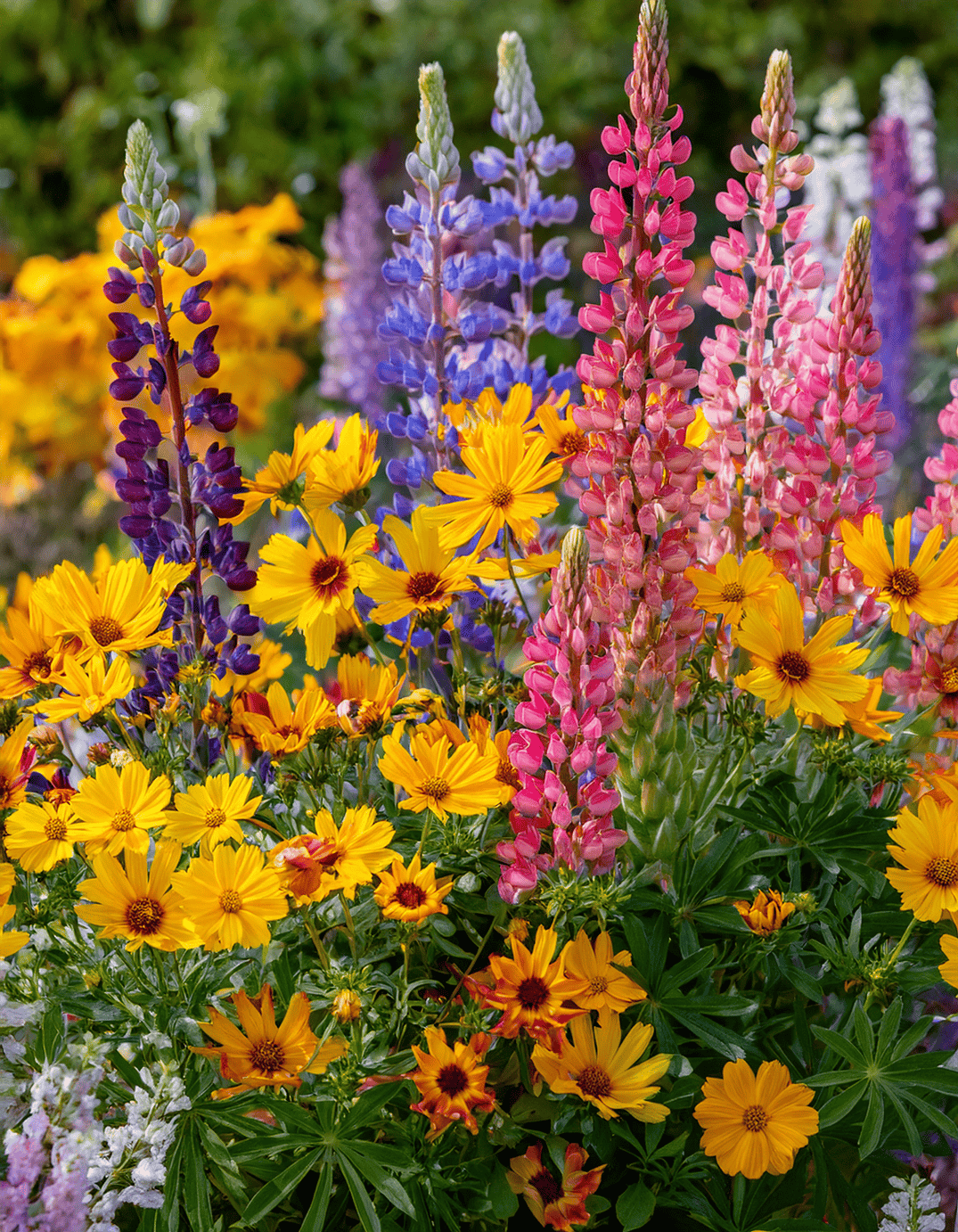
This is where the succession planting starts. Coreopsis kicks in around early summer and keeps blooming clear through fall, which means it’s doing a lot of the heavy lifting once your lupines are finished for the season.
It’s a low, dense carpet of bright, daisy-like flowers that completely changes the texture of the bed the moment the tall lupine spikes are gone. Because it’s such a non-stop bloomer, it fills the exact void left by a post-bloom lupine haircut — plant it front and center, right in front of the lupines.
Coneflower
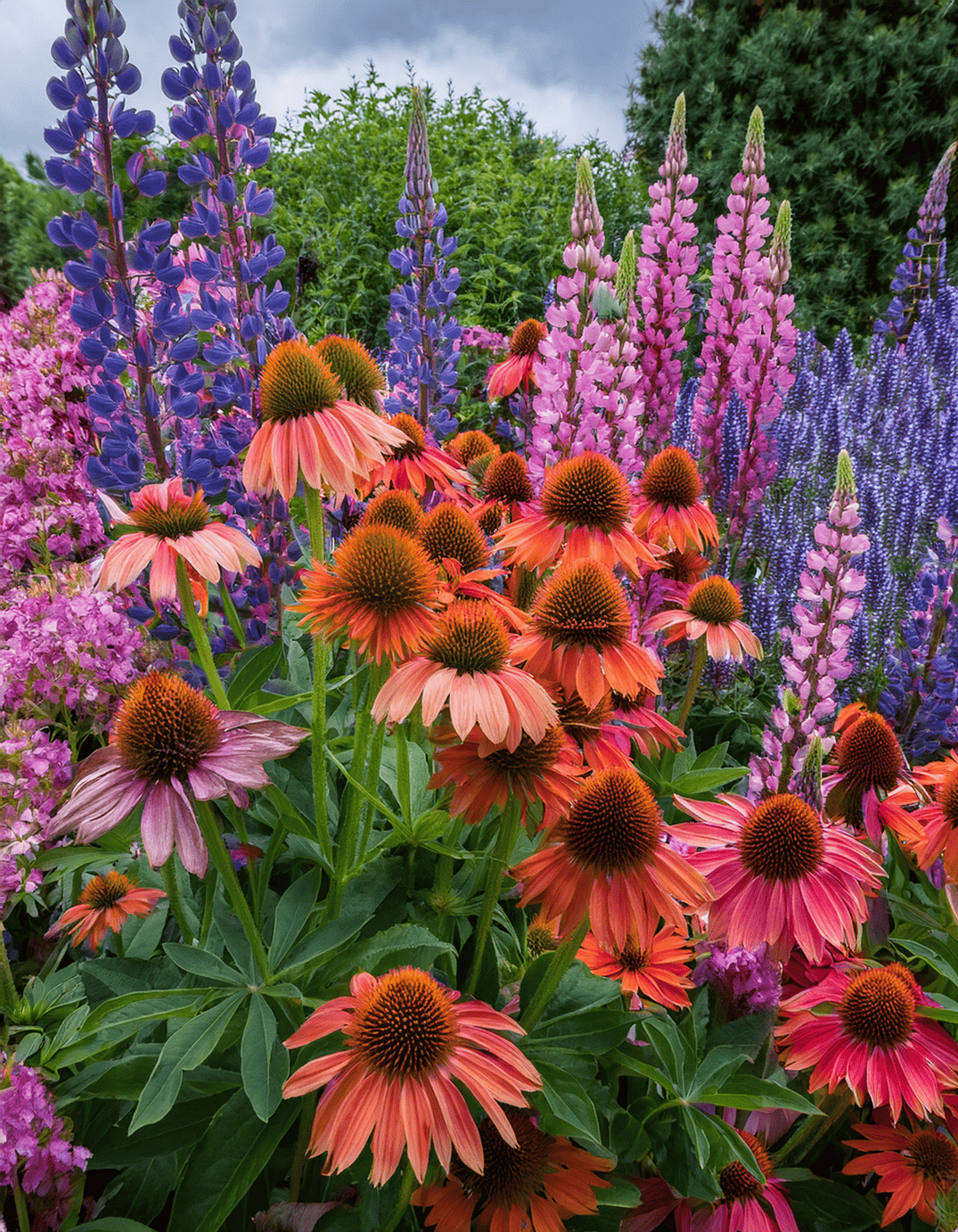
Coneflower steps in mid-to-late summer with flat, radiating petals and those signature prominent center cones, bringing some rustic structure back to the garden in July and August when things can otherwise start to look a little flat.
It’s heat-tolerant and tough, and it peaks exactly when your lupines are resting, so the bed never looks empty during the hottest stretch of the year. Give it the same mid-border tier the lupines occupy so it can step into that visual role directly.
Yarrow
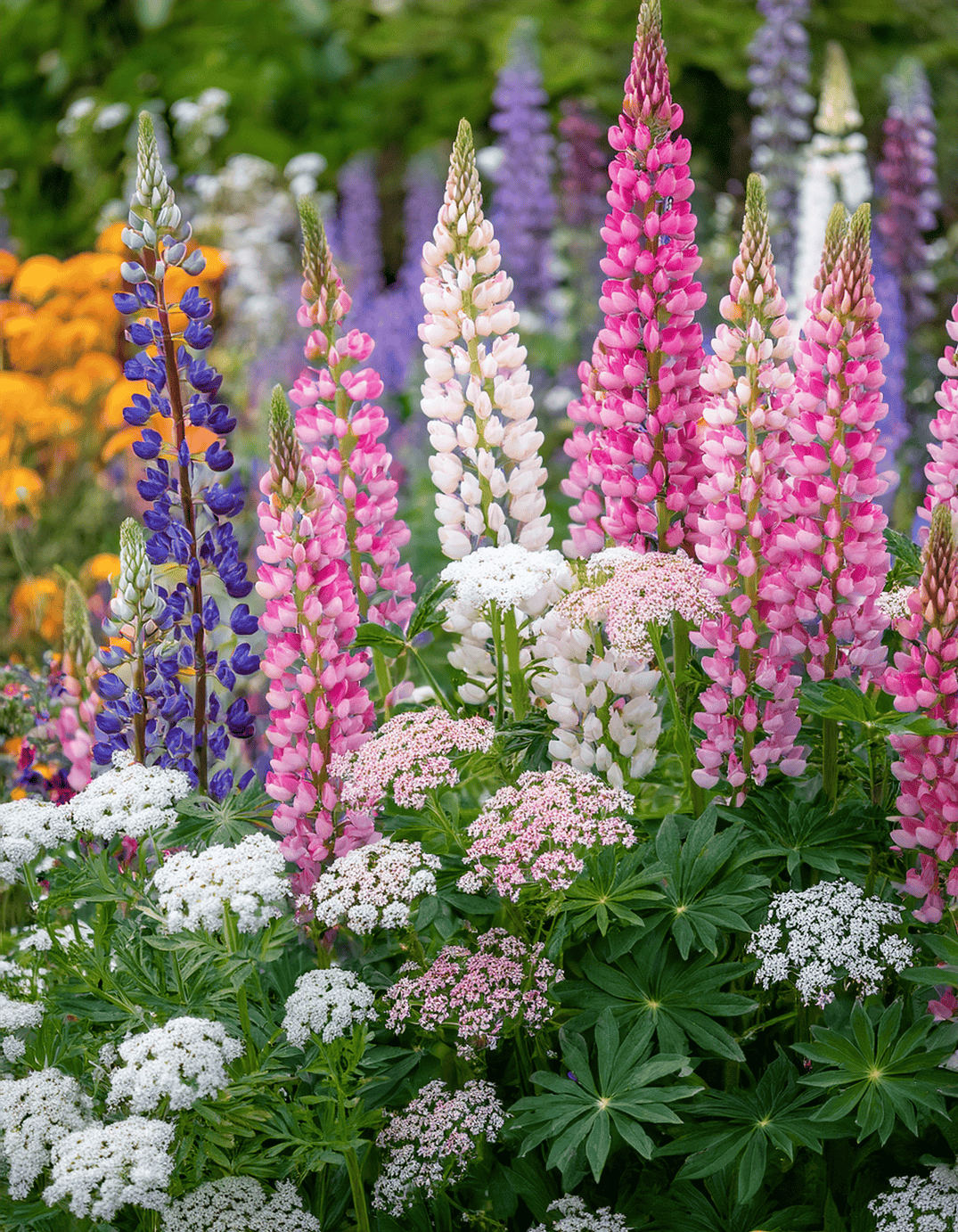
Yarrow shows up mid-summer with a total geometric flip from what the lupines were doing earlier in the season. Its flat, umbrella-shaped flower clusters give you a strong horizontal presence right where those vertical lupine spikes used to dominate the view.
It shrugs off summer heat and drought without any extra fuss, and it’s happy in the same lean soil lupines love, so it’s an easy addition to an existing bed. Mix it in right next to the lupines, mid-border, so it can take over that visual space cleanly.
Daylily
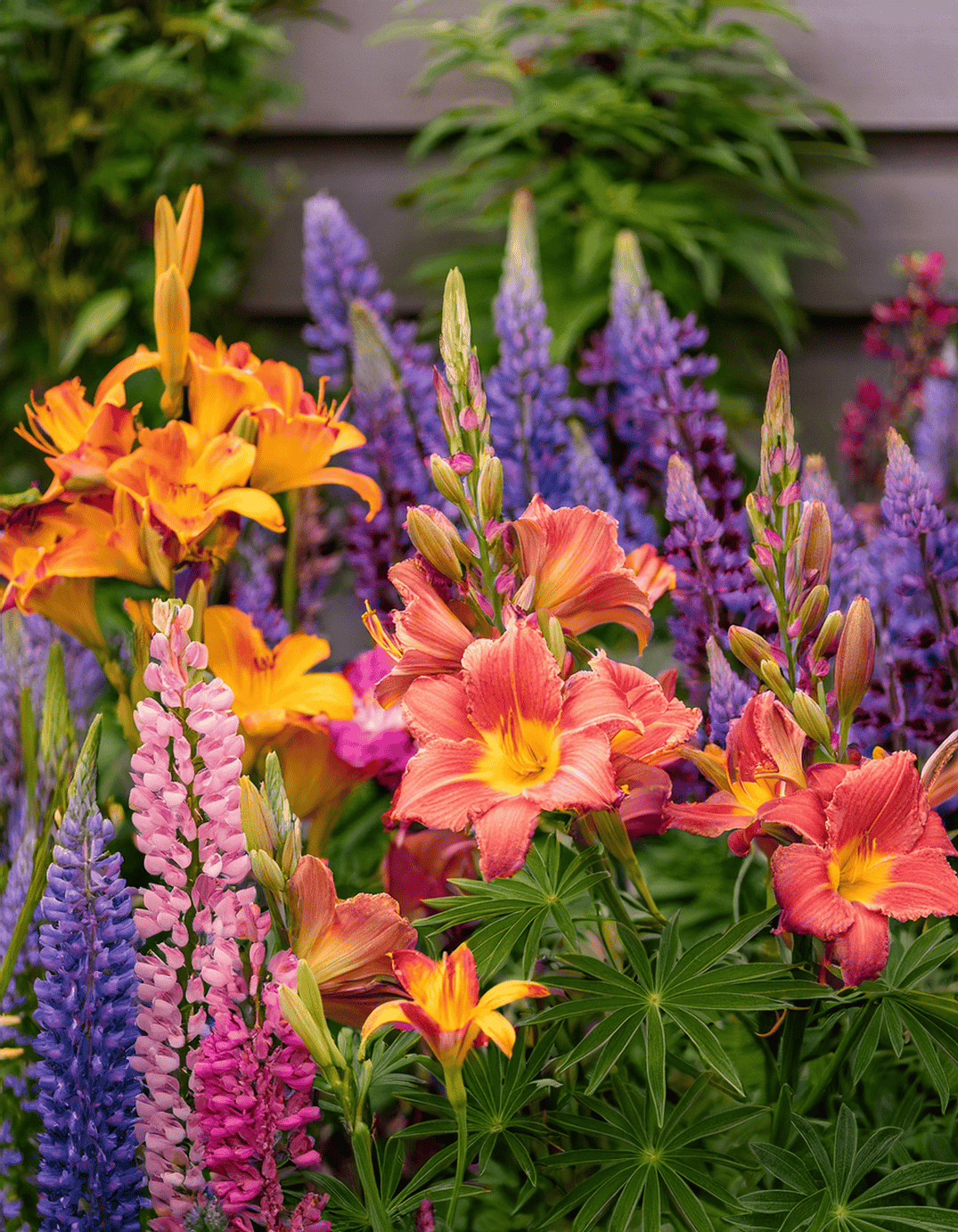
Daylilies are the ultimate camouflage artist on this list. They arrive mid-summer with bold trumpet flowers and fresh, grass-like foliage right as lupine foliage starts looking spent and ragged in July.
That timing is exactly why they earn their spot here — as the old lupine leaves get tired and yellow, the daylily foliage fills in and completely masks them. Plant daylilies immediately in front of the lupines so they act as a living screen for the rest of the season.
Black-Eyed Susan
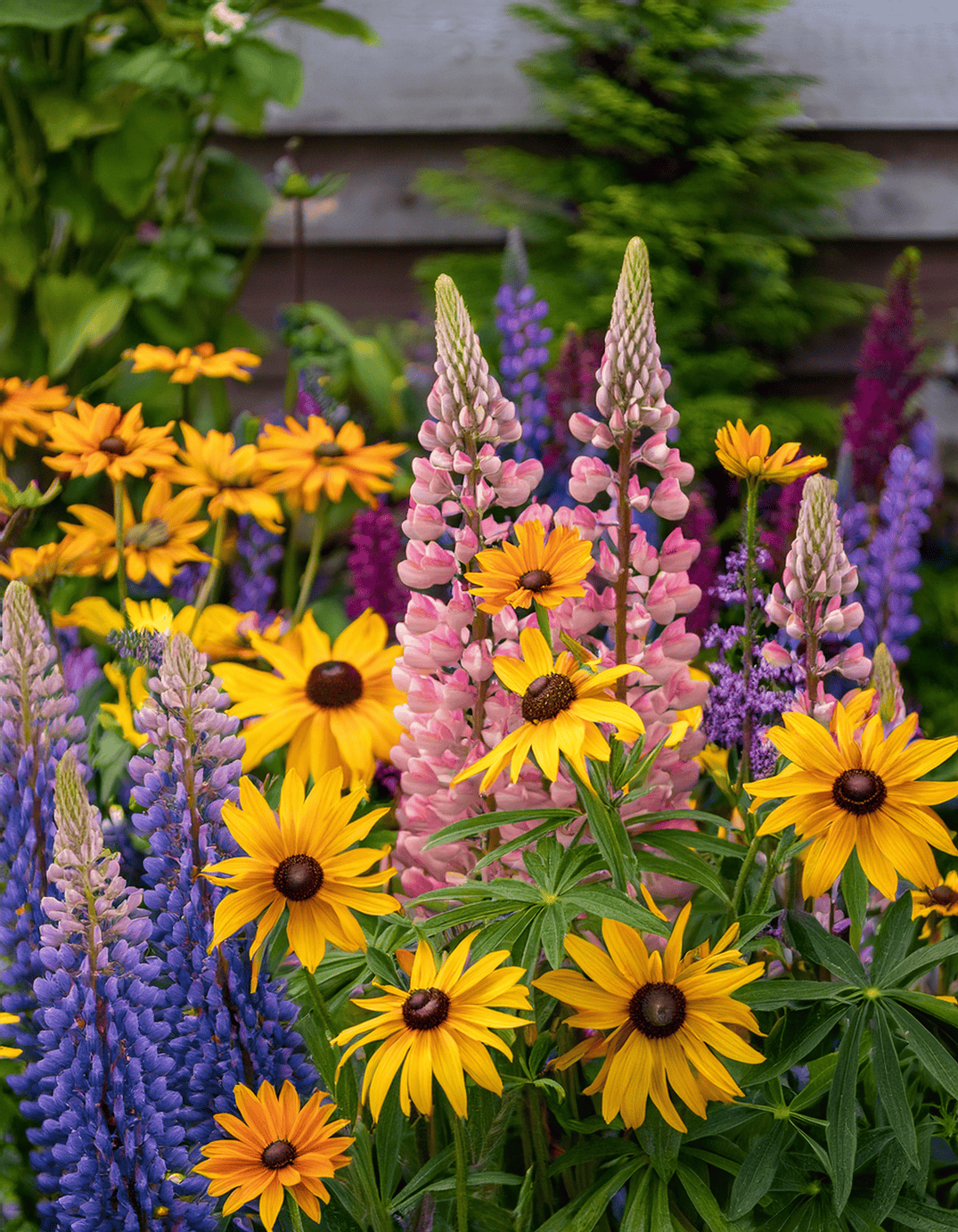
Rounding things out, Black-Eyed Susan brings big punches of golden yellow from late summer into fall, which shifts the entire mood of the garden from spring pastels into warm, autumn tones.
It’s one of the longest-lasting bloomers on this list and keeps your bed a focal point for months after the lupines have gone fully dormant. Best placed mid-to-back border, where it can anchor the bed through the last weeks of the season.
Columbine
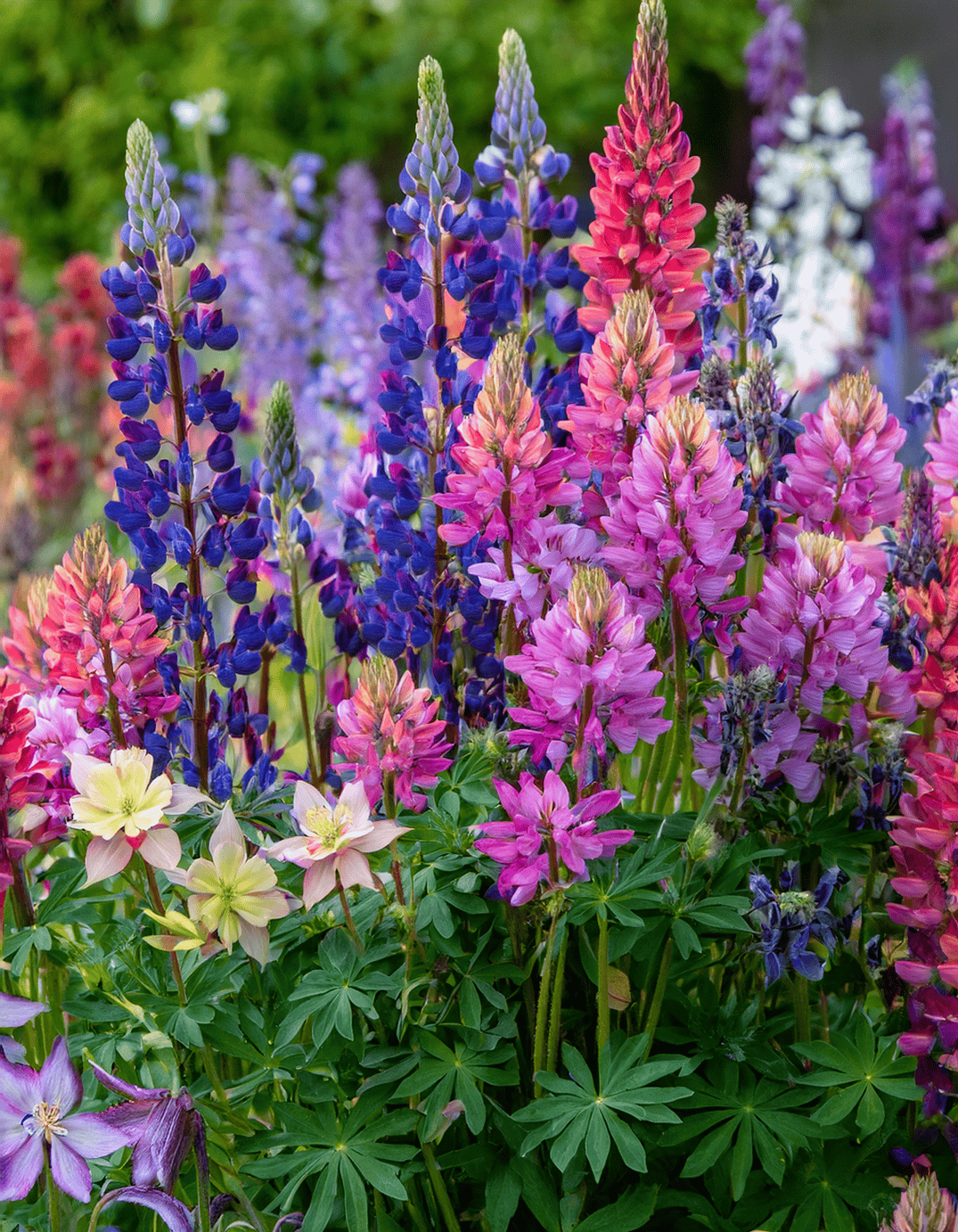
Columbine blooms right in step with lupines and brings a whimsical, airy feel to a bed that can otherwise look a little stiff and formal. Its delicate, nodding flowers soften all that dense, structured lupine growth and add some visual movement.
It also thrives in the same spring conditions as lupines, so there’s no fussing over separate watering or soil needs. Plant it just in front of, or woven between, your lupine clumps for that romantic, cottage-garden feel.
Allium
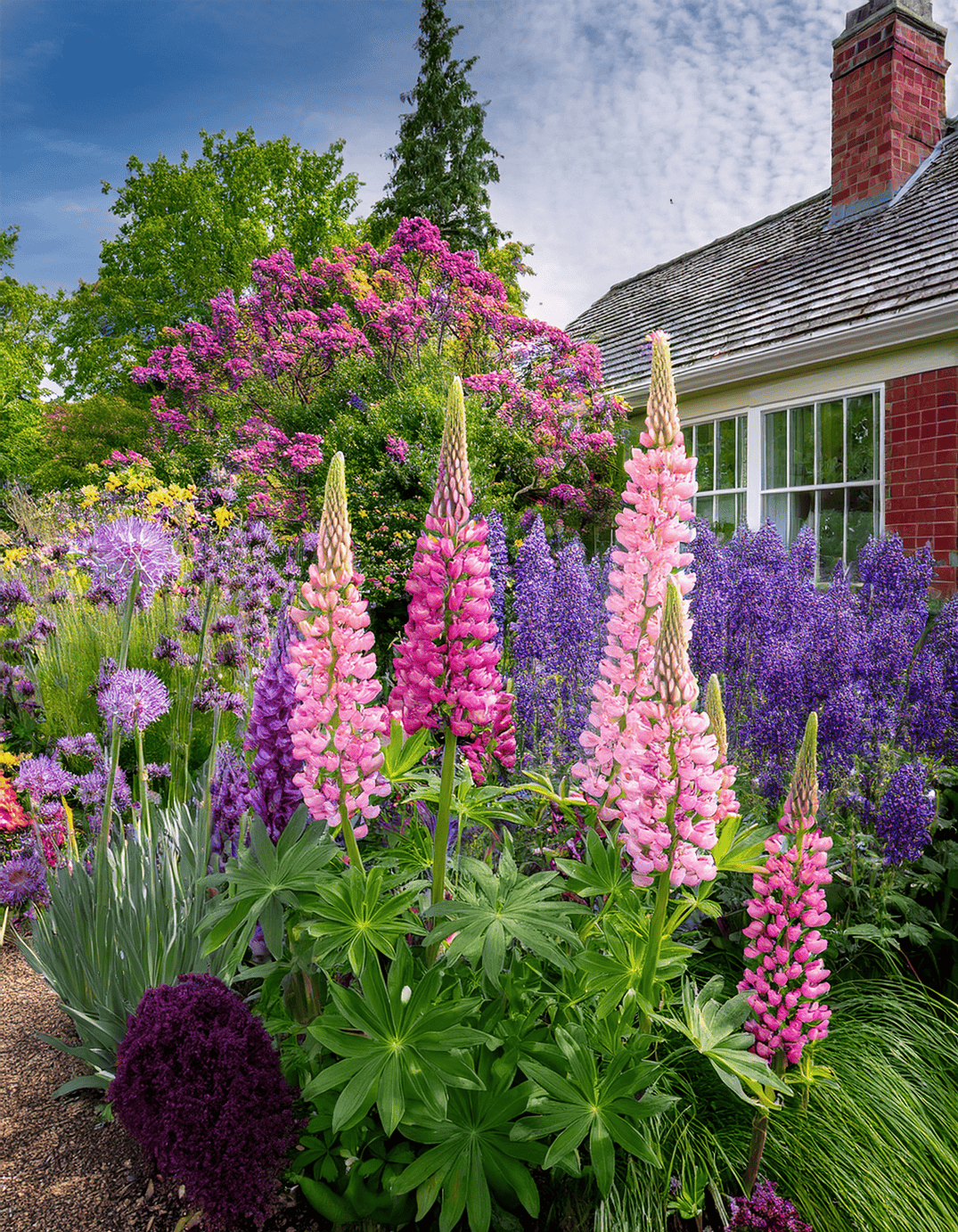
Alliums bloom at the same time as lupines and carry the show right into summer, which makes them one of the easiest “set it and forget it” pairings on this list. Their floating, spherical blooms are the perfect geometric counterpoint to the lupine’s sharp vertical lines — it’s a contrast that photographs beautifully, too.
Since both plants like the same gritty, well-drained soil, you don’t have to compromise on growing conditions to make this pairing work. Tuck alliums in tightly among your lupines so they look like bubbles floating through the bed.
How to Layer Your Lupine Bed for Continuous Blooms
Here’s the quick cheat sheet on bloom timing:
- Late spring (with lupines): Oriental poppy, allium, columbine, salvia
- Early-mid summer: Coreopsis, yarrow, daylily
- Mid-late summer: Coneflower
- Late summer-fall: Black-Eyed Susan
The real design trick — call it “hide the trim” — is arranging these plants so the summer bloomers naturally grow up and screen the bare patches left behind once you cut the spring lupines back. Put your early succession plants (coreopsis, daylily) right in front of or around the lupines so they physically block the view as they fill in.
One more thing worth knowing: lupines are legumes, which means they fix nitrogen right into the soil as they grow. So their companions aren’t just there to look good together — they’re actually getting a nutrient boost from sharing that bed.
Quick Lupine Growing Guide
| Category | Details |
|---|---|
| Sunlight | Full sun (6+ hours daily) |
| Soil | Well-draining, slightly acidic (pH 6.0–6.5) |
| Water | Regular water first year; drought-tolerant once established |
| Bloom Time | Late spring to early summer |
| Height | 2–4 feet |
| Spacing | 12–18 inches apart |
| Hardiness | Zones 4–8 (varies by variety) |
| Maintenance | Cut back after blooming to encourage possible rebloom and tidy foliage |
| Soil Bonus | Fixes nitrogen into soil as a legume |
Final Thoughts
Designing a garden isn’t about nailing a single moment of peak bloom — it’s about running a successful relay race, where each plant picks up the baton right as the last one starts to fade.