

Daffodils are one of those spring flowers that can look completely different depending on how you plant them. A few bulbs lined up along a foundation can feel fairly ordinary, but the same flowers scattered through a lawn, tucked around a stone path, or woven into a cottage border suddenly feel intentional and established. And because daffodils return year after year in the right conditions, a good planting can actually get better with time.
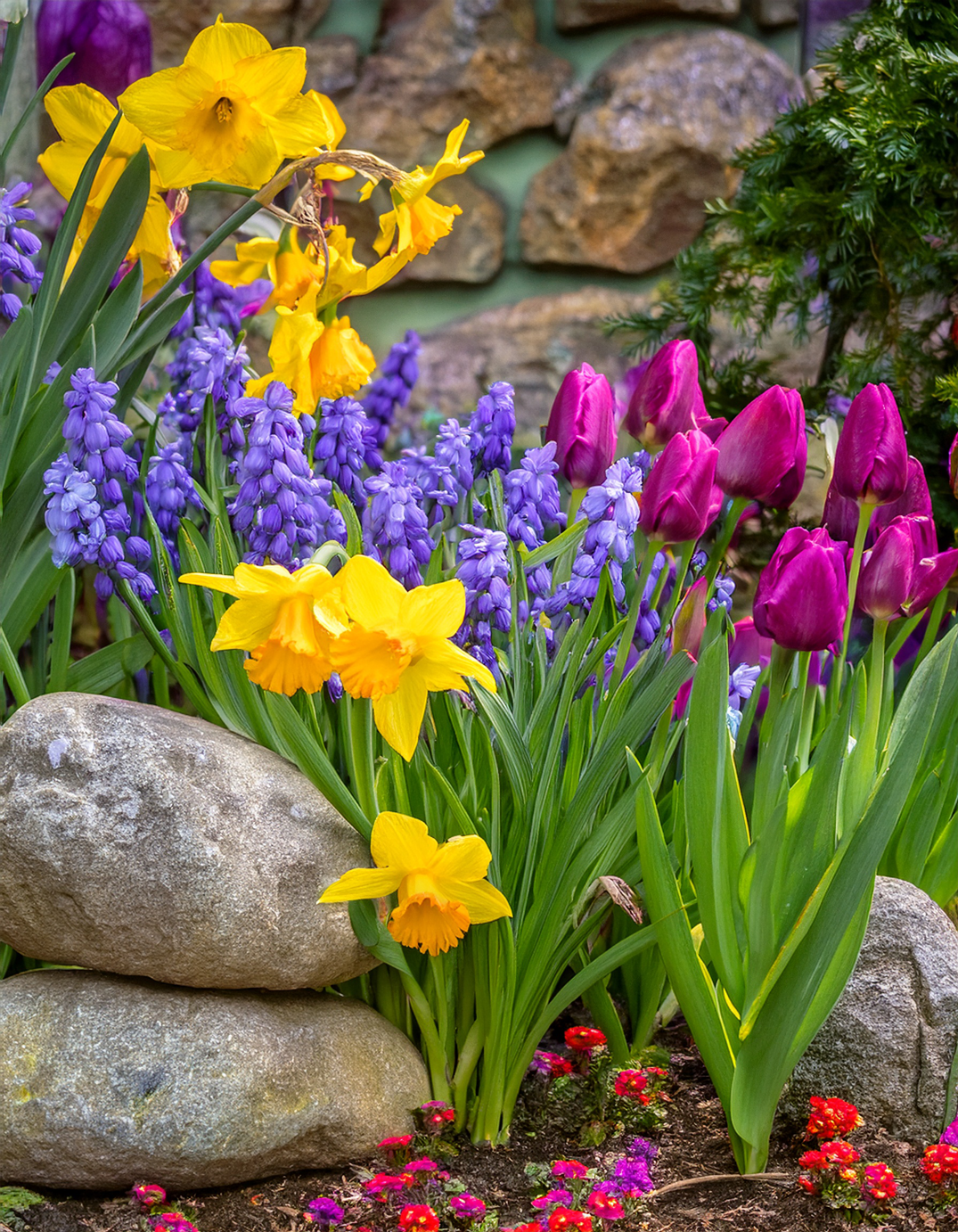
I also love how easy they are to combine with other parts of the garden. You can use daffodils as an early layer beneath shrubs and perennials, mix them with other spring bulbs, or even squeeze a miniature variety into a container by the front door. If you’re planting bulbs this fall and want something a little more interesting than a straight row of yellow flowers, here are 12 daffodil planting ideas worth trying.
1. Plant Daffodils in Sweeping Drifts Through a Lawn
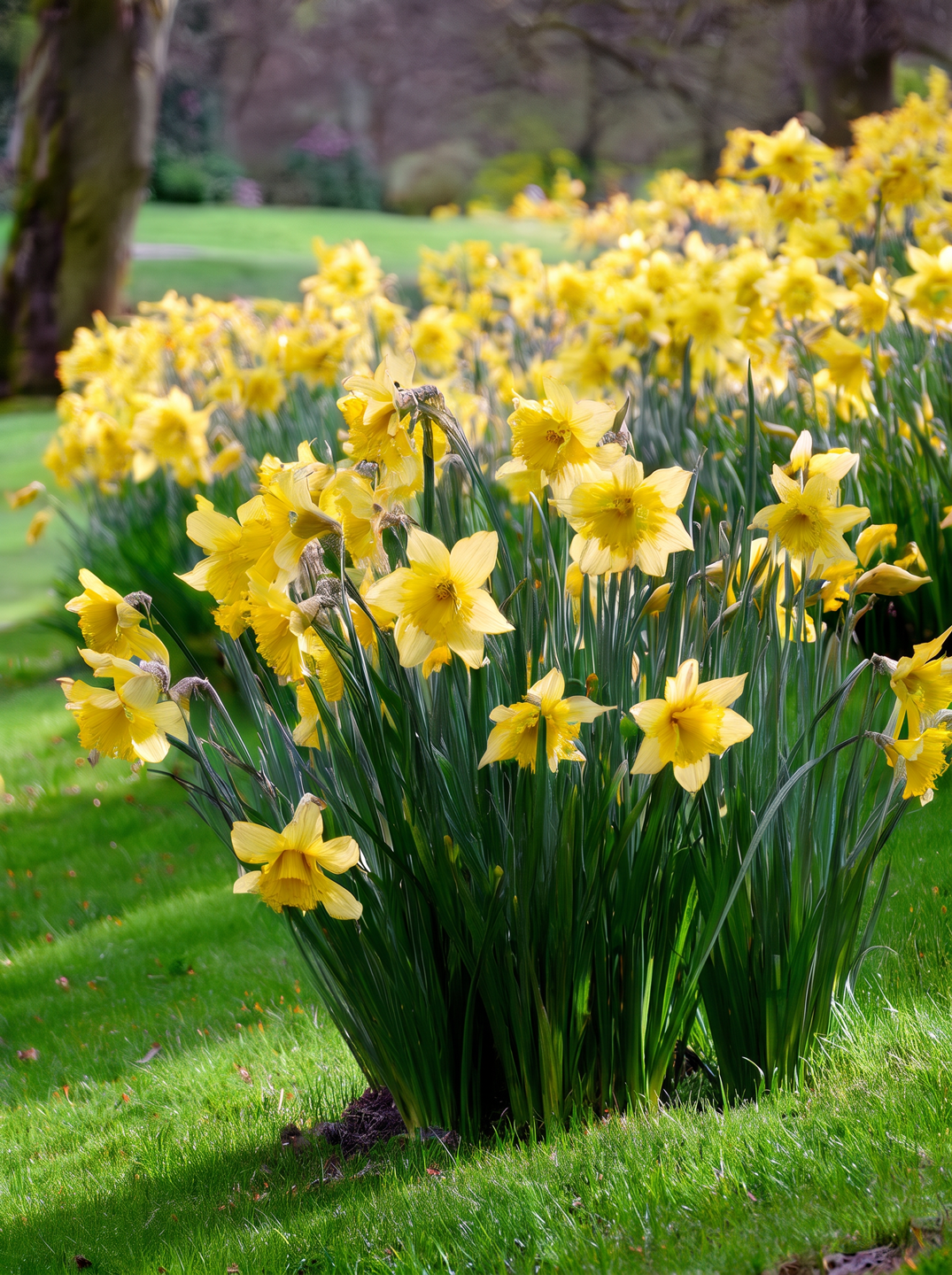
One of my favorite ways to grow daffodils is to make them look like they planted themselves. Instead of measuring out perfectly even spaces, plant the bulbs in loose drifts that wind through an open patch of lawn. Some clusters can be dense, others can contain only a few flowers, and the whole planting can gradually thin toward the edges. That irregularity is exactly what makes it work.
A simple trick is to gently scatter the bulbs over the area and plant them roughly where they land. The effect becomes especially beautiful as the bulbs multiply and the planting begins to feel more established. Just remember that naturalizing bulbs in grass changes your mowing schedule. The foliage needs time after flowering to replenish the bulbs before it is cut back. The Royal Horticultural Society has a helpful guide to naturalizing bulbs in grass if you want to create this kind of meadow-like planting.
🐝 Fan Favorite
“Feed the Bees” Garden Sign
Give your wildflower patch a pop of color and let your neighbors know there’s purpose in your plants.
Delivered in 5–7 days
- Hand-illustrated design
- Recycled aluminum — won’t fade, rust, or crack
- Plants 1 real tree in the Monarch Corridor
🦋 Every sign funds a tree planted in the North American Monarch Corridor — at no extra cost to you.
2. Create a Daffodil Border Along a Garden Path
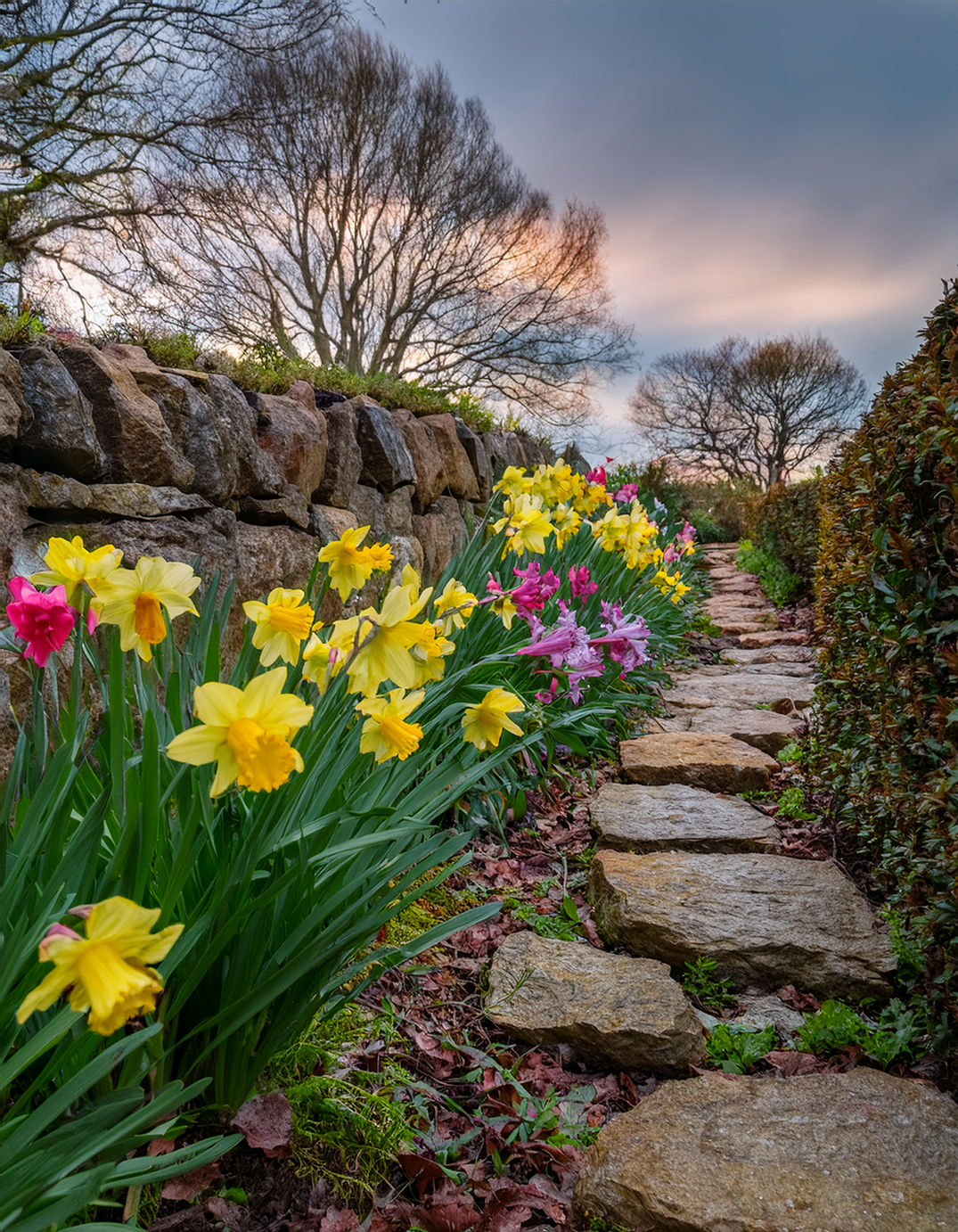
A pathway already creates a strong line through a garden, so planting daffodils alongside it gives the flowers an instant sense of structure. I particularly like this beside irregular flagstone, old brick, or gravel, where the softness of the flowers contrasts with the hard edges of the path. Rather than making one continuous yellow line, try planting small groups that appear and disappear as you move through the garden.
This is also a good place to experiment with different heights. Shorter daffodils can sit close to the path while taller varieties rise behind them among emerging perennials. If you like the slightly romantic look of flowers spilling over walkways, there are plenty of similar planting ideas in my cottage-style front yard garden ideas. Daffodils fit that style almost effortlessly.
3. Mix Daffodils With Tulips for Layered Spring Color
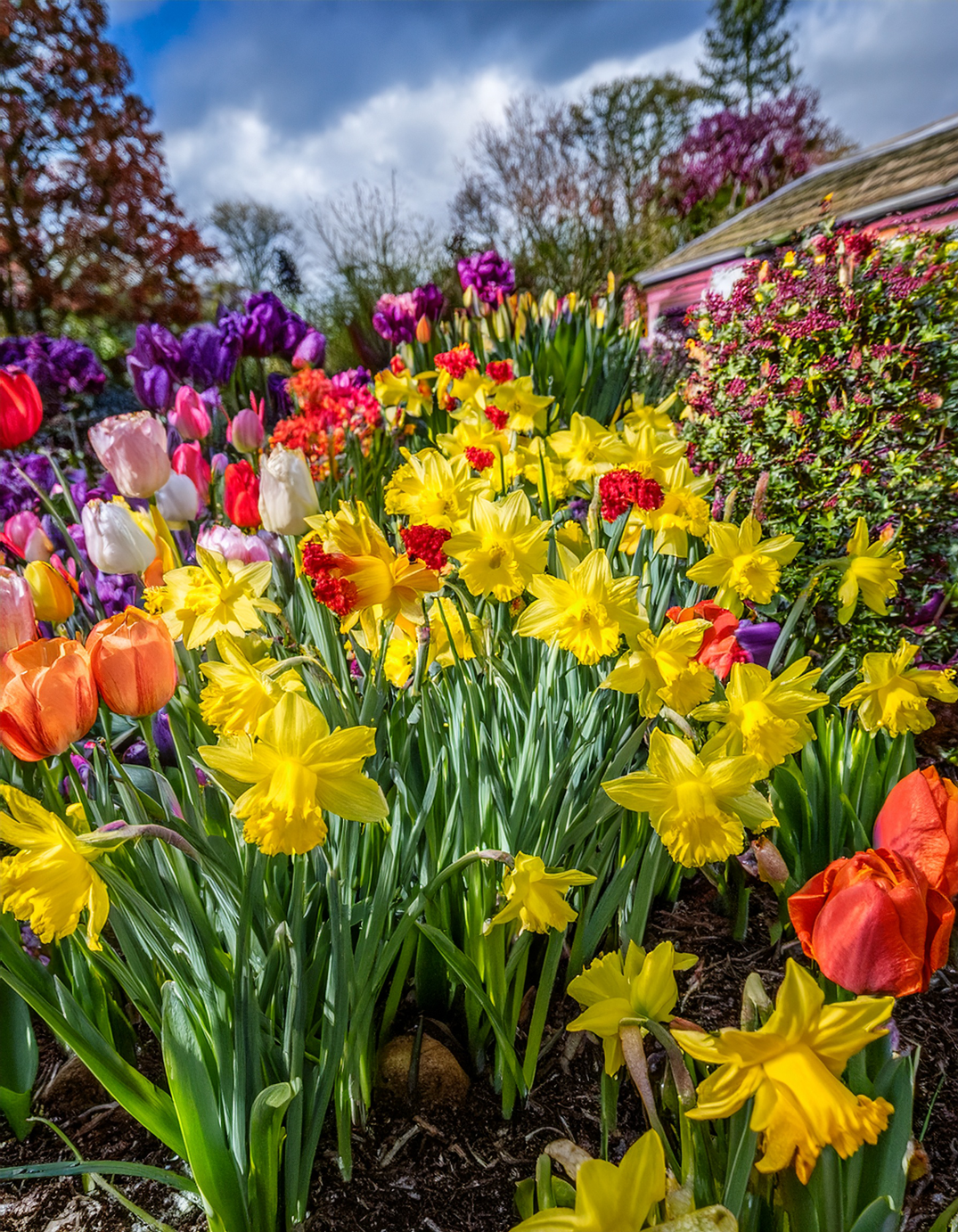
Daffodils and tulips are classic companions for a reason. Daffodils give you that unmistakable burst of yellow, cream, or white early in the season, while tulips open the door to almost every other color imaginable. Deep plum tulips beside pale yellow daffodils can feel surprisingly sophisticated, while pink tulips mixed with creamy daffodils create something much softer.
You can also think beyond color and use bloom time to extend the display. Choose varieties that overlap for one big flush of flowers, or combine bulbs that bloom in sequence so the bed changes as spring progresses. I use this same idea in my guide to spring flower succession planting combinations, where crocuses, daffodils, tulips, and alliums can essentially hand the garden off from one flower to the next.
4. Plant Daffodils Beneath Flowering Shrubs
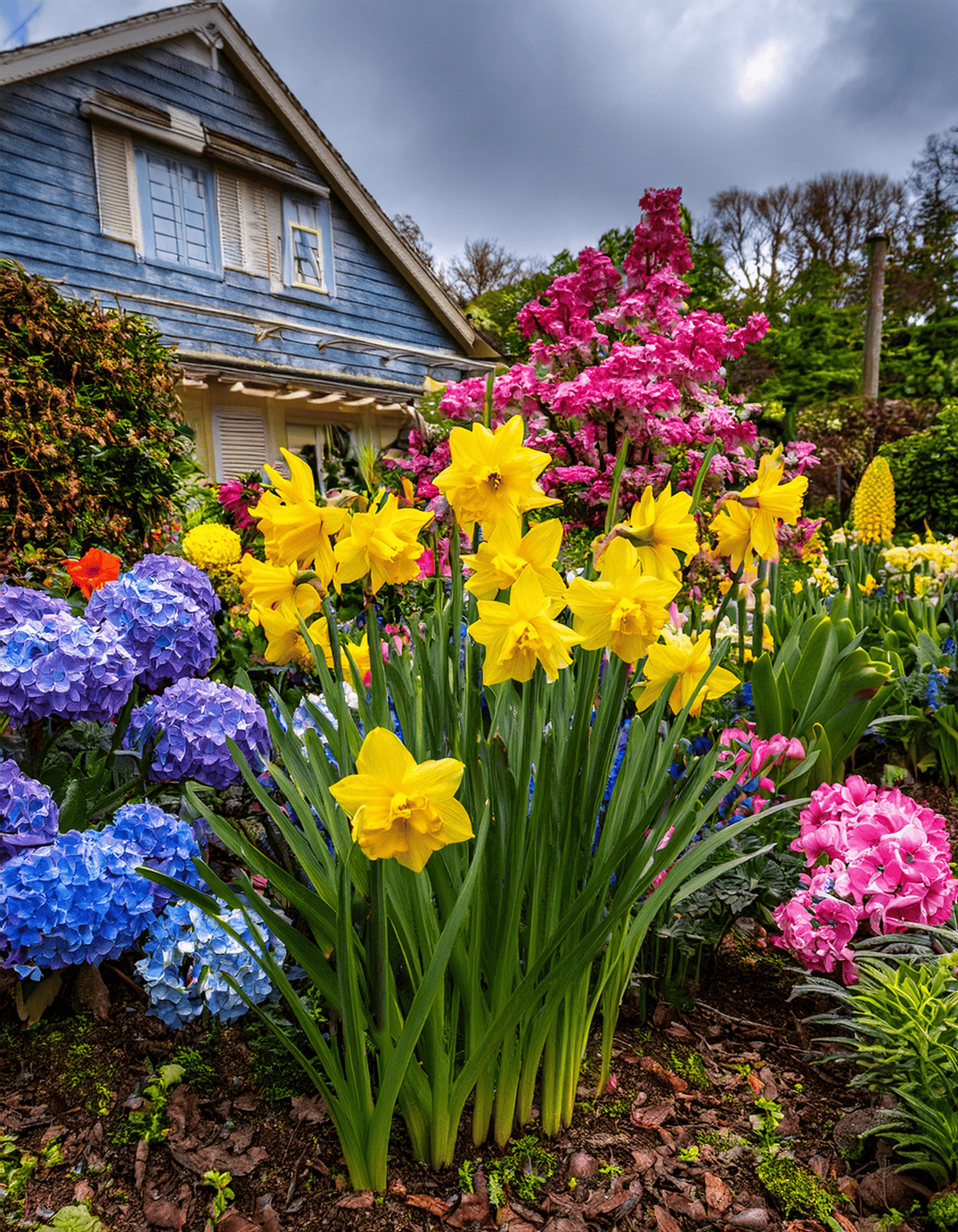
There is often a surprisingly empty layer beneath deciduous shrubs in early spring. Hydrangeas, lilacs, roses, and viburnums may only be beginning to wake up when daffodils are already reaching their peak, which makes that space perfect for an extra layer of flowers.
I like to place bulbs in irregular groups around the outer edges of the shrub rather than crowding them tightly around the trunk or stems. Once the shrub fills out later in spring, its foliage helps distract from the fading daffodil leaves below. You get a splash of early color without needing to dedicate an entirely separate flower bed to bulbs.
5. Create a Cottage-Style Daffodil Border
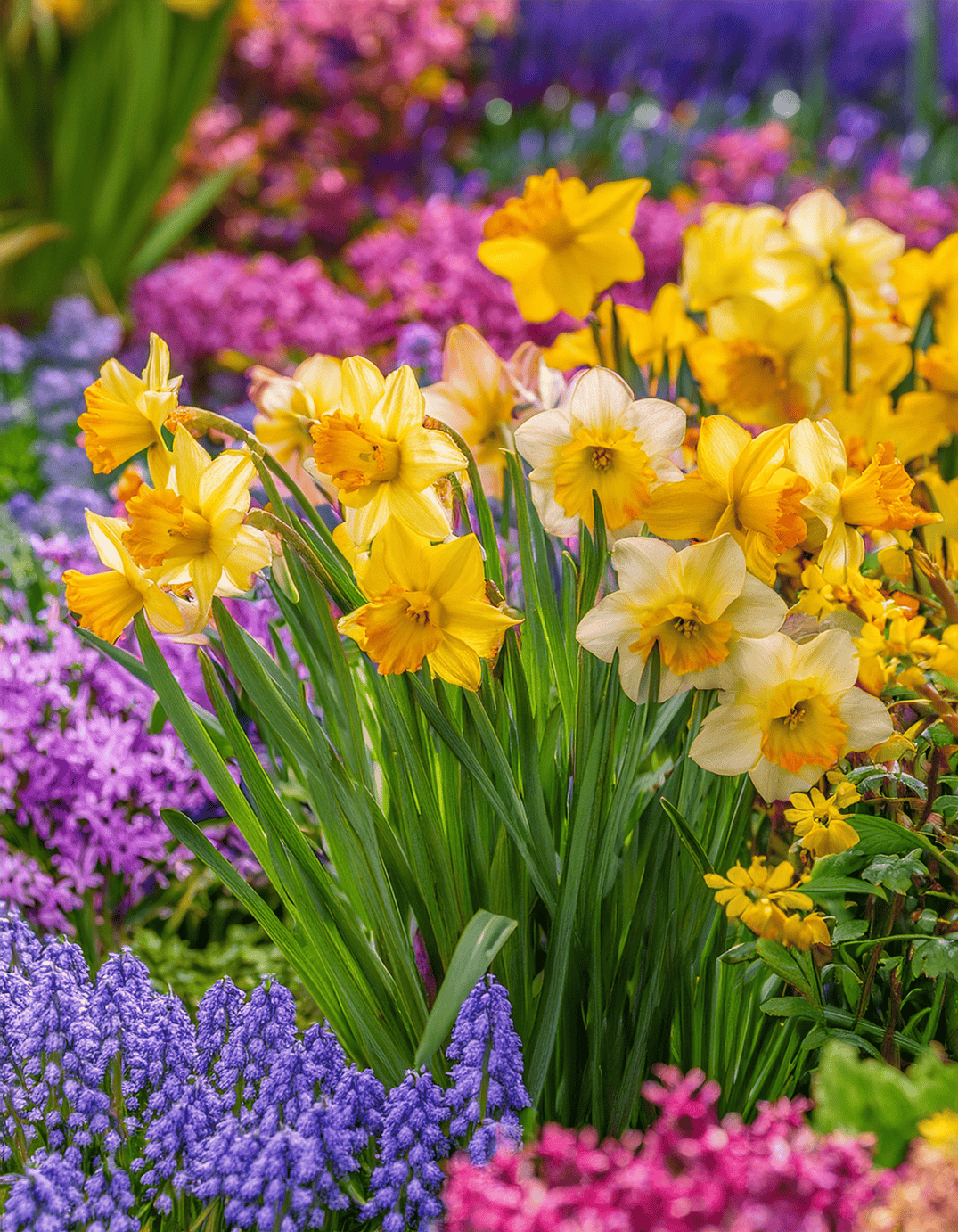
Daffodils feel right at home in a cottage garden because they do not need to look perfectly arranged. Let them emerge between perennials, beside pathways, and around other bulbs so it feels as though the border has been evolving for years. Creeping phlox, primroses, forget-me-nots, violas, and other early flowers can soften the spaces around their upright stems.
The trick is to avoid making every plant compete at exactly the same height. Let daffodils rise above a low carpet of flowers, then place taller perennials farther back that will fill the space later in the season. If this loose, layered style is what you’re after, my collection of cottage garden ideas has plenty of inspiration for building the rest of the planting around them.
6. Plant Daffodils Around a Mailbox or Lamppost
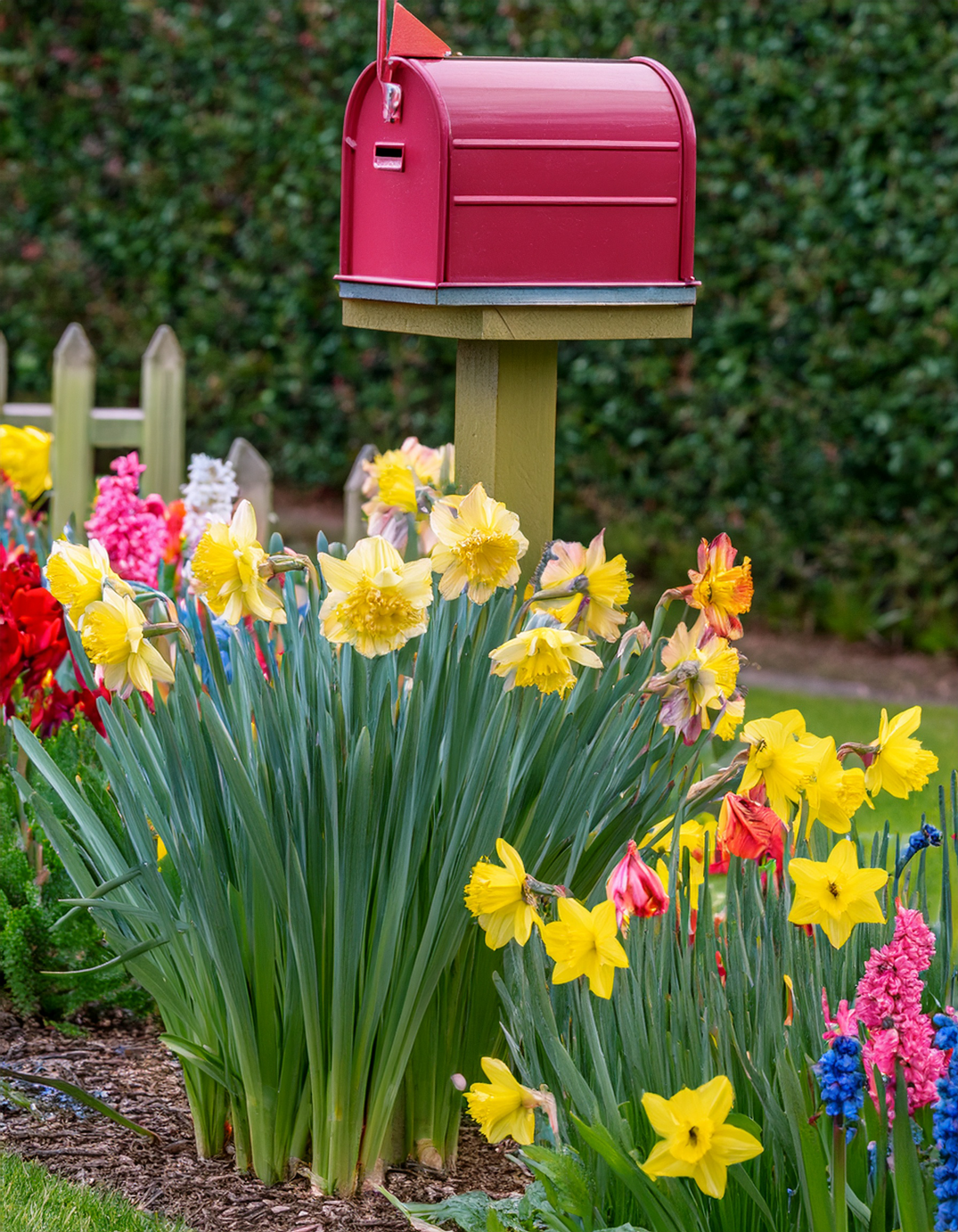
Not every daffodil planting needs hundreds of bulbs. A small group around a mailbox, lamppost, or other vertical feature can become one of the most noticeable spring displays in the yard. These spots are often surrounded by unused lawn, so even 15 or 20 bulbs can make a surprisingly big difference.
I would keep the arrangement somewhat loose rather than creating a perfect circle. Plant several clusters around the feature and leave a little room between them for low-growing perennials or ground covers. Once those plants emerge later in spring, they can take over visually as the daffodils begin to fade. It’s a simple way to turn a forgotten patch of lawn into a tiny seasonal garden.
7. Make a Layered Bulb Container With Daffodils
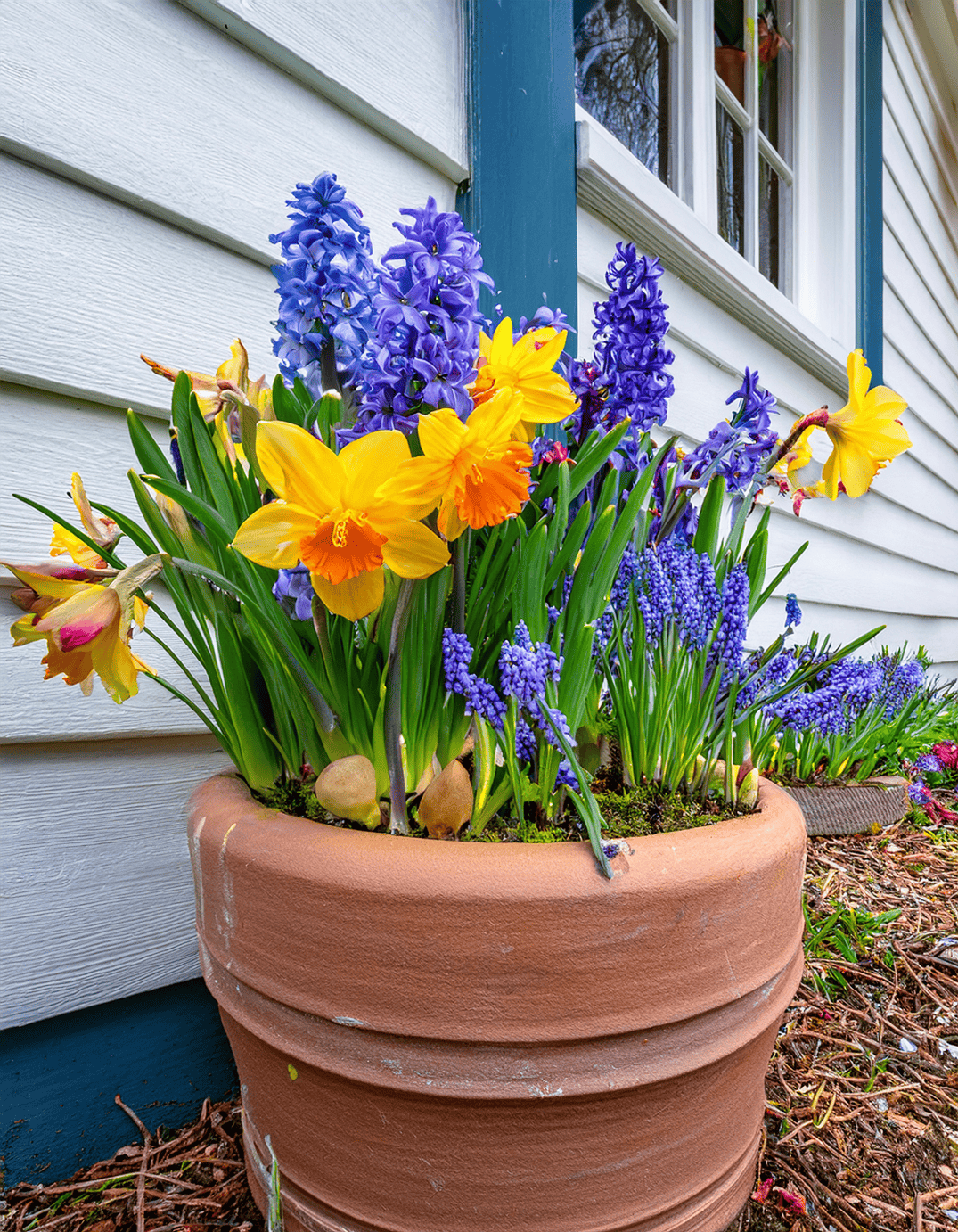
If garden space is limited, you can create an entire spring display inside one large pot. Layering bulbs lets you fit far more flowers into the container than you might expect. Depending on the varieties you’re using, larger or later-flowering bulbs can sit toward the bottom, with smaller early bulbs placed higher up in the pot.
Crocus, miniature daffodils, grape hyacinths, and other compact bulbs are especially useful for creating several waves of flowers from the same container. Once growth starts, you barely notice that there are multiple layers beneath the soil. For more combination ideas, take a look at these spring bulb planter ideas. One of my favorite combinations pairs fragrant hyacinths with miniature daffodils.
8. Plant Daffodils Along a Fence Line
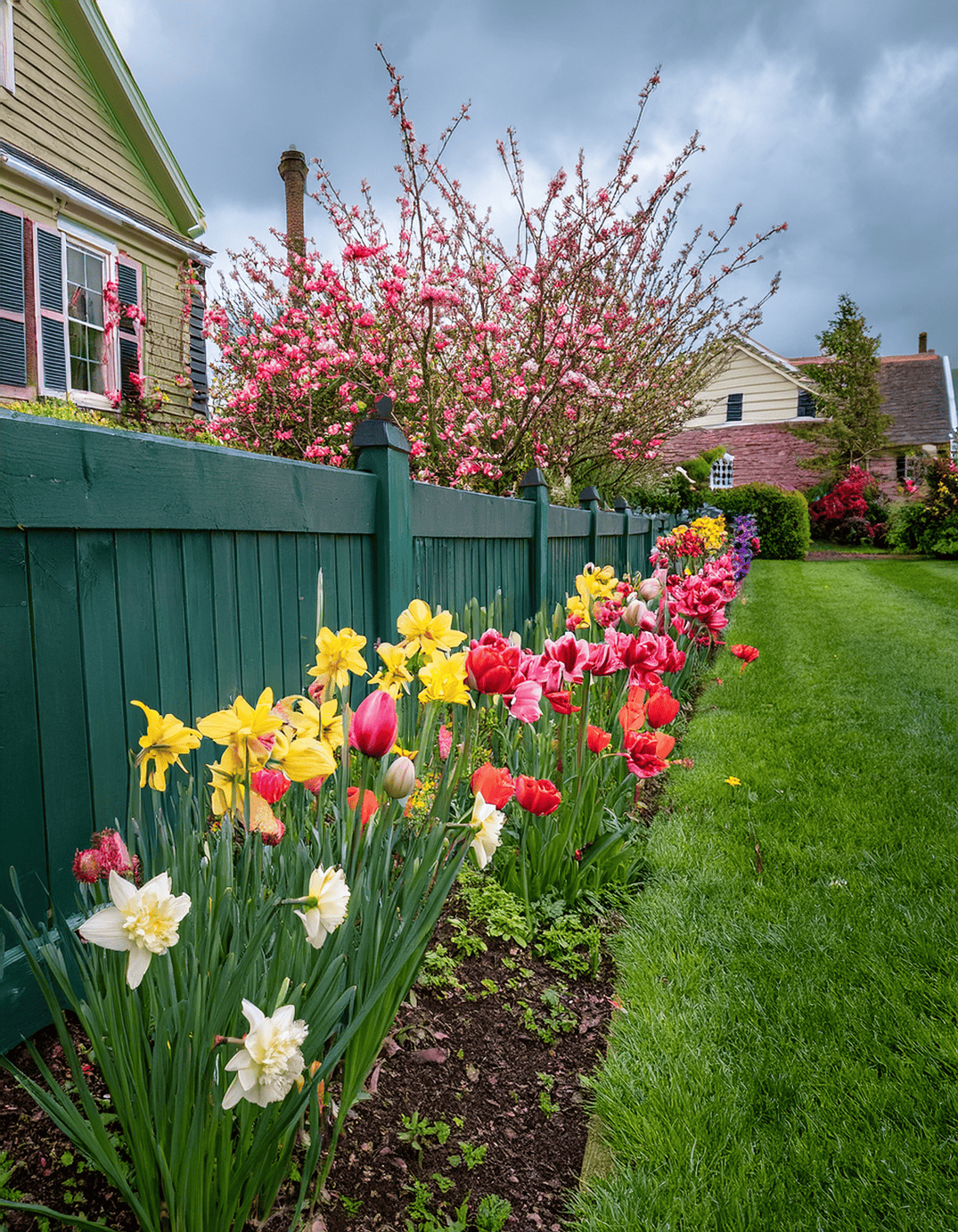
A bare fence can make a surprisingly good backdrop for daffodils. Dark stained wood, black fencing, and deep green hedges all make yellow and white flowers stand out much more dramatically. Even a simple wooden fence can give an otherwise loose bulb planting enough structure to feel intentional.
Instead of planting one narrow line directly against the fence, give the bed some depth. Place daffodils in groups at slightly different distances from it, then add perennials that will fill the gaps as spring turns into summer. This is particularly effective in cottage gardens, where the fence becomes part of the composition rather than simply marking the edge of the property. You can find more examples of this approach in these cottage garden border and fence ideas.
9. Naturalize Daffodils at the Edge of a Woodland Garden
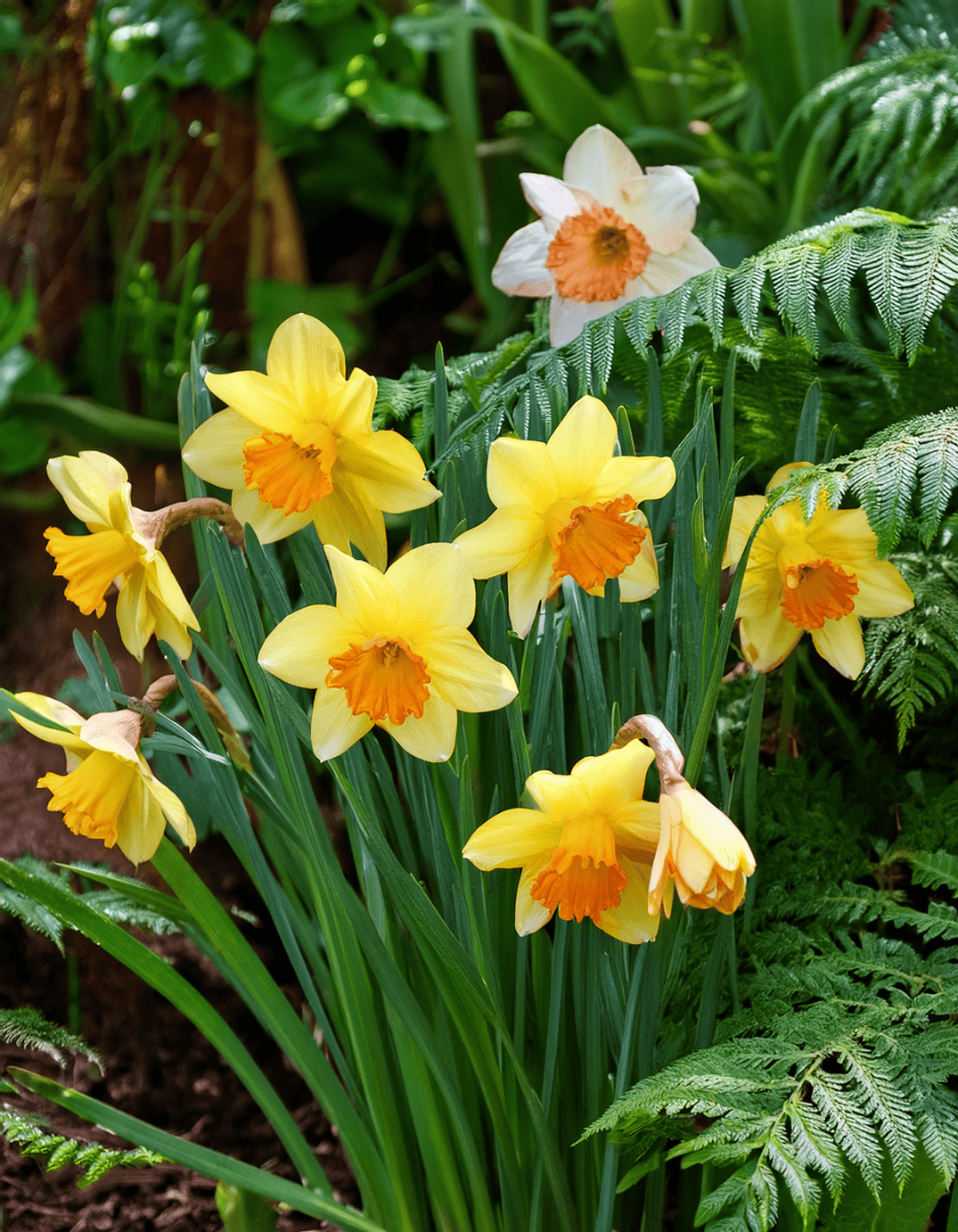
Daffodils can look completely different when they are moved away from a formal flower bed and tucked along the edge of a woodland garden. Plant them in loose groups beneath deciduous trees or around areas that will eventually fill with ferns, hostas, and other shade-loving plants. In early spring, before the canopy has fully leafed out, the bulbs can take advantage of the available light.
The finished look should feel a little irregular. Let some groups contain five or six bulbs and others stretch into larger drifts. Over time, returning daffodils can make the area feel like an old woodland garden that has been growing there much longer than it actually has. Pale yellow and white varieties are especially beautiful here because they seem to glow against dark soil, bark, and emerging green foliage.
10. Create an Early Spring Bed With Primroses
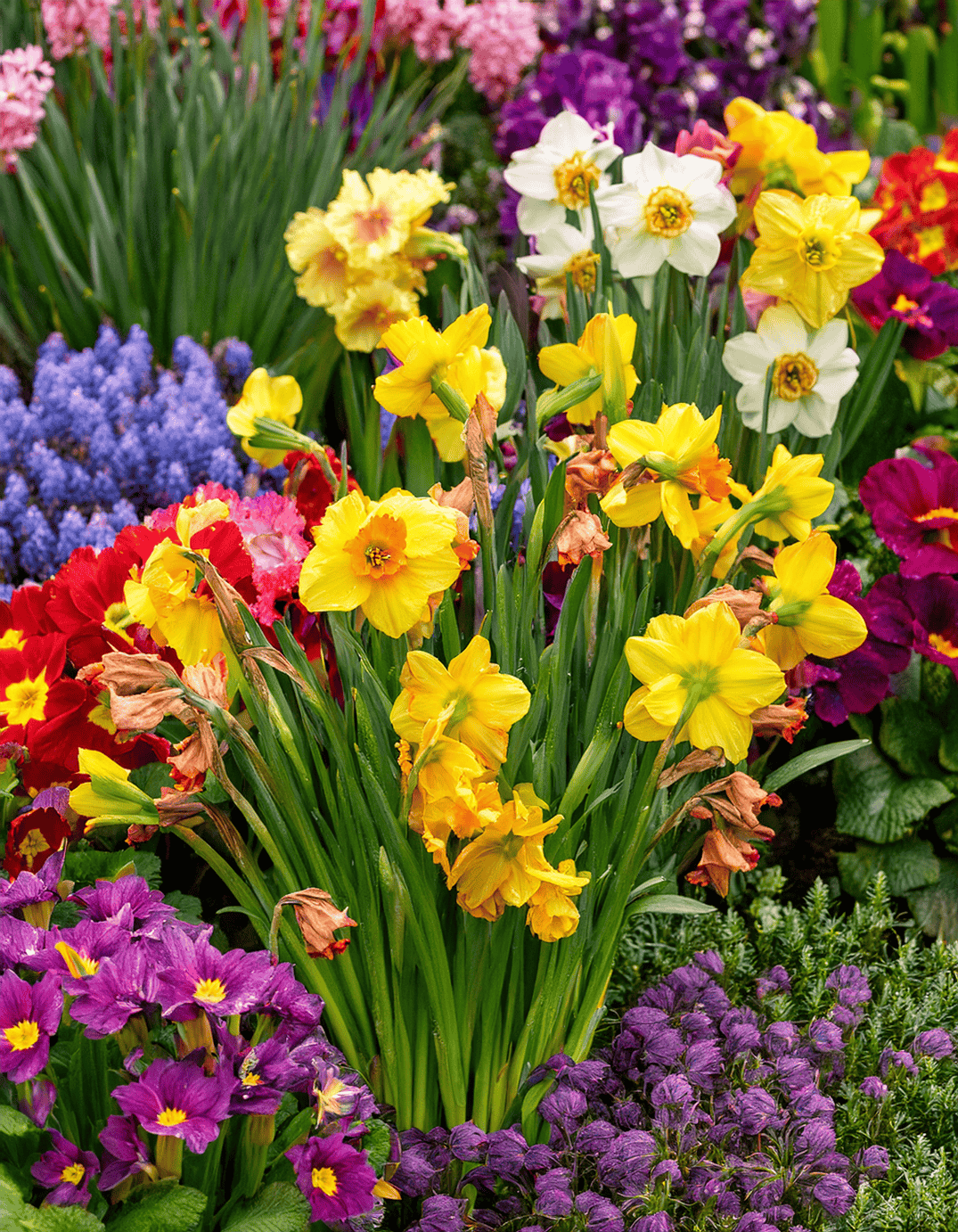
Daffodils pair beautifully with primroses because the two plants bloom at a similar time but sit at very different heights. Primroses create a low carpet of color around the base of taller daffodils, which helps the whole bed feel fuller instead of leaving bare soil between the bulbs.
Try using purple, pink, cream, or red primroses around yellow or white daffodils for an easy layered look. They work especially well along the front of borders, beside paths, and around shrubs where you want early spring color before the rest of the garden fills in.
11. Pair Daffodils With Hyacinths for a Longer Spring Display
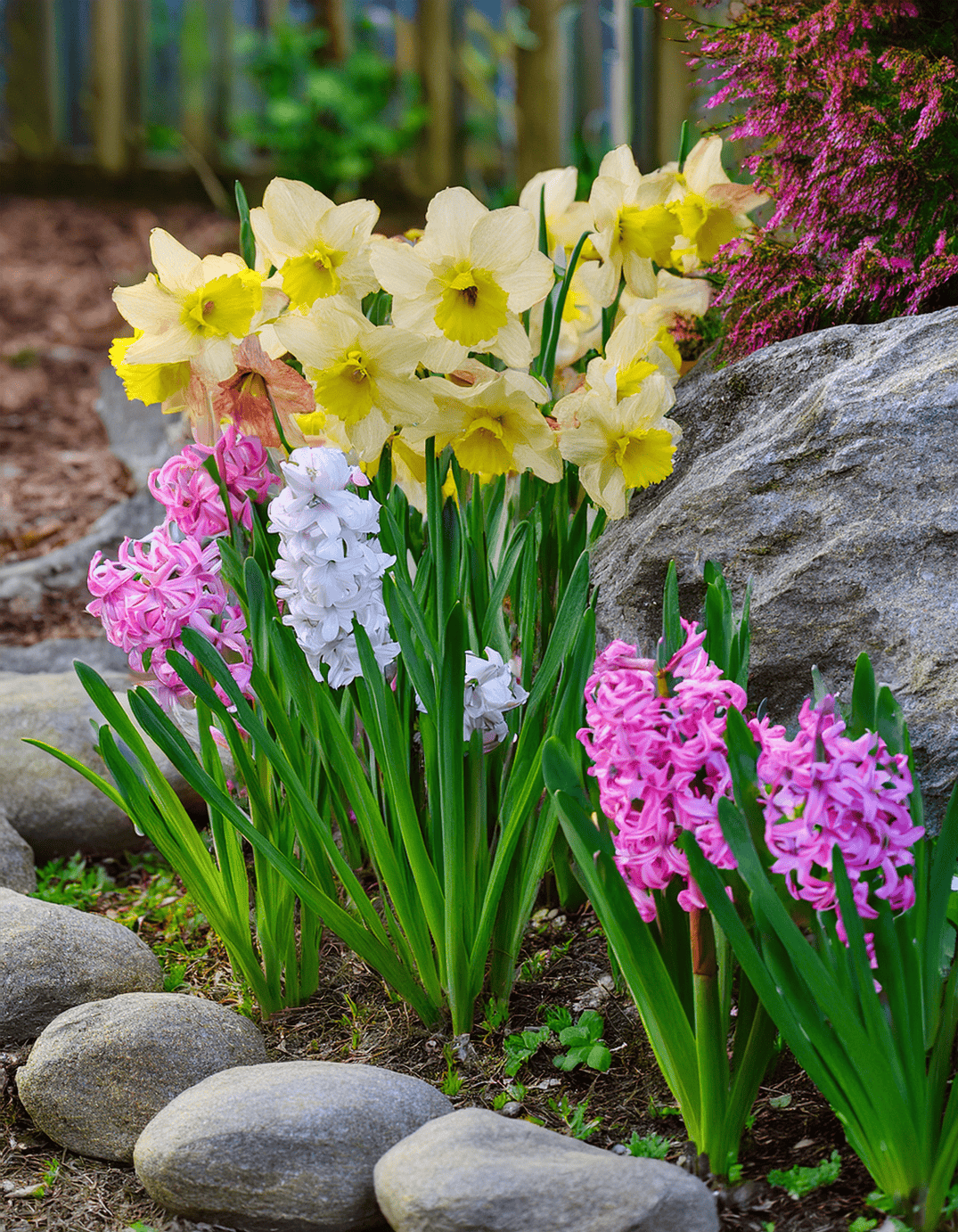
If you want your spring bulb bed to make an impact beyond color, add hyacinths. Their dense flower spikes provide a completely different shape beside the open trumpet flowers of daffodils, while their fragrance can be noticeable even from several feet away. Blue, purple, and pink hyacinths all pair beautifully with yellow or creamy white daffodils.
You can also choose varieties according to bloom time so that one group begins opening as another reaches its peak. That little bit of planning makes a relatively small bulb bed feel interesting for much longer. Hyacinths and several types of Narcissus also make my list of fragrant bulbs to plant in fall for spring, which is worth exploring if scent is part of your garden plan.
12. Plant Daffodils Around Large Landscape Rocks or Boulders
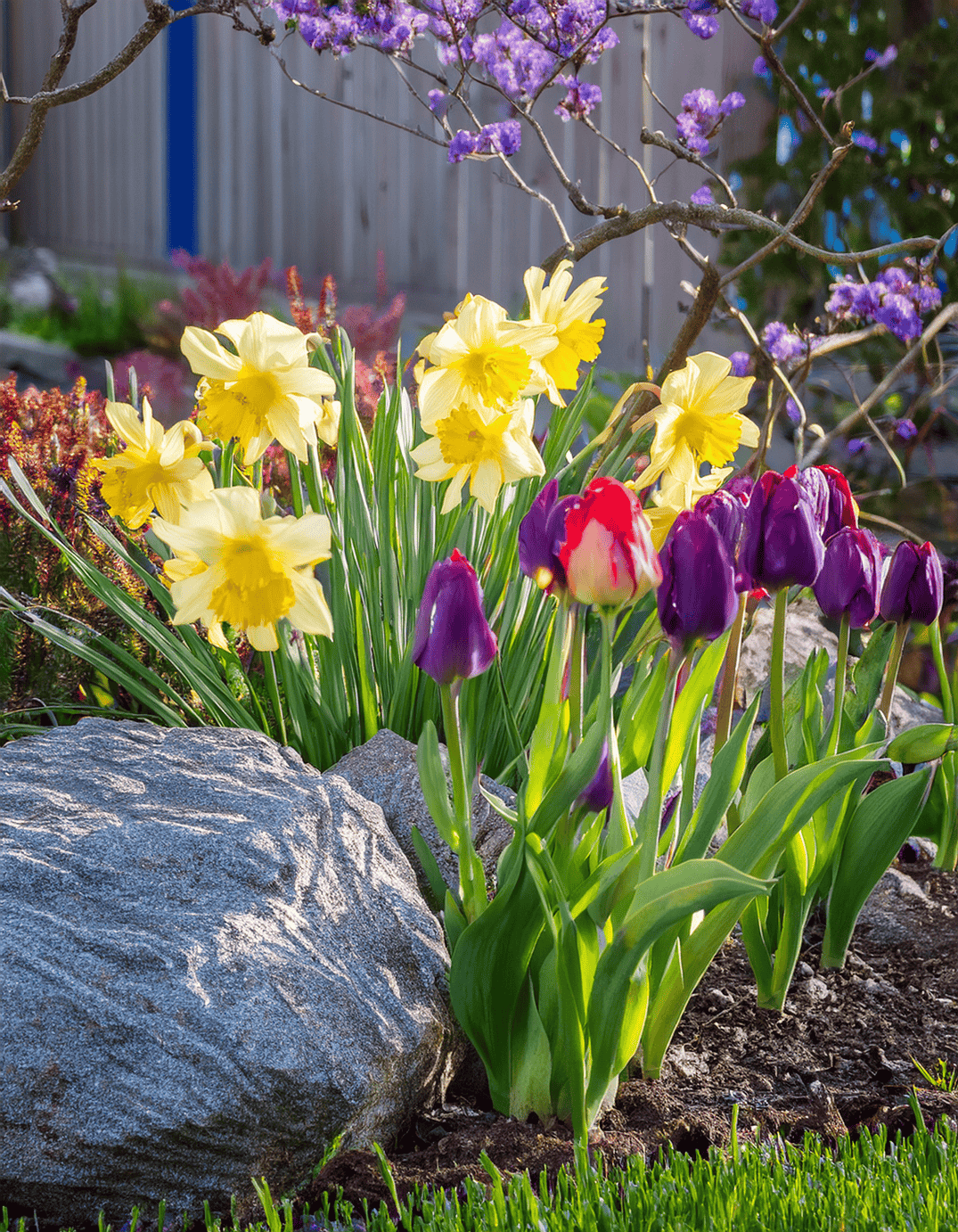
Large rocks are useful in a garden because they give your eye somewhere to rest, but they can sometimes feel disconnected from the planting around them. Daffodils are an easy way to soften that transition. Let clusters emerge beside and partially behind a boulder so the flowers seem to wrap naturally around it.
This works particularly well in sloped gardens, rock gardens, woodland edges, and informal beds. You can tuck smaller bulbs into gaps nearby and eventually add low-growing perennials that remain after the daffodils finish flowering. The contrast between rough stone and delicate spring flowers gives even a relatively simple planting a much more established, designed appearance.
Final Thoughts
The thing I like most about daffodils is that you really do not need an elaborate garden plan to make them look good. A handful beside a mailbox can work just as well as hundreds naturalized through a lawn. What changes the effect is how you use the surrounding landscape. Paths, fences, shrubs, stones, containers, and existing perennials can all become part of the display.
And because daffodils are such dependable spring bulbs, these ideas do not have to be finished in one season. Start with a few clusters this fall, see where you wish you had more color when they bloom, and add another batch the following year. Before long, those small pockets of yellow and white can start to connect, giving the garden that wonderfully established spring look that is almost impossible to fake.