

Fall planters are one of my favourite ways to decorate the porch and garden, but there’s always that point in the season when the first frost arrives and everything starts looking a little tired. Summer annuals collapse, flowers turn brown, and those beautiful arrangements that looked so colourful in September suddenly lose their appeal. Fortunately, a little planning can keep your outdoor containers looking attractive well into the colder months.
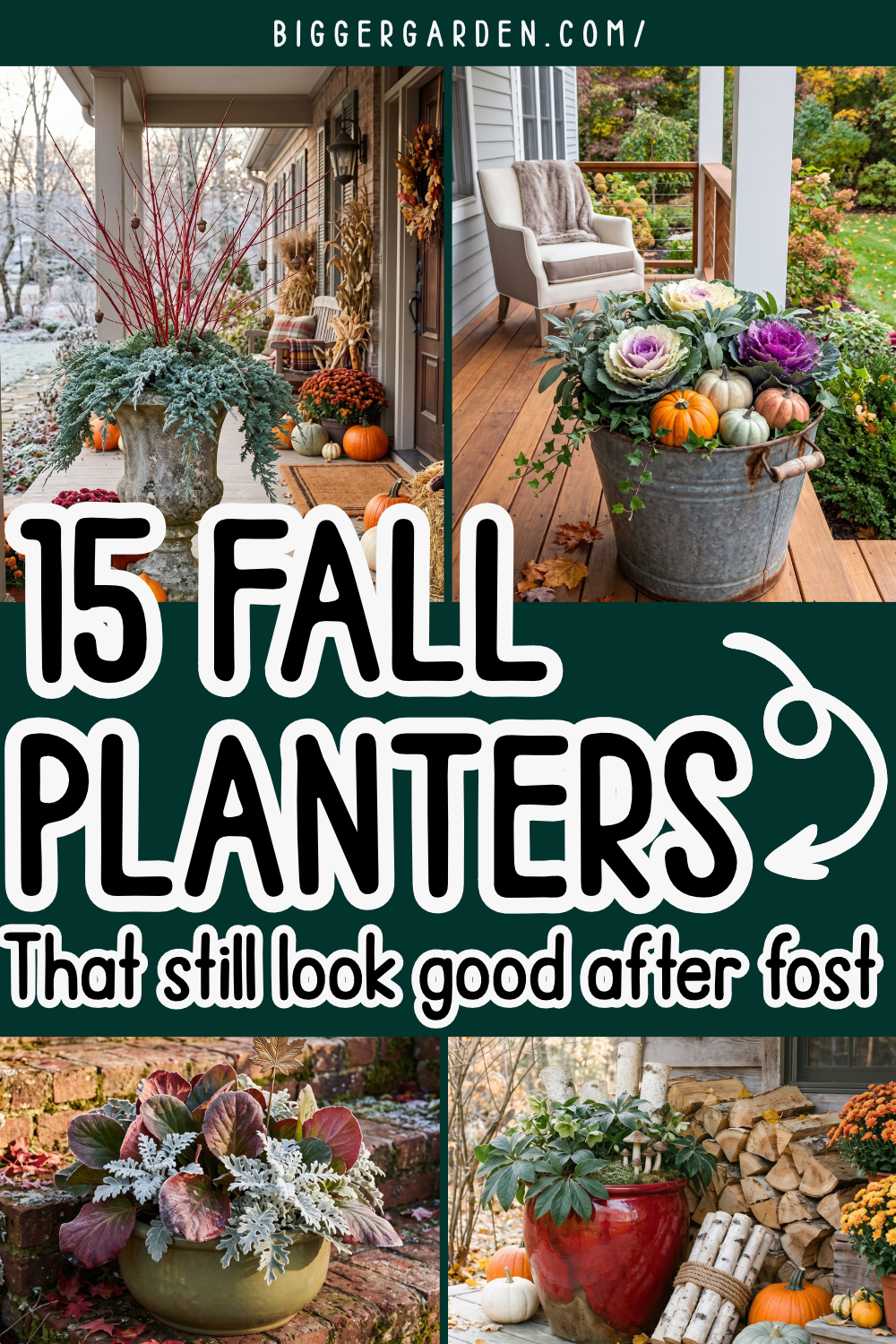
Instead of relying entirely on flowers, I like to combine cold-tolerant foliage, ornamental grasses, evergreen plants, and natural decorations that actually look better as autumn progresses. Deep burgundy leaves, copper-coloured grasses, colourful berries, and dried seed heads all bring something different to the garden after frost. These 15 fall planter ideas combine interesting plants with creative containers and accessories, giving you plenty of ways to decorate your porch, patio, or garden long after the first chilly nights arrive.
1. Ornamental Kale, Burgundy Coral Bells, and Copper Bells
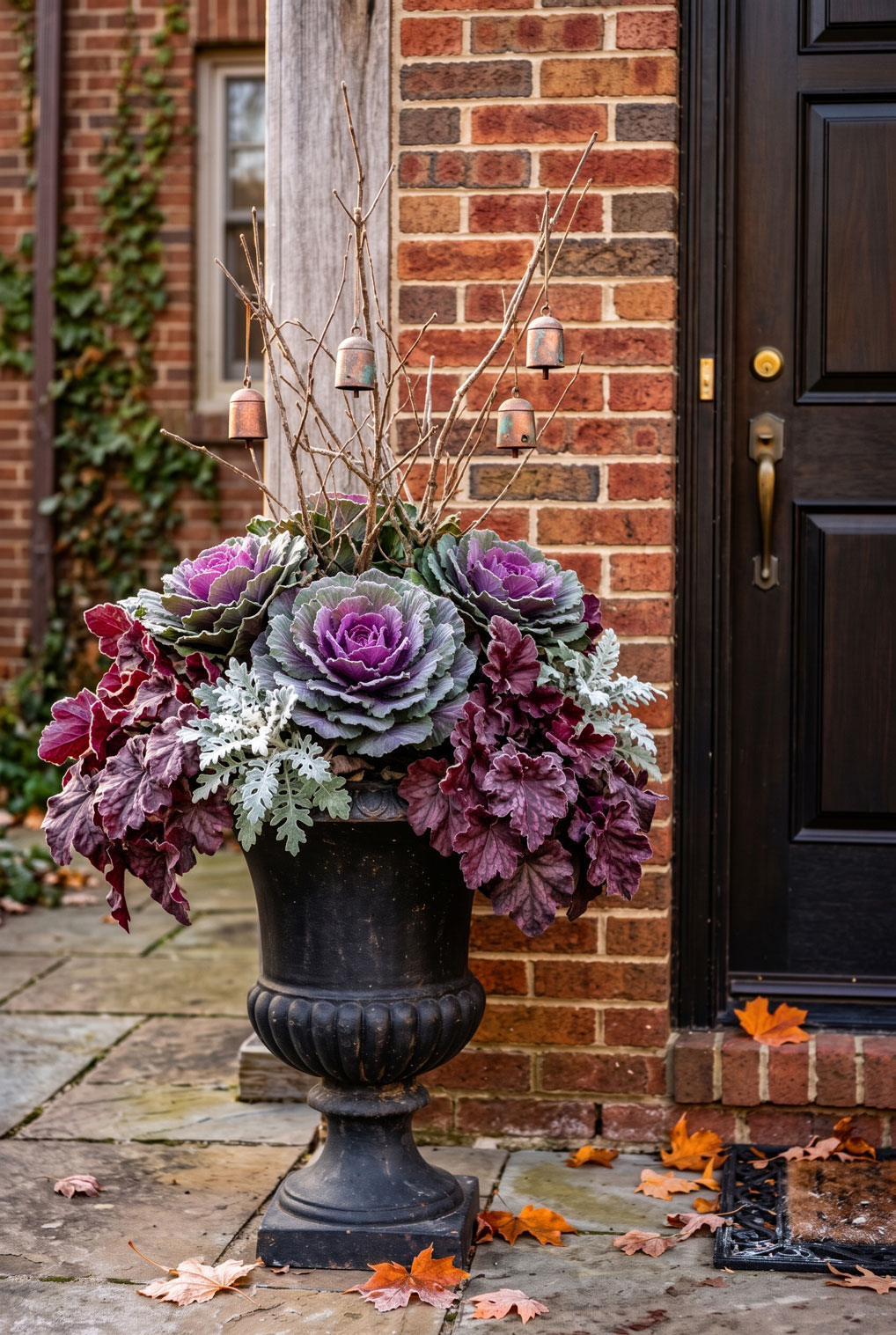
Ornamental kale (Brassica oleracea) is one of my favourite plants for fall containers because its colourful leaves can become even more vibrant as temperatures drop. For this arrangement, start with a tall charcoal-black urn and fill the center with large purple ornamental kale rosettes. Surround them with burgundy coral bells (Heuchera spp.), choosing varieties with dark, ruffled foliage for extra texture. A few silver dusty miller plants (Jacobaea maritima) around the edges create a beautiful contrast against the purple and burgundy tones. The result is a full, layered planter that doesn’t need bright flowers to make an impression.
To give the arrangement something unexpected, add a few small weathered copper bells suspended from decorative branches. I especially like how copper complements the darker foliage without making the planter look overly decorated. Position the urn beside a front door, preferably against brick or light-coloured siding, where the different foliage colours will stand out. Kale and many coral bells can tolerate light frosts, although dusty miller may eventually suffer damage during prolonged freezing temperatures. Even then, the kale and coral bells can continue providing structure and colour.
🐝 Fan Favorite
“Feed the Bees” Garden Sign
Give your wildflower patch a pop of color and let your neighbors know there’s purpose in your plants.
Delivered in 5–7 days
🦋 Every sign funds a tree planted in the North American Monarch Corridor — at no extra cost to you.
2. Wintergreen Berries, Moss, and a Woodland Fox
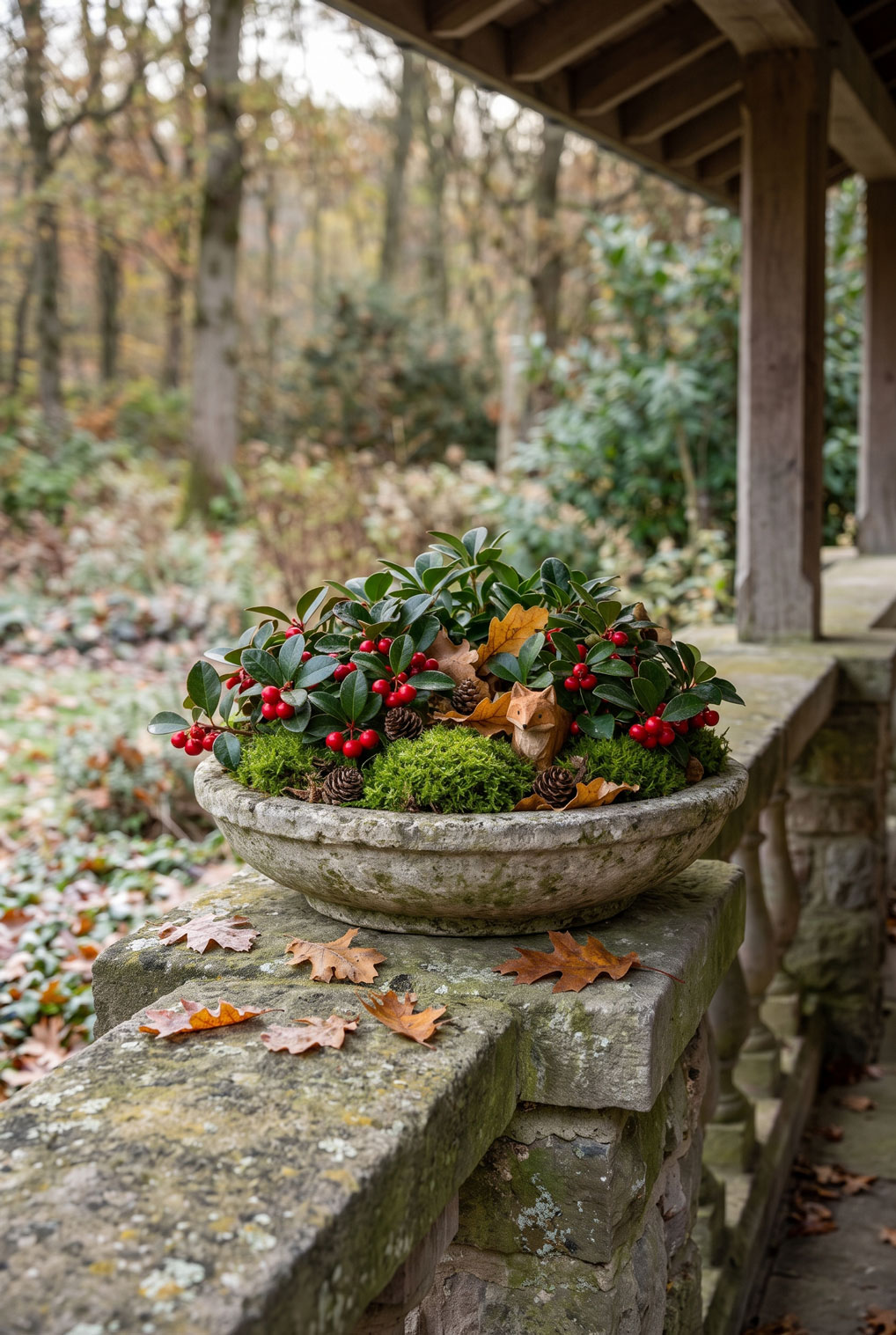
Wintergreen (Gaultheria procumbens) deserves more attention in fall container arrangements. This low-growing evergreen has small, glossy green leaves and bright red berries that bring colour to an otherwise quiet garden. I love using it in shallow stone bowls because its creeping growth habit creates a natural woodland appearance. Plant several wintergreen plants together, leaving enough space between them to tuck in small cushions of moss. Add a few pinecones, curled oak leaves, and pieces of weathered bark to make the arrangement feel like a miniature section of the forest floor.
A small carved wooden fox makes the perfect finishing touch, especially when it’s partially hidden among the foliage rather than sitting prominently on top. Place the bowl on an outdoor wooden side table, a sheltered porch ledge, or a low stone wall near the house. Wintergreen prefers acidic, well-drained soil that stays evenly moist, so I would use a potting mix suitable for acid-loving plants rather than ordinary garden soil. Its evergreen leaves and berries provide interest through chilly weather, although the roots will need protection if you’re hoping to keep the plants alive through a particularly harsh winter.
3. Golden Sedge, Purple Violas, and Amber Glass
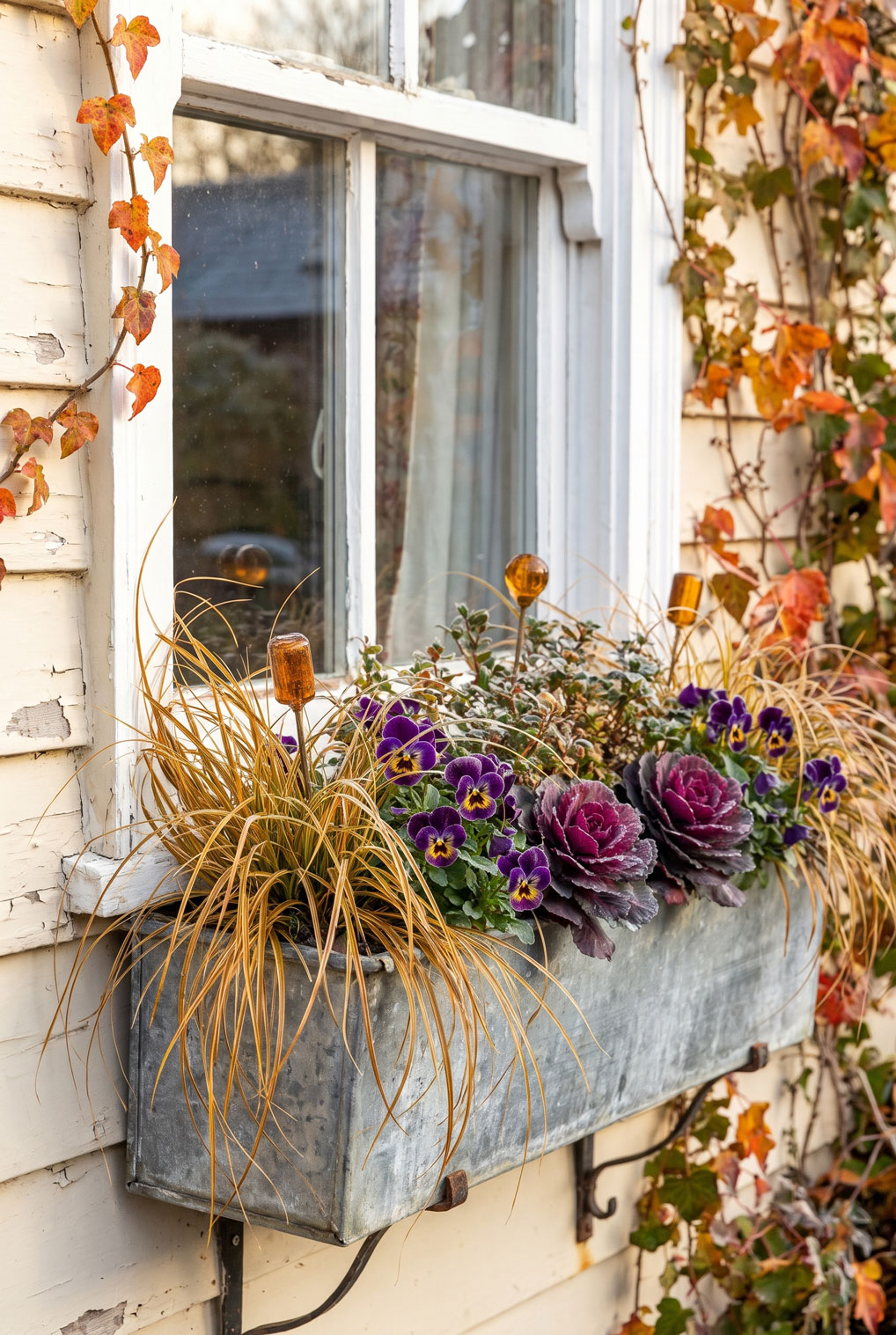
Window boxes don’t have to come down when the summer flowers disappear. In fact, autumn is a great opportunity to replace tired annuals with plants that have more interesting foliage and better cold tolerance. For this combination, I would use golden Japanese sedge (Carex oshimensis ‘Evergold’) as the main foliage plant, allowing its narrow, arching leaves to spill gently over the sides of a long window box. Add deep purple violas (Viola spp.) between the grasses, followed by a few compact ornamental cabbage plants for a fuller appearance. The contrast between the fine golden foliage and broad, ruffled cabbage leaves makes the entire arrangement feel more substantial.
Small amber glass ornaments mounted on short outdoor garden stakes introduce another warm autumn colour without competing with the plants. I particularly like this arrangement beneath a white-trimmed window, where the purple flowers and golden foliage can stand out against the house. Violas are surprisingly resilient during chilly weather and can continue flowering during mild periods after light frosts. The evergreen sedge also provides structure when flowering slows down. Choose a window box with proper drainage, and avoid allowing the soil to remain waterlogged during cold, wet weather.
4. Little Bluestem, Dried Hydrangeas, and a Vintage Milk Can
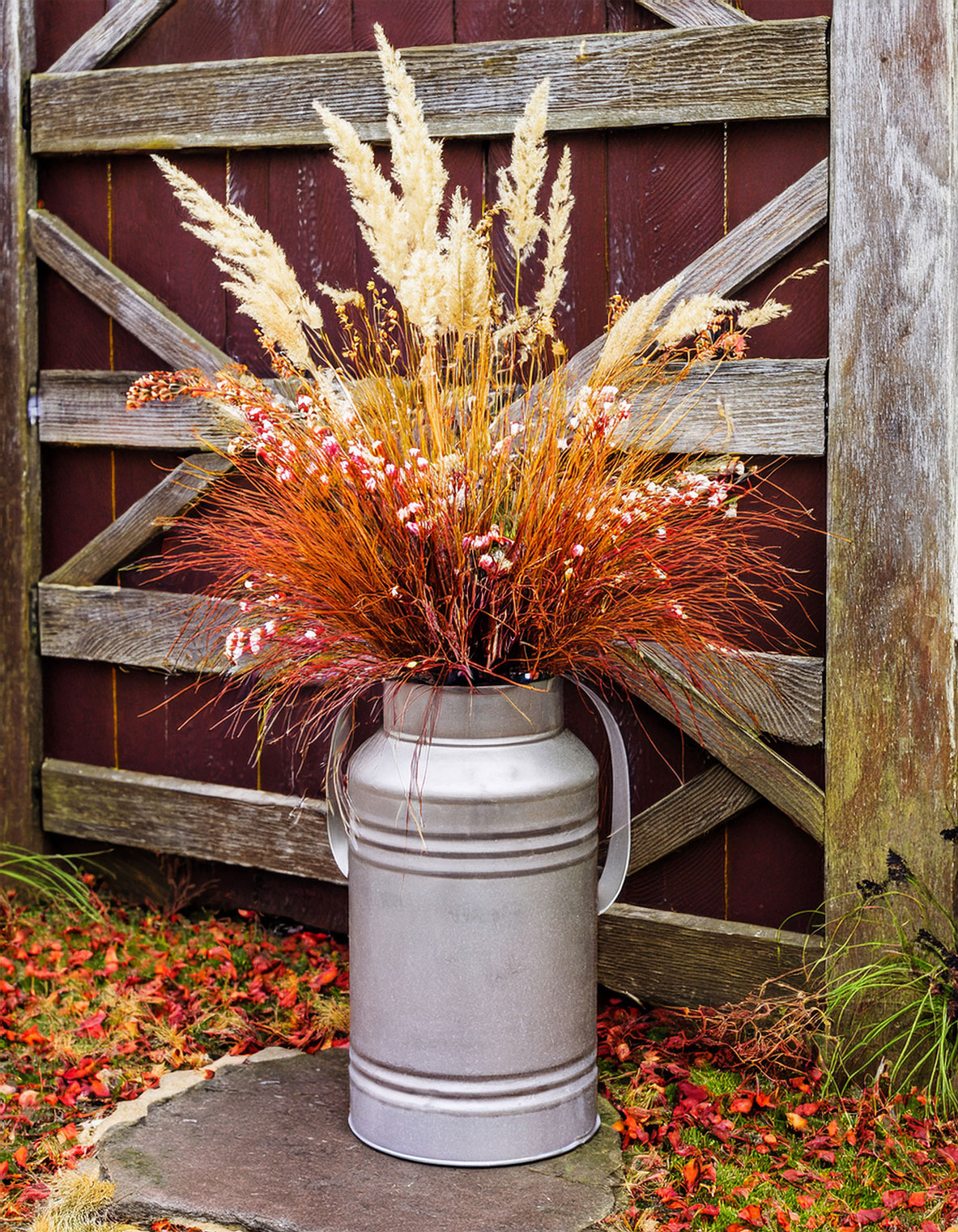
One of the easiest ways to create a fall planter that lasts is to include plants that naturally look beautiful as they dry. Little bluestem (Schizachyrium scoparium) is a wonderful example. This native ornamental grass develops shades of copper, bronze, and reddish orange in autumn, while its delicate seed heads catch the light. I would use a large vintage galvanized milk can as the container, filling it with an upright clump of little bluestem and surrounding the grass with dried hydrangea (Hydrangea spp.) blooms in muted cream, dusty pink, and parchment brown. The hydrangeas can be cut stems arranged around the living grass rather than additional plants competing for root space.
A few dried berry branches add height and make the arrangement feel less predictable. I think this planter would look especially good beside a weathered garden gate, an old wooden fence, or a farmhouse porch. The beauty of using dried hydrangeas is that you don’t have to worry about their flowers being ruined by the first frost. Little bluestem also retains much of its shape and seasonal colour after dormancy begins. If you’re planting directly into a milk can, make sure it has drainage holes. Otherwise, place the living grass in a separate draining nursery pot inside the decorative container.
5. Bergenia, Silver Foliage, and a Brass Leaf Ornament
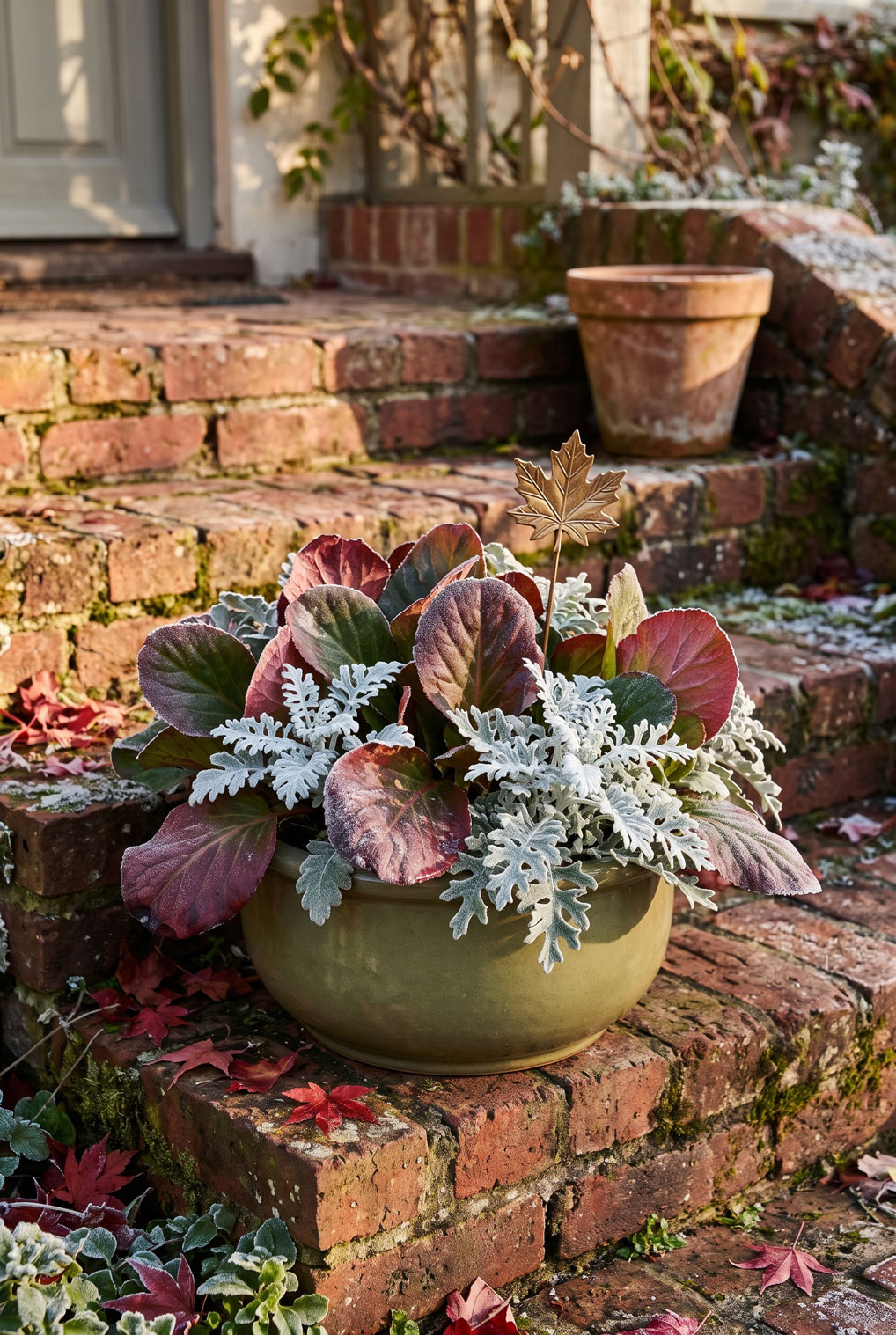
Bergenia (Bergenia cordifolia) is an underrated plant for cold-season containers, particularly if you want something different from the usual ornamental kale and chrysanthemums. Its large, leathery evergreen leaves develop beautiful reddish and burgundy tones in cold weather, creating a dramatic display even without flowers. For this arrangement, use a broad ceramic planter in muted olive green or weathered grey. Fill it with several bergenia plants, allowing their oversized leaves to overlap naturally. Tuck silver dusty miller (Jacobaea maritima) around the edges, where its soft foliage will contrast with the glossy bergenia leaves.
A single brass maple leaf ornament on a slender garden stake is all I would add for decoration. The warm metallic finish works beautifully with the burgundy foliage, especially when morning sunlight catches the leaves. Position the container on wide brick steps or beside a stone pathway, where its lower, spreading shape can be appreciated. Bergenia is generally quite cold-hardy, and its leaves can remain attractive through much of winter, although they may droop during a hard freeze and recover when temperatures rise. The dusty miller is more vulnerable to severe cold, so I would consider it a seasonal accent rather than something guaranteed to survive winter.
6. Miniature Spruce, Heather, and a Rustic Wooden Fence
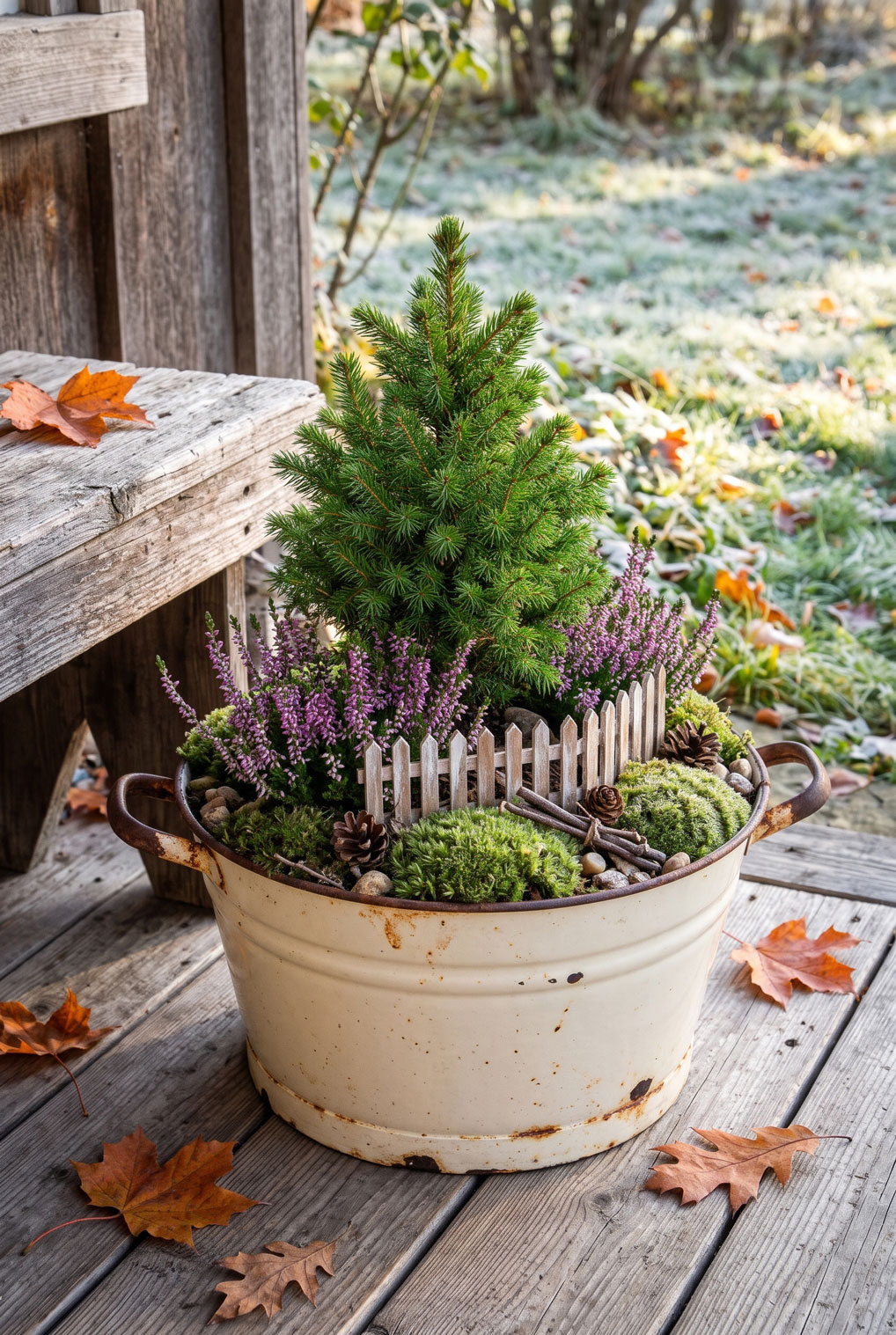
If you’re looking for a fall planter that can transition into winter without a complete makeover, a small evergreen is an excellent starting point. Dwarf Alberta spruce (Picea glauca ‘Conica’) has a naturally compact, conical shape that makes it ideal for container arrangements. I would plant one in the center of a large vintage enamel washpot, then surround it with low-growing heather (Calluna vulgaris). Choose heather varieties with purple or pink blooms to add seasonal colour around the base of the spruce. Small patches of moss and a few naturally arranged pinecones help soften the spaces between the plants.
For a playful detail, add a miniature weathered wooden picket fence that curves around one side of the arrangement. It creates the appearance of a tiny cottage garden without overwhelming the plants. I would place this container beside a wooden bench or beneath a covered porch, where the evergreen provides greenery even after the heather flowers fade. Both plants appreciate good drainage, and heather grows best in acidic soil. The spruce can remain attractive throughout winter, but its roots need extra protection in exposed containers during extended periods of freezing weather.
7. Hens-and-Chicks, Creeping Sedum, and Rusty Metal Mushrooms
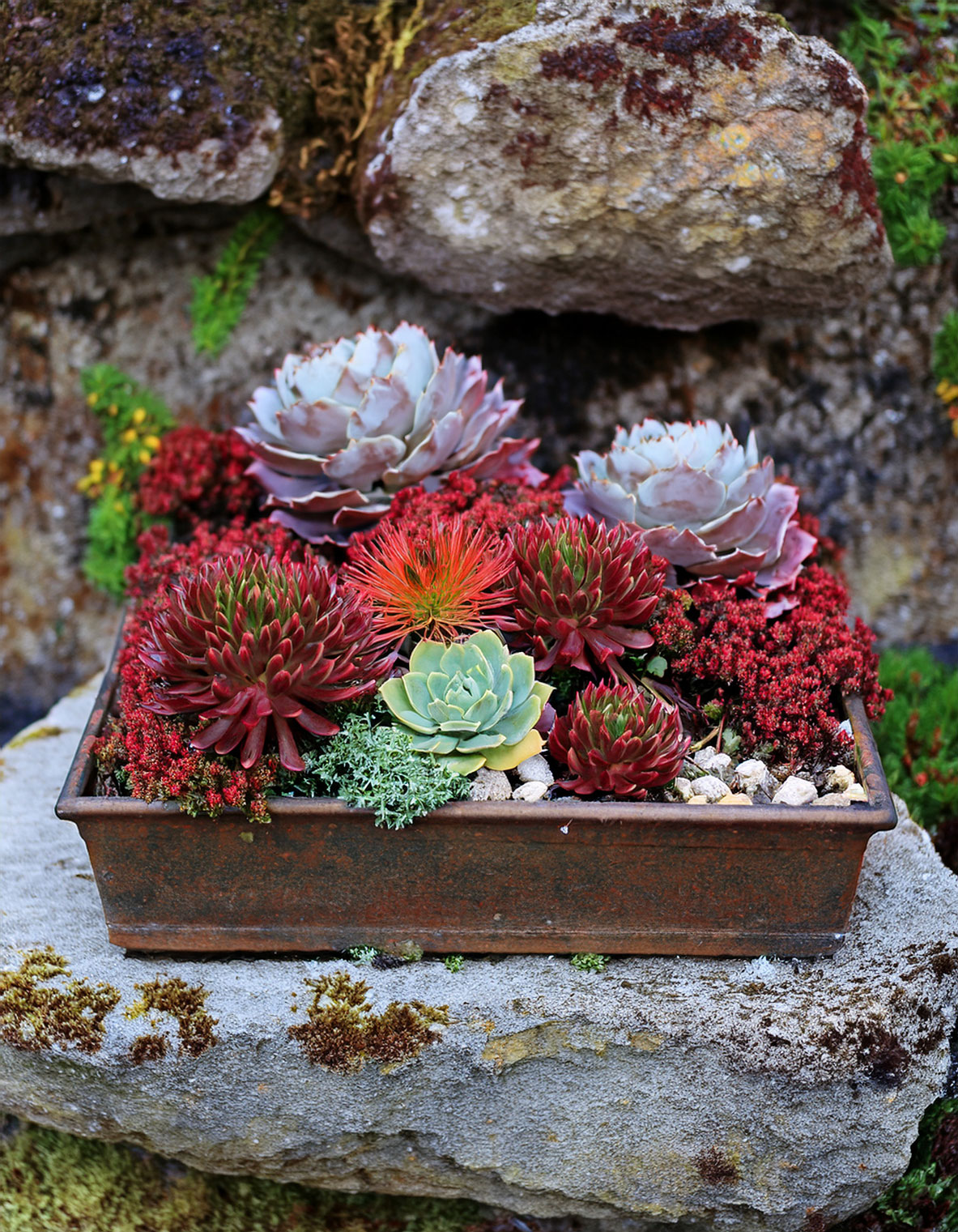
Not every fall planter needs to be overflowing with foliage. Sometimes a shallow arrangement with interesting shapes and textures makes an even stronger impression. Hens-and-chicks (Sempervivum tectorum) are perfect for this because their tightly packed rosettes create natural geometric patterns. I would plant several varieties in an aged stone trough, combining burgundy, dusty purple, and sage-green rosettes. Fill the spaces between them with low-growing creeping sedum (Phedimus spurius), small pieces of limestone, and a thin layer of decorative gravel. The mixture creates a miniature rock garden that looks attractive even when the plants aren’t actively growing.
Three small rusted metal mushroom ornaments of different heights give this arrangement a whimsical woodland feel. Position them asymmetrically so they look like they’ve naturally emerged between the rocks and succulents. This is one of my favourite ideas for a low garden wall, outdoor table, or sunny patio ledge. Hens-and-chicks are remarkably cold-tolerant, and many varieties develop deeper red colouring during cool weather. Their biggest challenge is often excessive moisture rather than frost, so use a gritty, well-drained growing medium and keep the trough away from places where water collects.
8. Ornamental Cabbage, Silver Sage, and Mini Pumpkins
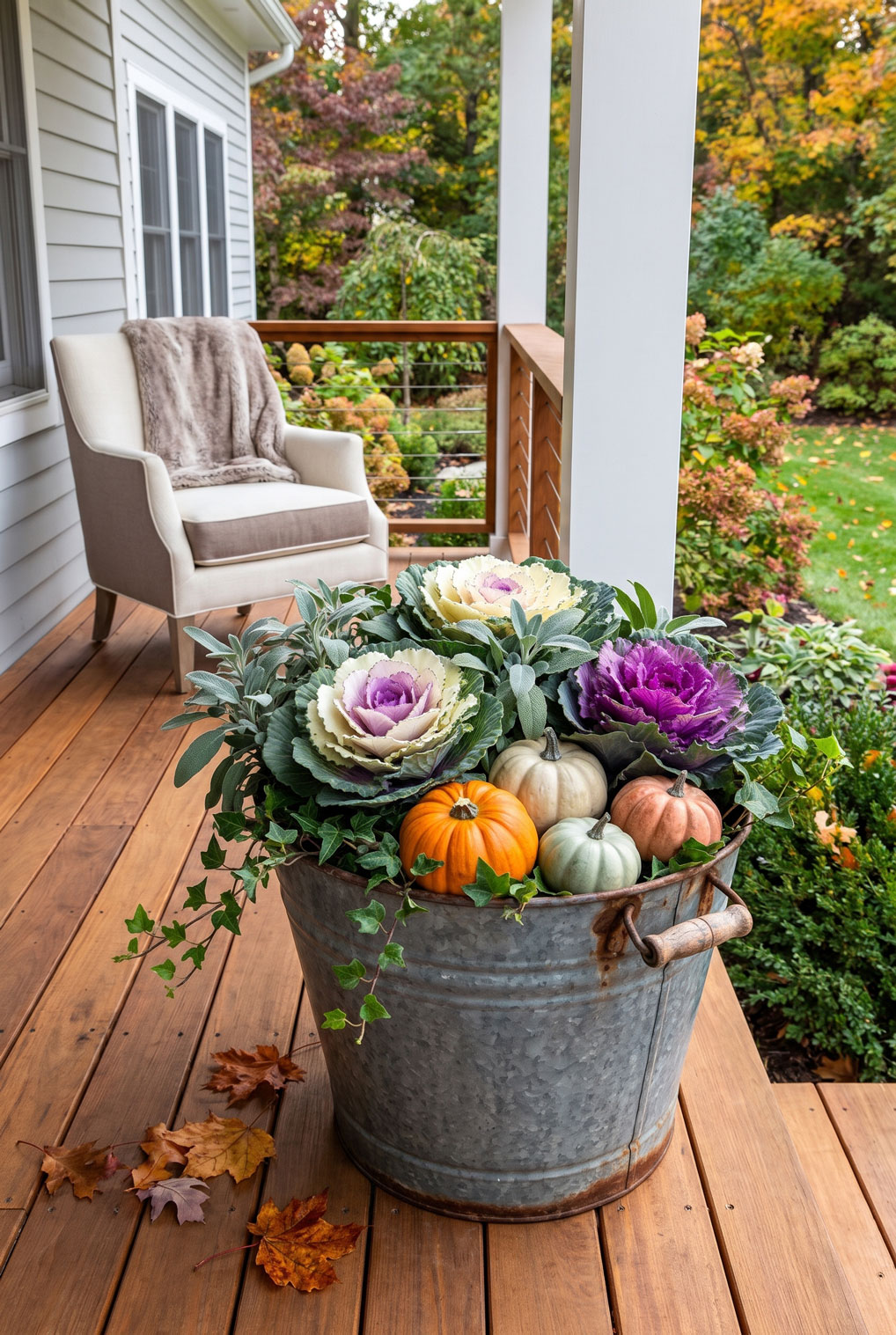
Ornamental cabbage (Brassica oleracea) has the kind of bold foliage that can carry an entire fall planter. Its broad leaves form oversized rosettes, often with creamy white, lavender, or purple centers surrounded by blue-green outer foliage. For this arrangement, I would use a large galvanized bucket and plant two or three ornamental cabbages as the main feature. Add culinary sage (Salvia officinalis) around the edges to introduce softer, silver-green leaves that contrast with the cabbage’s rounded shape. A little trailing ivy (Hedera helix) can also help break up the outline of the bucket and make the planting appear more natural.
Instead of using large pumpkins around the outside, tuck three miniature decorative pumpkins directly among the plants. Cream, dusty orange, and pale sage green are especially attractive colours for this combination. I prefer weather-resistant artificial pumpkins for arrangements that will remain outdoors after repeated freezes, since real pumpkins eventually soften and rot. Display the bucket beside a wooden rocking chair, on a wide front step, or next to an outdoor bench. Ornamental cabbage usually handles light frost very well, while sage can tolerate cool weather if the soil drains freely. A sheltered location will help the entire arrangement stay attractive longer.
9. Red-Twig Dogwood, Creeping Juniper, and Hanging Acorns
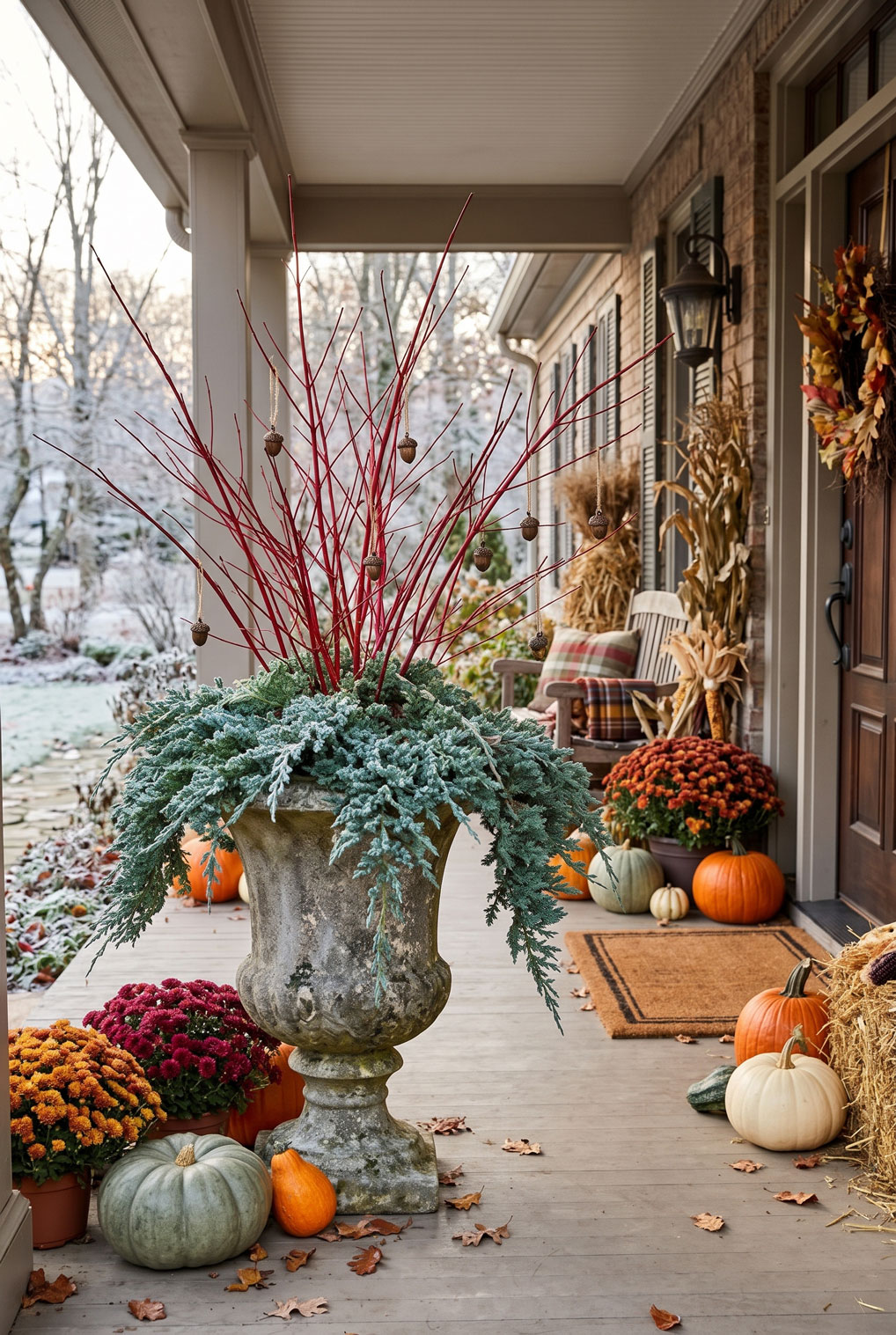
Red-twig dogwood (Cornus sericea) is one of those plants that becomes more interesting when the leaves disappear. Its brilliantly coloured red stems are especially striking against evergreen foliage, which makes them perfect for a late-autumn planter. I would start with a tall stone urn planted with creeping juniper (Juniperus horizontalis), choosing a blue-green variety that drapes over the edges. Then, insert an assortment of freshly cut red-twig dogwood branches into the center, arranging them at slightly different heights to create a loose, natural shape. The contrast between the bright red stems and cool evergreen needles is beautiful without needing a single flower.
Small bronze acorn ornaments hanging from a few of the branches add movement and a subtle decorative touch. Keep the ornaments lightweight and use outdoor-safe twine or wire that won’t damage the stems. I would position this planter at the beginning of a garden walkway or on either side of a front entrance, where its height can frame the space. The juniper provides the living foundation, while the dogwood branches are decorative cuttings that can retain their colour well into winter. Use a substantial container so the branches remain secure during windy weather, and protect the juniper’s roots during severe freezes.
10. Feather Reed Grass, Coneflower Seed Heads, and a Copper Dragonfly
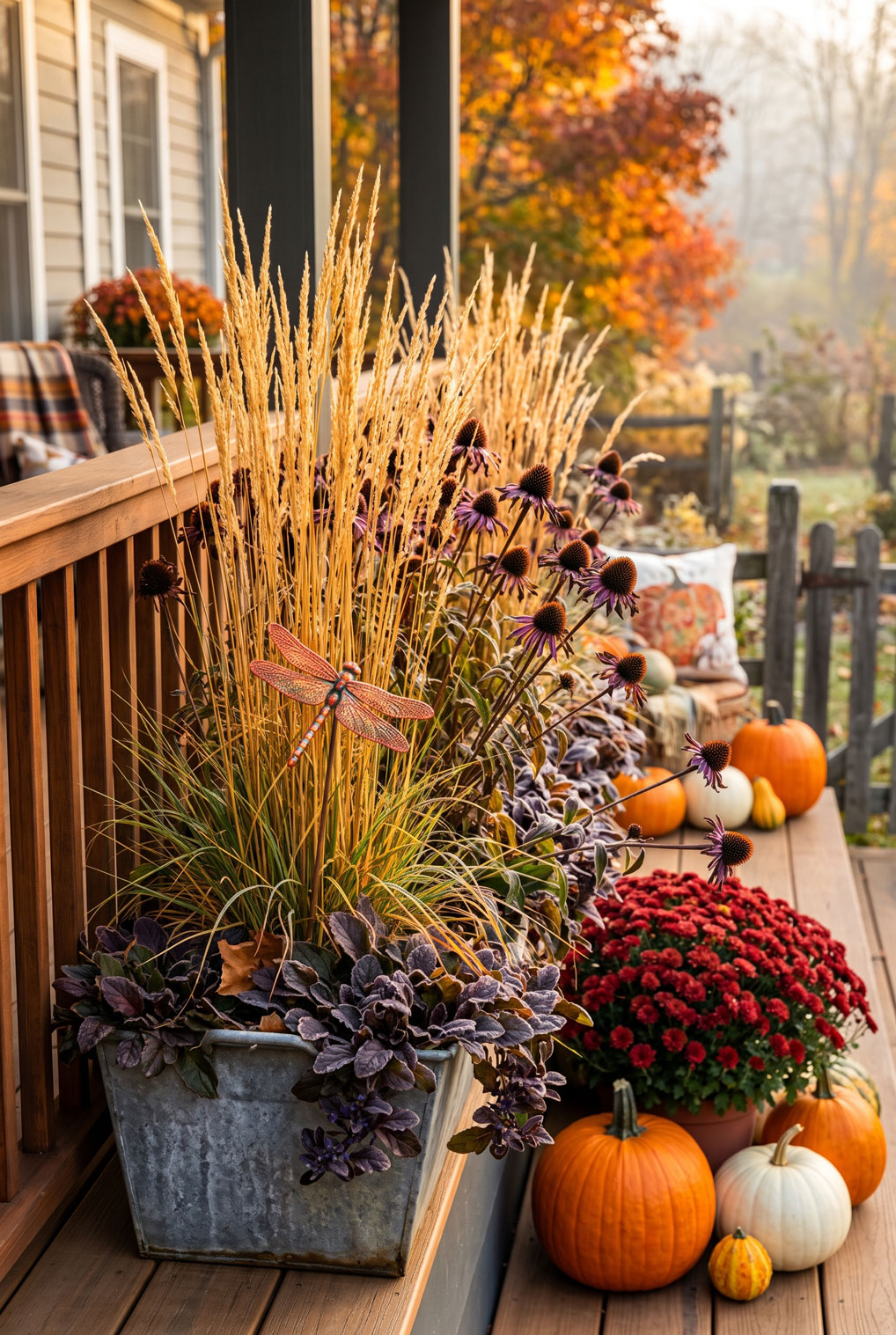
Ornamental grasses are some of the most useful plants for extending the season because their dried foliage and seed heads continue providing structure after growth stops. Feather reed grass (Calamagrostis × acutiflora), particularly the popular ‘Karl Foerster’ variety, has strong upright stems that create beautiful vertical lines. I would combine it with dried purple coneflower (Echinacea purpurea) seed heads in a long, narrow metal trough. The dark, rounded coneflower centers contrast wonderfully with the fine golden grass stems. A low border of bronze bugleweed (Ajuga reptans) around the front helps fill the base of the arrangement.
Add a copper dragonfly ornament mounted on a slender stake, positioned just above the lower foliage so it appears to hover among the grasses. This combination would look lovely along a porch railing, beside a wooden fence, or near a seating area where the intricate seed heads can be appreciated up close. Frost often makes dried grasses and coneflower heads even more interesting by outlining their individual shapes. I would leave the dried stems standing rather than cutting everything back in autumn. Just remember that tall grasses can become top-heavy in containers, so choose a sturdy trough and anchor the decorative stems securely.
11. Bronze Ajuga, Pansies, and an Old Wooden Toolbox
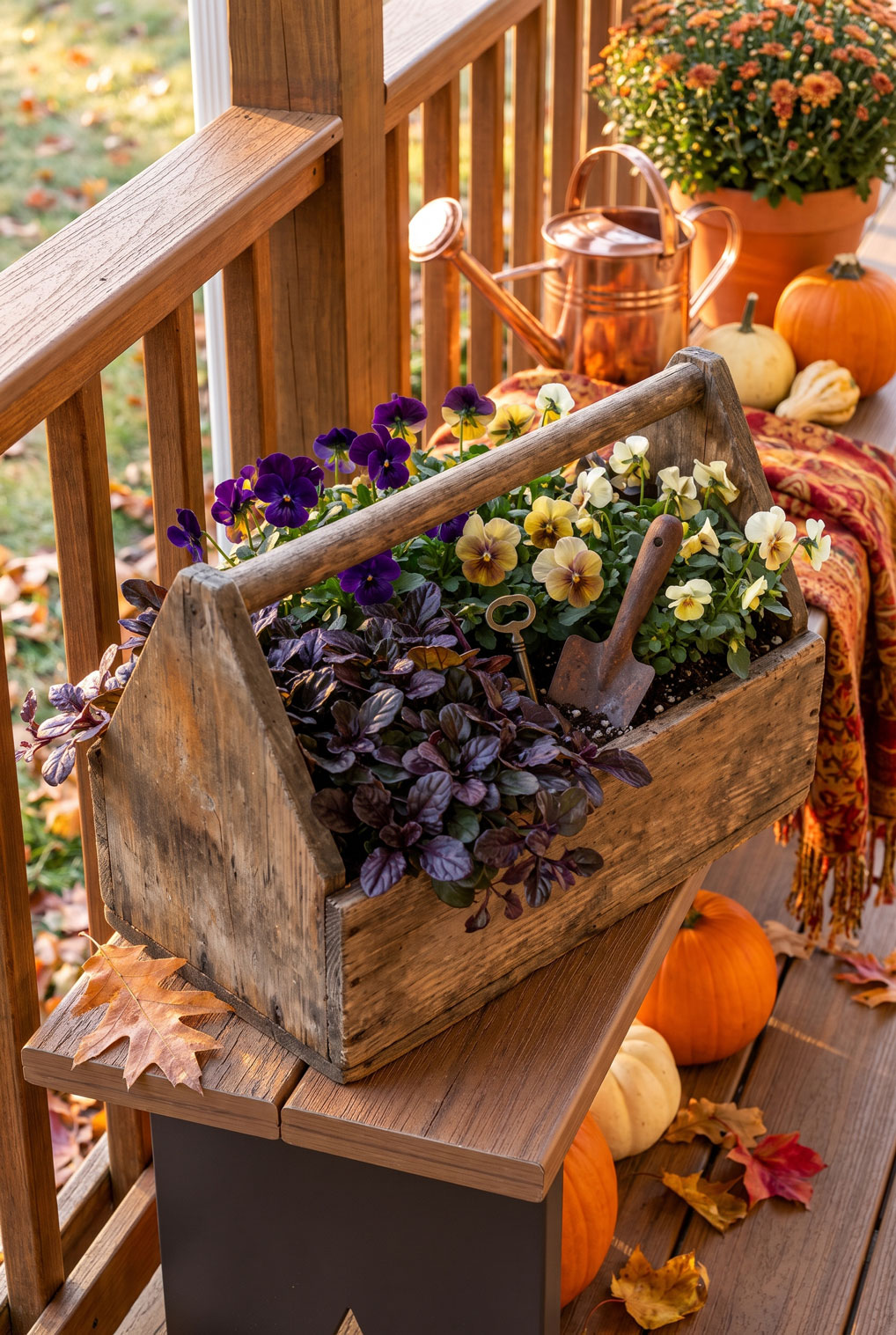
Repurposed containers can make fall plantings feel much more personal, and an old wooden carpenter’s toolbox is a wonderful alternative to a traditional flowerpot. Look for one with a central handle and a wide, shallow compartment that can accommodate several small plants. I would fill it with bronze bugleweed (Ajuga reptans), allowing its dark, glossy leaves to spread between clusters of cold-tolerant pansies (Viola × wittrockiana). Choose pansies in deep violet, creamy white, and muted yellow to complement the bronze foliage. Their cheerful flowers provide just enough colour without overpowering the vintage appearance of the box.
Tuck a small antique-style brass key or miniature metal garden trowel into the arrangement for a decorative detail. The central wooden handle can remain visible, adding height and character without requiring taller plants. I think this design would look especially charming on a sheltered porch shelf, beside an old watering can, or on a rustic potting bench. Since wooden toolboxes aren’t designed as planters, line the interior with a suitable moisture-resistant material and provide drainage so water doesn’t accumulate against the wood. Pansies can handle light freezes and often recover when temperatures rise, although flowering may slow considerably during prolonged cold weather.
12. Blue Fescue, Purple Kale, and a Geometric Lantern
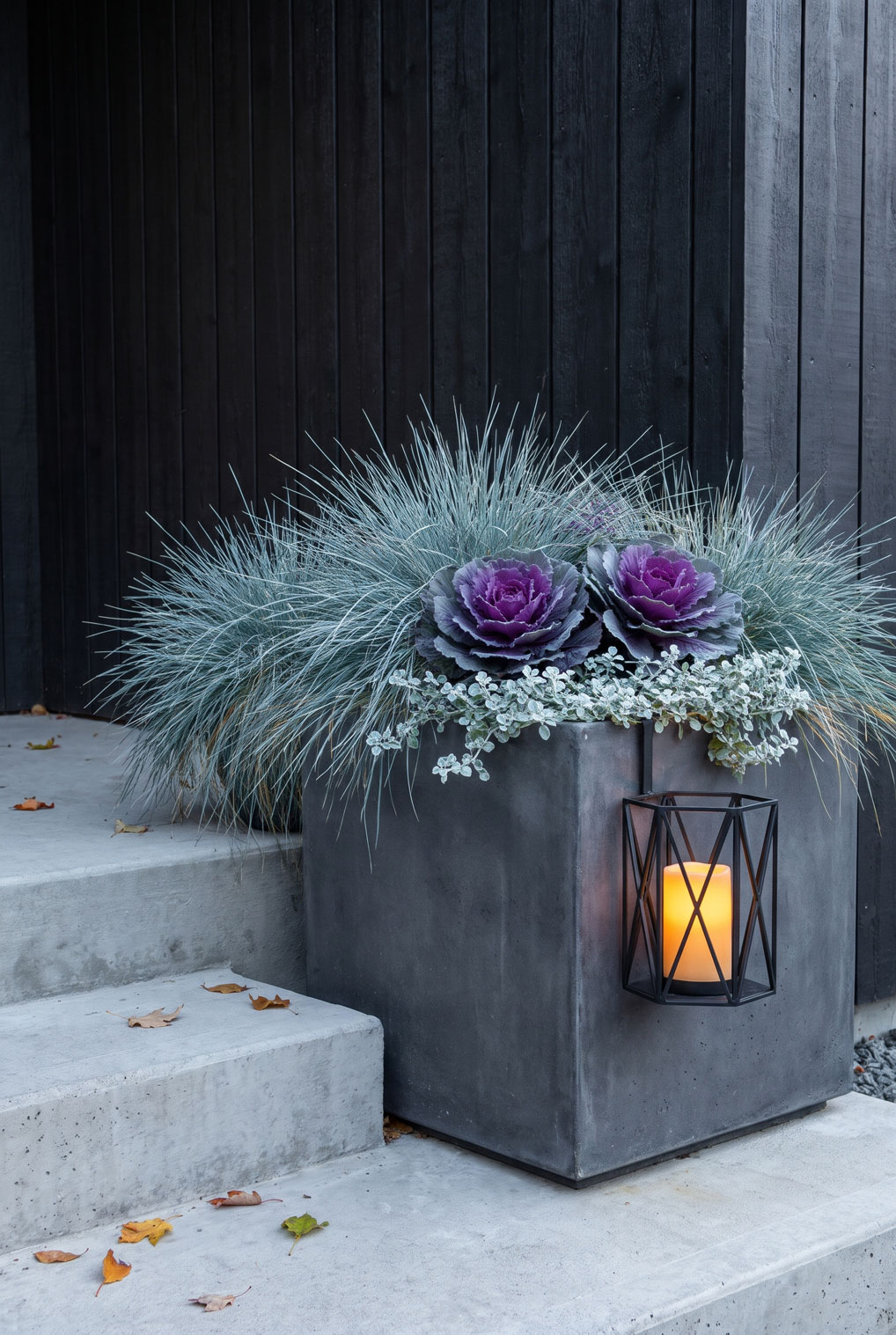
For a more contemporary fall display, I love the contrast between icy blue foliage and deep purple ornamental kale. Blue fescue (Festuca glauca) forms neat mounds of narrow, needle-like leaves that hold their shape beautifully in cool weather. Plant several clumps around two large purple ornamental kale (Brassica oleracea) plants in a square charcoal concrete container. The kale provides bold, ruffled foliage, while the fescue adds finer texture and a cooler colour. A few silver dusty miller plants around the edges can help tie the arrangement together, especially if you’re using a larger container with room for additional foliage.
Rather than placing ornaments directly inside the planter, I would position a black geometric metal lantern beside it. A battery-operated candle creates a soft warm glow that contrasts beautifully with the blue and purple plants, especially during darker autumn evenings. This arrangement works particularly well beside a modern front entrance, against dark wood siding, or on clean stone steps. Blue fescue is generally cold-hardy and remains semi-evergreen or evergreen in suitable climates, while ornamental kale becomes more colourful in chilly conditions. Just remember that a concrete planter needs to be rated for freezing temperatures, particularly in regions where moisture repeatedly freezes and thaws.
13. Inkberry Holly, Orange Seed Pods, and a House Number Ornament
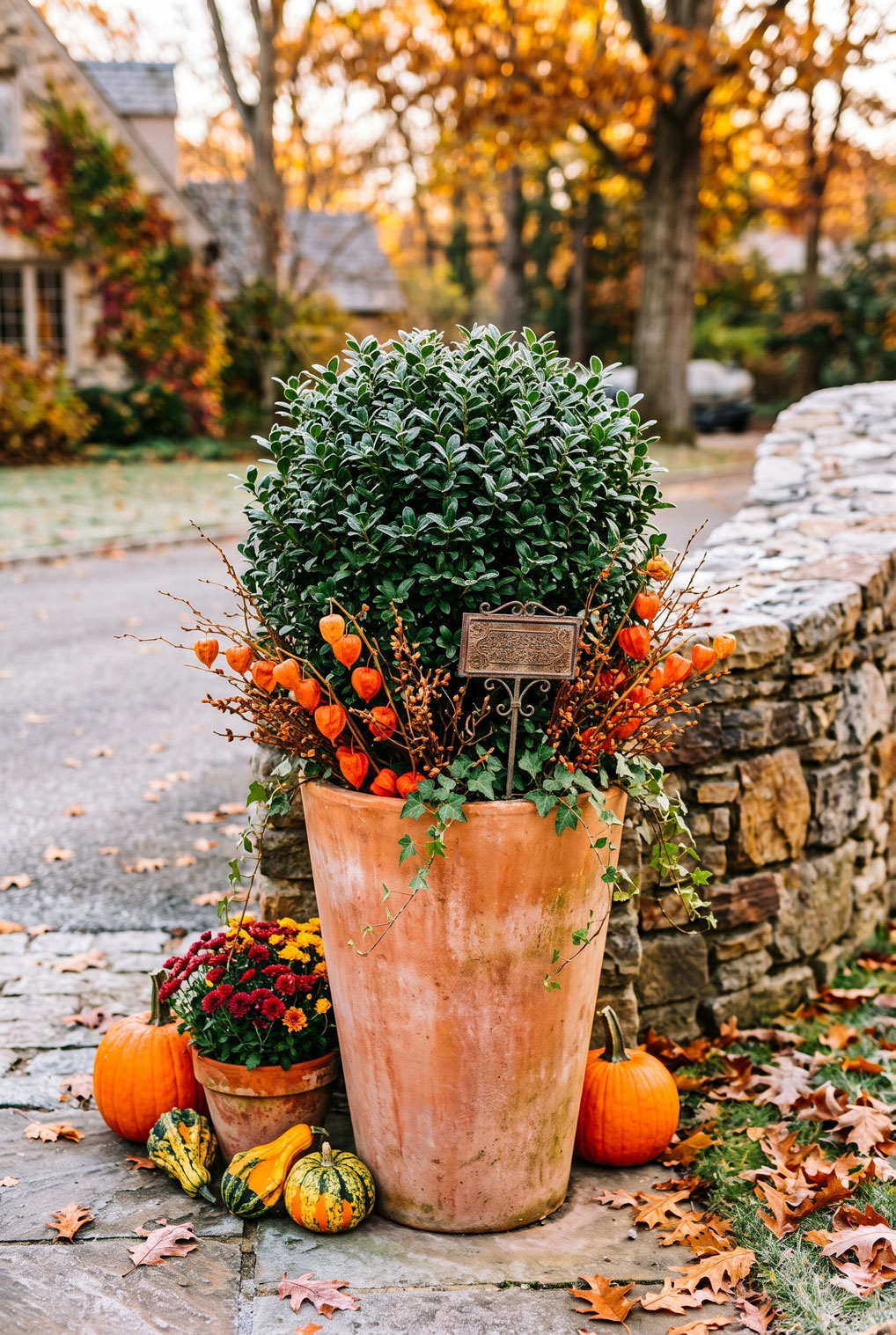
Evergreen shrubs are often overlooked when planning fall containers, but they provide some of the longest-lasting displays. Inkberry holly (Ilex glabra) has small, glossy dark green leaves and a naturally dense appearance that works beautifully in a tall planter. I would choose a compact variety such as ‘Shamrock’ and plant it in a weathered terracotta or frost-resistant composite container. Around the base, arrange dried Chinese lantern pods (Alkekengi officinarum, formerly Physalis alkekengi) in warm orange tones, securing the cut stems between the evergreen branches. The papery pods create a lovely contrast against the dark foliage and add colour without relying on living autumn flowers.
A small decorative metal house-number plaque on a stake makes this arrangement especially suitable for a front entrance or the beginning of a driveway. You could also add a little trailing ivy around the rim to soften the shape of the container. I like how this design brings together formal evergreen foliage and more relaxed seasonal decorations. Inkberry prefers acidic, consistently moist but well-drained soil, and it performs best in a container large enough to protect its roots from rapid temperature changes. Use the Chinese lanterns as dried decorative stems rather than planting them in the container, since the plant can spread aggressively in the garden.
14. Dried Alliums, Teasels, and a Repurposed Birdbath
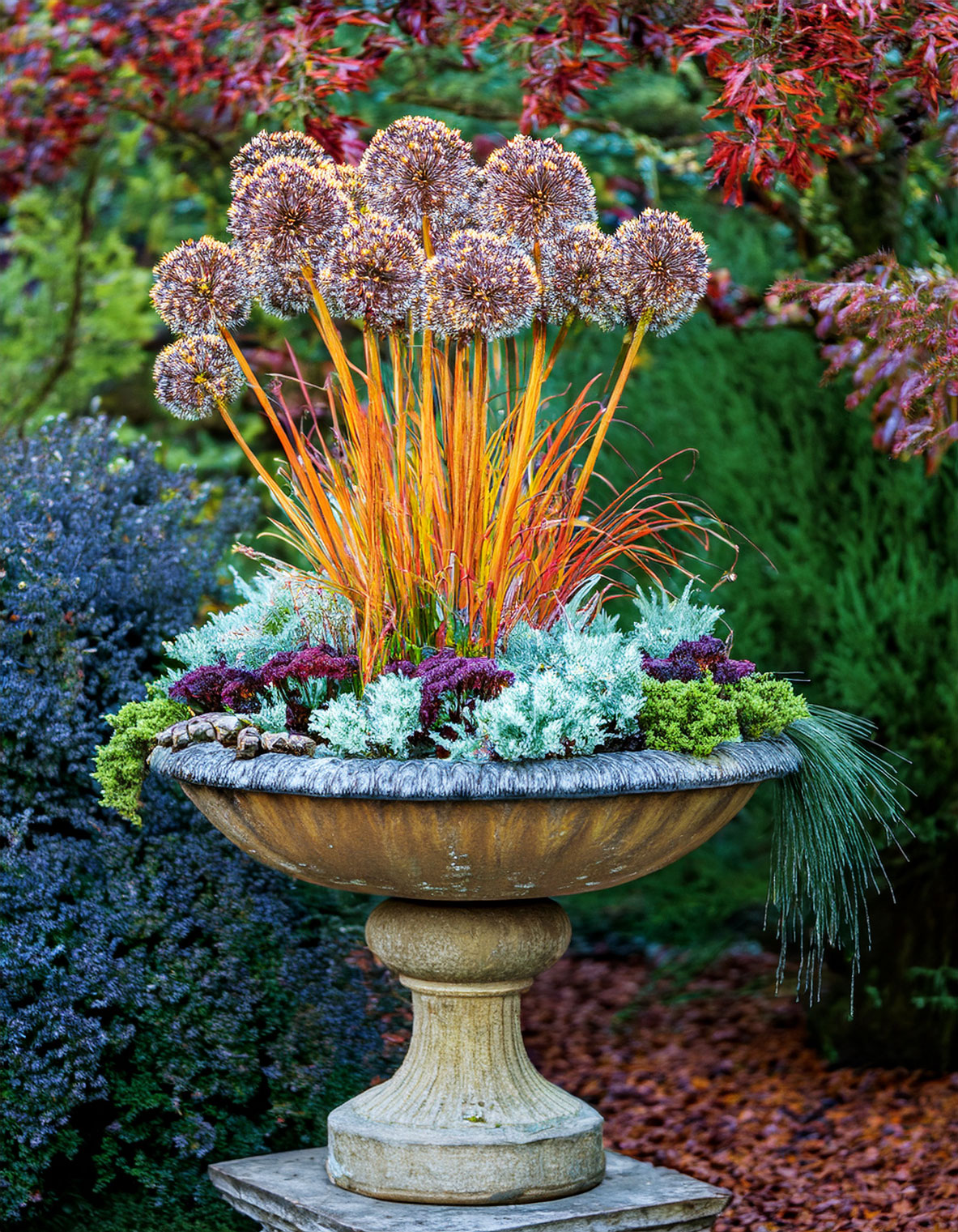
An old birdbath can become one of the most interesting fall planters in the garden, especially when you use dried flowers with unusual shapes. Instead of filling the basin with conventional bedding plants, I would create a sculptural arrangement using dried ornamental allium (Allium spp.) seed heads, teasel (Dipsacus spp.) stems, and fresh cedar branches (Thuja spp.). The spherical allium heads add height and architectural interest, while the spiky teasels introduce a completely different texture. Arrange the stems in a well-drained planter insert set inside the birdbath, using cedar cuttings to conceal the base and create a ring of evergreen foliage.
A small weathered copper bird ornament perched on the rim adds just enough personality without distracting from the dried flowers. I would place this arrangement near a garden pathway or in a quiet corner surrounded by dormant perennials and fallen leaves. Because the main features are already dried, frost can actually make them more attractive by highlighting their intricate shapes. Secure the stems against wind and use seed-free or thoroughly cleaned teasel heads, since teasels can spread aggressively in some regions. If the birdbath doesn’t drain, keep the planted insert elevated so standing water cannot collect around living roots or freeze inside a vulnerable stone basin.
15. Hellebore Foliage, Birch Discs, and a Woodland Pot
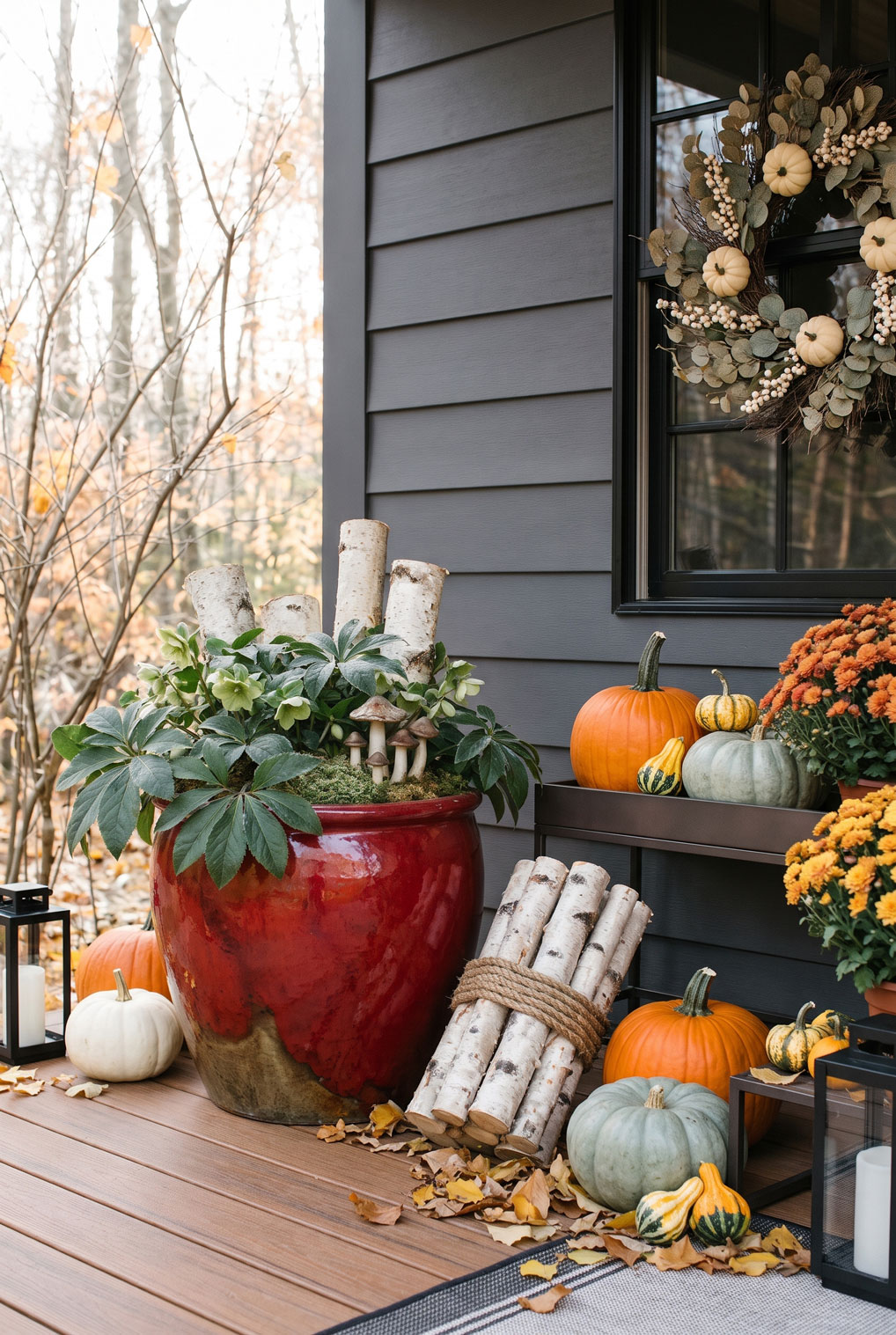
Hellebores (Helleborus spp.) are usually associated with late winter and early spring flowers, but their foliage can be just as valuable for autumn containers. Many varieties have broad, leathery evergreen leaves that provide a lush appearance when most surrounding plants have already died back. For this arrangement, I would use a large handmade ceramic pot with a dark, earthy glaze and plant several hardy hellebores, such as Helleborus × hybridus. Leave enough room between them for the foliage to spread naturally, then fill exposed spaces with moss and a few small pinecones. The deep green leaves create a beautiful backdrop for natural woodland decorations.
Stand several small birch wood discs upright among the plants, letting their white bark contrast with the dark foliage. A cluster of miniature ceramic mushrooms near the front adds a whimsical touch without making the arrangement feel overly decorative. I would position this planter beside a neatly stacked pile of firewood, beneath a covered porch, or near a woodland garden entrance. Hellebores prefer well-drained soil and partial shade, and their leaves may temporarily droop during severe freezes before recovering as temperatures warm. For the best long-term results, keep the container sheltered and consider transplanting the hellebores into the garden in spring, where their roots will have better protection.
How to Keep Fall Planters Looking Good After Frost
The biggest lesson I’ve learned with cold-season containers is that choosing frost-tolerant plants is only part of the equation. The container itself matters just as much. Plants growing in pots experience colder root temperatures than plants growing directly in the ground, particularly when the sides of the container are exposed to freezing air. I try to use larger pots whenever possible because they hold more soil and experience less abrupt temperature changes. Good drainage is equally important, since waterlogged soil can damage roots and cause certain containers to crack when temperatures drop below freezing.
I also like to combine living plants with materials that don’t need to survive at all. Dried hydrangeas, ornamental grasses, seed heads, evergreen cuttings, pinecones, and decorative branches can maintain their appearance even after repeated frosts. If a few living plants eventually decline, the arrangement still has structure and visual interest. During extended cold spells, move vulnerable containers closer to the house, protect them from drying winds, and check soil moisture whenever temperatures are above freezing. For perennial plants you want to keep from year to year, consider moving them into a protected location or planting them in the ground before winter becomes severe.
Final Thoughts
A beautiful fall planter doesn’t have to rely on flowers that disappear after the first cold night. Some of my favourite autumn arrangements are actually the ones that emphasize interesting foliage, dried seed heads, ornamental grasses, and natural textures. Whether you’re decorating a front porch with colourful kale, filling a stone trough with hardy succulents, or turning an old birdbath into a woodland-inspired display, there are plenty of ways to keep your containers looking attractive after frost. I especially like choosing plants that provide a foundation of greenery and then adding seasonal accessories that can be changed as autumn turns into winter. That way, the planters continue looking intentional even when the growing season has come to an end.