

Tricky weeds are tricky because of their scale and vigour. Moving them on means being more cunning + persistent than they are!

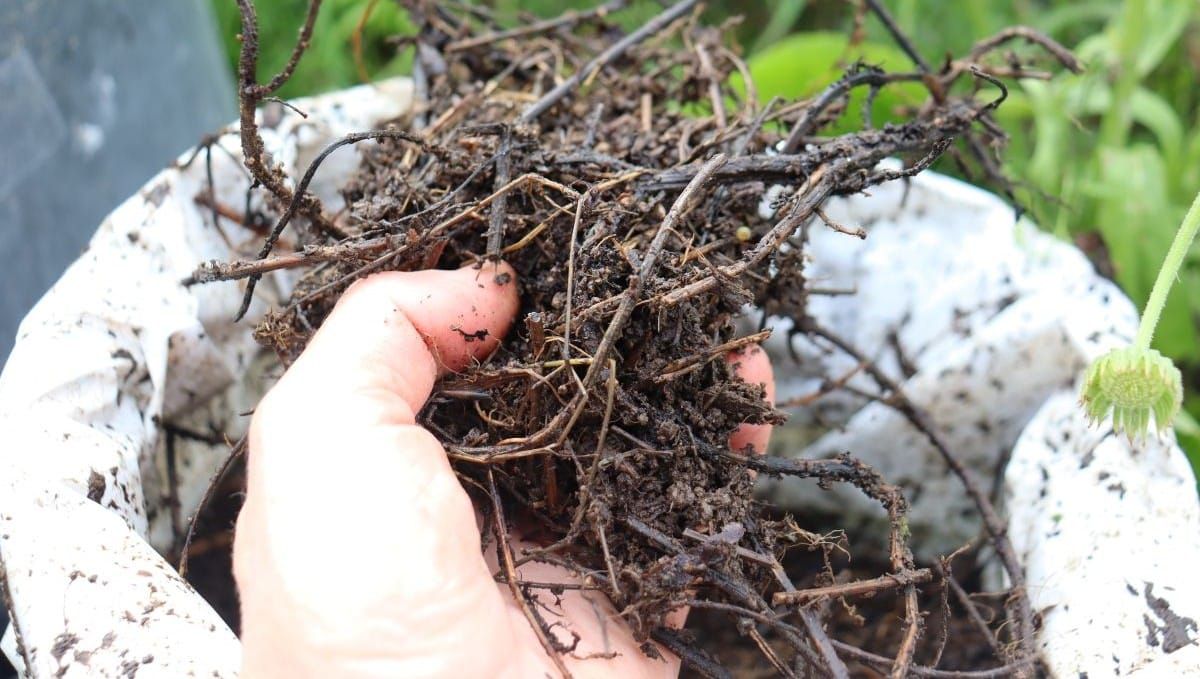
Tricky weeds are tricky because of their scale (small areas can mostly be managed using any one of these strategies), and vigour. It’s their genes that give them their robust natures, further supported by the fact that they are a perfect match to the soil and climate they are growing in.
If you are new to this series, set yourself up for the strategies I use with in #3 with a quick read through Weed smarter not harder #1, and Weed smarter not harder #2.
Before we get into it, I’m going to challenge you with a question: Can you make use of whatever tricky weed you have – for bulk compost ingredient, shelter, living mulch, stock food…. ? Generally for vining weeds, its a no from me, but many others can easily be integrated, and gradually phased out with plants of my choosing. Read on!
A rogues gallery of tricky weeds
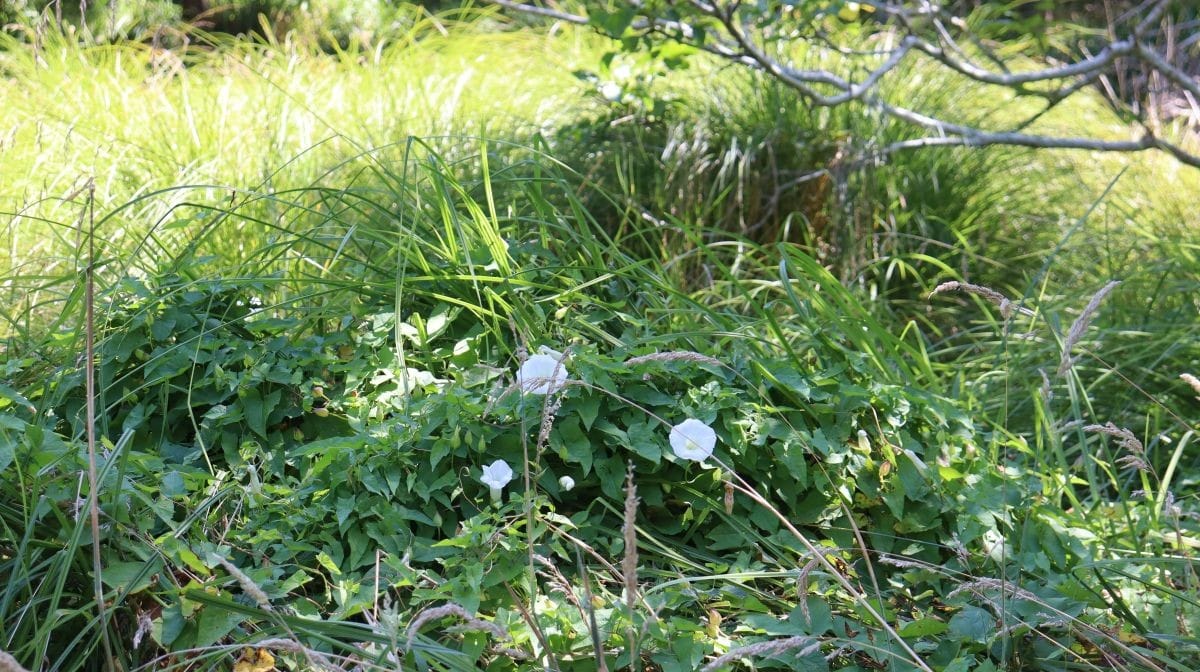
Not every weed covered – of course not!, just a few commoners, but the same strategies apply to all others.
Blackberry
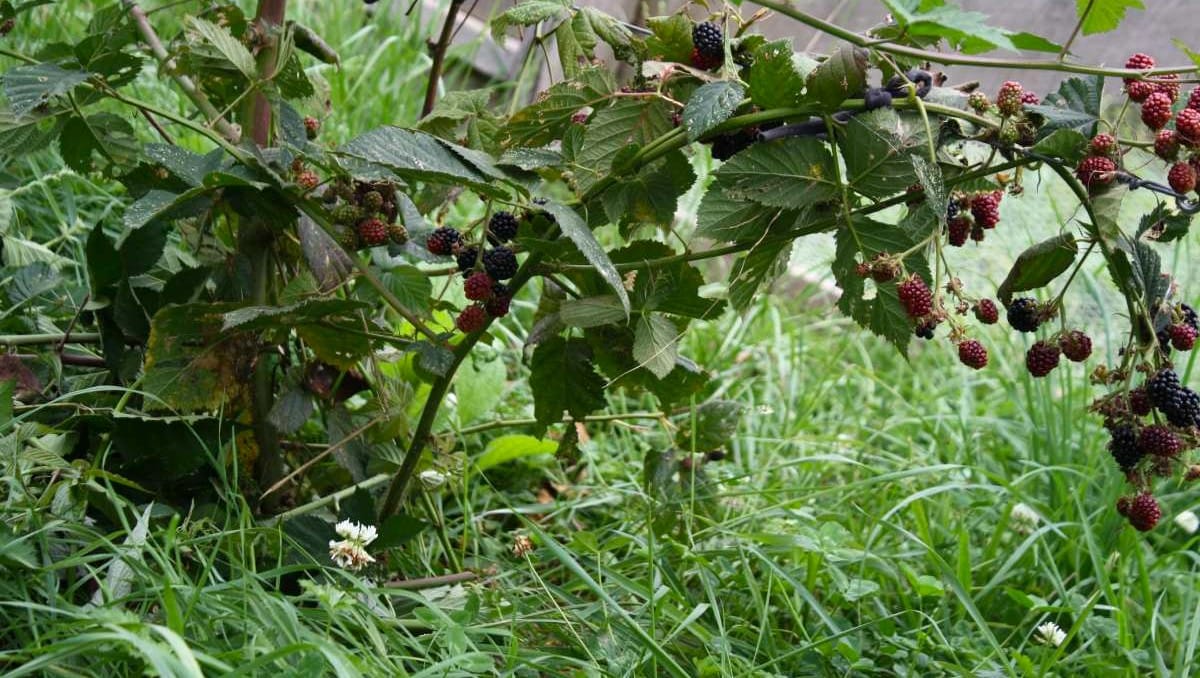
Blackberry is mostly a sunny-edge weed, and here-in comes our first strategy – to shade it out.
- On steep land: sow seed balls amongst blackberry using fast growing trees like manuka, karamu, tagastaste, mahoe
- From blackberry to shelter: slash blackberry back, or grub our roots, or use a mini digger, then plant fast growing shelter trees amongst the blackberry.
- From blackberry to pasture: grub or dig roots out, then sow a diverse mix of herbs and grasses. Incorporate a few rows of support trees.
- From blackberry to food gardens: grub or dig roots out then plant s diverse mix of fruit, support trees + perennials and whatever is required to improve soil: de-compaction/ drainage/ organic matter…. as soil improves blackberry will be less interested in growing.
Make it easy
- Keep on the job! So disheartening to put in a massive effort, and go back to square one. Little and often, keep up with grubbing out new bits that arise.
- Make a weed break: If blackberry is coming in from the neighbours create a break that you can mow or weed eat along, or set-up stock or goats along this edge.
- Leave some for harvest. Manage it with goats or by slashing plants back and keeping on top of any runners that shoot out.
Dock
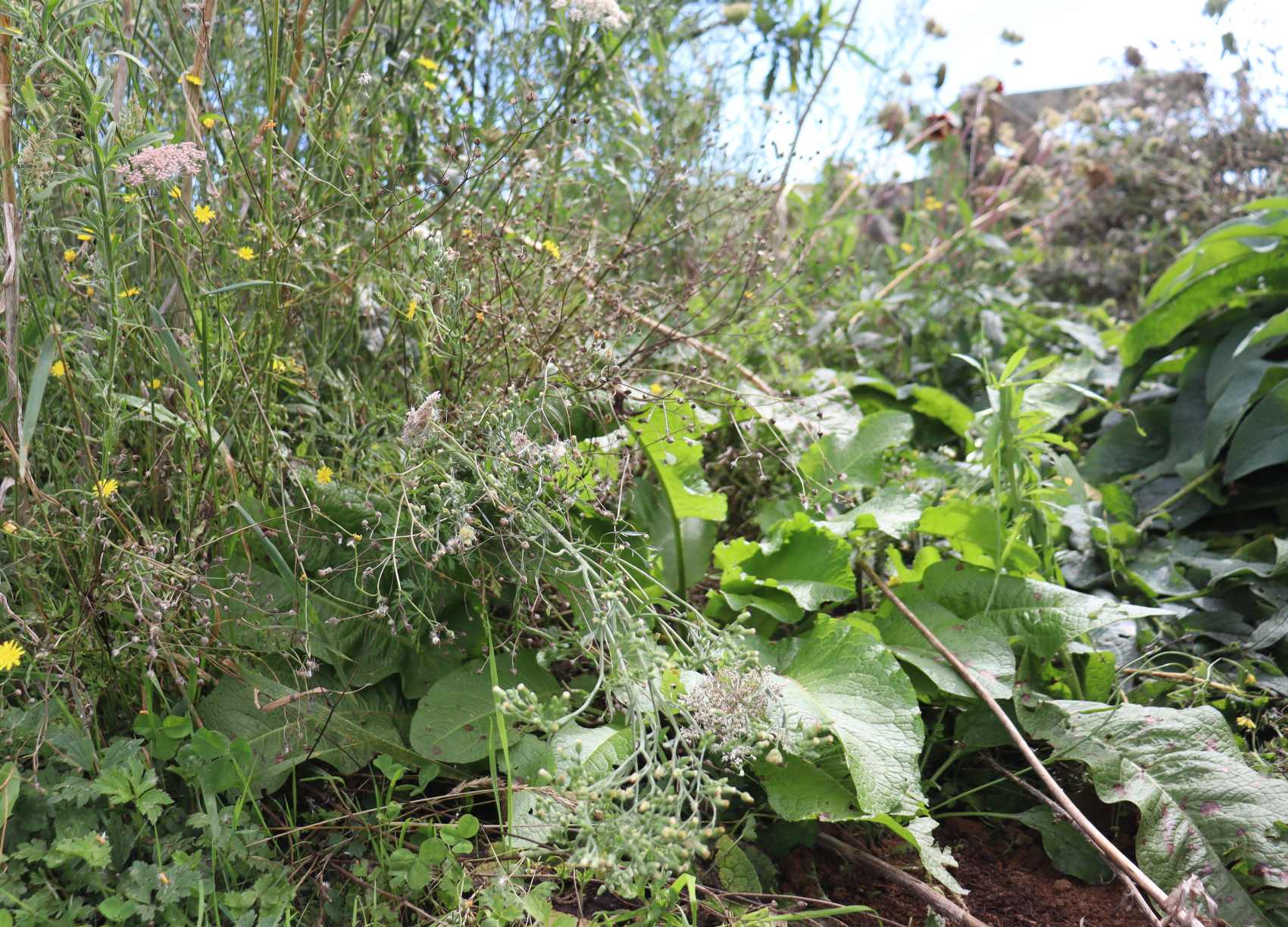
Use a mix of these strategies
- Cut seedheads off during the growing season – whizz round with the weed eater, scythe, mower or tractor.
- Stop grazing/ mowing so low! Let the sward grow long and lush, then chop it pre-seed development. Awesome soil fertility.
- Plant a mix of trees and shrubs amongst, or around the edges to aerate soil, and improve soil.
- Handweed. To remove dock from the veggie patch, grub or dig – after it’s rained. Trust me its easier this way.
Oxalis
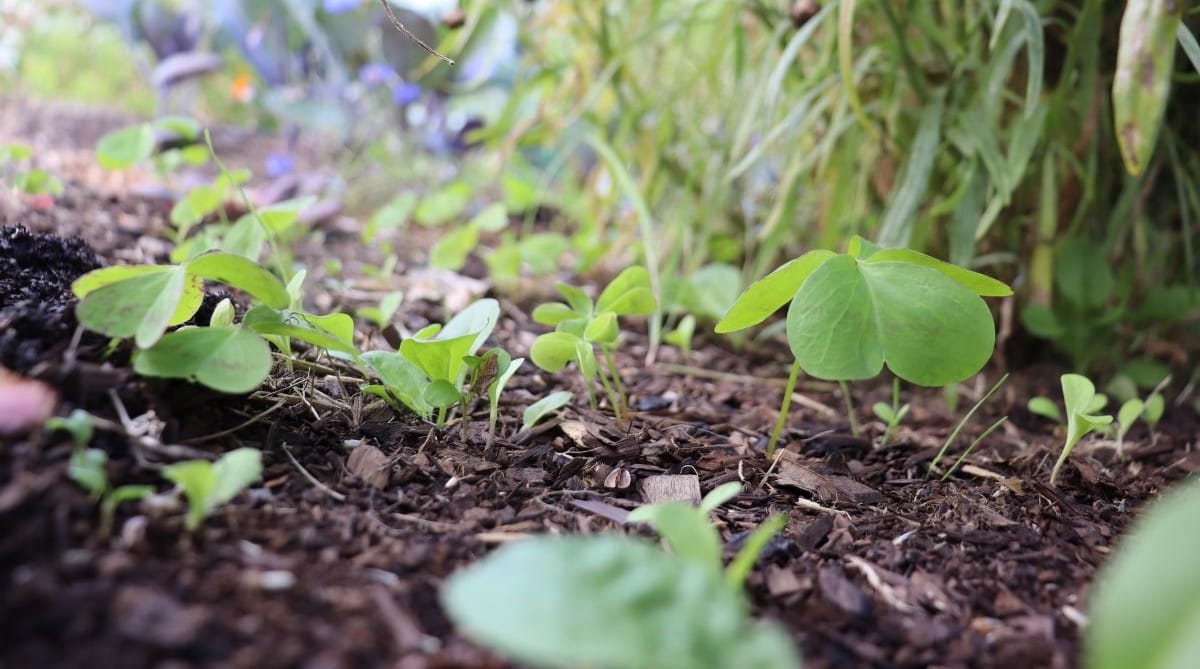
High on your list as a pernicious weed, and I understand it is annoying! But it’s so small and shallow rooted – its easily outcompeted. Oxalis thrives on disturbance so best to leave it be as much as possible. Lay card on top, thick mulch, then plant with a diverse guild of perennials/ shrubs/ trees – defo not annual vegies!
Runner grasses
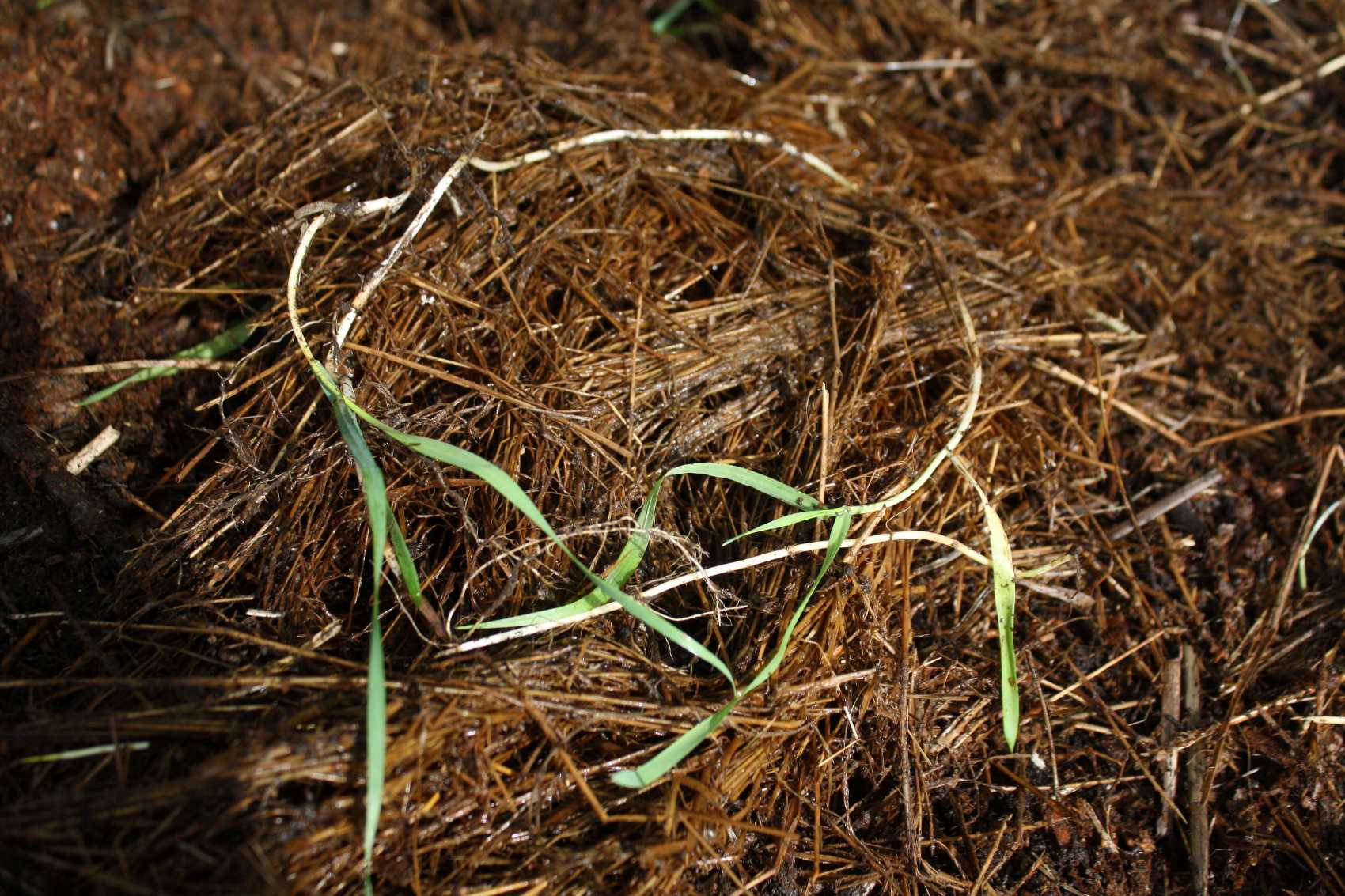
Kikuyu spreads out via runners below and above ground while couch (or twitch) runs below the topsoil. They are both really determined grasses.
Chop-and-drop to keep these grasses from dominating young trees. They’ll be less prolific in the shade of established trees.
Diversify! Dense plantings of equally determined perennials + fast growing trees teamed up with vigorous tap roots and tenacious groundcovers to make like a forest, works a treat. Keep on the job either chopping and dropping or weeding out bits that come through in the early days.
- If these grasses are in your vegie patch, keep on keepin’ on with weeding them out, at the same time adding compost and hay mulch to loosen their grip on the soil. As soil improves, the roots that peg them down will get further and further apart, making them easier to manage in time. Little and often weeding for the win, and a long term view.
Tradescantia (wandering willie)
This little weed is hard core in native bush because it puts a halt to regeneration, flourishing in the light gap made when a tree dies and stopping new natives coming up. Please don’t dump your tricky weeds on the roadside! Recycle them as per my ideas below.
- Chickens love tradescantia. They’ll clean the area up for you in the best way possible.
- Rake it all up, hunting out every last scrap, then sludge it.
- Smother. I’ve had good success with laying clear plastic over top and letting the sun fry it.
As soon as it is cleared, be sure to plant up straight away! The usual recipe for outcompeting applies – use vigorous, evergreen, perennial groundcovers + trees. While new plantings establish, keep on top of bits of weed that come through.
Vines: convulvulus, jasmine + ivy
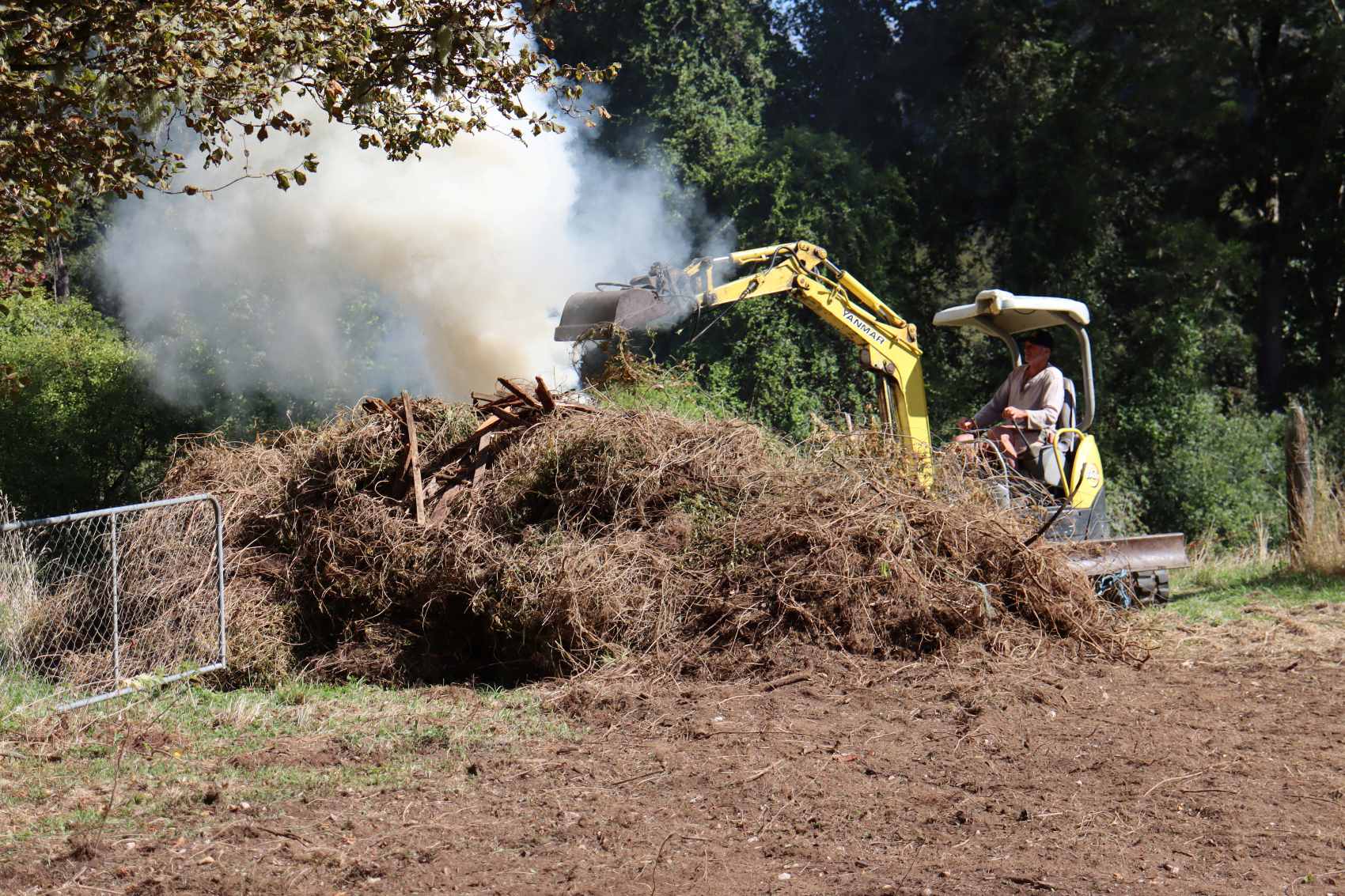
Vines are tough customers.
Small areas, or bare ground
Smother by laying plastic over top the patch. Use planks to seal the edges. In the heat the new growth will shoot away but it’ll quickly fry and die.
Check beneath the plastic, and when no greenery remains, go over the area with a garden fork and get up as much root as you can. Either burn it or seal it in a black plastic bag until it has rotted.
Plant the cleared space up straight away. As new bits appear, patiently follow the root back to source and whip it out. It’ll become easier and easier as the soil improves.
Where vines come in from neighbours
Team up with your neighbour and work away on the vines together. While you do, make a weed break between your gardens and incoming vines i.e. a mowing strip or graze pigs, goats or chooks along this edge. They wont get rid of the vines but are a useful way to hold them back.
Large areas, or where vines wind through existing plants
To date, my only known solution is to use cutnpaste, a roll on glyphosate developed by kiwi park ranger Andy Spence. Dab the foliage of convulvulus in December. Dab the fresh cut stem of ivy or jasmine.
3 ways to recycle tricky weeds
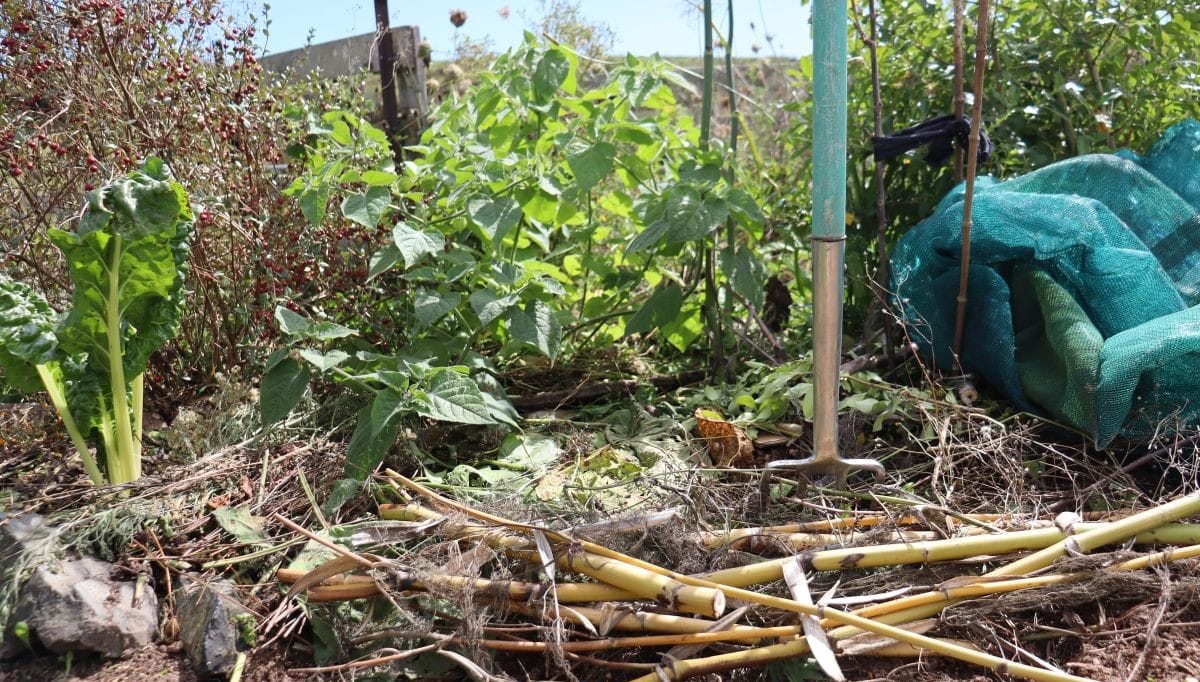
- Chop-and-drop, or use for compost: for lush weeds without runner roots or ripe seed heads.
- Put through a mulcher or burn: for prickly weeds, or hard core weeds like bamboo.
- Sludge: for runner roots, soft vines, and weeds that reproduce from the smallest cutting e.g. tradescantia. Stuff into a black plastic bag, tie it up, and leave it down the back of the garden somewhere for a year or more. Once turned to sludge, add to compost, or tip out amongst trees.