


When I first started experimenting with my spring garden, I noticed how quickly some flowers appeared and then disappeared, leaving gaps in the beds. That’s when I began thinking of planting as a relay race. Each flower could hand off the baton to the next, keeping color and life moving steadily across the season.
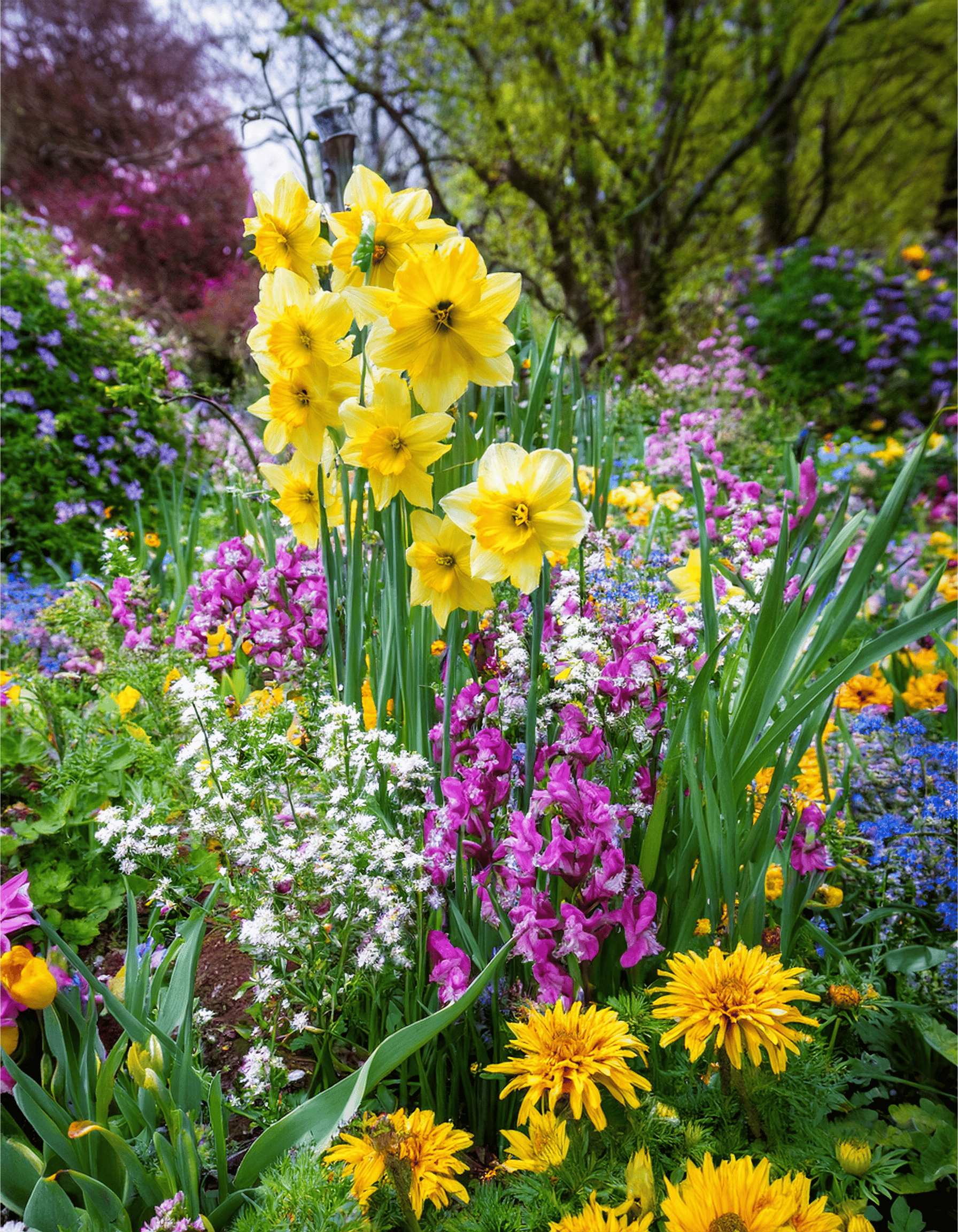
Succession planting with flowers is simply about planning the timing. By combining early risers with mid-season bloomers and late performers, the garden never feels empty. I’ve put together nine examples I’ve used or admired that show how this rhythm can work.
Quickly Find Succession Planting Pairs:
1. The Early Starter Relay
Crocus → Daffodils → Tulips → Alliums
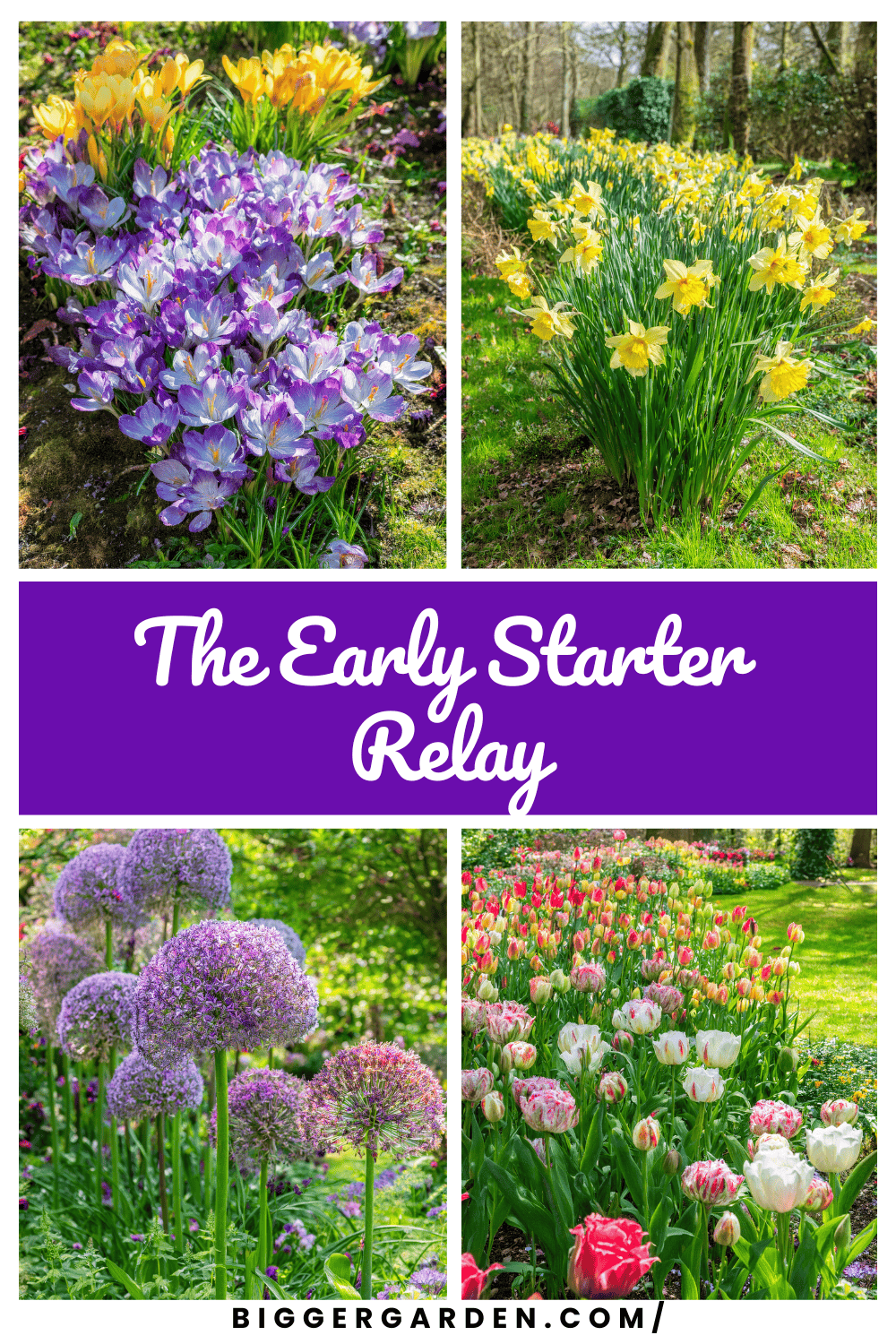
I like to think of this group as the classic opening act for spring. Crocuses are the first to arrive, often poking through even when the weather is still cold. As soon as they fade, daffodils light up the bed with their familiar yellow trumpets. Tulips come in to add a wide range of color, and finally, alliums rise above everything else with tall purple globes that stand well into late spring.

This sequence works best in a dedicated bed or border where you want color to build and shift as the weeks go by. Each flower flows naturally into the next, and by the time the alliums are finished, the summer perennials are ready to take over.
2. The Pollinator Parade
Snowdrops → Grape Hyacinths → Catmint → Coneflowers

If supporting bees and butterflies is a goal, this combination is reliable. Snowdrops appear at the very start of the season, followed by grape hyacinths that are small but attractive to early pollinators. Catmint keeps the action going with its long spires of blue flowers, and coneflowers carry the energy right through the heat of midsummer.
I’ve planted these together in a corner where I like to sit and watch activity. There’s a steady stream of bees moving through the plants, and it’s reassuring to know that food is available for them over such a long stretch of time.
3. Cottage Garden Hand-Off
Primroses → Poppies → Roses → Lavender

For a softer, more traditional garden style, I turn to this mix. Primroses provide the earliest splash, quickly followed by the upright charm of poppies. Roses then step in as the season deepens, and lavender closes the sequence with fragrance and texture that last well into the warm months.
The key here is placement. I like to weave these plants through a border so each one is waiting in line. By the time the primroses have had their moment, the poppies are already preparing, and the roses are just behind. Lavender then acts as the finisher, providing a steady presence through the summer.
4. The Bold Color Wave
Tulips → Irises → Daylilies → Rudbeckia
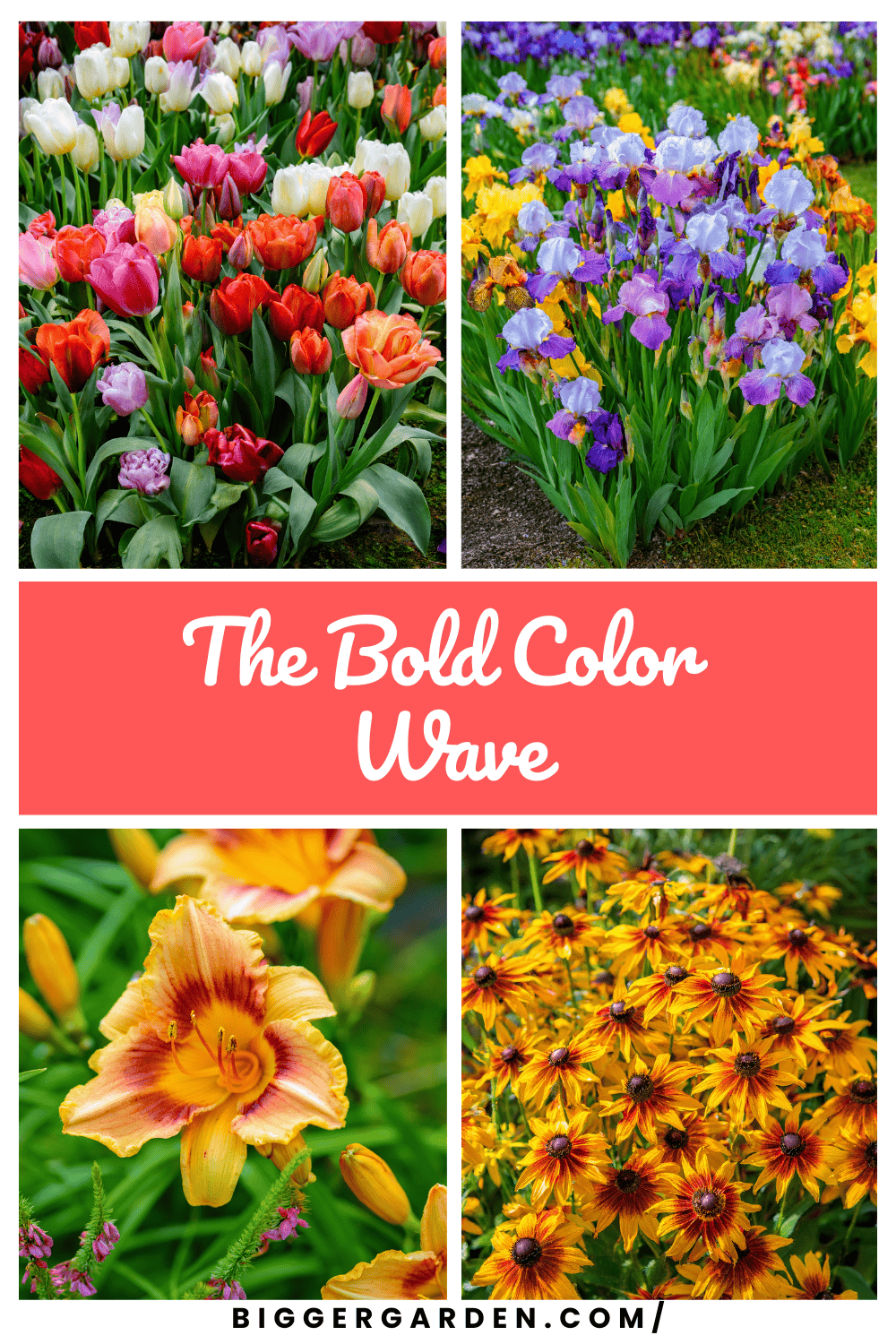
This sequence is all about large, confident flowers that demand attention. Tulips start things with a clear statement, followed by the vertical lines of irises. Daylilies add a strong mid-season presence, and rudbeckia keeps the beds active right into the later months of summer.
I’ve used this in a front yard bed where visibility from the street is important. The transitions are smooth, and the colors are easy to spot from a distance. It’s a dependable way to keep a high level of interest without much downtime.
5. Shade Garden Relay
Hellebores → Lungwort → Astilbe → Hostas

Shady corners don’t have to be quiet. Hellebores appear before most other plants, offering blooms even when snow lingers. Lungwort follows with spotted leaves and clusters of blue or pink flowers. Astilbe brings soft plumes later in the season, and hostas finish by filling the space with bold foliage.
This combination is less about constant color and more about steady presence. I’ve planted these under a large tree where sunlight is limited, and the sequence gives structure over the entire growing season. Each step adds something distinct without requiring bright sun.
6. Bee-Lover’s Baton Pass
Crocus → Hyacinths → Salvia → Sedum

Another pollinator-friendly option, this sequence is designed specifically with bees in mind. Crocus and hyacinths both emerge early, providing food when little else is available. Salvia then stretches the supply well into summer, and sedum closes things out with dependable blooms that bees crowd in late summer and fall.
I like this set because it works in both formal beds and looser borders. The plants complement one another without much overlap, and the bloom schedule means there’s always something useful in place.
7. Natural Meadow Relay
Daffodils → Camassia → Ornamental Grasses → Asters
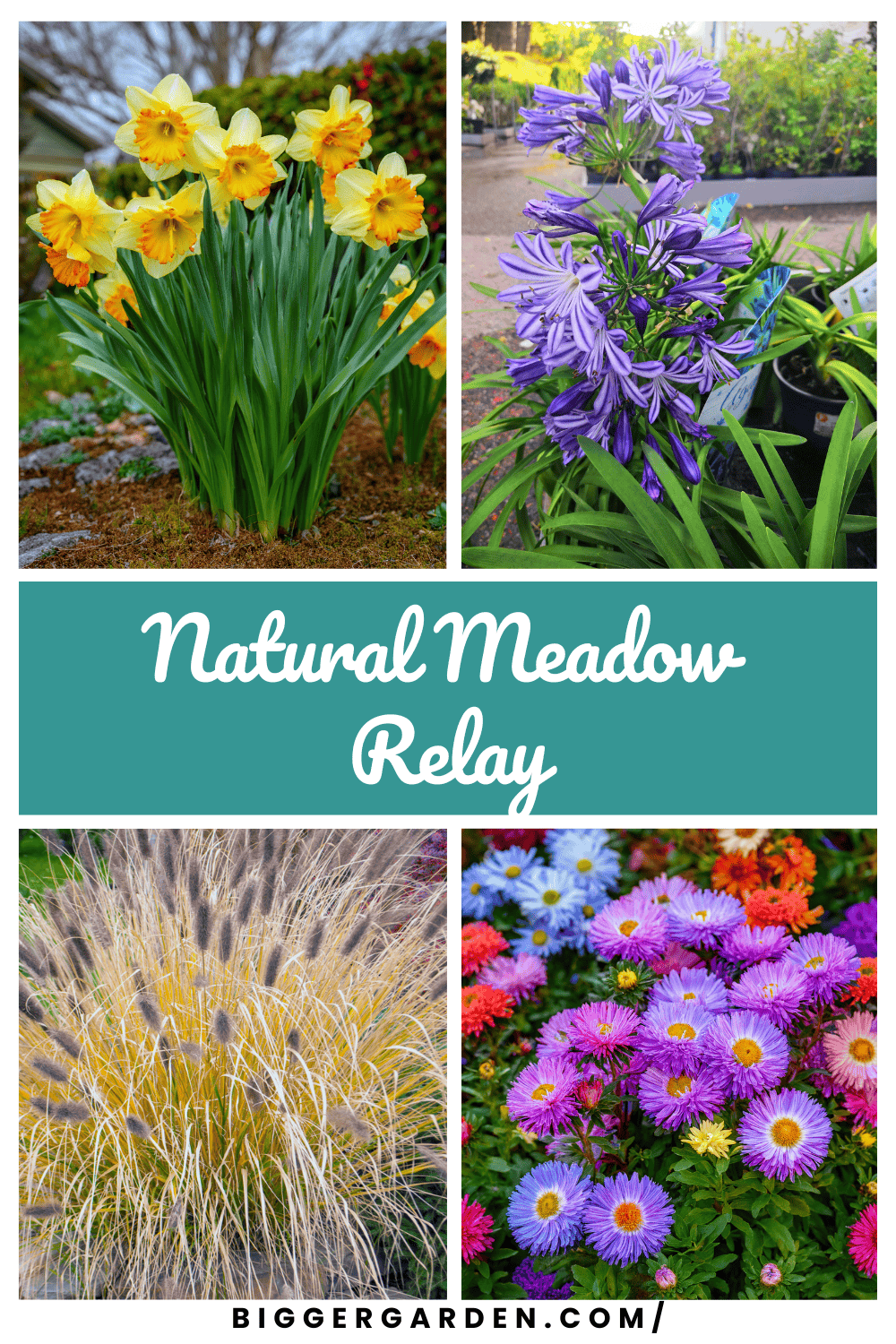
When I want a planting to look more relaxed, this combination fits. Daffodils are the bright openers, followed by camassia, which has a graceful presence and fills the late spring gap. Ornamental grasses step in to carry the structure, and asters provide the closing note with strong autumn flowers.
I’ve used this approach in a back area of the yard where the design is meant to feel closer to a meadow than a border. The plants layer well without heavy maintenance, and the sequence stretches the interest right to the end of the season.
8. Edible + Ornamental Relay
Chives → Nasturtiums → Sunflowers → Zinnias

This mix is playful and useful at the same time. Chive blossoms open early and can be snipped for the kitchen. Nasturtiums add trailing growth and edible flowers, sunflowers dominate the middle of the season, and zinnias finish with steady blooms until frost.
I enjoy this combination in a kitchen garden where function and appearance blend. It’s practical because I can harvest from it, but it also keeps color in the space for months. The handoff from one plant to another is smooth and makes the garden feel alive.
9. Long-Season Container Relay
Mini Daffodils → Pansies → Geraniums → Chrysanthemums

Containers benefit from their own succession planting, and this lineup has served me well. Mini daffodils fit neatly in small pots and announce the start of the season. Pansies follow, offering reliable blooms through cool weather. Geraniums handle the warmth of summer, and chrysanthemums extend the display well into fall.
I rotate these plants in and out of larger porch containers. The process doesn’t take much effort, and it means that the pots are never empty. This sequence is especially useful where space is limited but I still want consistent color.
Final Thoughts
Succession planting is really about attention to timing. Each of these nine examples shows how different flowers can pass the spotlight forward, keeping beds, borders, and containers active throughout the season. I’ve found that once I began thinking this way, the garden shifted from having short bursts of color to providing a steady rhythm of blooms.
Experimenting with different combinations is part of the fun. Some pairings are more formal, others are relaxed or even edible, but they all share the same idea of continuity. With a little planning, the garden doesn’t have to pause between flowers. Instead, it keeps moving, one bloom after another.