


Gremolata is perhaps the easiest and most effective way to add a burst of flavor to a meal. It only has 5 simple ingredients and takes less than 5 minutes to prepare. Add this zesty gremolata to anything that needs a punch: soups, sandwiches, salads, pizza, veggies, stews, dips, bread, or mushrooms. Keep reading and I’ll tell you what makes my gremolata recipe different, and I’ll give substitutions to make gremolata work for any cuisine.
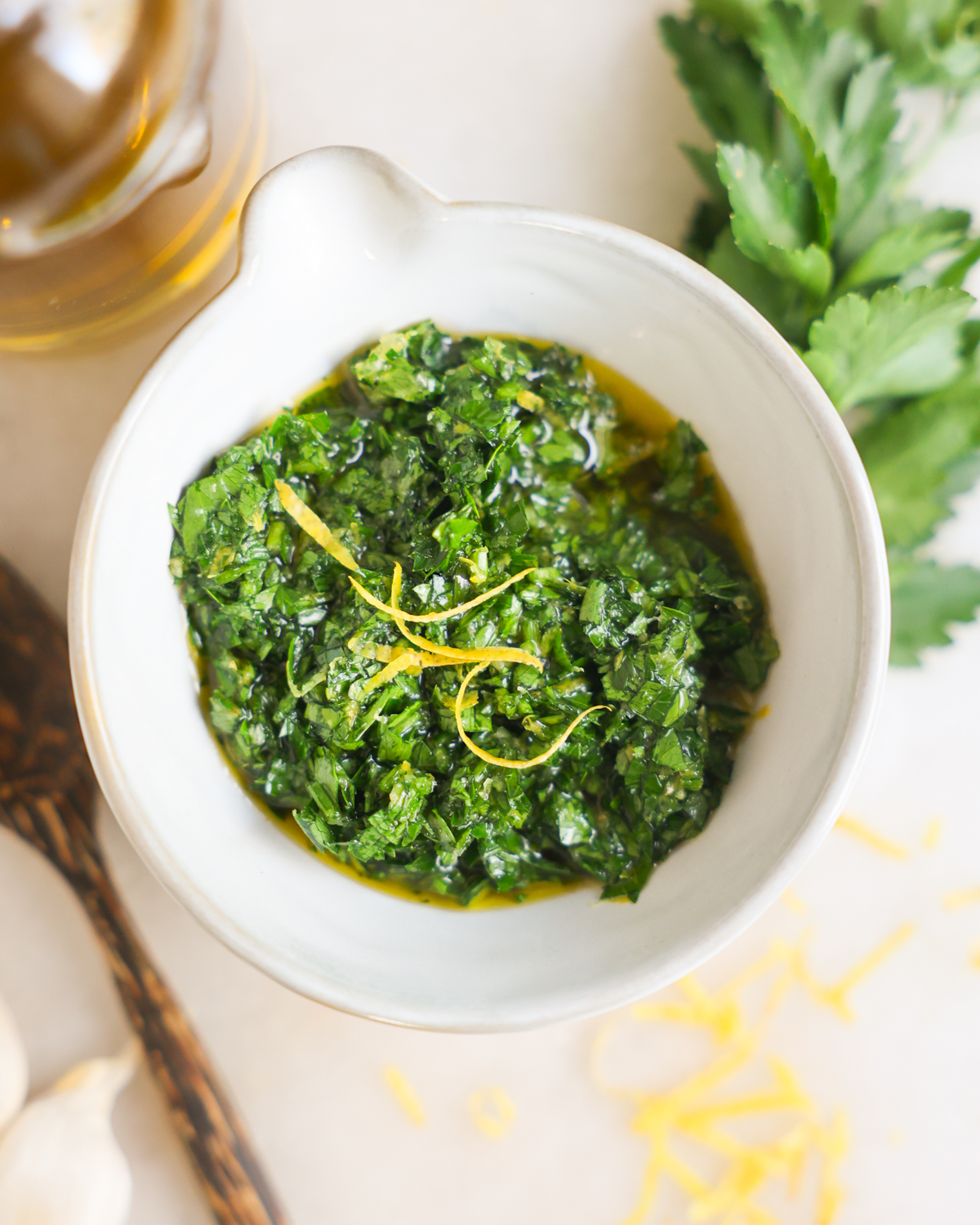
Gremolata is an Italian condiment traditionally made with just 3 ingredients, fresh parsley, garlic, and lemon zest. It’s commonly used as a topping for meat and fish. In this version of gremolata I use a high quality extra virgin olive and a pinch of salt. The olive oil adds flavor, keeps the herbs and zest fresh for longer, and allows for drizzling. Plus, plant-based food tends to be lower in fat, so this oil gremolata adds the delightful mouthfeel that otherwise may be missing; and it helps to round out your meal.
When I teach folks how to cook, I always emphasize the importance of balancing your flavors. Before adding more salt to a bland meal, consider adding acid, herbs, and sweetness: this gremolata has all three. This combination of flavors helps to balance the flavors in any meal.
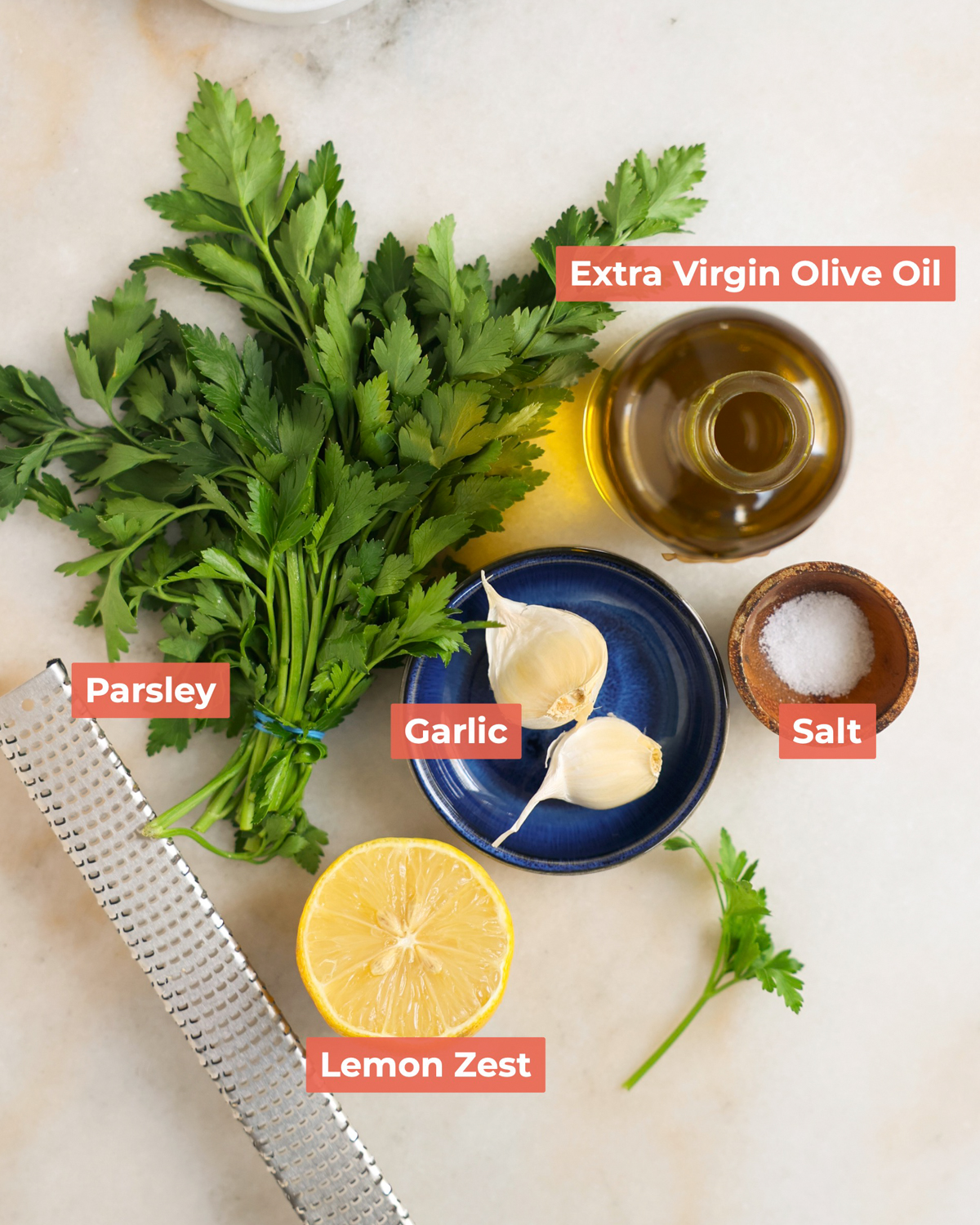
Ingredients
Gremolata is made with just a few simple ingredients. See the recipe substitutions list below for tasty swaps and additions.
Fresh Parsley: Classic gremolata is made with flat leaf parsley. Curly parsley can also be used. Parsley is beloved in Mediterranean cooking for its bright, clean, and earthy taste. No need to remove the parsley leaves from the stems before chopping. A little stem never hurt nobody.
Garlic: Raw garlic is a must in every gremolata recipe. Its pungent spicy taste blends so well with herbs, and brings depth to any dish. Grate or finely mince the raw garlic for the strongest flavor in every bite.
Lemon Zest: Lemon juice is delicious but the zest is really where it’s at. Lemon zest contains the aromatic essence of the fruit. When eaten alone citrus zest is quite bitter, but when blended with other ingredients, it brings harmony and brightness to the dish. Make sure to zest only the yellow skin, and avoid the white pith below. Use organic lemons or wash conventional fruit with baking soda to remove any pesticides or coating.
Extra Virgin Olive Oil: Though oil is traditionally not added to gremolata, I swear by it. A few glugs of extra virgin olive oil (EVOO) added to this simple gremolata help the flavors marry and spread. Use a tasty high quality EVOO if you can.
Recipe Variations
While gremolata is traditionally made with parsley and lemon zest, it can be adapted to any cuisine.
Classic Oil-Free: Gremolata is traditionally made without oil, or just a splash. You can skip the oil if you prefer.
Latin-Style: Swap parsley for cilantro, and lemon zest for lime zest. Use a neutral-tasting avocado oil instead of EVOO, or use none at all. This variety also works well with Indian cuisine.
Mediterranean Mix: Try a blend of parsley, mint, tarragon, and basil for a more complex gremolata.
Pine Nut or Almond Gremolata: In Italian cooking, toasted pine nuts are often added to gremolata to give the condiment a nutty taste and delightful crunch. Add ¼ cup of toasted pine nuts or the same amount of finely chopped toasted almonds (or other nuts) to the gremolata. Pumpkin or sunflower seeds can be used to make this version nut-free.
Arugula Gremolata: Replace the parsley with arugula leaves for a sharp bite. This variety is especially delicious on roasted or grilled vegetables.
Basil Gremolata: Replace the parsley with fresh basil. Try it on pizza and pasta. Basil gremolata by itself is a delicious pasta sauce that comes together in a pinch.
Thai-style: Use thai basil in place of parsley and lime zest in place of lemon. Use a neutral-tasting oil instead of EVOO or none at all. This is delicious on Asian-inspired dishes like pumpkin curry and sweet potato noodles.
Spicy Gremolata: Turn up the heat by adding 1/2 tsp of red chili flakes.
Quick tip: Make a sampler of different varieties of gremolatas when you’re entertaining guests.
How to Make Gremolata
This is definitely one of the easiest recipes I make!
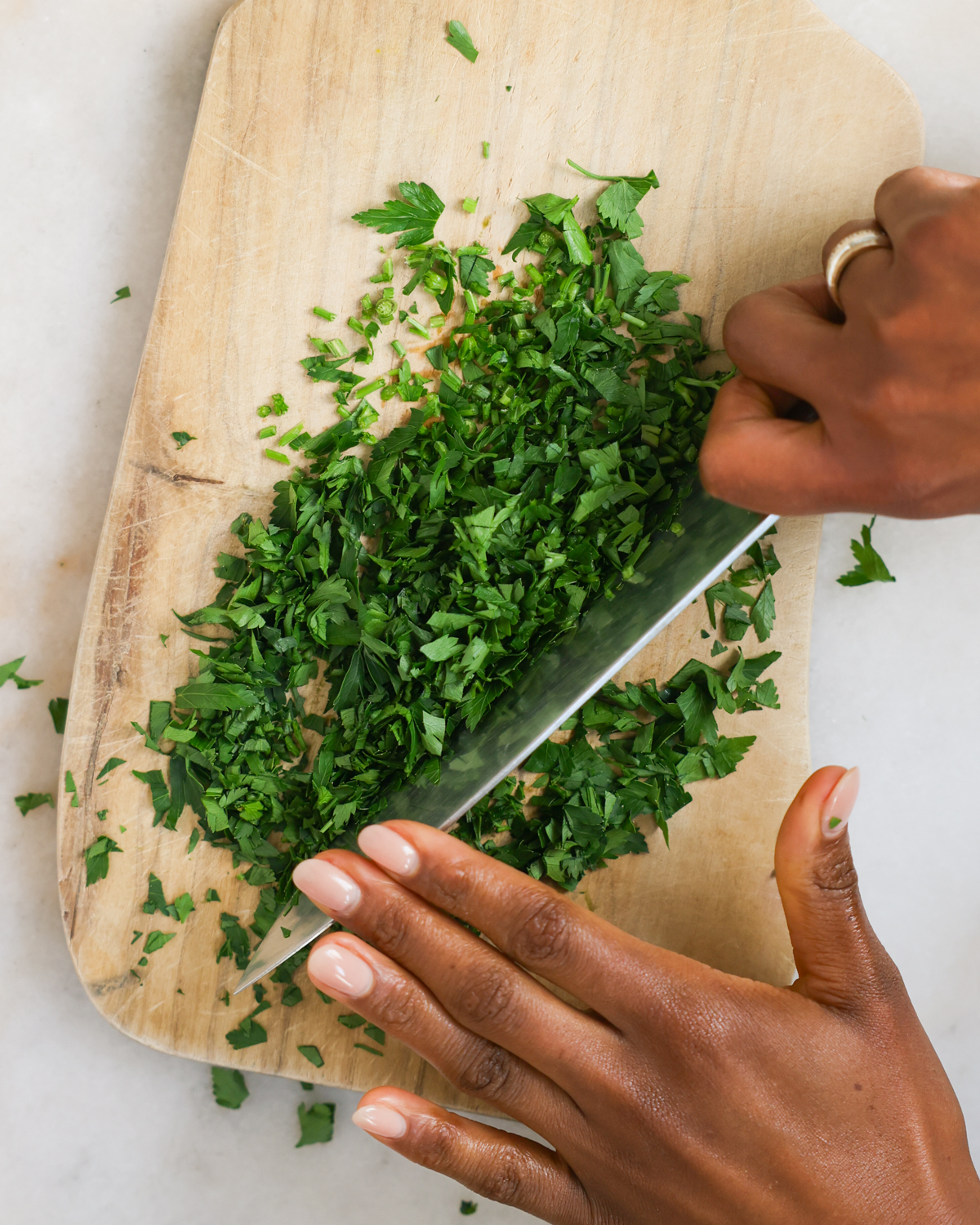
- Chop herbs. Use a sharp chef’s knife to mince the fresh parsley leaves. It’s ok to use some of the stem too.

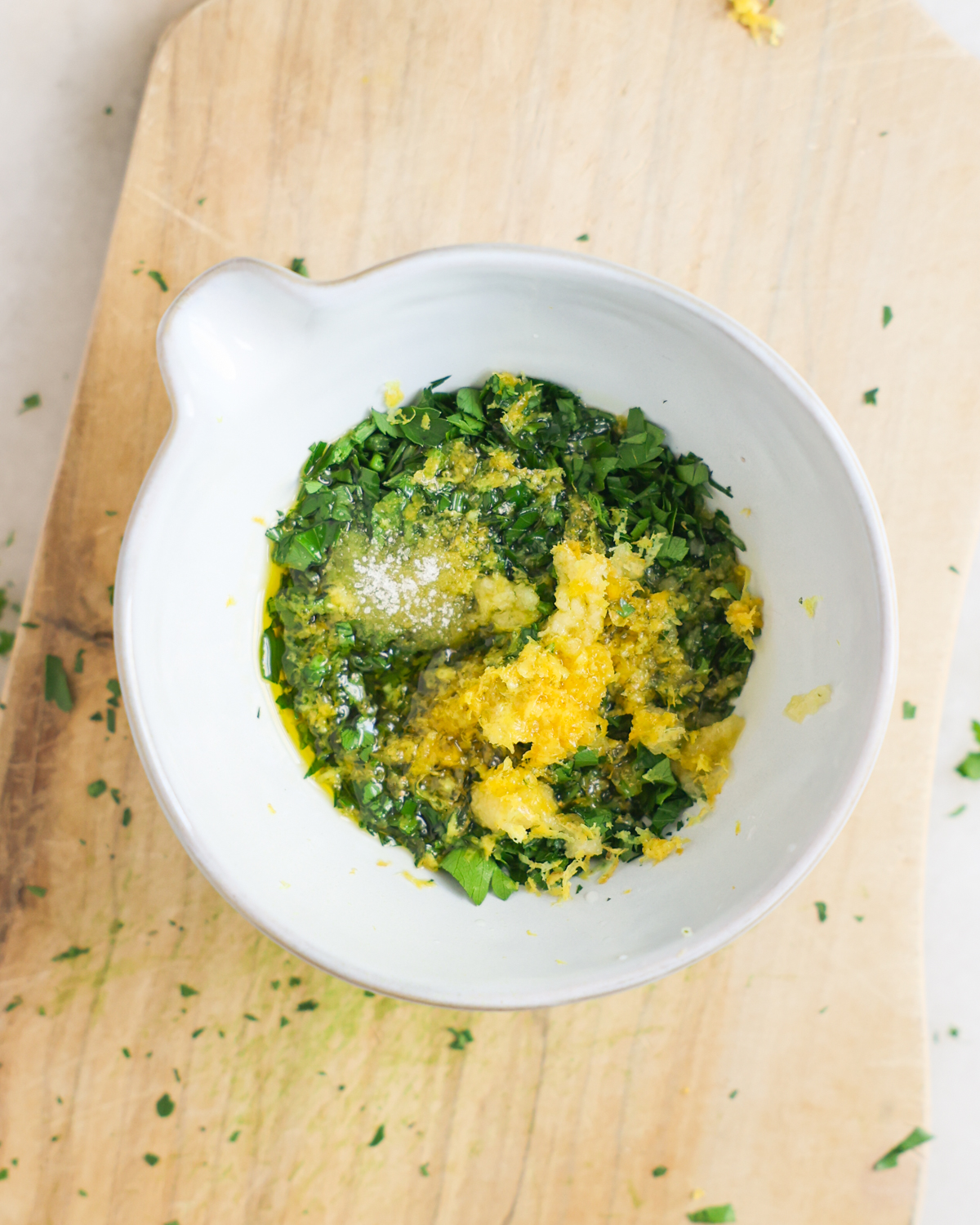
- Combine ingredients. Add the chopped parsley to a medium bowl. Using a microplane or grater, grate the cloves of garlic directly into the bowl. Or finely mince the garlic before adding. Then add the lemon zest, oil, and salt. Stir.



Jenné’s Recipe Tips
- Use a sharp chef’s knife to mince the parsley. Dull knives can bruise the herbs and make them bitter.
- Wash and dry parsley before chopping. The parsley should be completely dry for best results.
- If you don’t have a microplane to zest the lemon use a peeler to gently peel the yellow skin from the lemon. Be careful to avoid the bitter white pith (the white layer below the skin). Use the sharp knife to mince the zest as finely as possible before adding to the gremolata.
- Don’t use a food processor. Gremolata is best when made by hand. The food processor is great when making a paste like pesto, but the best gremolata relies on evenly minced fresh herbs.

How to Use Gremolata
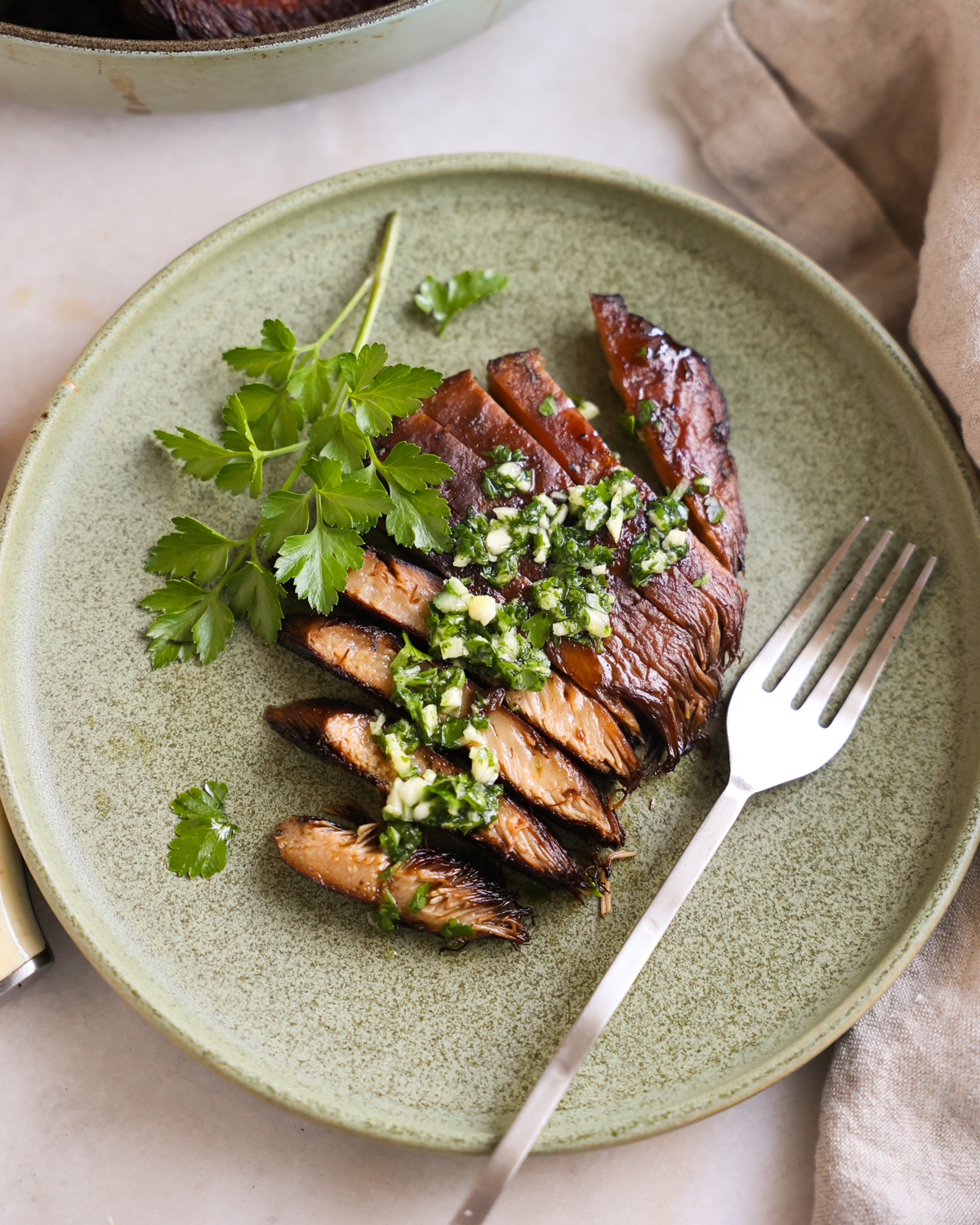
Gremolata is delicious on pretty much anything! You can use it as a sauce, a dressing, or wherever you’d use pesto. Try it as a topping for one of these vegan dishes.
How to Store
Store in an airtight container in the fridge. Remove it from the fridge at least 30 minutes before using to let the oil return to its liquid state. Use the gremolata within 3 days of making.
Frequently Asked Questions
Gremolata is traditionally a dry condiment made with parsley and without oil. My recipe does call for oil, but that doesn’t make it a chimichurri. Chimichurri is an Argentinian sauce made with fresh herbs and spices as well as vinegar. Both are delicious, but gremolata has a brighter taste, thanks to the citrus zest, and fewer overall ingredients.
Gremolata is an Italian condiment that is traditionally added to meats and fish. It can also be used on mushrooms, grilled or roasted vegetables, pasta, soups, salads, bread, pizza, and dips. The possibilities are endless! Add homemade gremolata whenever you want to add extra flavor to a meal.
Gremolata can be prepared up to 3 days in advance of serving. Store it in the refrigerator, and remove it at least an hour before serving to allow the olive oil (if using) to liquify again.
Prevent your screen from going dark
- Use a sharp chef’s knife to mince the parsley. Dull knives can bruise the herbs and make them bitter.
- Wash and dry parsley before chopping. The parsley should be completely dry for best results.
- If you don’t have a microplane to zest the lemon use a peeler to gently peel the yellow skin from the lemon. Be careful to avoid the bitter white pith (the white layer below the skin). Use the sharp knife to mince the zest as finely as possible before adding to the gremolata.
- Don’t use a food processor. Gremolata is best when made by hand. The food processor is great when making a paste like pesto, but the best gremolata relies on evenly minced fresh herbs.
Calories: 82kcal | Carbohydrates: 1g | Protein: 0.2g | Fat: 9g | Saturated Fat: 1g | Polyunsaturated Fat: 1g | Monounsaturated Fat: 7g | Sodium: 148mg | Potassium: 25mg | Fiber: 0.2g | Sugar: 0.1g | Vitamin A: 316IU | Vitamin C: 6mg | Calcium: 7mg | Iron: 0.3mg