

Rich, thick, and deeply spiced, this tofu rendang combines tofu, butternut squash, and sugar snap peas in a slow-simmered spiced coconut sauce. It’s a vegan take on the classic Malaysian curry that’s vibrant, flavorful, and incredibly satisfying!

Curries are one of my favorite types of dishes to cook because they’re always loaded with flavor. I also love that many of them are surprisingly simple to prepare… but that’s not always the case. Full disclosure: this vegan rendang is a bit more involved than most of the curries on this site. I promise you, though, it’s absolutely worth it.
[feast_advanced_jump_to]
Unlike my Thai curries, such as vegan red curry and vegan green curry, where you can grab a can of curry paste at the store and dinner comes together quickly, this rendang starts with a homemade paste. And unlike some of my Indian-inspired curries, like tofu tikka masala, which rely mainly on ground spices, this recipe uses several whole spices for deeper flavor. If you have an Asian market nearby, this is the perfect excuse to explore and pick up a few new ingredients.
Traditional rendang is made with beef, but for this vegan version I focused on capturing the rich sauce and slow-simmered technique rather than mimicking the meat. My version combines tofu, butternut squash, bamboo shoots, and snap peas, all simmered in a thick, warmly spiced, tangy coconut sauce. The result is an ultra-comforting meal that feels a little extra special — perfect for a weekend dinner.
Ingredients You’ll Need
Below you’ll find a list of ingredients in this recipe, with notes and substitutions. Scroll all the way to the bottom of the post to see the full recipe, including the amount of each ingredient.
- Dried chile peppers. Look for these in the international aisle of your grocery store, or at an Asian market. You may find that several varieties are available — go with Chinese dried chiles if you can.
- Lemongrass. Most grocery stores will have this in the produce aisle. If yours doesn’t, try an Asian market.
- Shallots.
- Garlic.
- Galangal. This is also known as Thai ginger. It’s a bit milder and more citrusy than the ginger you’re familiar with. You’ll probably need to get this one at an Asian market.
- Ginger.
- Vegetable oil. Pretty much any neutral, high-heat oil can be used, such as peanut oil, coconut oil, or canola oil.
- Whole spices. You’ll need a cinnamon stick, a couple of star anise, and whole cloves.
- Butternut squash. Feel free to replace this with another type of winter squash, like kabocha or delicata.
- Bamboo shoots. Most stores sell these in cans in the international aisle.
- Makrut lime leaves. I like to buy these dried at the Asian market. They keep for a long time and can be used to add flavor to lots of dishes. Give my Thai coconut soup a try if you’re looking for another use for them!
- Tamarind concentrate. Another ingredient to grab from the Asian market, this will add a rich, tangy flavor to your curry.
- Brown sugar. We’re using organic brown sugar to keep the recipe vegan — conventional brown sugar is often processed using animal bone char.
- Tofu. I like using super-firm tofu for this recipe, since it’s easy to work with and holds up well under the long simmer time.
- Sugar snap peas.
- Unsweetened shredded coconut.
- Salt.
- Rice. I like basmati or jasmine rice with this recipe, but any variety is fine.
How It’s Made
Below is a detailed photo tutorial on how to make this dish. Scroll all the way down if you’d like to skip right to the recipe!

Step 1: Soak the chiles. Cover them with hot water and let them soak for at least 10 minutes. You can start prepping the rest of the paste ingredients in the meantime.

Step 2: Prepare the lemongrass. Cut a lengthwise slice along each stalk, then peel off the tough outer layers. Cut the inner portion into a few pieces. This is what you’ll be using in the paste.
Tip: A lot of the heat in your dried chiles is in the seeds, so removing them will help mitigate the heat level of your curry.

Step 3: Prepare the paste. Add all of your paste ingredients to a blender or food processor — soaked chiles, lemongrass, shallots, garlic, galangal, ginger, and oil.

Step 4: Blend. Run the machine and blend up your ingredients. If the mixture feels a bit stubborn, add a few tablespoons of the coconut milk you’ll be using for the curry.
Tip: Use a smaller blending device, like a mini food processor, if you have one. It’ll make blending easier!

Step 5: Sauté the paste. Heat some oil in a pot, then add your paste. Cook it for about 5 minutes, stirring constantly to prevent burning. You want it to reduce a bit and start to darken.

Step 6: Toast whole spices. Add your cinnamon stick, star anise, and cloves to the pot. Cook them for about a minute while stirring constantly.

Step 7: Simmer. Stir in your coconut milk, starting with just a small amount to loosen the paste, then adding the rest. Add your diced butternut squash, bamboo shoots, makrut lime leaves, tamarind concentrate, and brown sugar. Let the mixture simmer with the pot covered until the squash begins to soften.
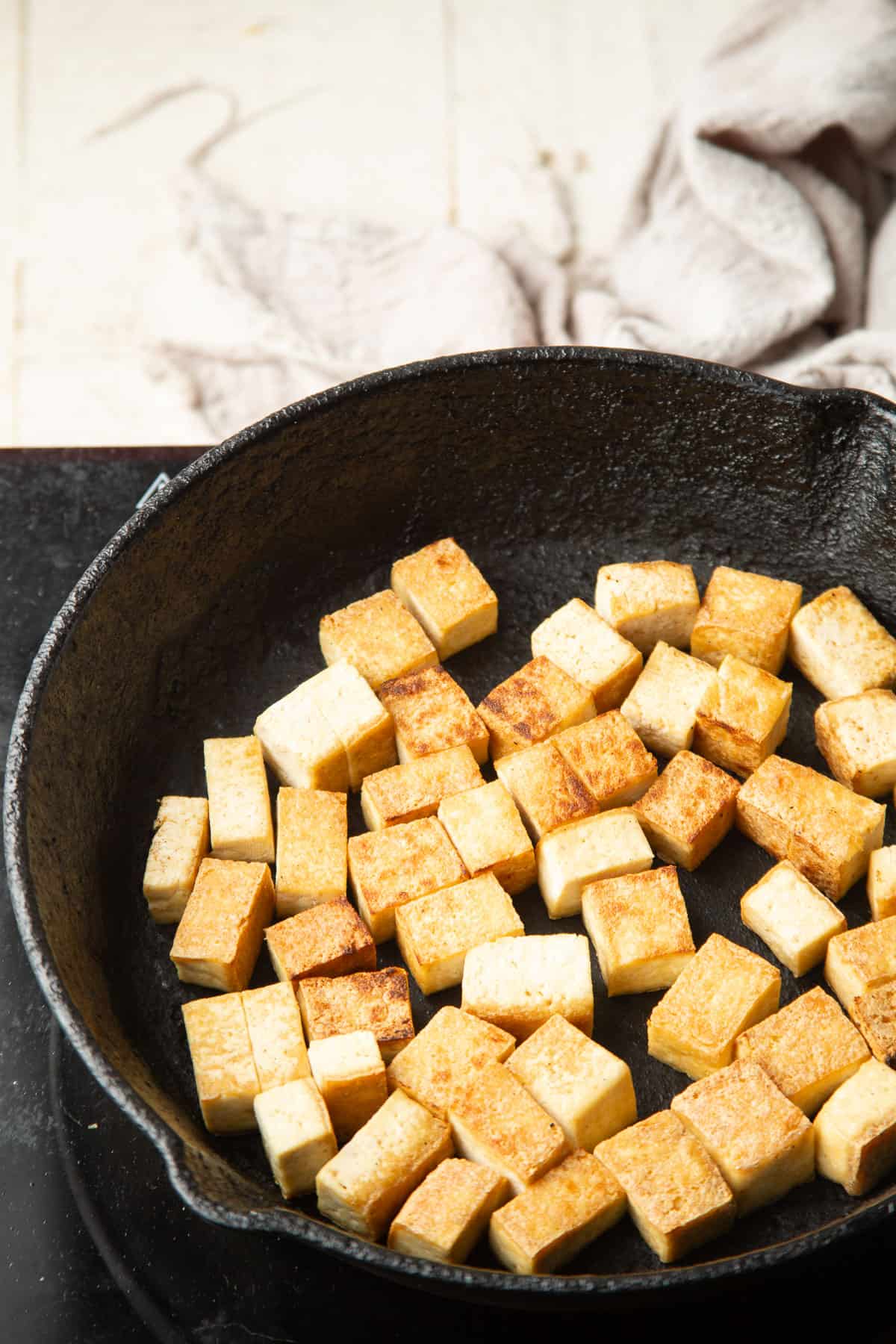
Step 8: Cook the tofu. While the curry simmers, heat some oil in a large skillet, then add diced tofu. Cook the pieces for a few minutes on each side. You want them to get nice and crispy so they can stand up to the long simmer time in the curry.

Step 9: Reduce. Take the lid off of the pot and add the tofu. Let it continue simmering for about a half hour. You want the sauce to become super thick. It’ll start to look a bit glossy when it’s done — this is the oil separating back out from the coconut milk.

Step 10: Cook the snap peas. Add them in last, since they only need a few minutes to cook. Let the curry continue to simmer just until your peas become bright green and tender-crisp. Be careful not to let them overcook.

Step 11: Finish the curry. Stir in your coconut and take the pot off of heat. If you’re able, remove the whole spices and lime leaves (or just take them out as you eat the dish). Season it with salt to taste.

Step 12: Serve. Your vegan rendang is ready to enjoy! Pile it onto plates over rice. You can garnish it with some hot pepper slices and fresh cilantro if you’d like, but it’s totally not required.
Frequently Asked Questions
Yup! The recipe, as written, includes no gluten-containing ingredients.
Yes, the dish will have some heat no matter what, due to the inclusion of dried chilies, which I don’t recommend omitting. You can minimize the heat by using just a few chiles and removing the seeds before you soak them.
You sure can! It’ll keep in an airtight container in the fridge for about four days, or in the freezer for about 3 months. I like to make a double batch when I’m preparing this dish, and freeze some for later.
Leftovers will keep in an airtight container in the fridge for three or four days, or in the freezer for up to three months. I find that this dish reheats best in the microwave.
More Vegan Curries



Like this recipe? If so, please stop back and leave me a review and rating below if you try it! Also be sure to follow me on Facebook, Pinterest or Instagram, or subscribe to my newsletter for more recipes like this one!
📖 Recipe

Tofu Rendang
#wprm-recipe-user-rating-0 .wprm-rating-star.wprm-rating-star-full svg * { fill: #343434; }#wprm-recipe-user-rating-0 .wprm-rating-star.wprm-rating-star-33 svg * { fill: url(#wprm-recipe-user-rating-0-33); }#wprm-recipe-user-rating-0 .wprm-rating-star.wprm-rating-star-50 svg * { fill: url(#wprm-recipe-user-rating-0-50); }#wprm-recipe-user-rating-0 .wprm-rating-star.wprm-rating-star-66 svg * { fill: url(#wprm-recipe-user-rating-0-66); }linearGradient#wprm-recipe-user-rating-0-33 stop { stop-color: #343434; }linearGradient#wprm-recipe-user-rating-0-50 stop { stop-color: #343434; }linearGradient#wprm-recipe-user-rating-0-66 stop { stop-color: #343434; }
Ingredients
For the Paste
- 8 dried chile peppers (or more if desired, up to 12)
- 3 lemongrass stalks
- 2 medium shallots, halved
- 5 garlic cloves
- 2 tablespoons fresh galangal, grated
- 1 tablespoon fresh ginger, grated
- 2 tablespoons vegetable oil
For the Curry
- 3 tablespoons vegetable oil, divided
- 1 cinnamon stick
- 2 star anise
- 5 whole cloves
- 1 (14 ounce/400 ml) can full-fat coconut milk
- 3 cups diced butternut squash
- 1 (5 ounce/142 gram) can sliced bamboo shoots, drained
- 5 makrut lime leaves
- 2 teaspoons tamarind concentrate
- 2 teaspoons organic brown sugar
- 1 (16 ounce/454 gram) package super firm tofu, cut into ½-inch cubes
- 2 cups sugar snap peas
- ¼ cup unsweetened shredded coconut
- 1 teaspoon salt, plus more to taste
- Cooked rice, for serving
Instructions
-
To make the paste, first place the dried chiles into a small bowl or cup and cover them with hot water (Note 1). Let them soak for 10 to 15 minutes while you gather the rest of the paste ingredients.
-
Slice open the lemongrass stalks, lengthwise, then peel off the tough outer layers. Cut each stalk into 1-inch or smaller pieces, then add them to a blender or food processor fitted with an S-blade (Note 2).
-
Add the shallots, garlic, galangal, ginger, and vegetable oil to the blender or food processor. Remove the chiles from the water and add them as well.
-
Blend everything until relatively smooth, stopping to scrape down the sides of the bowl or pitcher as needed. If you need a little liquid to get things moving, add two or three tablespoons of the coconut milk that you'll be using for the curry. Get the mixture to a paste — it doesn't need to be perfectly smooth as long as it's free of large chunks.
-
To make the curry, heat 2 tablespoons of oil in a large pot over medium heat. Once the oil begins to shimmer, add the paste. Sauté the paste for 4 to 5 minutes, stirring constantly, until it thickens a bit and begins to darken.
-
Add the cinnamon stick, star anise, and cloves to the pot and sauté them with the paste for a minute, stirring constantly.
-
Pour in a few tablespoons of the coconut milk and stir to loosen the paste. Once it begins to bubble, gradually stir in the remaining coconut milk. Next, stir in the butternut squash, bamboo shoots, makrut lime leaves, tamarind concentrate, and brown sugar. Raise the heat to high and bring the liquid to a boil, then reduce it to a low simmer and cover the pot. Let the curry simmer for about 15 minutes, until the squash is easily pierced with a fork.
-
Cook the tofu while the curry simmers. Coat the bottom of a large nonstick skillet with the remaining tablespoon of oil and place it over medium-high heat. Give the oil a minute to heat up, then add the tofu cubes, arranging them in a single layer. Cook the tofu for 8 to 10 minutes, flipping the pieces once or twice, until crispy and nicely browned. Remove the tofu from the skillet and move it to a plate.
-
Uncover the pot containing the curry and stir in the tofu. Allow the curry to continue simmering for about 30 minutes, stirring occasionally, until the sauce is very thick and clings to the tofu and squash.
-
Stir in the sugar snap peas and let the curry continue simmering for 3 to 4 minutes, until the peas are bright green and tender-crisp.
-
Stir in the coconut, then remove the pot from heat. Season the curry with 1 teaspoon of salt, plus more to taste (Note 3).
-
Serve over rice.
Notes
- Optionally, cut the chiles open and shake out the seeds first. This will reduce the heat level of the curry.
- A mini food processor works best, since you’ll be blending a small amount, but don’t worry if you don’t have one — as you can see, I’m using a large blender and was able to make it work.
- You can remove the whole spices and lime leaves before serving if you’d like. Since it can be hard to dig everything out, I sometimes just warn my guests to look out for them as they’re eating.
- Nutrition information does not include rice.
Nutrition
The post Tofu Rendang appeared first on Connoisseurus Veg.