
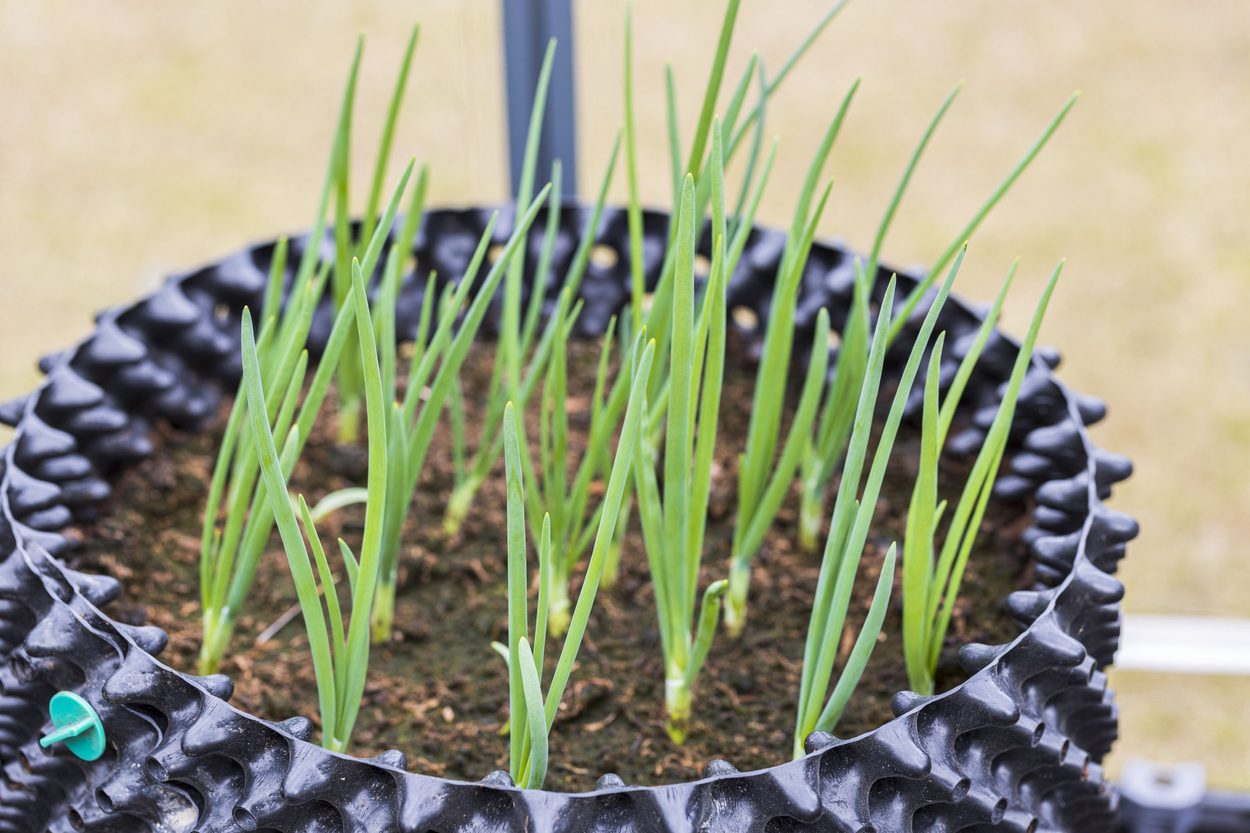
Onion seedlings are not exactly known for standing tall and proud. They emerge as thin green loops, straighten into what look like blades of grass and often begin leaning long before they are ready for the garden. A tray can look perfectly healthy one day and strangely flattened the next. Fortunately, a fallen onion seedling is not always a dying seedling.
Some bending is a normal part of onion growth. Other seedlings fall because they need stronger light, less water, more space or protection from disease.
The location of the bend is usually the most useful clue. Healthy leaves tend to arch or lean from higher on the plant. A seedling collapsing at the soil line is much more concerning. Here are six common reasons onion seedlings fall over and what you can do about each one.
First, Make Sure You Are Looking at Seedlings
This article covers young onions that are still growing—not mature onions approaching harvest.
🐝 Fan Favorite
“Feed the Bees” Garden Sign
Give your wildflower patch a pop of color and let your neighbors know there’s purpose in your plants.
Delivered in 5–7 days
- Hand-illustrated design
- Recycled aluminum — won’t fade, rust, or crack
- Plants 1 real tree in the Monarch Corridor
🦋 Every sign funds a tree planted in the North American Monarch Corridor — at no extra cost to you.
When established onion plants begin falling over late in the season, it often means the bulbs have finished growing. Use these seven signs that onions are ready to harvest before pulling mature bulbs.
Young seedlings are different. They should remain green and continue producing new growth even if some of their leaves bend.
1. The Seedlings Are Emerging Normally
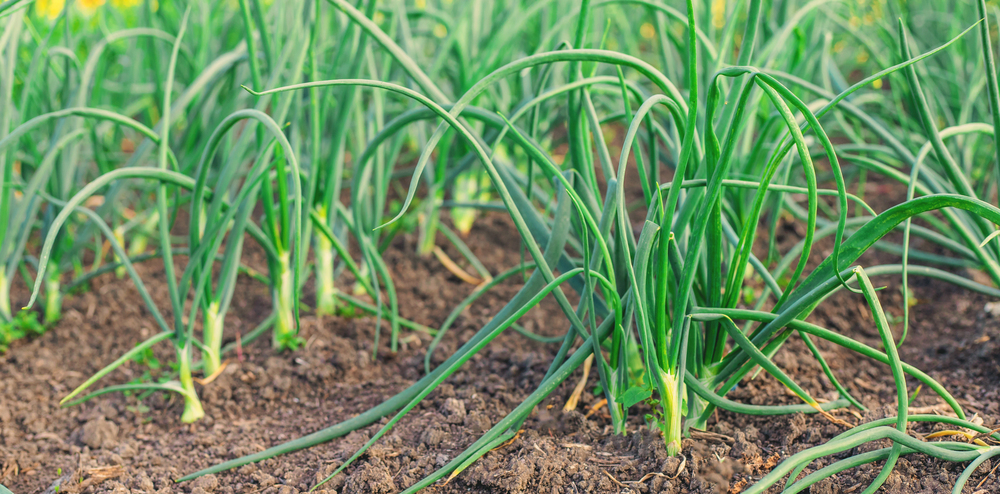
Onion seedlings have an unusual way of emerging from the soil.
Instead of immediately producing a straight stem with two obvious leaves, the first seedling leaf often appears as a bent loop. One end remains attached to the seed while the curved portion pushes through the soil.
This loop eventually lifts, unfolds and begins standing more upright. During this stage, the seedling can look folded, hooked or partially flattened.
That is usually normal.
What normal onion seedlings look like
A healthy emerging seedling should be:
- Green rather than yellow or brown
- Firm instead of soft or mushy
- Securely rooted in the potting mix
- Slowly straightening as it grows
- Producing new green tissue from its centre
Do not try to pull the leaf upright or remove the attached seed coat. The seedling will normally correct itself as it grows.
Give it adequate light, gentle airflow and consistent moisture. If the base remains firm, the plant probably does not need rescuing.
2. They Are Stretching for More Light
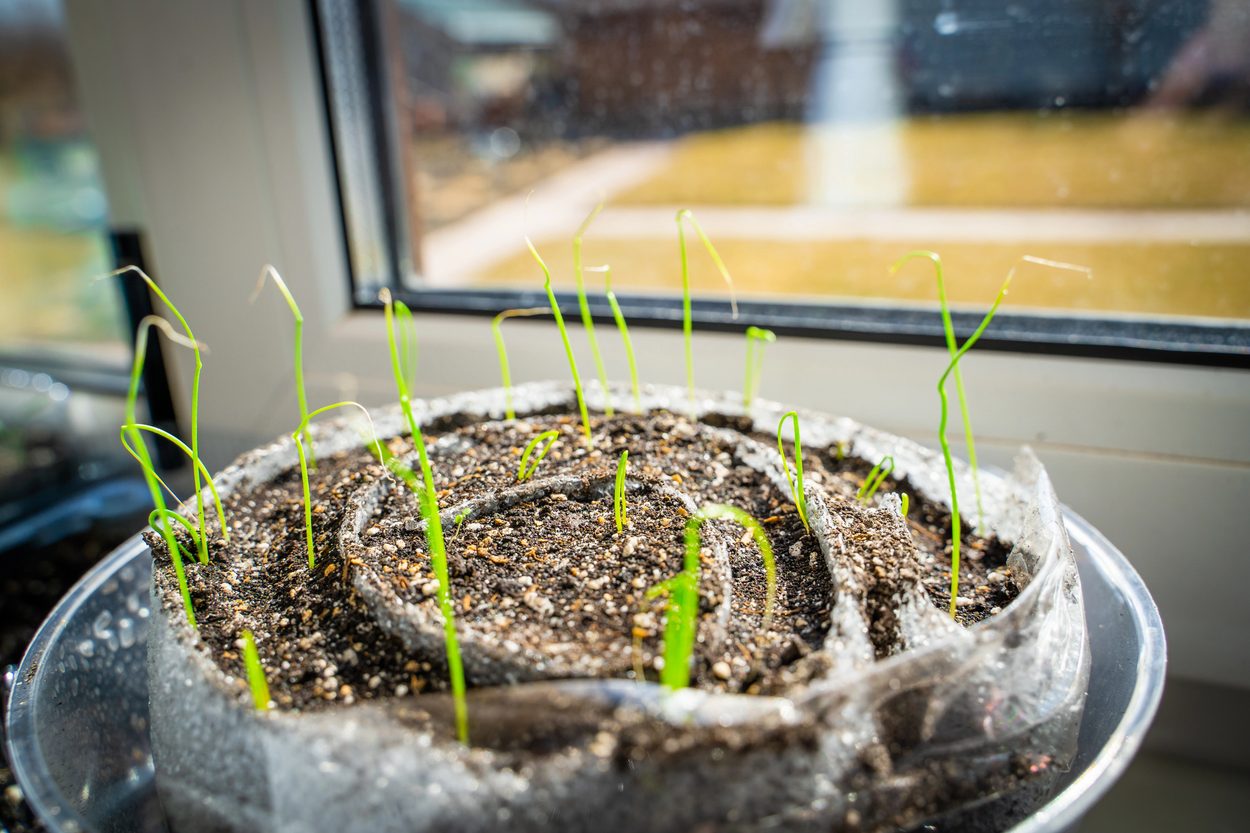
Insufficient light is one of the most common reasons indoor onion seedlings become weak and floppy.
A bright window may look sunny to us, but it often does not provide enough consistent light for strong seedling growth. The onions respond by stretching toward the brightest part of the window.
This produces long, thin leaves that cannot support themselves.
Leggy seedlings may:
- Lean in the same direction
- Grow unusually tall and pale
- Develop long spaces between the soil and upright growth
- Bend whenever the tray is moved
- Fall after minor overwatering or underwatering
How to fix leggy onion seedlings
Place the seedlings under a grow light rather than relying entirely on a window.
The University of Minnesota recommends providing seedlings with approximately 12 to 16 hours of artificial light each day. It also notes that ordinary window light is often inadequate.
Position the light close enough to prevent stretching but far enough away that it does not scorch the foliage. The correct distance depends on the strength and type of light, so follow the manufacturer’s directions.
Raise the fixture as the onions grow.
If you are using a sunny window, rotate the tray each day. This will not replace a proper grow light, but it can stop all the seedlings from leaning in one direction.
A small fan running on its lowest setting can also help strengthen the plants. The leaves should move slightly—not whip back and forth.
3. The Potting Mix Is Too Wet
Onions need consistent moisture, but their roots should never remain in saturated potting mix.
When the mix stays wet, the roots receive less oxygen. Seedlings may become yellow, stop growing or lose enough root strength that they begin leaning.
Constantly wet conditions also create an ideal environment for damping-off pathogens.
Signs of overwatered onion seedlings
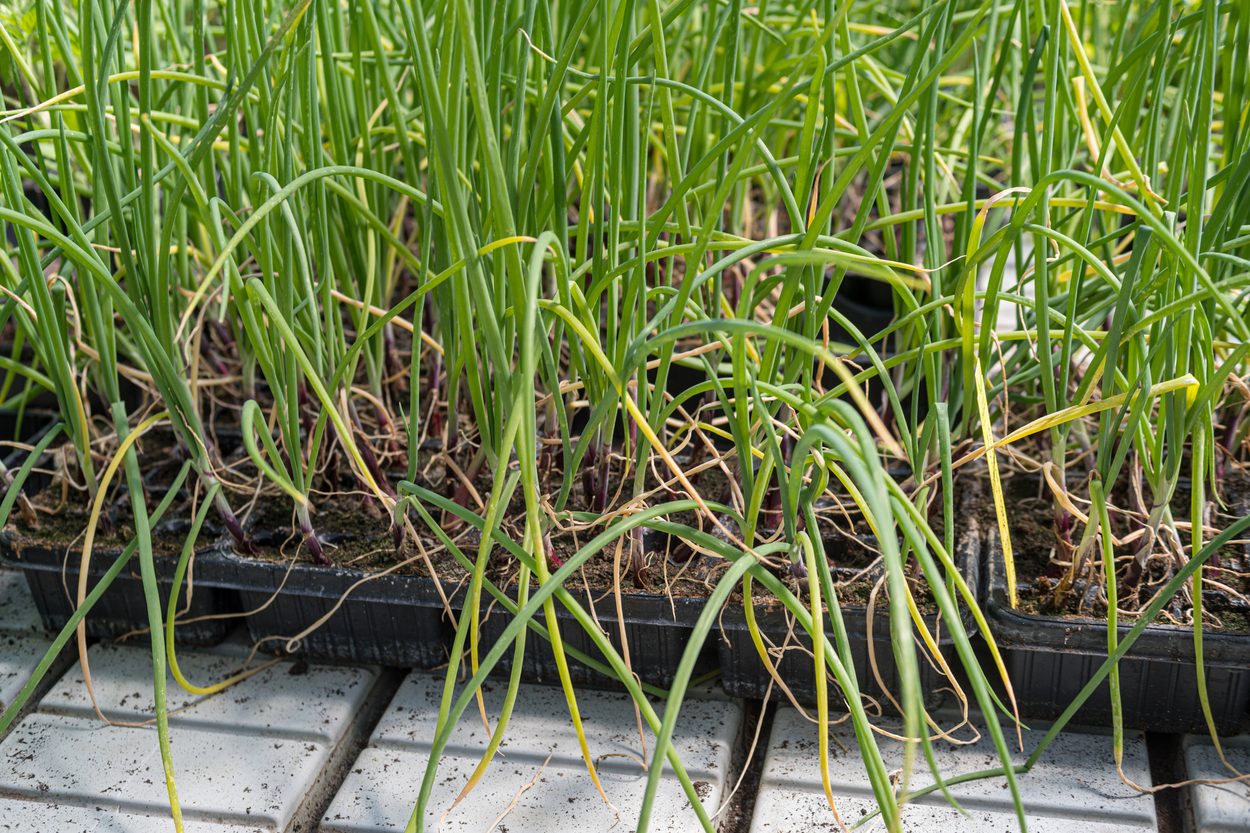
Look for:
- Potting mix that remains wet for several days
- Green algae growing across the surface
- A sour or musty smell
- Yellowing leaves
- Fungus gnats around the tray
- Seedlings that feel loose in the soil
- Water collecting beneath containers
How to correct the watering routine
Allow the surface of the potting mix to begin drying before watering again. The mix underneath should remain lightly moist rather than becoming completely dry.
Make sure every container has drainage holes.
Bottom watering is useful for crowded onion trays. Place water in the tray, allow the mix to absorb it and then pour away anything that remains. Do not leave the pots sitting in water all day.
Seedlings in small cells may need frequent watering, but frequency should be determined by the condition of the mix—not by a fixed calendar.
4. The Seedlings Have Damping-Off Disease
Damping off is the most serious explanation for onion seedlings that suddenly collapse.
Several fungi and water moulds can cause it, including species of Pythium, Rhizoctonia and Fusarium. These pathogens thrive in damp, crowded conditions with poor airflow.
The most recognizable symptom is a thin, pinched or water-soaked section of stem at the soil line. The seedling falls because the damaged tissue can no longer support it.
Signs of damping off
A seedling affected by damping off may have:
- A constricted stem at soil level
- Brown, grey or water-soaked tissue
- Soft or mushy roots
- White cobweb-like growth on the soil
- Sudden wilting despite moist soil
- Several nearby seedlings collapsing together
This is different from a healthy green leaf arching farther up the plant.
Unfortunately, seedlings that have collapsed from damping off rarely recover. Remove affected plants along with a small amount of surrounding potting mix.
This damping-off guide recommends using clean containers, new seed-starting mix, good drainage and moderate moisture. Garden soil should not be used in indoor seed trays because it can introduce pathogens.
To protect the remaining seedlings I:
- Remove visibly affected plants.
- Increase airflow around the tray.
- Allow the surface to dry slightly between waterings.
- Stop misting the foliage.
- Move unaffected seedlings into clean mix if the problem continues spreading.
- Clean reusable pots and tools before using them again.
Avoid adding extra fertilizer to “help” damaged seedlings. High fertilizer salts can stress young roots and make the problem worse.
5. The Seedlings Are Crowded or Top-Heavy
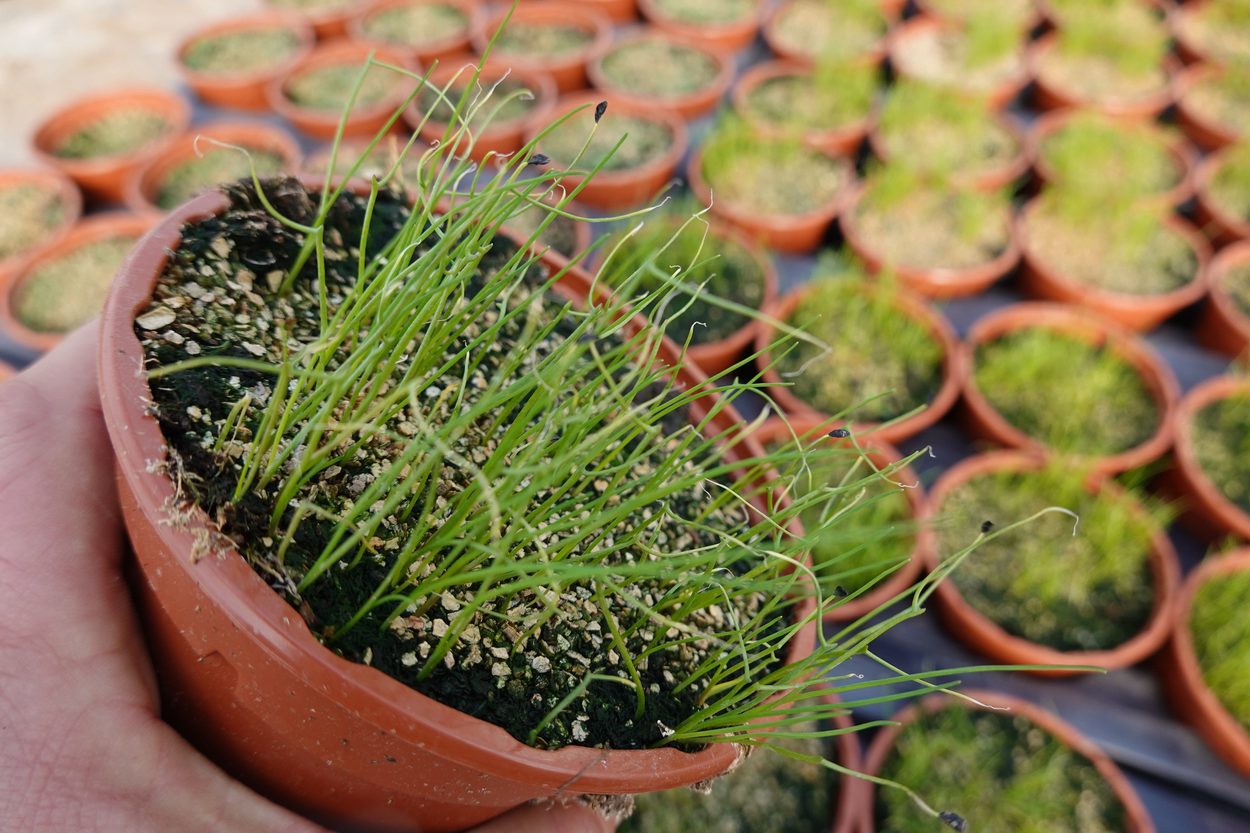
Onions can be started together in a larger container, but a dense clump eventually creates competition for light, water and root space.
The plants begin shading one another, and their leaves become tangled. Even healthy seedlings may fall simply because they have grown too long and top-heavy.
Crowding also reduces airflow around the soil surface, increasing the risk of damping off.
What to do with crowded onion seedlings
Thin out the weakest seedlings first.
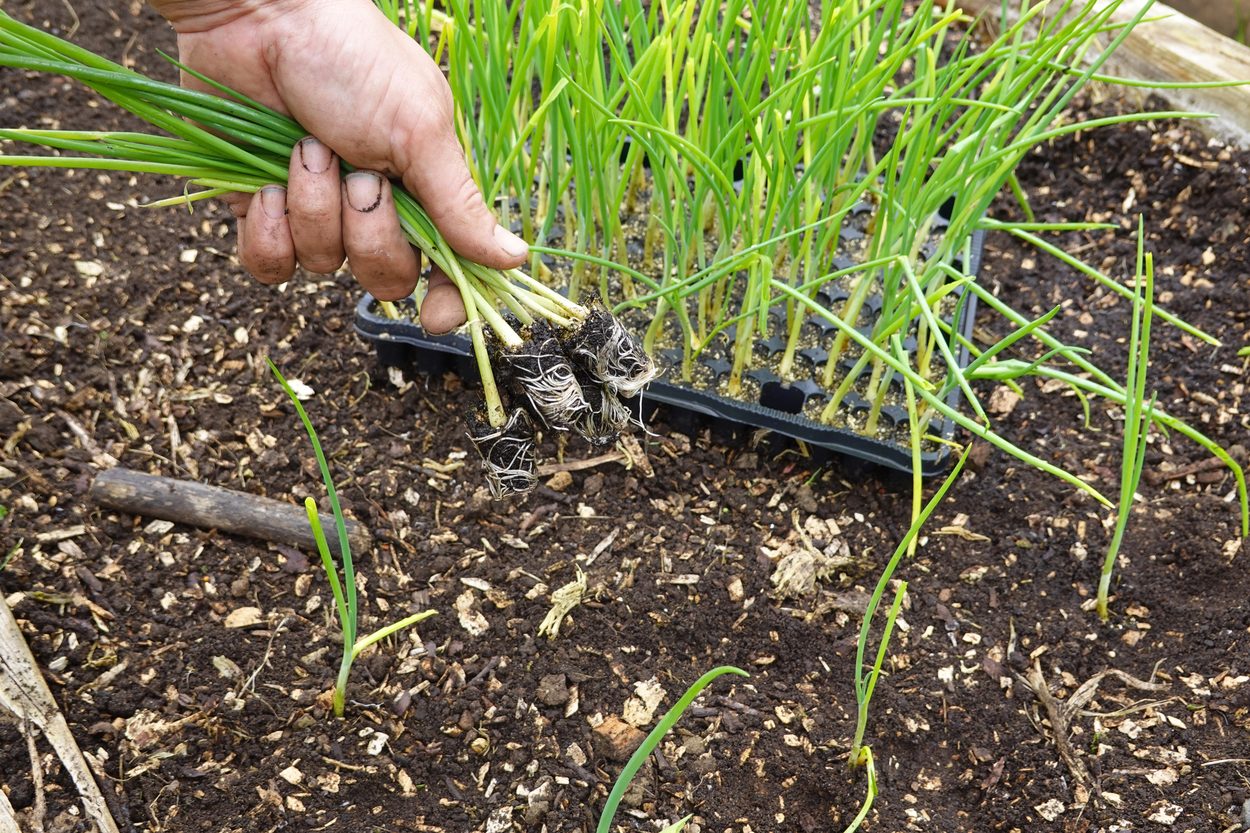
If the plants are large enough to handle, carefully separate and transplant them into deeper cells or small pots. Hold seedlings by their leaves rather than squeezing their delicate stems.
Onion roots often become tangled, so work slowly. You do not need to remove every piece of potting mix from the roots.
Healthy onion transplants can also be trimmed before planting. I trim the tops to approximately 4 inches and the roots to about half an inch at transplanting time.
Use clean scissors and avoid cutting newly emerged seedlings. Trimming is most appropriate for established transplants with several healthy leaves.
Do not repeatedly cut seedlings simply to keep them short. Better light and appropriate spacing should do most of that work.
6. They Are Reacting to Transplant Shock
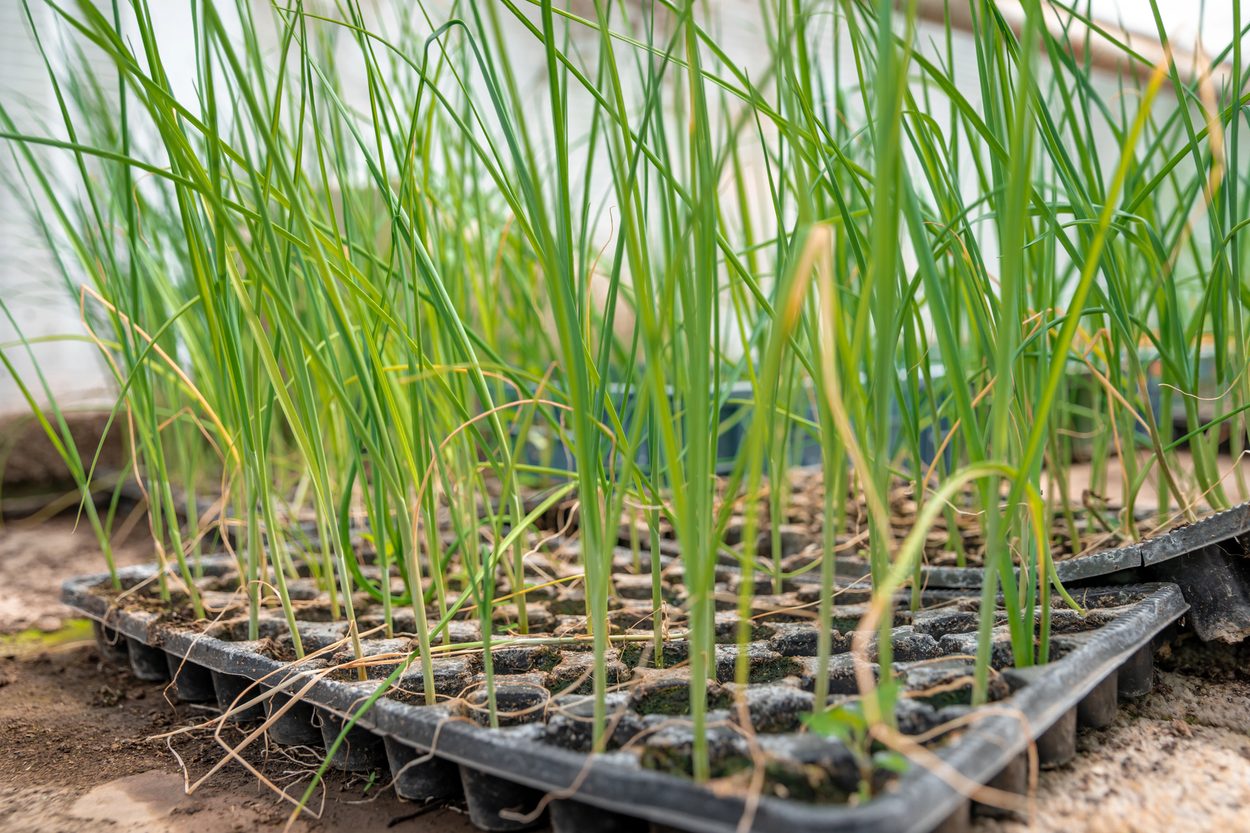
Onion seedlings may temporarily flop after being moved into a new container or planted outside.
Transplanting disturbs their small root systems. The plants may struggle to absorb enough moisture until those roots become established again.
Wind, stronger sunlight and fluctuating outdoor temperatures add to the stress.
How to reduce transplant shock
Harden the seedlings off before planting them outside.
Begin by placing them in a protected, shaded location for a short period. Gradually expose them to more sunlight, wind and outdoor temperatures over approximately one to two weeks.
Avoid moving seedlings directly from a warm indoor room into full sun.
When it is time to plant:
- Choose a cloudy day or plant later in the afternoon.
- Water the seedlings before removing them from their containers.
- Handle them by their leaves.
- Plant them at the same general depth they were growing in the tray.
- Water them immediately after transplanting.
- Protect them from strong wind for the first few days.
Onion transplants tolerate cool conditions and light frost, but a severe temperature change can still stress tender indoor-grown plants.
A slight lean after transplanting is not usually a problem if the seedlings remain green and firm. They should begin standing more upright as their roots establish.
Quick Onion Seedling Diagnosis
Use this chart to identify the most likely reason your seedlings are falling.
| What you see | Most likely cause | What to do |
|---|---|---|
| A green loop emerging from the soil | Normal growth | Leave it alone and provide adequate light |
| Long, pale seedlings leaning toward a window | Insufficient light | Add or reposition a grow light |
| Yellow seedlings in constantly wet mix | Overwatering | Improve drainage and reduce watering |
| Pinched, brown stem at the soil line | Damping off | Remove affected seedlings and improve sanitation |
| Healthy but tangled, top-heavy leaves | Crowding | Thin, separate or trim established transplants |
| Flopping immediately after planting outside | Transplant shock | Provide water, shade and wind protection |
Should You Trim Onion Seedlings?
Trimming onion seedlings can make established transplants easier to handle, but it will not correct every problem.
It may help when the seedlings are:
- Healthy and well rooted
- Several inches tall
- Tangled with neighbouring plants
- Being prepared for transplanting
Trimming will not cure damping off, repair rotten roots or compensate for inadequate light.
Use clean scissors and leave approximately 4 inches of healthy green growth. Avoid cutting into the central growing point or removing most of the foliage at once.
Can Fallen Onion Seedlings Recover?
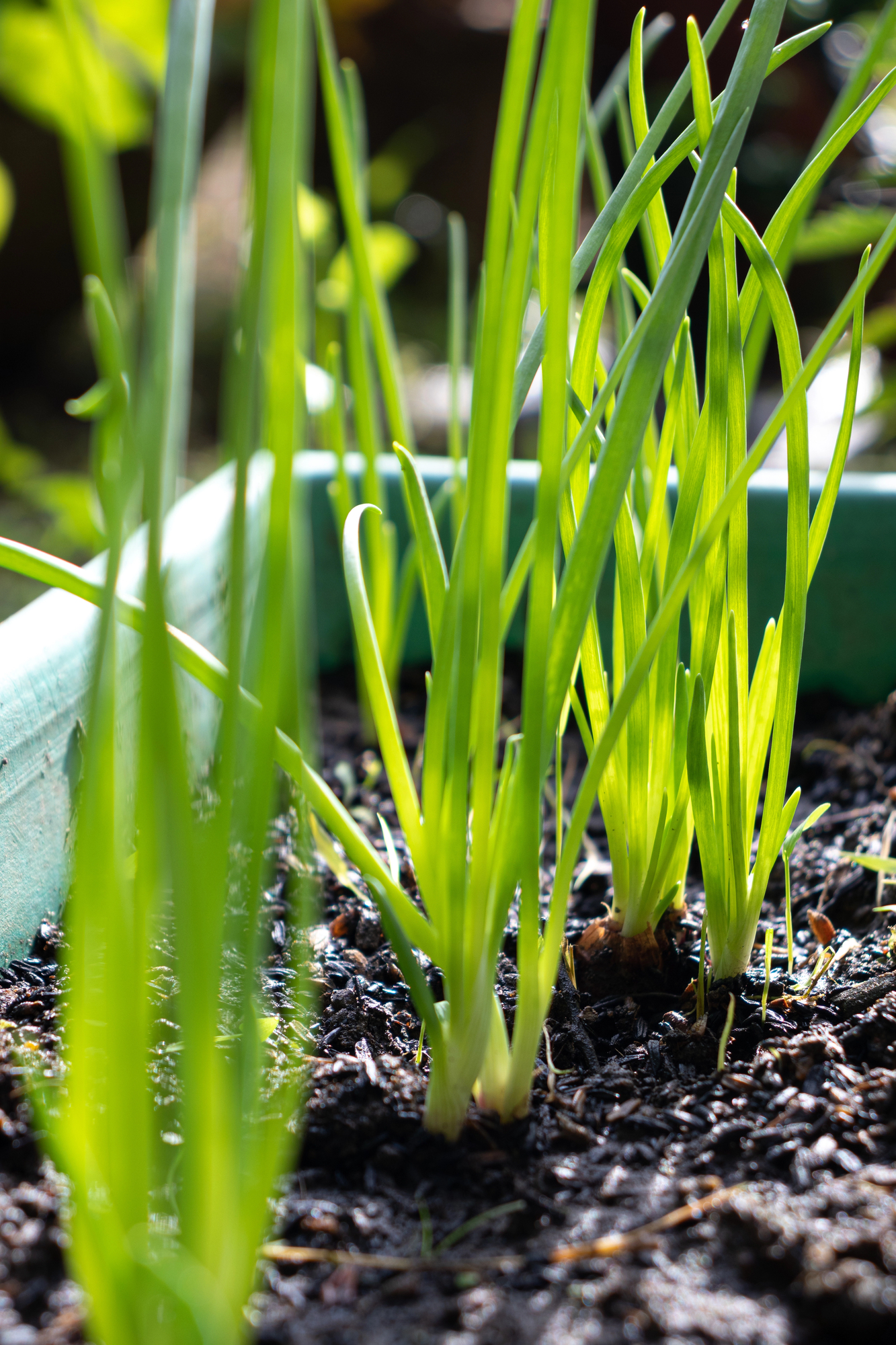
Healthy onion seedlings can often recover when the underlying problem is corrected.
Leggy plants may strengthen under better light. Slightly overwatered seedlings can recover once the potting mix begins draining properly. Transplants that flop after planting usually improve as their roots establish.
Recovery is unlikely when the stem has become pinched, brown or mushy at the soil line. Those symptoms strongly suggest damping off or advanced rot.
When in doubt, gently touch the base of the seedling. A firm green base is encouraging. A thin, soft or water-soaked base is not.
How to Grow Stronger Onion Seedlings
Prevention is easier than trying to rescue an entire fallen tray.
For sturdy onion seedlings:
- Use fresh, sterile seed-starting mix.
- Choose containers with drainage holes.
- Provide 12 to 16 hours of light.
- Keep the potting mix moist but not saturated.
- Add gentle airflow after germination.
- Avoid heavy fertilizer on very young seedlings.
- Thin overcrowded plants.
- Harden seedlings off before planting outside.
- Clean reused trays and tools before sowing.
Onions are shallow-rooted, so they need consistent care. The goal is not to keep the mix dry, but to balance moisture with drainage and airflow.
Frequently Asked Questions
Is it normal for onion seedlings to bend?
Yes. Newly emerging onion seedlings often appear as curved loops. Older leaves may also arch naturally. The plant is usually healthy if its base remains green and firm.
Why are my onion seedlings falling at the soil line?
A pinched, brown or water-soaked stem at the soil line is a classic sign of damping off. Remove affected seedlings and reduce the cool, wet conditions that favour the disease.
Will leggy onion seedlings still grow?
They may recover if they receive stronger light before becoming severely stretched. Move them under a grow light and provide gentle airflow.
Do fallen seedlings need more water?
Not necessarily. Falling can be caused by too much water, insufficient light, disease or transplant shock. Check the moisture and the base of the stem before watering again.
When can onion seedlings go outside?
Onions tolerate cool weather, but indoor-grown seedlings should still be hardened off gradually. Begin transplanting when the soil is workable and outdoor conditions are appropriate for your region.
What happens after the onions mature?
Mature onion tops eventually begin yellowing and falling naturally. After harvesting, follow the complete process for curing onions after harvest before placing the bulbs into winter storage.
Final Thoughts
A fallen onion seedling is a symptom, not a diagnosis.
Start by examining where the plant is bending. A curved green leaf is often normal, while a weak, discoloured stem at the soil line requires immediate attention.
Check the light, moisture and spacing before making changes. Correcting those three conditions solves many onion seedling problems and also reduces the risk of damping off.
With strong light, careful watering and a little airflow, most healthy onion seedlings will regain their footing and continue growing toward a productive harvest.