

Harvesting potatoes can feel like a guessing game. It’s far easier for me to tell when tomatoes or peppers are ready to be picked. As for potatoes… the crop is hidden underground, so you can’t tell how large the potatoes are simply by looking at the plant.
Fortunately, potato plants provide several clues as the tubers mature. You just need to know whether you want tender new potatoes for eating immediately or mature potatoes that can be cured and stored.
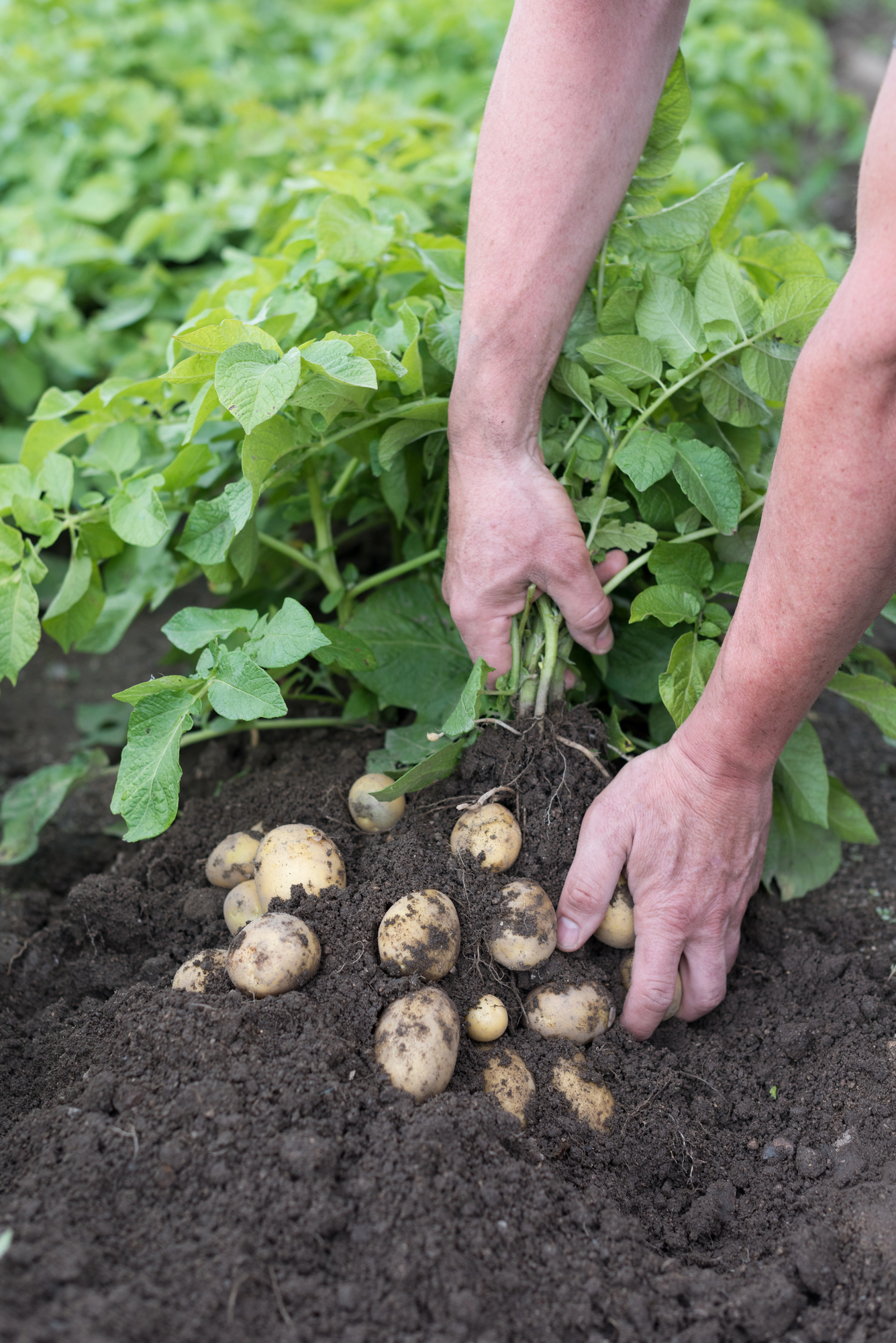
How Do I Know When My Potatoes Are Ready?
For new potatoes, carefully test-dig around the plant once it is well established and has begun flowering—or has reached the expected maturity window for its variety.
For full-size storage potatoes, wait until the foliage yellows and dies back. Dig one test potato and rub its skin with your thumb. If the skin remains firmly attached, the potatoes are ready to harvest and cure.
🐝 Fan Favorite
“Feed the Bees” Garden Sign
Give your wildflower patch a pop of color and let your neighbors know there’s purpose in your plants.
Delivered in 5–7 days
- Hand-illustrated design
- Recycled aluminum — won’t fade, rust, or crack
- Plants 1 real tree in the Monarch Corridor
🦋 Every sign funds a tree planted in the North American Monarch Corridor — at no extra cost to you.
| Type of potato | When to harvest | Skin texture | Best use |
|---|---|---|---|
| New potatoes | While plants are still green | Thin and easily rubbed off | Eat shortly after harvesting |
| Full-size potatoes | As foliage yellows and declines | Beginning to toughen | Fresh eating |
| Storage potatoes | After the vines die back | Firm and difficult to rub off | Cure and store |
| Damaged potatoes | During the main harvest | Cut, bruised or punctured | Use first; do not store |
How Long Do Potatoes Take to Harvest?
The time between planting and harvesting depends on the variety.
Early potatoes mature considerably faster than late-season storage varieties. Weather, soil temperature, moisture and planting conditions can also affect how quickly the tubers develop.
Use the maturity period listed for your seed potatoes as a starting point, but do not rely on the calendar alone. The condition of the vines, the size of a test potato and the firmness of its skin are more reliable indicators.
1. Your Potatoes Have Reached Their Expected Maturity Window
Begin by checking the estimated days to maturity for the variety you planted.
If the plants have only been growing for a few weeks, small tubers may be present, but they probably need more time. Once the plants approach the maturity period listed by the supplier, begin watching for the other signs on this list.
Keep in mind that days to maturity are an estimate. Cool temperatures, drought, excessive heat or a late planting can slow development.
Use the calendar to tell you when to start checking—not as an automatic signal to dig up the entire crop.
2. The Plants Have Flowered or Reached an Advanced Stage of Growth
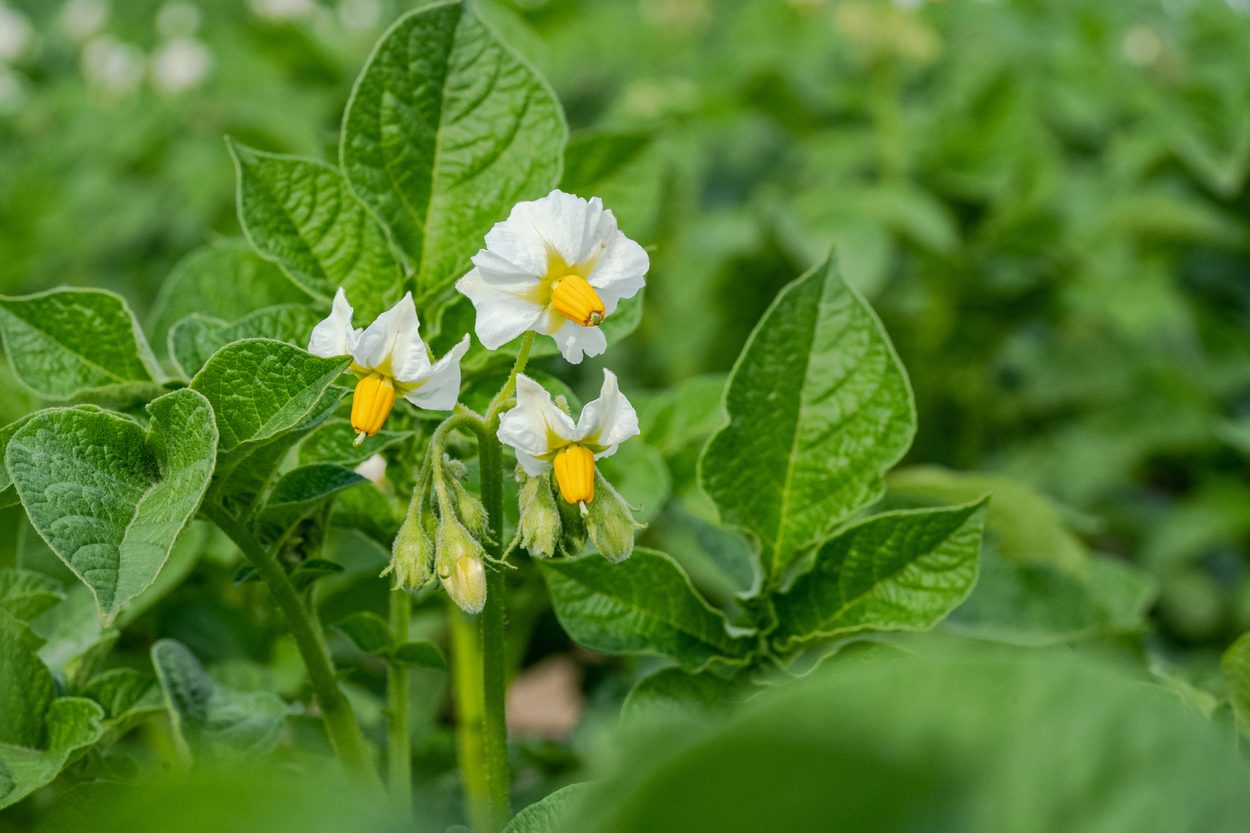
Potato flowers can be a useful clue that tubers are developing beneath the soil. If you want small new potatoes, flowering is a good time to begin checking carefully around the outside of the plant.
However, not every potato plant produces noticeable flowers. Some varieties flower heavily, while others produce only a few blooms or no obvious blooms at all.
A lack of flowers does not mean there are no potatoes underground. If the plant has been growing for the expected amount of time, conduct a test dig instead of waiting indefinitely for flowers.
3. The Leaves Are Beginning to Turn Yellow
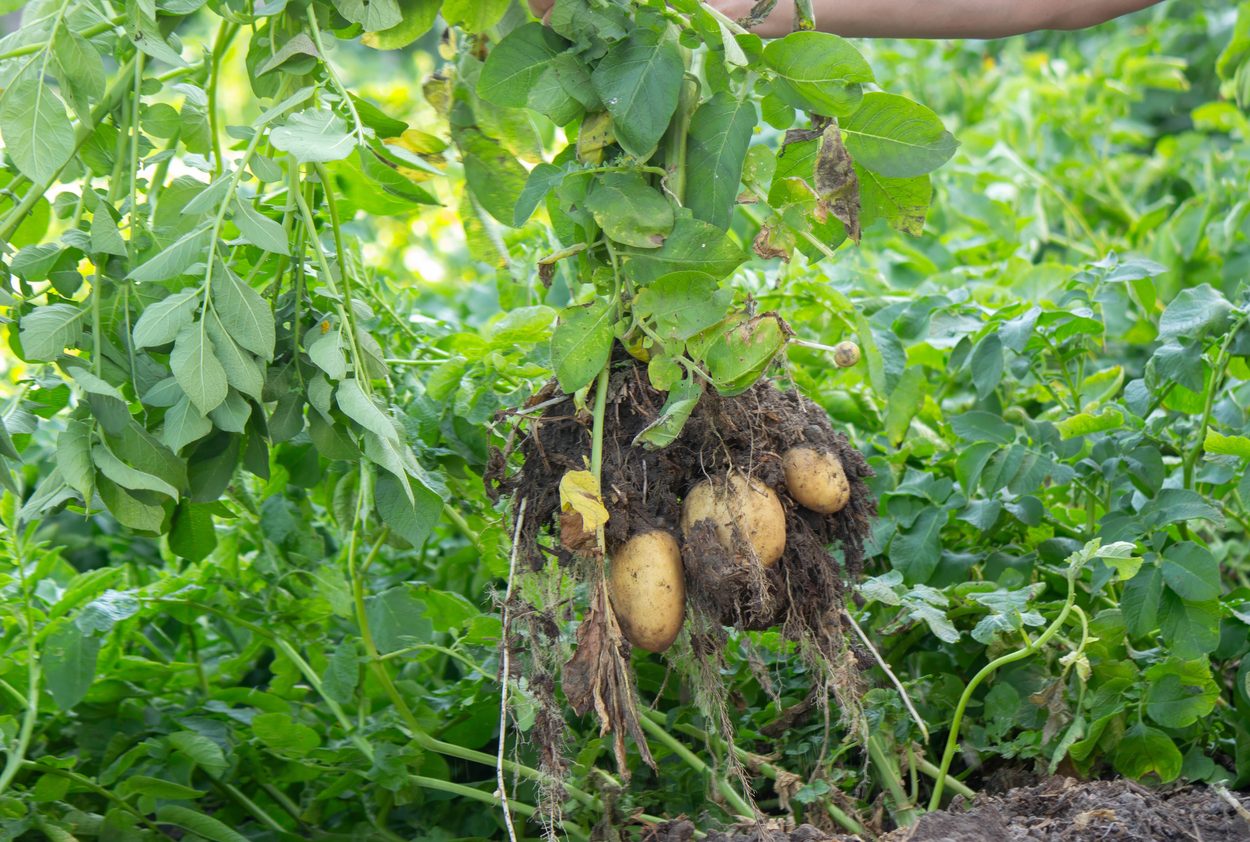
As a potato plant approaches maturity, its lower leaves usually begin to yellow. The stems may also lose their upright appearance and start falling outward.
This gradual decline is normal near the end of the growing season. It means the plant is redirecting less energy toward new growth and is approaching the end of tuber development.
Yellowing foliage does not necessarily mean the potatoes must be harvested immediately. At this stage, you may still choose to leave the crop underground so the potatoes can grow larger and develop tougher skins.
Yellow leaves can also be caused by drought, nutrient problems or disease. Consider the plant’s age and overall condition before treating yellowing as a sign of maturity.
4. The Vines Have Died Back
Dead or mostly dead vines are one of the strongest signs that full-size potatoes are approaching harvest.
Once the tops die, the tubers stop actively growing and their skins begin to toughen. This process is particularly important when you want to cure and store the potatoes.
Oregon State University recommends reducing irrigation and allowing the vines to die before harvesting potatoes intended for storage in its guide to harvesting and storing homegrown potatoes.
You do not need to wait for the vines to die if you are harvesting new potatoes. New potatoes are intentionally dug while the plants are still alive and their skins are tender.
If the plants have died because of serious disease rather than natural maturity, remove the affected foliage and inspect the tubers carefully. Do not place diseased or rotting potatoes into storage.
5. A Test Potato Has Reached the Size You Want
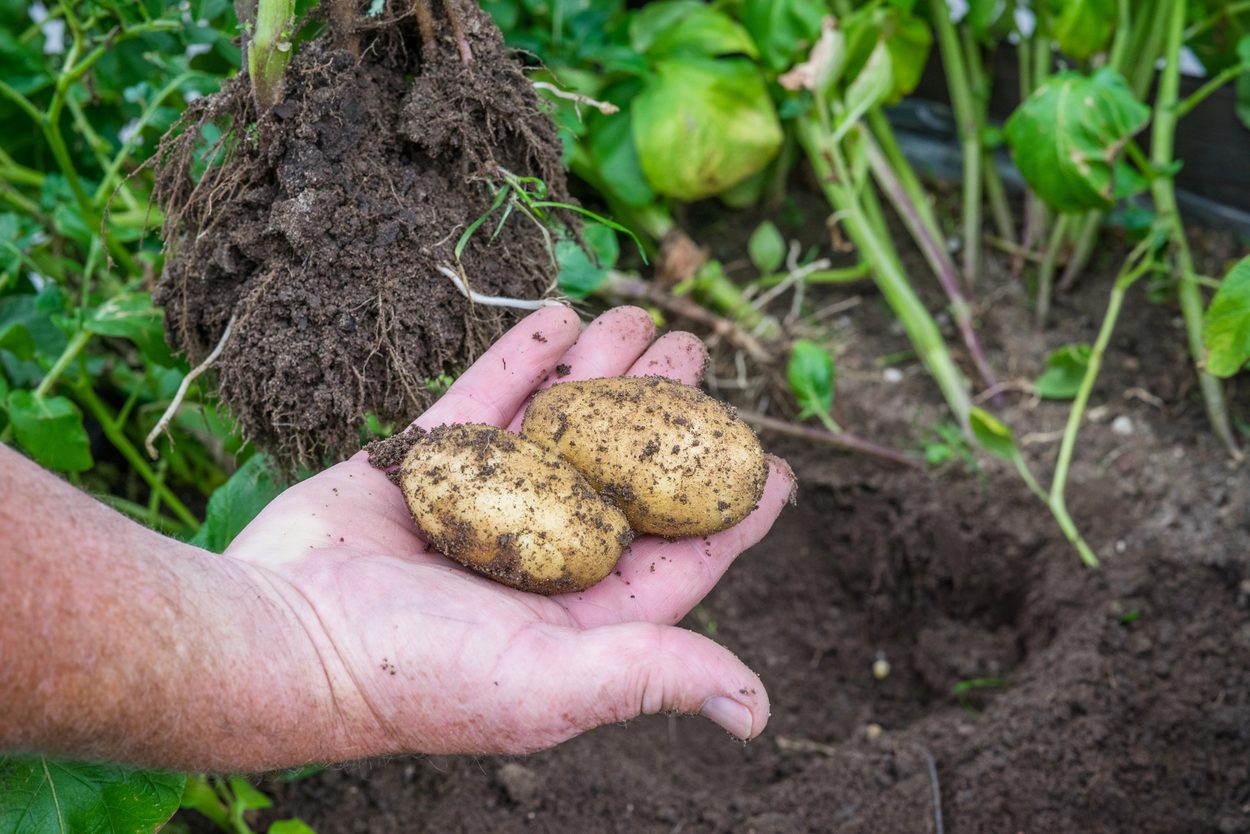
The only completely reliable way to see what is happening underground is to dig one potato.
Choose a plant near the edge of the bed. Gently loosen the soil beside it with your fingers or a garden fork, taking care not to stab the tubers. Remove one potato and check its size.
If you want new potatoes, you can harvest them once they are large enough for your intended use. Carefully remove a few from around the outside of the plant and replace the soil so the remaining potatoes can continue growing.
If you want large potatoes and your test tuber is still small, replace the soil and give the plants more time.
One plant can produce potatoes of several different sizes, so check another section if the first tuber does not give you a clear answer.
6. The Skin No Longer Rubs Off
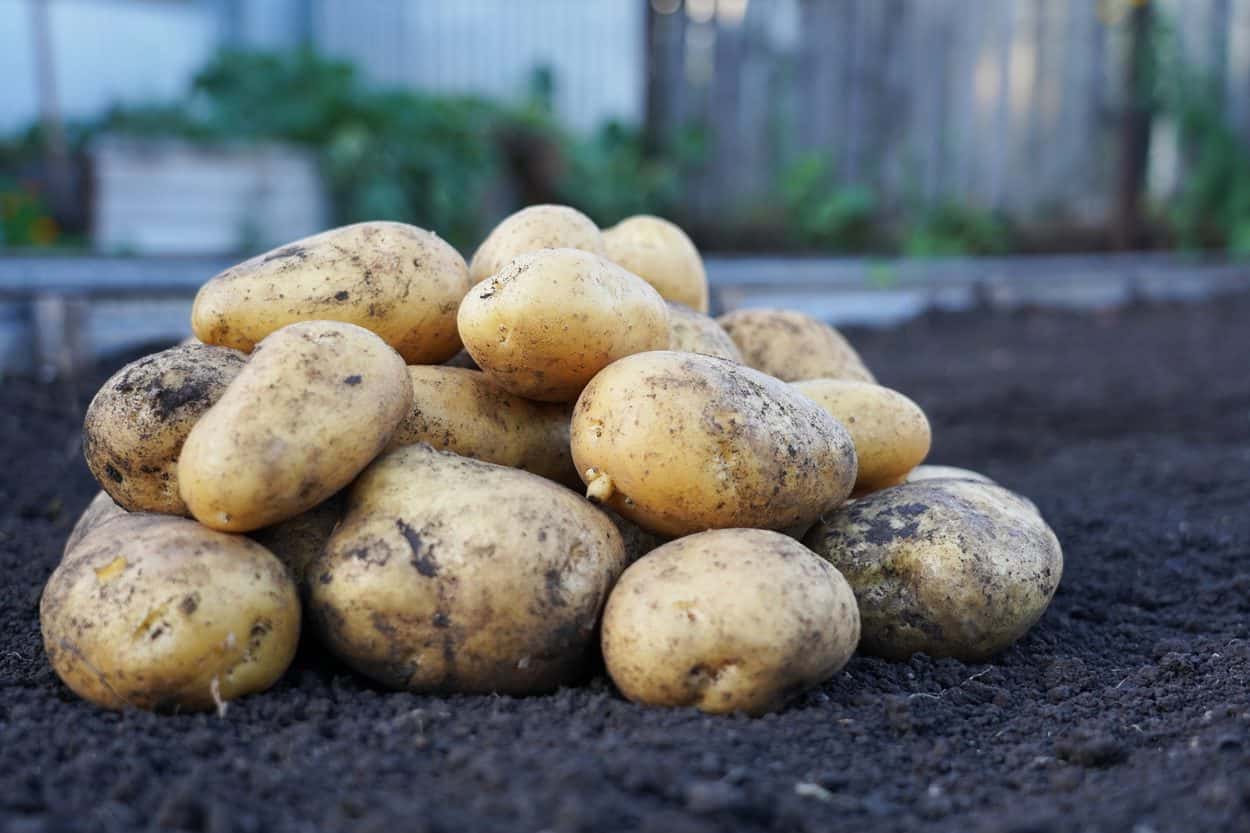
Size tells you whether a potato is big enough to eat. The skin test tells you whether it is mature enough to store.
Rub the surface of your test potato firmly with your thumb.
- If the skin slides, flakes or rubs away easily, the potato is still immature.
- If the skin remains firmly attached, it has developed the protective layer needed for curing and storage.
If the skin rubs off, you can eat the potato as a new potato. Otherwise, wait approximately one more week and test the crop again.
This is the maturity test recommended by Oregon State University Extension.
Thin-skinned potatoes are safe to eat, but they bruise easily and do not store as well as potatoes with properly set skins.
7. The Soil Is Dry Enough for Digging
Whenever possible, harvest potatoes on a dry day when the soil is loose rather than muddy.
Dry soil falls away from the potatoes more easily, allowing you to see cuts, bruises and signs of disease. It also reduces the amount of wet soil that must be removed before curing.
Once the vines begin dying naturally, gradually reduce watering. Do not leave mature potatoes in consistently wet soil, where they may be more vulnerable to rot.
You should also harvest before the soil freezes. Once the vines are dead, the skins are set and suitable harvesting weather arrives, there is usually little benefit to delaying the harvest.
When to Harvest New Potatoes
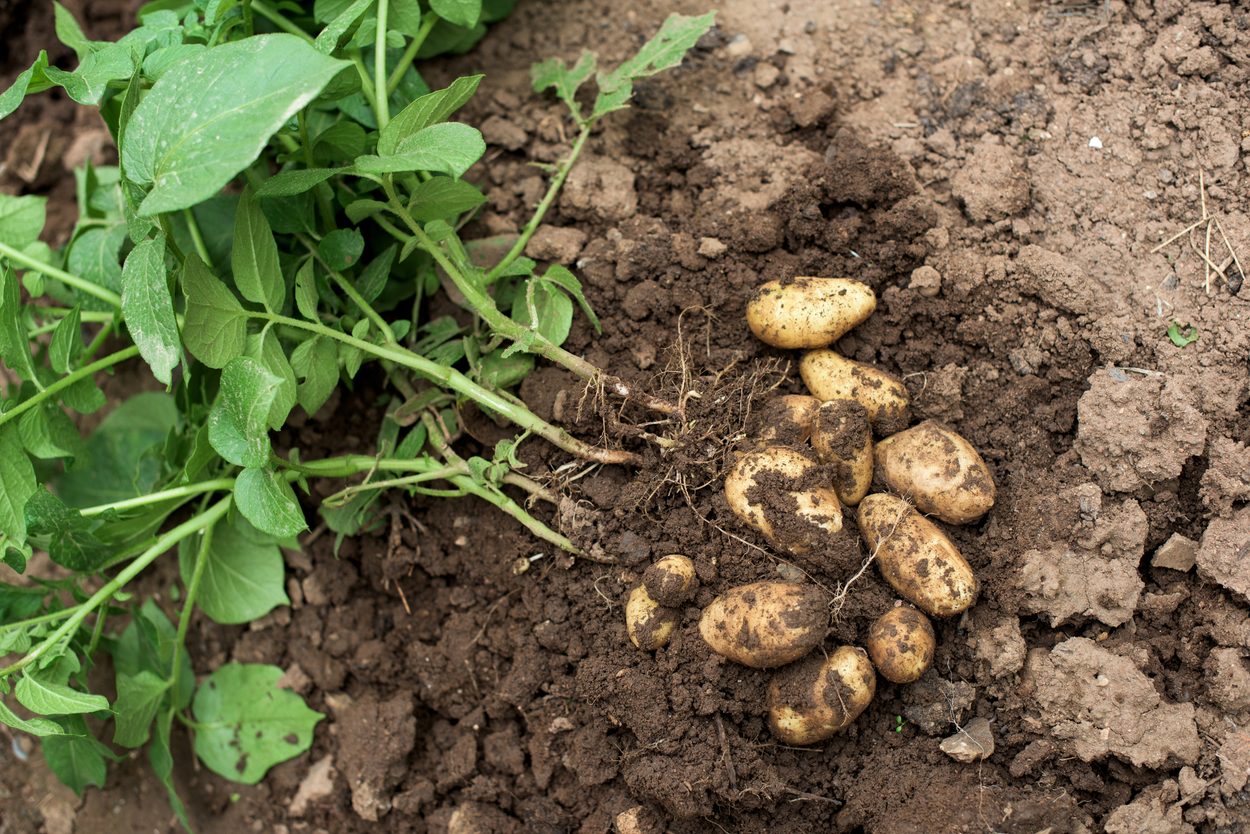
New potatoes are not a separate type of potato. They are simply potatoes harvested before they reach full maturity.
You can begin checking for new potatoes once the plants are well established and tubers have started forming. This often occurs around flowering, but the timing varies by variety and growing conditions.
Carefully reach into the soil along the outside of the plant and remove the largest tubers. Leave the smaller ones attached and replace the soil around the roots.
New potatoes have thin skins, a moist texture and a fresh flavour. However, they are easily damaged and do not keep well. Harvest only what you expect to use within a short period.
When to Harvest Potatoes for Storage
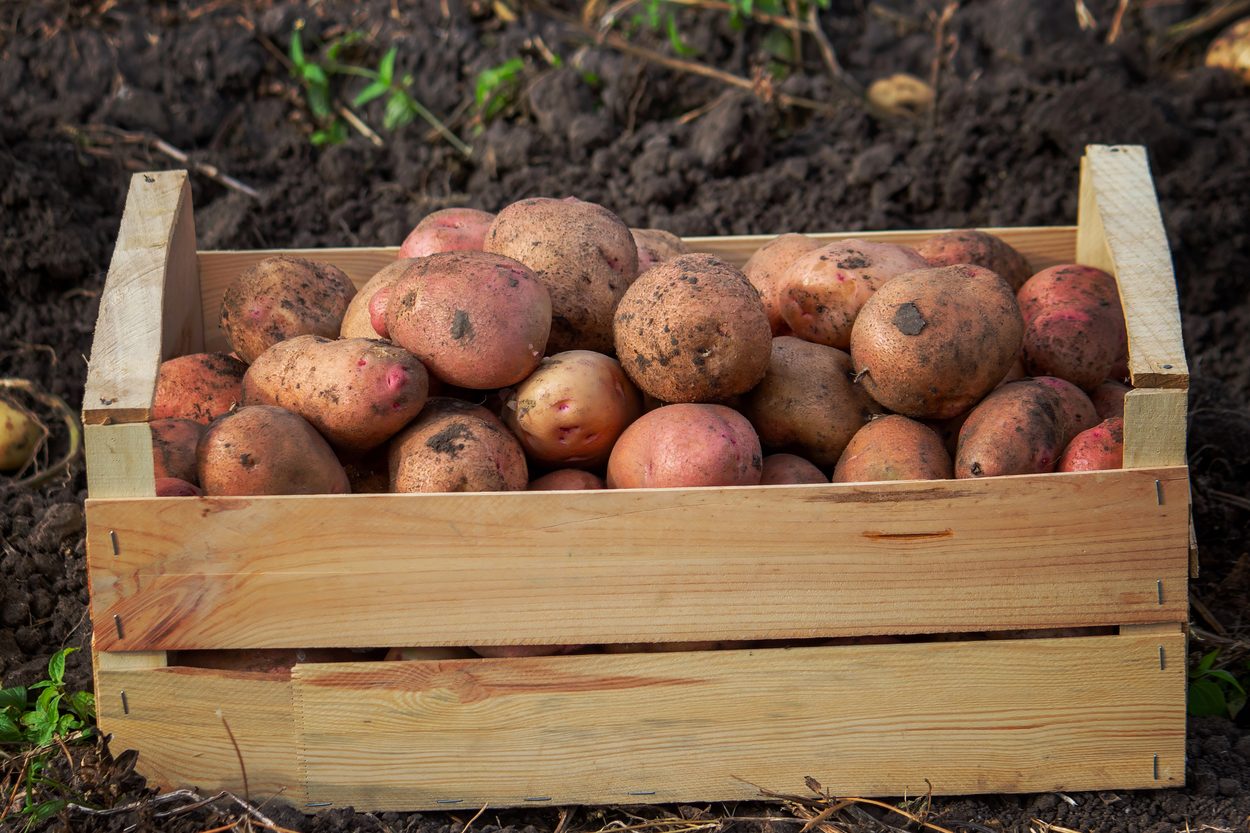
Storage potatoes should remain underground longer than new potatoes.
Wait until the foliage has yellowed and died back. If conditions are reasonably dry and the plants are healthy, allowing a short period after dieback gives the skins additional time to toughen.
Before harvesting the entire bed, dig one test potato and perform the skin-set test. If the skin remains firmly attached when rubbed, the crop is ready.
Utah State University recommends harvesting storage potatoes when the vines have died, the tubers are full sized and their skins are difficult to rub off. Its home potato-growing guide also recommends allowing the soil to dry before digging.
How to Harvest Potatoes Without Damaging Them
Potatoes store best when they are lifted without cuts, punctures or bruises.
Start farther away from the plant than you think is necessary. Insert a garden fork or shovel approximately 10–15 centimetres away from the stems. Push the tool straight down and gently lift the soil.
Oregon State University’s potato harvesting guide recommends placing the tool beside the bed and levering the soil upward rather than digging directly beneath the plant.
Once the soil is loose, use your hands to search for the remaining potatoes. Tubers may have developed farther from the main stem than expected, so check the surrounding soil carefully.
Divide the harvest into two groups:
- Firm, undamaged potatoes for curing and storage
- Cut, bruised or punctured potatoes to use first
Discard potatoes showing extensive rot or disease. Do not leave freshly harvested potatoes sitting in direct sunlight, since light exposure can cause greening.
Should You Wash Potatoes After Harvesting?
Do not wash potatoes that you intend to store.
Allow any soil on the surface to dry and then brush it away gently. Washing introduces moisture and may damage the skin, increasing the likelihood of decay.
New potatoes that will be cooked promptly can be washed shortly before use. Storage potatoes should remain dry and unwashed until you are ready to prepare them.
How to Cure and Store Potatoes
Curing allows minor harvest wounds to heal and gives the skins time to finish toughening.
Arrange the potatoes in shallow trays, ventilated boxes or slatted crates. Keep them in a dark, well-ventilated location with relatively high humidity and a temperature of approximately 10–15°C (50–60°F).
Cure the potatoes for approximately one to two weeks. Utah State University suggests two to three weeks at 13–16°C in its potato-growing recommendations, while Oregon State recommends approximately seven to ten days under suitable conditions.
Curing potatoes is different from curing onions. Potatoes need darkness and enough humidity to prevent excessive moisture loss. Do not cure them in direct sunlight.
After curing, inspect every potato again and remove any with:
- Soft or wet areas
- Cuts and deep punctures
- Signs of rot
- Serious insect damage
- Extensive greening
Store the healthy potatoes in a dark, cool and ventilated location at approximately 4–8°C (40–46°F). Use cardboard boxes with ventilation holes, perforated paper bags or slatted crates rather than airtight containers.
Agriculture and Agri-Food Canada notes that cool temperatures help delay sprouting, while dark storage prevents greening in its guide to cold storage for potatoes.
Check stored potatoes regularly and remove any that become soft or begin to rot.
What to Do With Green Potatoes
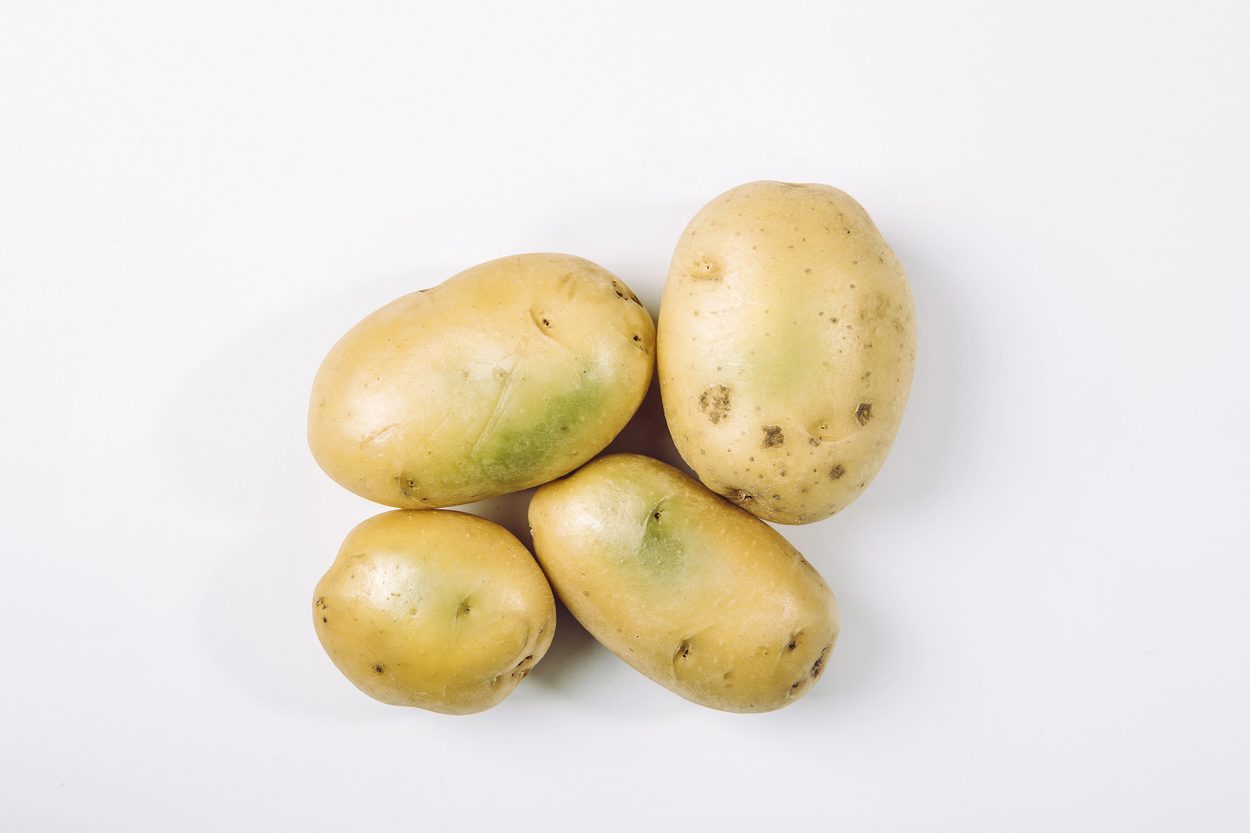
Potatoes turn green when they are exposed to light. The green pigment is chlorophyll, but greening can occur alongside increased concentrations of natural compounds called glycoalkaloids.
Cut away small green areas, sprouts, damaged tissue and eyes generously. Discard potatoes that are extensively green, badly sprouted, damaged or rotten.
Health Canada also advises against eating potatoes that taste bitter or cause a burning sensation in the mouth. Cooking does not significantly reduce glycoalkaloid levels, so a severely affected potato cannot be made safe simply by boiling or baking it. Additional guidance is available in Health Canada’s information on glycoalkaloids in food.
Frequently Asked Questions
When do you harvest potatoes in the garden?
Harvest new potatoes while the plants are still green once the tubers have reached the desired size. Harvest mature potatoes after the foliage yellows and dies and the skins no longer rub off easily.
Can you harvest potatoes before the plants flower?
Yes. Potato plants do not need to flower before producing tubers. If the plant has reached its expected maturity window, carefully dig one test potato.
How long after flowering are potatoes ready?
There is no universal number of days. You can begin checking for new potatoes around flowering, but full-size potatoes should generally remain underground until the foliage declines and the skins set.
Can you eat potatoes immediately after harvesting?
Yes. Freshly dug potatoes can be eaten immediately. Curing is only necessary for potatoes you intend to store.
What if the potato skin rubs off?
The potato is immature. You can eat it as a new potato or leave the rest of the crop underground for approximately another week before testing again.
Can potatoes stay in the ground after the plants die?
They can remain for a short period if the soil is reasonably dry and the tubers are not threatened by disease, pests or freezing conditions. Avoid leaving mature potatoes in consistently wet soil.
Why are my harvested potatoes so small?
Small potatoes can result from harvesting too early, overcrowding, inadequate moisture during tuber development, excessive heat or the natural characteristics of the variety. If the foliage is still healthy and green, the crop may simply need more time.
Final Thoughts
The foliage provides the first clues, but a test dig provides the final answer.
For tender new potatoes, begin checking once the plants are well established and tubers have started forming. For storage potatoes, wait until the vines die back, confirm that the tubers have reached a useful size and perform the skin-set test.
If the skin stays firmly attached, the soil is dry and the potatoes lift without damage, your potato harvest is ready to come out of the ground.