

A Christmas cactus covered in pink, red or white flowers is one of my favourite ways to bring a little colour indoors when the garden starts winding down. But a plant that looks perfectly healthy can still sit through the holidays without producing a single flower. If yours is growing plenty of green stems but showing no signs of buds, it is worth looking at its surroundings before reaching for another bottle of fertilizer.
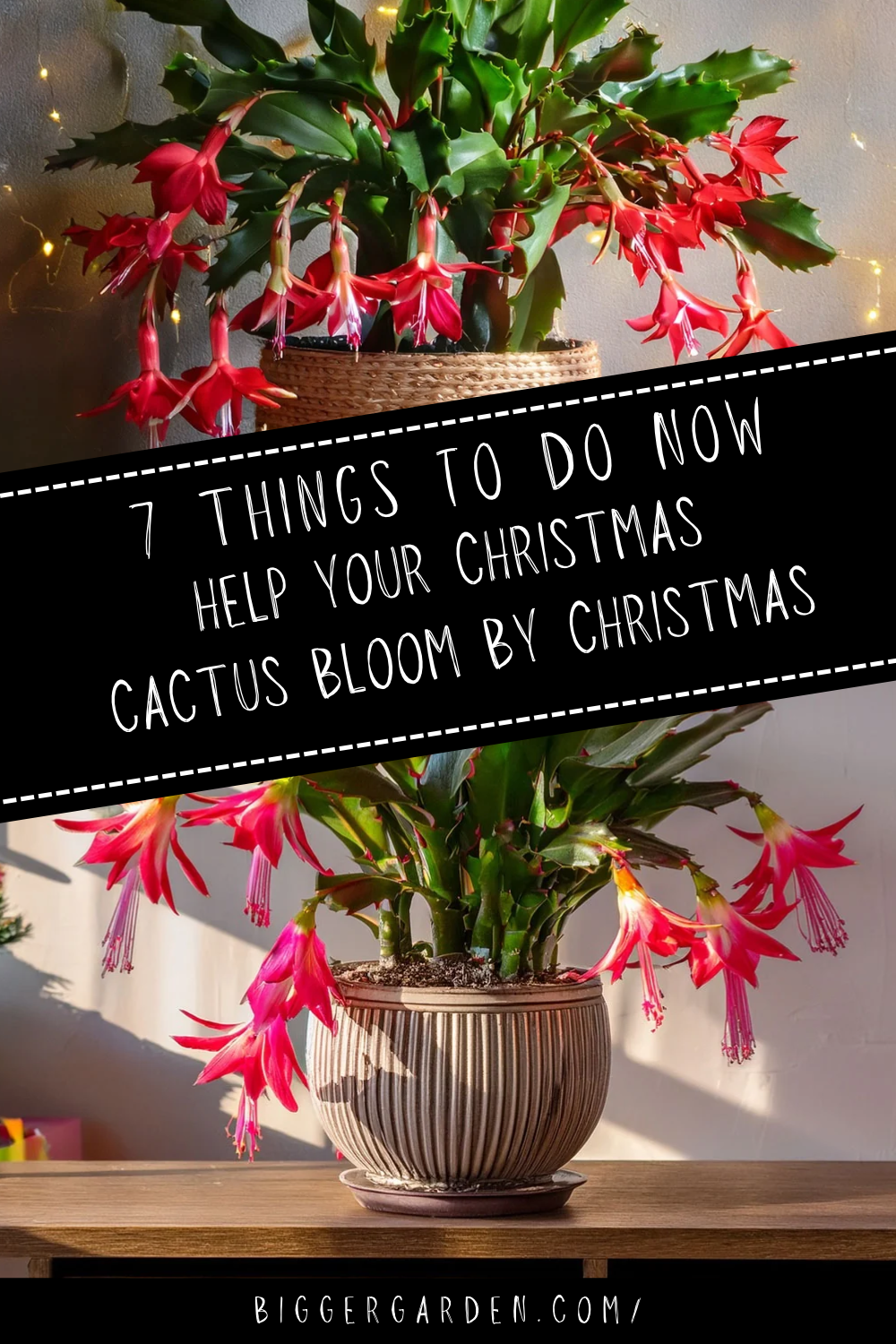
The good news is that you can encourage flowering by giving your plant the seasonal conditions it needs. Longer nights, cooler temperatures and consistent watering all have a part to play. The timing does take some patience, though. Depending on the variety and its starting conditions, allow roughly six to ten weeks from the beginning of a flowering routine to open blooms. Starting in early November may still help, but flowers before Christmas are a possibility rather than a promise.
At a Glance
- First, make sure you actually have a Christmas cactus. True Christmas cactus has rounded, scalloped stem segments, while Thanksgiving cactus has more pointed edges and usually flowers earlier.
- Give the plant about 14 hours of uninterrupted darkness each night for roughly six weeks. Evening lamps and grow lights can interfere with the seasonal signal that helps trigger buds.
- Cool nights help encourage flowering. Aim for nighttime temperatures around 13 to 18°C, or 55 to 65°F, with slightly warmer conditions during the day.
- Keep daytime light bright. An east-facing window or another location with bright, filtered light works well, as long as the overnight dark period remains uninterrupted.
- Water according to the soil rather than a schedule. Water when the top inch feels dry, then let excess water drain completely so the roots are never left sitting in soggy mix.
- Once buds appear, keep conditions steady. Avoid sudden temperature changes, repotting, heavy feeding, pruning, or repeatedly moving the plant between very different rooms.
- Allow six to ten weeks for the flowering routine to work. Starting late in fall may still encourage buds, but flowering before Christmas is not guaranteed.
1. Check Which Holiday Cactus You Actually Have
Before changing anything, I would take a close look at the edges of the flattened green stem segments. A true Christmas cactus, Schlumbergera × buckleyi, has rounded, scalloped edges. Thanksgiving cactus, Schlumbergera truncata, has more pronounced points that look a little like tiny claws. Those flat sections are often called leaves, although they are actually stems. Plenty of plants sold under the Christmas cactus name are Thanksgiving cacti or hybrids, so the label that came with the pot may not tell the whole story. Identification gives you a much better starting point than the name on a holiday gift tag.
This matters because Thanksgiving cactus generally flowers earlier, while a true Christmas cactus tends to flower closer to Christmas or later in winter. Hybrids can fall somewhere between the two. If a friend’s plant is already covered in flowers while yours is only starting to form buds, you may simply be growing different plants. I would use the stem shape as a useful clue, then focus on encouraging healthy buds rather than trying to match someone else’s flowering date. An Easter cactus has a different seasonal routine, so the same Christmas deadline should not be applied to every holiday cactus.
🐝 Fan Favorite
“Feed the Bees” Garden Sign
Give your wildflower patch a pop of color and let your neighbors know there’s purpose in your plants.
Delivered in 5–7 days
🦋 Every sign funds a tree planted in the North American Monarch Corridor — at no extra cost to you.
2. Give It Long, Uninterrupted Nights
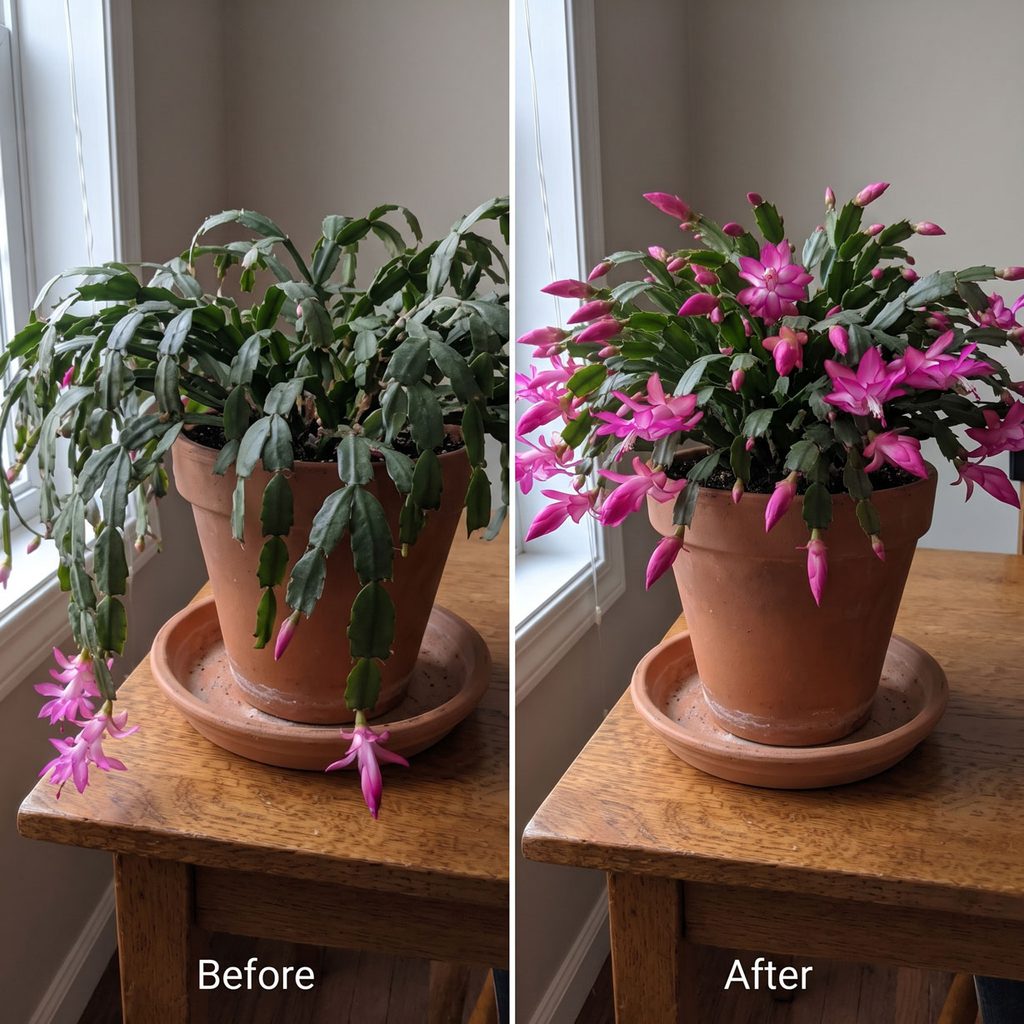
One of the first things I would check is how much light reaches the plant after sunset. Christmas and Thanksgiving cacti respond to long nights, but our homes can interrupt that seasonal signal. A lamp beside the sofa, a bright kitchen or a grow light running into the evening can keep the plant exposed to light long after the outdoor garden has gone dark. For a practical home routine, aim for about 14 hours of uninterrupted darkness each night for roughly six weeks. The exact requirement varies with temperature and cultivar, which is why a consistent routine is more useful than trying to find one perfect number.
A spare bedroom that stays dark overnight can make this much easier. For example, a room kept dark from 6 p.m. until 8 a.m. provides a straightforward schedule, as long as the plant receives good light during the day. If you use a ventilated, opaque cover instead, make sure it does not rest on the stems or trap heat around the plant, and remove it every morning. I would choose whichever arrangement is easiest to maintain daily. Leaving the cactus in a cupboard around the clock will deprive it of the daytime light it still needs.
3. Find a Cooler Spot for the Night
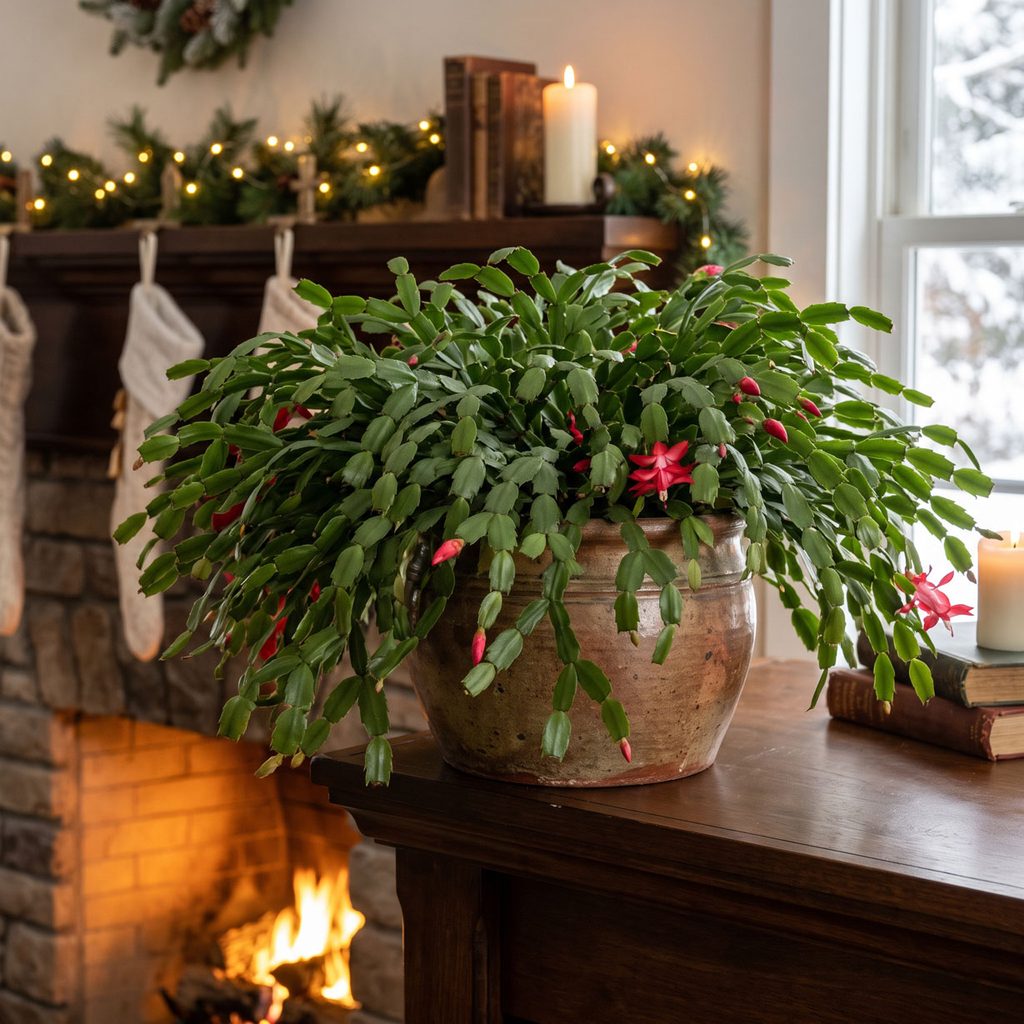
Temperature is the other major flowering cue, and a warm living room can work against your efforts. To encourage buds, aim for nighttime temperatures around 13 to 18°C, or 55 to 65°F, with daytime temperatures around 18 to 21°C, or 65 to 70°F. A slightly cooler bedroom may provide a better setting than a shelf above a radiator. I would check the actual temperature near the pot with a small thermometer, especially if that corner of the room feels noticeably warmer or colder than the thermostat suggests. The conditions around the stems matter more than the number displayed down the hallway.
Cool conditions should still be comfortable and stable. Keep the plant away from freezing glass, exterior doors and cold draughts, and avoid using an unheated garage unless you know its temperature stays suitable. In a cold climate, moving an indoor cactus outside in November is a gamble I would skip. A bright room with gentle overnight cooling is a much more practical choice. Ideally, find one location that provides both cooler nights and uninterrupted darkness, so you can keep the routine simple without carrying the pot between several different rooms.
4. Keep the Daytime Light Bright
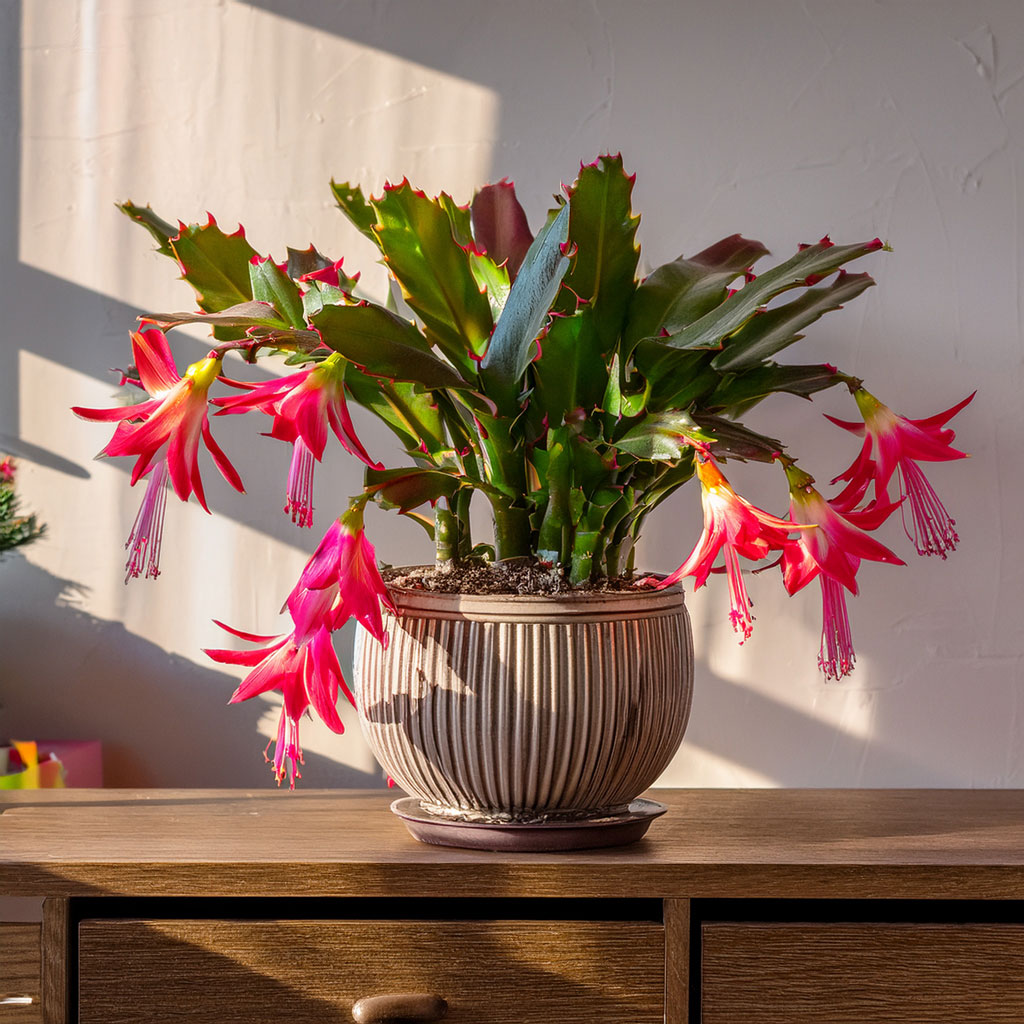
With so much attention on darkness, it is easy to overlook the other half of the day. Your Christmas cactus still needs bright light to support healthy growth and developing flowers. I would look for a position near an east-facing window or another bright window where the plant receives filtered light without prolonged, harsh sun. These cacti come from forest habitats, where they grow on trees or rocky surfaces rather than baking in exposed desert conditions. A plant tucked into a dim hallway may get wonderfully long nights but still lack a good daytime growing position.
If you are adjusting its location, assess the light across the whole day rather than judging it during one sunny moment. Curtains, nearby trees and the shorter days of late autumn can all affect how much reaches the stems. A grow light can help where natural light is limited, but put it on a timer that preserves the long overnight dark period. I would also avoid making a sudden jump from deep shade to intense direct sun. The aim is a bright, dependable daytime setting that works alongside the flowering routine, not the strongest light you can find.
5. Water by the Soil, Not the Calendar
Despite its name, Christmas cactus should not be treated like a desert cactus and left bone dry for weeks. At the same time, constantly wet potting mix can damage roots and lead to problems with buds. I would check the soil with a finger and water when the top inch feels dry, while avoiding prolonged dryness deeper in the pot once buds are developing. Water thoroughly, let the excess drain away and empty the saucer or decorative outer pot. The roots need access to moisture and air, and a container sitting in leftover water makes that balance difficult.
A fixed weekly schedule is less useful once you move a plant into cooler conditions, because the mix may dry more slowly than it did in a warm room. Check before watering, even if that means skipping your usual watering day. Once buds appear, keep paying attention so the root ball does not swing between soggy and completely dry. I would be especially cautious about responding to wrinkled stems with more water before feeling the soil. Both dryness and damaged roots can leave a plant looking thirsty, so the condition of the potting mix should guide your next step.
6. Put Fertilizing, Repotting and Pruning on Hold
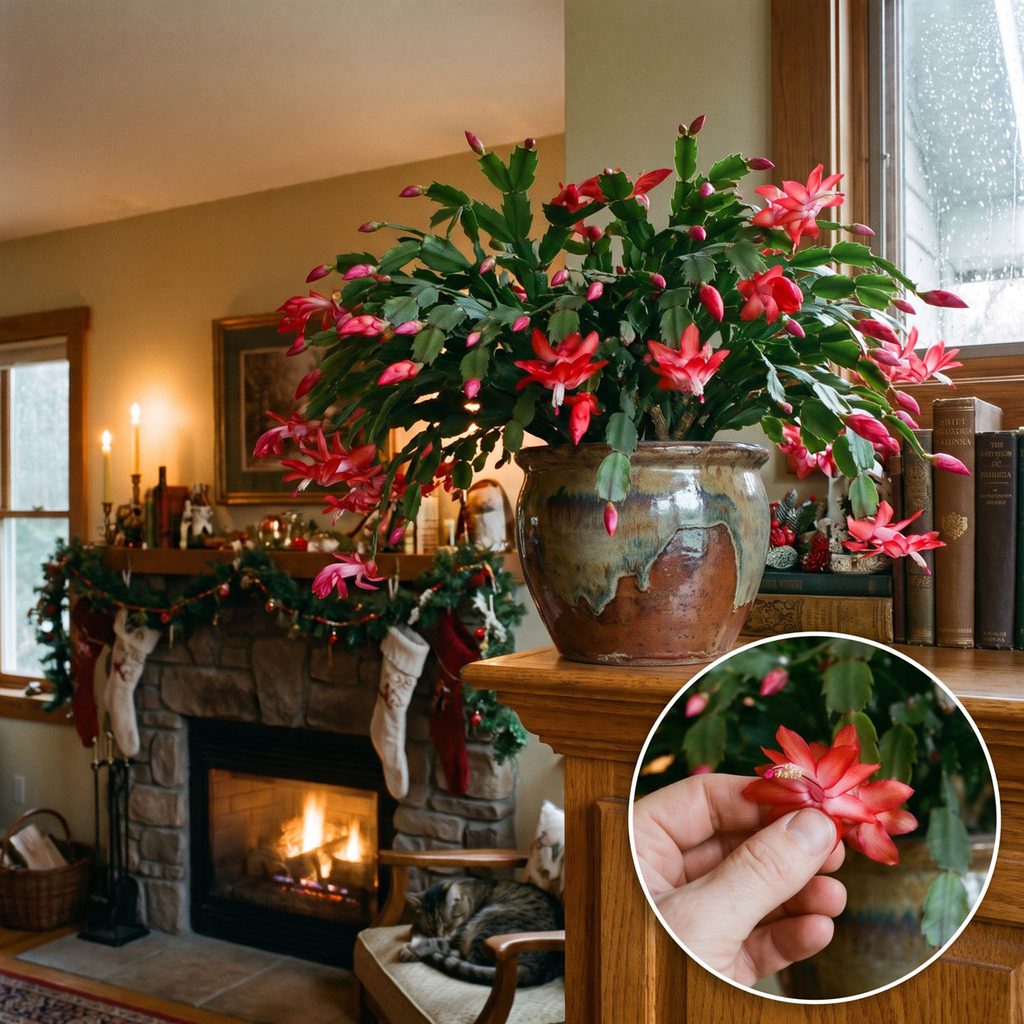
When a plant refuses to flower, it is tempting to give it a complete makeover. For a healthy Christmas cactus heading into its flowering period, I would keep things simpler. Extra fertilizer cannot replace the light and temperature signals that initiate buds. Routine feeding belongs mainly to the active growing season, and there is no need to start adding repeated doses of bloom fertilizer now. If the plant has been growing well, concentrate on its environment first. Trying several new products at once also makes it harder to work out which part of the care routine actually needed attention.
I would also postpone routine repotting and shaping until after flowering, with spring being a useful time to reassess the pot. Holiday cacti tolerate being somewhat snug in their containers, and healthy plants do not need a larger pot every year. Flowers develop at the stem tips, so this is also a poor moment to pinch those tips off for cuttings. Save that project for after the flowers have faded, when you can take cuttings without sacrificing the current display. A plant with root rot or another serious problem still needs care promptly, but ordinary maintenance can wait.
7. Keep Conditions Steady Once Buds Appear
When you spot small buds at the ends of the stems, resist the urge to change everything again. At this stage, I would focus on protecting the progress the plant has made. Sudden changes in temperature, light and moisture can contribute to bud drop, especially when a cactus moves from a cool growing spot to a hot room. Keep it away from fireplaces, heating vents and draughty entrances. If your plant already has buds when you begin reading this, you do not need to restart a full darkness treatment. Concentrate on good daytime light, sensible watering and stable conditions as those buds develop.
Choose a place where you can enjoy the plant without repeatedly rearranging it for holiday decorating. Lifting the pot briefly to water is reasonable; continually moving it between very different rooms is worth avoiding. I would wait until flowers begin opening before making a bigger move to a display spot, then choose somewhere with similar conditions. You can build the rest of your seasonal display around it, just as you might plan Christmas planters around a favourite focal plant. Once buds are on their way, the most useful thing you can often do is keep the care predictable.
Propagate Your Christmas Cactus After Flowering
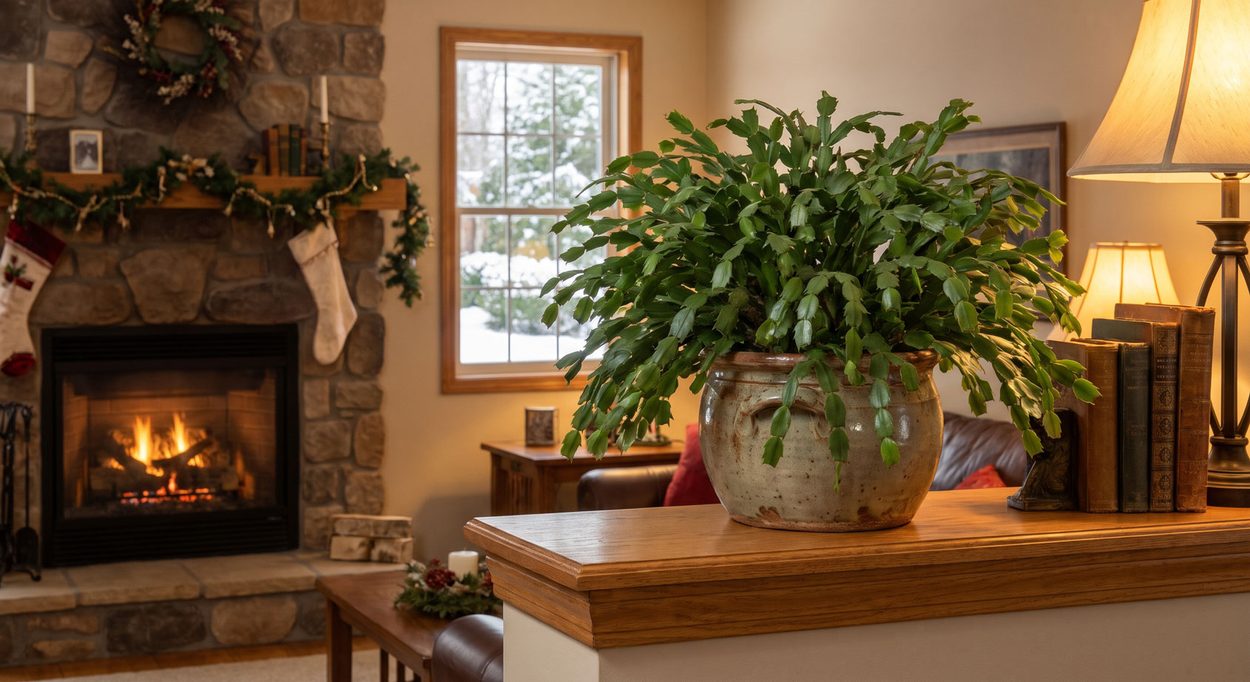
Once the flowers have faded, you can turn a few healthy stems into new plants. I would wait until spring or early summer if possible, when warmer conditions and active growth make this an easier project. Choose a healthy cutting with two or three joined stem segments, removing it cleanly at a joint. Leave the cut end somewhere shaded for a day or two so it can dry and callus before planting. If your main goal is flowers this Christmas, leave the budding tips alone for now. Taking cuttings is a lovely way to share the plant, but it will not help the parent bloom earlier.
Insert the bottom end of each cutting into a small pot of fresh, well-draining potting mix with added perlite, burying it just deeply enough to stand upright. Keep it in bright, indirect light and keep the mix lightly moist without letting it stay soggy. Roots usually begin developing within a few weeks, although cooler indoor conditions can slow things down. I would give each cutting time to establish before moving it into a larger container, and expect flowering to come later as the plant matures. For more plants to multiply alongside it, see my list of 15 houseplants you can propagate indoors all winter.
Final Thoughts
If I wanted a Christmas cactus to bloom before Christmas, I would start by checking its identity, then finding a bright daytime position with cool, dark nights. Those changes address the main flowering cues, while careful watering helps the plant stay healthy enough to carry its buds through to opening. If you would like another flowering plant for your holiday display, my guide to growing amaryllis indoors for Christmas blooms is another seasonal project to try.
Give it time, particularly if you are starting later in autumn. A plant that flowers a little after the holidays has still responded successfully, and you will have a much better idea of when to begin next year. For the next flowering season, starting roughly eight to ten weeks before your preferred display date gives you more breathing room than a last-minute attempt.