


It’s so annoying when you come across a recipe which is seemingly vegetarian or vegan and you suddenly realise anchovies are called for. Or maybe you just don’t have any anchovies in stock. Well all is not lost. There are plenty of clever anchovy substitutes that can deliver the same salty, umami richness. And you’re quite likely to have some of them in your cupboard.
This post may contain affiliate links. As an Amazon Associate, I earn from qualifying purchases. See my cookie and privacy statement for further details.
Dive Right In
Why Are Anchovies Used In Cooking?
Anchovies are richly flavoured oily fish with an intense salty, savoury flavour. They’re usually cured in salt brine for several months before they’re boned, filleted and packed into tins with either oil or salt.
When a recipe calls for anchovies, it’s usually not about the fish itself, but the deep umami boost they bring. They’re used in all sorts of dishes to provide a rich, complex base which doesn’t taste overtly fishy.
Mostly, only a small amount is needed to boost flavour. As well as fillets being used in their entirety, they can also be “dissolved” into oils and sauces, which makes them ideal for cooking.
However good they are for enhancing dishes though, anchovies aren’t much use to those of us on a plant-based diet.
Best Anchovy Substitutes (Vegan and Vegetarian)
It’s impossible to get a direct replacement for anchovies, but you can get a good mix of salt, umami and sometimes briny notes too. Together these flavours bring depth and balance to a dish.

What you use instead of anchovies will very much depend on the type of dish you’re making. Sometimes you don’t need anything extra and can simply leave them out.
It really depends on the complexity of the dish. The more salty and umami-rich ingredients there are, the less you’ll miss the anchovies. As they are very salty, however, you’ll probably need to add some extra salt.
If you’re making something liquid, go for liquids and pastes, such as tamari. But if it’s more of a dry preparation or you require texture, you’ll probably want to choose something else.
Top Vegan Anchovy Substitutes
When recipes call for anchovies, miso is often your best friend. This Japanese fermented soybean paste has both the salty and umami elements associated with anchovies, but also a similar complex flavour profile due to its fermented nature.
It works best for saucy type recipes, where you’d normally break down the anchovies, as well as soups and stews. Use one teaspoon to replace two to three anchovy fillets.
The following table shows the six best vegan anchovy substitutes, their flavour profile, what to use them in and roughly how much to use.
Top Tip – Start by adding small amounts if it’s a new ingredient to you. Many of the suggestions below are quite potent. Always taste test before adding more.
| Substitute | Flavour Profile | Best Used In | How Much Per Fillet |
|---|---|---|---|
| miso paste (red, brown, yellow or white) | salty, umami, complex | dressings, sauces, soups | ½ tsp |
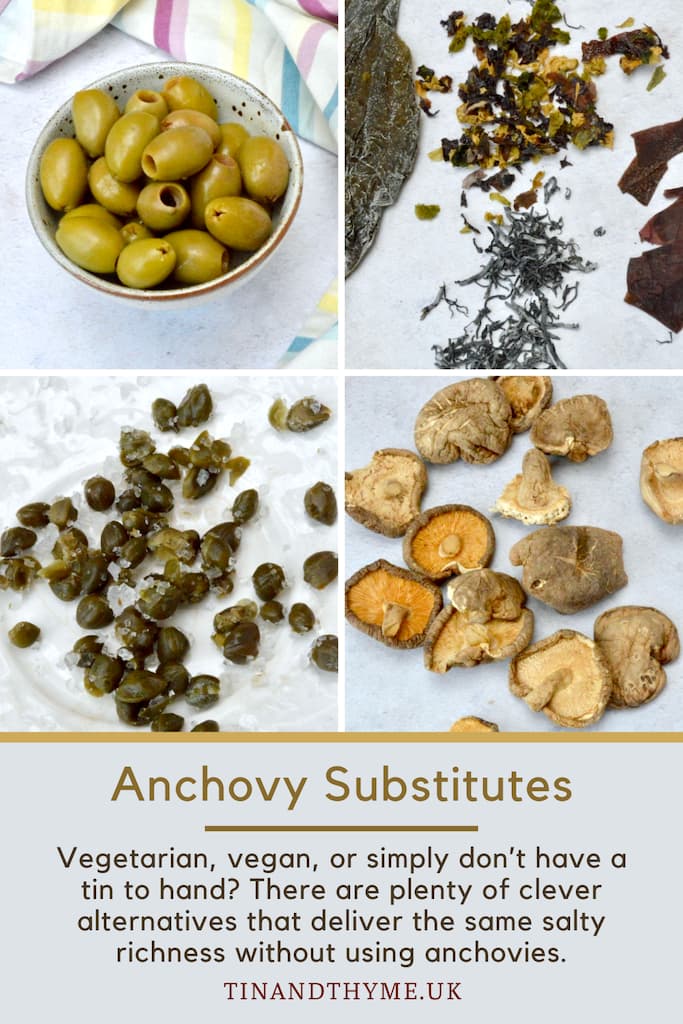
| capers / caper berries (in brine) | salty, briny | pasta, salads, tapenade | ½ tsp (finely chopped) |
| tamari / soy sauce | salty, umami | sauces, stews, marinades | ½ tsp |
| olives (Kalamata particularly good) – whole or finely chopped | salty, briny, savoury, rich | sauces, spreads, salads, pizzas | 1 tsp (finely chopped) |
| seaweed (nori, dulse, kelp) | briny, mineral | broths, stews, vegetarian “fish” dishes | 1 tsp (finely chopped or powdered) |
| mushrooms (fresh as well as dried shiitake & portobello) | rich, umami | pasta, pizza, stews | 1 tsp powdered), 1 ½ tsp (finely chopped) |
Other Anchovy Substitutes
Both Worcestershire sauce and fish sauce contain fermented anchovies. You can now easily buy vegan versions of both of these. Use them in sauces, dressings, marinades and stews or as per recipe. One teaspoon replaces two to three anchovy fillets.
Vegan Worcestershire sauce (or Worcester sauce) tend to replace the anchovies with a mix of tamari or soy sauce, tamarind paste, molasses and maybe miso. Biona’s Organic Vegan Worcester Sauce (affiliate link) has won awards, but I haven’t tried it.
Vegan Fish Sauce, on the other hand, replaces the anchovies with seaweed, soy protein and yeast extract. This is a good one to use for Asian-style recipes. Thai Taste Vegan Fish Sauce (affiliate link) is the one I use.
Cheese
Hard cheeses such as Italian parmesan are full of both salt and umami flavour and can make a good substitute for anchovies in some dishes such as pasta, on pizza or in salads. As parmesan contains animal rennet though, try to get a vegetarian version.
Nutritional Yeast
In a similar vain to parmesan cheese, nutritional yeast adds umami. It’s the vegan version, but isn’t as salty.
Other Ingredients To Look Out For
- Doenjang – similar to miso, but a Korean fermented soybean paste with a more robust flavour.
- Fermented black beans – known as douchi in Chinese. They’re a type of fermented and salted dry soybean that has a pungent and deep umami flavour.
- Sun-dried tomatoes – great for both umami and texture. They’re particularly useful for Mediterranean type dishes – see my version of gildas further down the post. As usual the higher the quality, the better the flavour. Make sure you use the ones in olive oil rather than dry packed.
- Umboshi paste – a concentrated seasoning made from pickled Japanese plums. As well as being intensely savoury, it has a distinct sourness too.
- Tamarind paste – similar to umboshi paste, but made with the pods of the tamarind tree. It may not taste like anchovies but it builds a complex flavour foundation in sauces, curries and dressings.
- Yeast extract – is another paste that adds lots of depth, umami and usually salt too. Marmite and Vegemite are two of the best known, but there are others. Whilst not the same, brewer’s yeast, which usually comes in powder form is another good source of umami flavour.
How To Replicate Anchovy Flavour
Although anchovies are often used in small amounts, they can have a big impact on the overall flavour of a dish. Rather than using one direct ingredient swap, you’re more likely to get a similar rich, salty, umami effect by combining or layering flavours.

Here are a few examples:
Miso
Miso is a fermented soybean paste with a deep umami taste. There are various types, each with a different strength and flavour profile. The two most commonly used (in the UK at least) are: white (shiro miso) which is the mildest and sweetest and red (aka miso) which is richer and stronger.
Blend red miso with nori seaweed to create a vegan anchovy paste. Miso brings the umami and the nori seaweed brings the flavour of the sea.
Miso mixed with crushed capers or kalamata olives is another good combination with the capers or olives contributing briny notes.
Tamari \ Soy Sauce
As I’ve stated on many an occasion, tamari (affiliate link) is my top pick for soy sauce. It has a really good depth of flavour, is less salty than most and is naturally gluten-free. It is expensive though, so you might prefer to use a different type of soy sauce.
Mix it with tamarind paste or umboshi paste and garlic to mimic the salty, umami-rich and complex flavour profile of anchovies. Or use one part tamari to one part vegan fish sauce.
Seaweed
Seaweed works well as an alternative to anchovies if used with both tamari and capers in brine.

Mushrooms
Fry mushrooms in soy sauce until crisp then toss with roasted seaweed for the taste of the sea. Shitake are particularly well flavoured for an anchovy substitute.

Dried mushrooms really deliver on the umami front, just add salt or soy sauce. You can even grind them into a powder with nutritional yeast.
Mix the liquid from reconstituted dried mushrooms with soy sauce for a homemade Worcestershire sauce substitute.
Capers & Olives
Although pickled caper berries, cut into quarters, can work as a direct substitute for anchovies in some recipes, capers generally work best when combined with other ingredients.

Capers and olives make a particularly good combination because they replicate the briny intensity of anchovies along with some of their savoury complexity.
Use capers in brine rather than oil or vinegar and mix them with well flavoured olives such as Kalamata. Or just use a good vegan olive tapenade which includes capers in the ingredients.
Recipes That Use Anchovies (And How To Replace Them)
Anchovies appear in recipes from all around the world, usually as a savoury flavour enhancer rather than to add obvious fishiness. Here are some well known dishes and the best vegetarian and vegan ingredients to use instead.
Spaghetti Alla Puttanesca
Spaghetti alla puttanesca is one of the best known Italian pasta dishes. Although many theories abound, there’s no certainty as to how the dish got its unfortunate name. But it did originate in Naples. The sauce contains tomatoes, black olives, capers, garlic and anchovies.
Use shiitake mushrooms instead of anchovies. Slice fresh ones and fry them in tamari until caramelised, before adding to the sauce. Add a little caper or olive brine to add the anchovy’s briny notes.
Caesar Salad
This popular salad sometimes contains anchovies in the salad itself but always in the dressing. Traditionally, the dressing is made of mashed anchovies, garlic, egg yolk and Parmesan cheese.
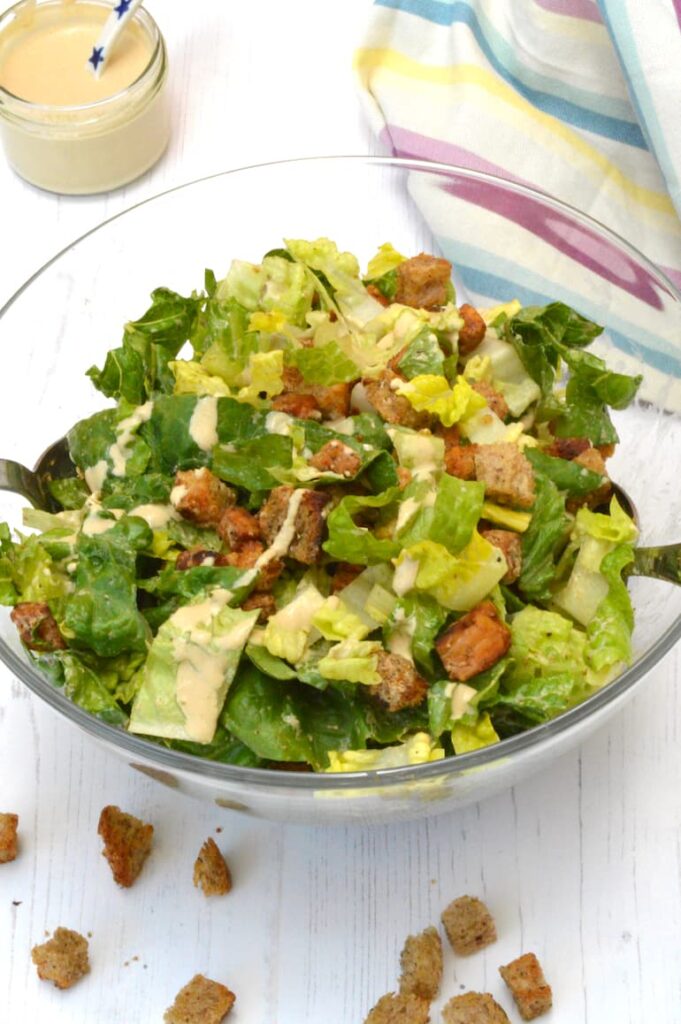
I’ve swapped the anchovies in my caesar salad recipe for marinated tempeh. As for the caesar dressing I’ve used capers and tamari to replace the anchovies and it tastes very much like the real thing – according to CT!
Bagna Cauda
A warm dipping sauce for raw vegetables and crusty bread. It’s made from anchovies, garlic and olive oil and comes from Piedmont in Italy. Traditionally, it’s served in an earthenware pot set over a candle to keep it warm.
Swap the anchovies for a mix of kelp powder, porcini mushroom powder, capers and white miso.
Whilst not a warm sauce salsa verde is another one that uses anchovies. I’ve used white miso as the anchovy replacement in this Italian green sauce (bagnèt verde).
Salade Niçoise
A classic French salad with olives, green beans, eggs and anchovies.
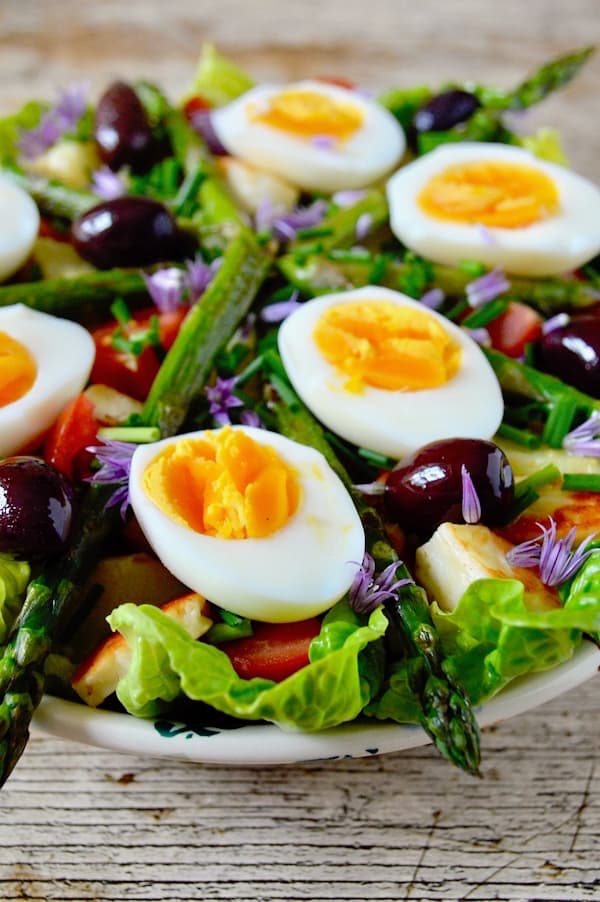
As it happens, I have a vegetarian version of Niçoise salad. I’ve swapped the anchovies for asparagus spears and fried salty halloumi cheese.
Tapenade
A French spread made from olives, capers and anchovies.
Swap the anchovies for sun-dried tomatoes. I have a jar of tapenade that’s made from black olives, sun-dried tomatoes, capers and garlic. It’s delicious.
Gildas
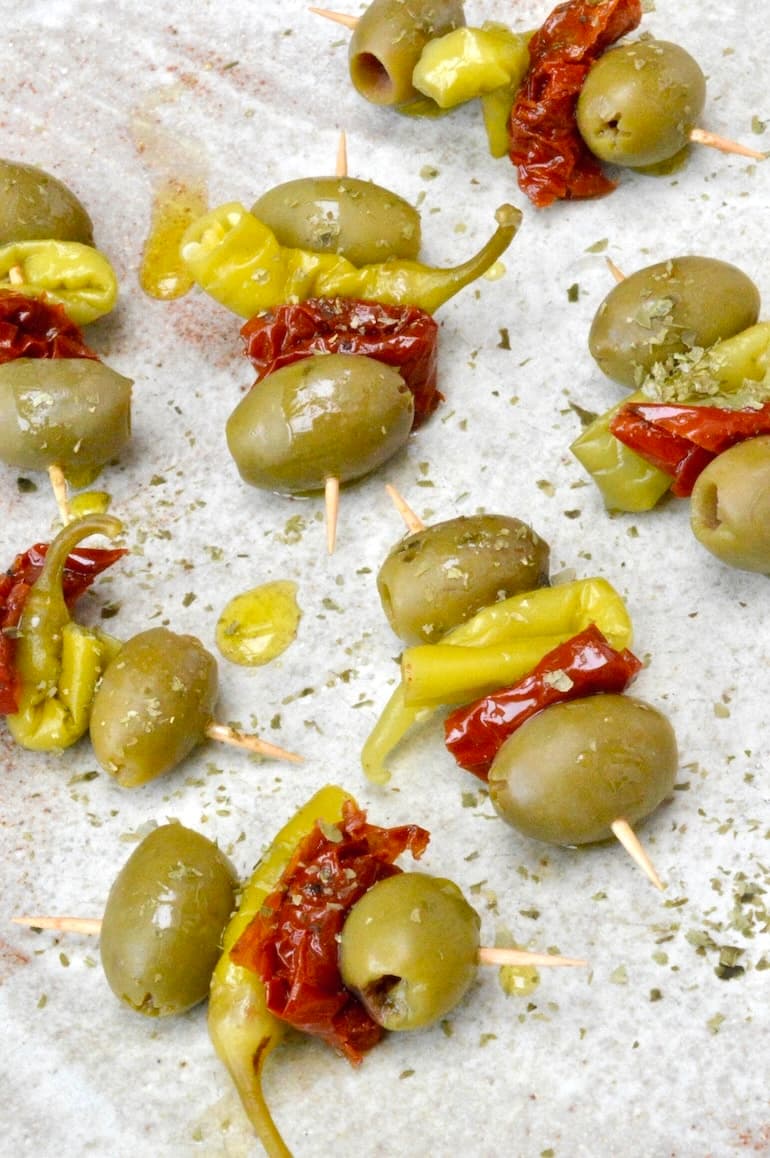
A Basque-style bar snack called pintxo, a gilda consists of a briny green olive (usually manzanilla), a hot green pickled pepper (usually guindilla) and an anchovy on a toothpick.

The gilda, created at the Bar Casa Vallés in San Sebastian in the late 1940’s was named after the 1946 film of the same name, starring Rita Hayworth. Her character was seen to be somewhat “green, salty and a little spicy” – just like the gilda pintxo.
Swap the anchovies for sun-dried tomatoes, manchego or artichoke hearts. Skewer an olive on a stick, followed by one of the anchovy swaps, a guindilla pepper and another olive. Drizzle with olive oil to finish and maybe a scattering of nori seaweed flakes, as I have done here.
Best enjoyed with a glass of Basque txakoli, dry cider, fino sherry or vermouth.
Anchovy Toast
Mashed anchovies with butter, spread on toast is popular in both France and Italy. It’s often topped with sliced tomatoes, radishes or chopped parsley.
Swap the anchovies for red miso or even white miso. Mash three teaspoons of miso paste into one hundred grams of softened unsalted butter, then spread on hot toast. You may like to mash in a few capers and a clove of garlic too.
Pissaladière
Pissaladière is a savoury French onion tart or pizza from Nice in Provence. Bread dough or sometimes pastry is topped with caramelised onions, black olives and anchovies.
Swap the anchovies for capers and strips of roasted red peppers.
Janssons Frestelse
This hearty Swedish potato casserole is made with onions, cream and anchovies.
Swap the anchovies for mushrooms and capers. See True North Kitchen’s version for a vegetarian version of Janssons Frestelse.
Myeolchi-Bokkeum
This popular Korean dish uses dried anchovies rather than tinned. They’re stir-fried, then coated in a sweet soy glaze.
Instead of anchovies fry slivers of tempeh or tofu until crisp. Add in some seaweed and just make sure the soy glaze has plenty of umami depth.
Anchovy Substitutes: FAQs
Miso paste is one of the best all-round substitutes as it provides both saltiness and deep umami flavour. Capers are another good option when a briny kick is needed.
A combination of ingredients often works best. This helps recreate the layered savoury taste anchovies bring to a dish.
Not usually. When used in small amounts, anchovies melt into the dish and add depth and saltiness rather than a strong fish flavour. This makes it relatively easy to use vegan and vegetarian substitutes.
You can, but the dish may taste a little flat. Adding an alternative source of umami, such as miso, soy sauce or nutritional yeast, helps maintain depth of flavour.
A mix of capers and tamari or soy sauce work well. They provide the savoury, tangy depth that anchovies usually bring.
Keep In Touch
Thank you for visiting Tin and Thyme. What do you like to use as an alternative to anchovies? I’d love to hear how you get on with any of these substitutes, or others, in the comments below.
For more delicious and nutritious recipes follow me on Twitter, Facebook, Instagram, Flipboard or Pinterest. And don’t forget to SUBSCRIBE to my weekly newsletter. Or why not join the conversation in our Healthy Vegetarian Whole Food Recipes Facebook Group?
If you’d like more posts about ingredients, follow the link and you’ll find I have quite a lot of them. All incredibly useful, of course.
Choclette x
Anchovy Substitutes. PIN IT.
This post contains affiliate links which are marked with an asterisk* or (affiliate link). If you buy through a link, it won’t cost you any more, but I might get a small commission. Thank you for your support of the brands and organisations that help to keep Tin and Thyme blithe and blogging.