


Anemones bring a loose, natural feel to the garden with their delicate petals and slender stems. Depending on the variety, they can bloom from early spring through fall, filling garden beds with shades of white, pink, purple, blue, and red.
While anemones look beautiful planted in groups, the right companion plants can make them stand out even more. I like pairing them with plants that add contrasting foliage, different heights, and flowers that bloom before or after the anemones. These eight companions will help you create a fuller garden bed with color that lasts across several seasons.
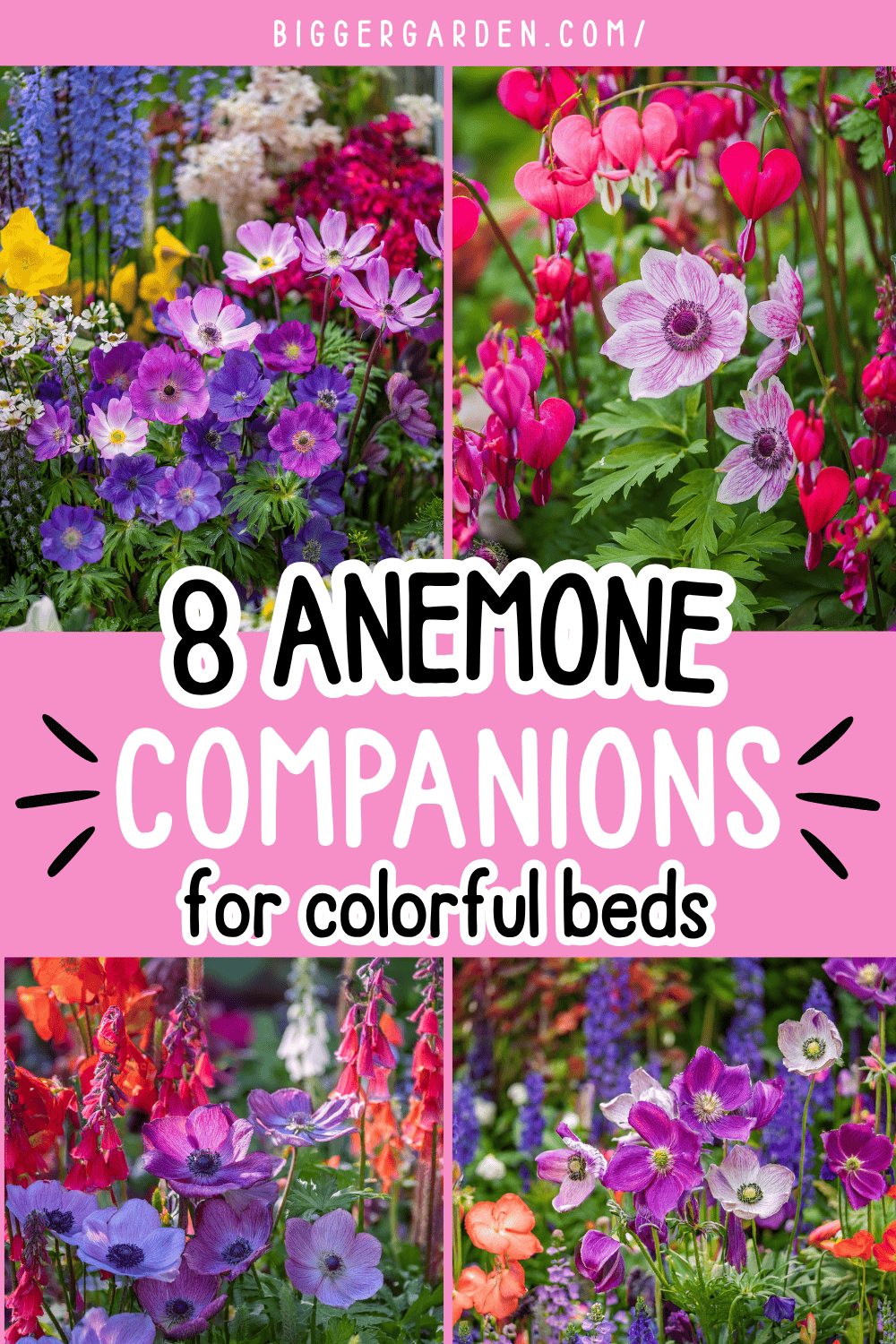
At a Glance
- Anemones bring a loose, natural feel to the garden. The best companions enhance them by adding contrasting foliage, varied heights, and staggered bloom times.
- Structure with spring bulbs: Pair spring-blooming anemones with daffodils and mid-to-late season tulips to add strong vertical lines and cup-shaped blooms that contrast the anemones’ open petals.
- Woodland and shade companions: For partially shaded beds, hellebores, bleeding hearts, and hostas thrive alongside anemones, offering thick, broad leaves that balance out the anemones’ delicate foliage.
- Hide the base: Plant hardy geraniums or coral bells at the front of the border. Their dense, mounding growth covers bare soil, keeps roots cool, and beautifully masks the fading lower foliage of taller anemones.
- Add a tall backdrop: Place biennial foxgloves at the back of the border to create striking vertical spikes that draw the eye upward without blocking the shorter flowers in front.
1. Hellebores
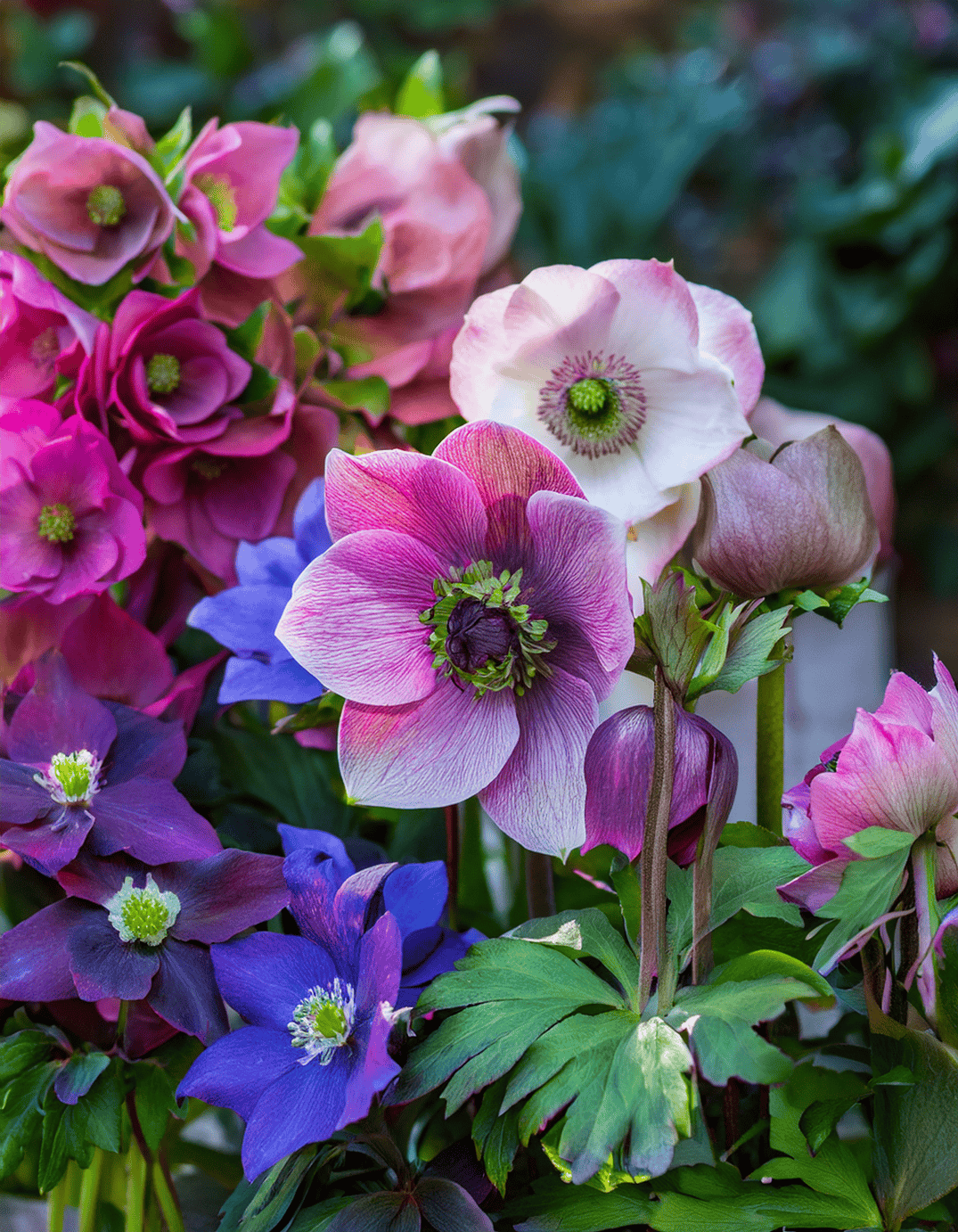
Hellebores are one of my favorite plants to pair with spring-blooming anemones. They begin flowering in late winter or early spring, often while the rest of the garden is still waking up. Their nodding flowers come in shades of white, pink, plum, green, and soft yellow.
The evergreen or semi-evergreen foliage is just as useful as the flowers. Its thick, leathery texture contrasts beautifully with the finer foliage of anemones and helps keep the garden bed looking full after the blooms fade. Hellebores are especially well suited to woodland gardens and partially shaded borders.
🐝 Fan Favorite
“Feed the Bees” Garden Sign
Give your wildflower patch a pop of color and let your neighbors know there’s purpose in your plants.
Delivered in 5–7 days
- Hand-illustrated design
- Recycled aluminum — won’t fade, rust, or crack
- Plants 1 real tree in the Monarch Corridor
🦋 Every sign funds a tree planted in the North American Monarch Corridor — at no extra cost to you.
2. Daffodils
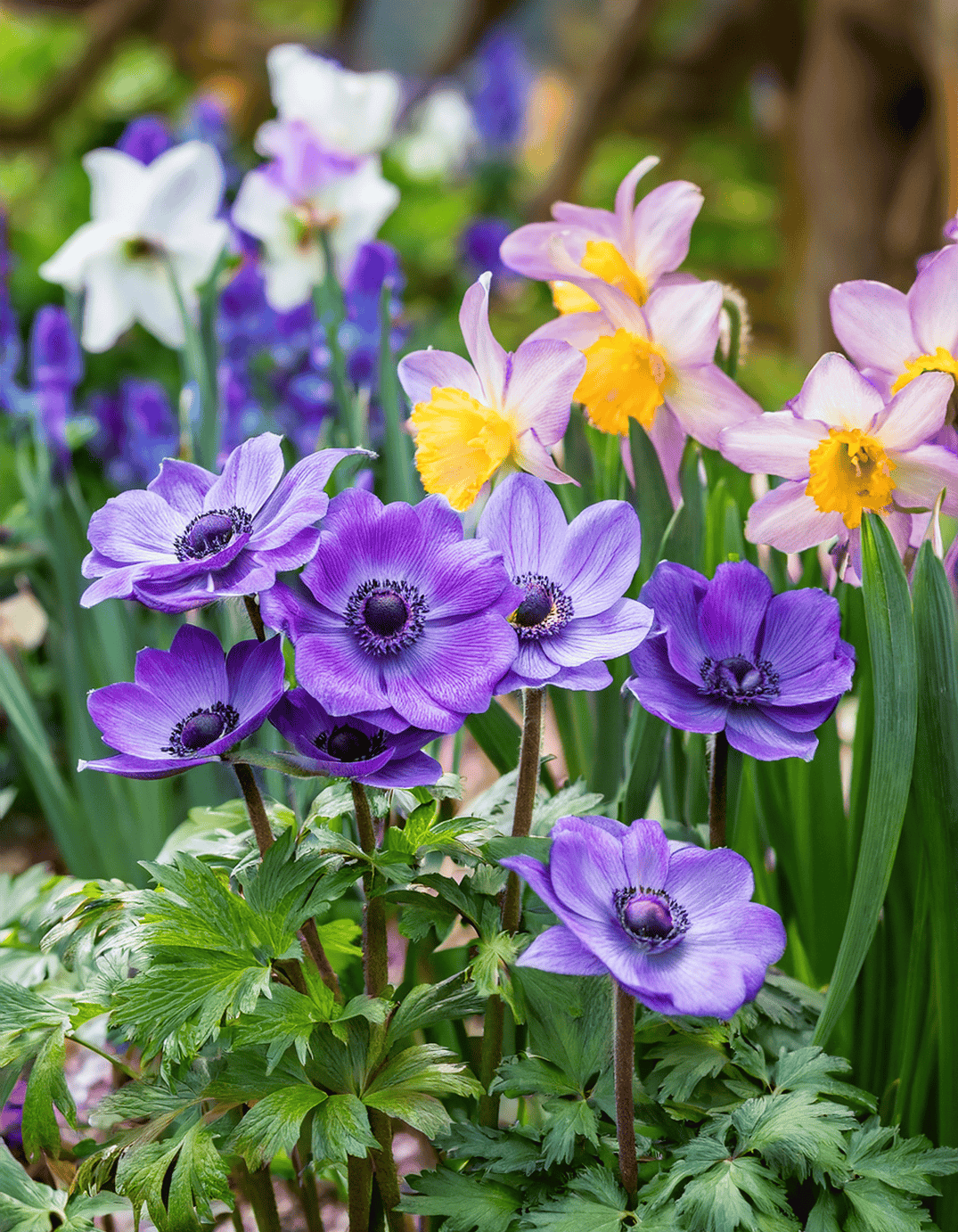
Daffodils and spring anemones make an easy, cheerful pairing. The taller daffodil stems rise above the low-growing anemones, creating distinct layers without either plant competing for attention. Yellow daffodils look especially striking above blue, white, or purple anemones.
Both plants prefer well-draining soil and consistent moisture while they are actively growing in spring. They also enter dormancy as summer approaches, making their care requirements easy to manage in the same bed. Plant the bulbs in informal groups for a display that feels natural rather than overly arranged.
3. Tulips
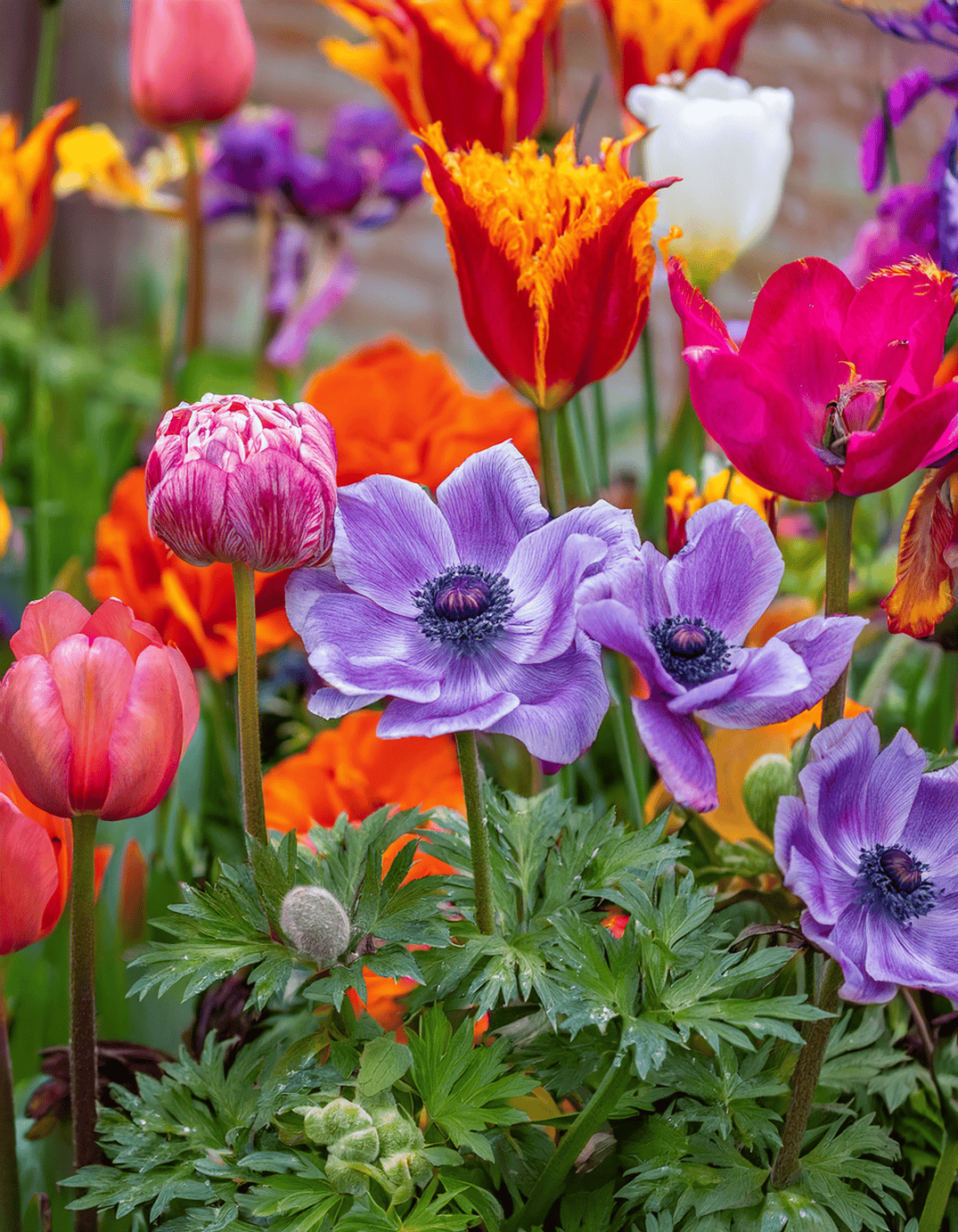
Tulips add structure to the soft, relaxed appearance of anemones. Their smooth stems and cup-shaped flowers create a strong contrast with the open petals and finely divided foliage of spring windflowers.
This pairing also gives you plenty of room to experiment with color. Soft pink tulips can create a romantic combination with white anemones, while deep purple or red tulips produce a bolder display. Choose midseason or late-season tulips so their flowering period overlaps with your anemones.
Leave some space between the tulip bulbs when planting. Their broad leaves can shade smaller anemones if the bulbs are packed too closely together.
4. Bleeding Heart
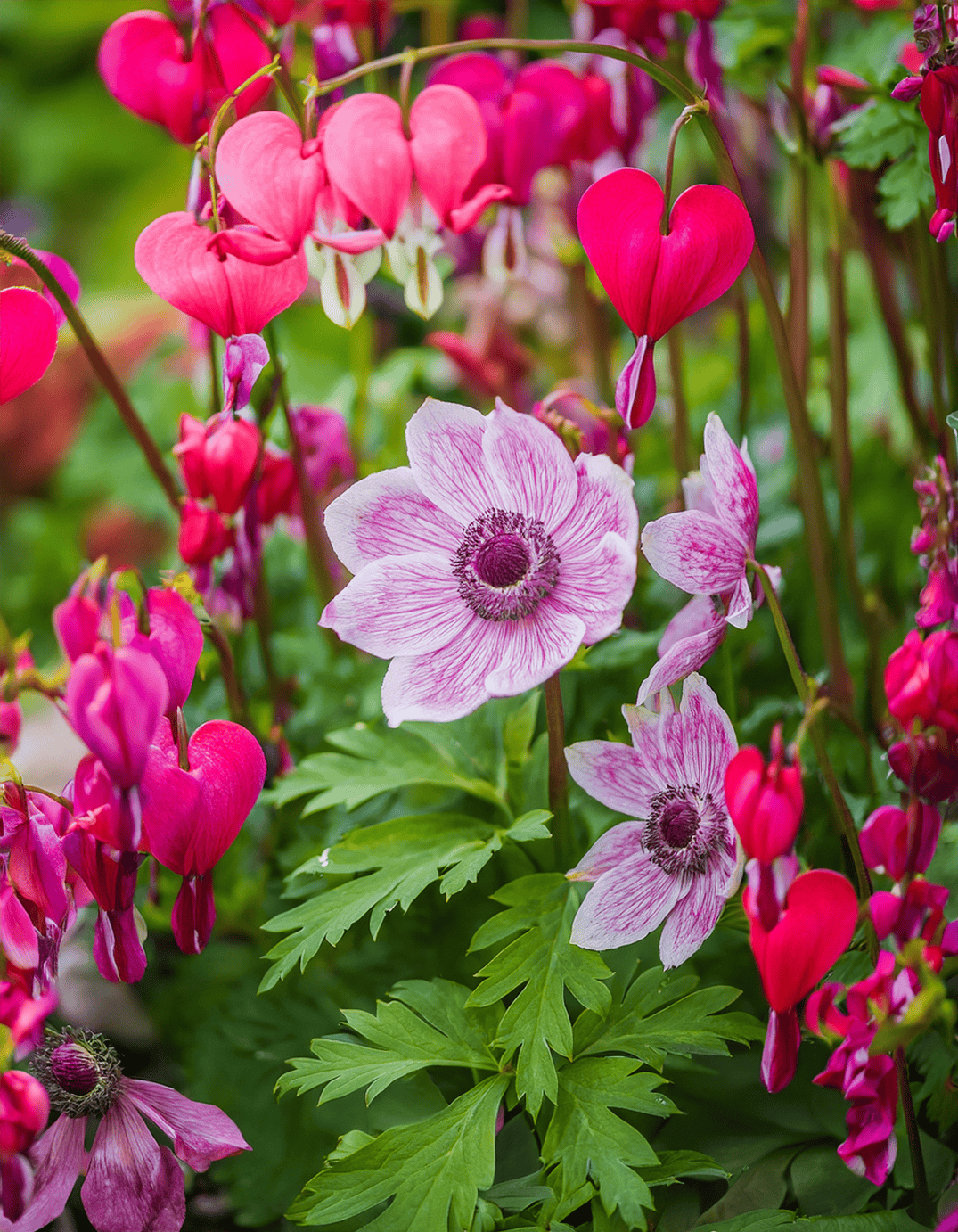
Bleeding heart is a natural companion for anemones growing in a shaded or woodland-style garden. Its arching stems and heart-shaped flowers add height and movement without making the planting feel heavy.
Both plants grow best in rich, well-draining soil with partial shade and regular moisture. Traditional bleeding hearts often die back during the heat of summer, so I like pairing them with fall-blooming Japanese anemones. As the bleeding heart foliage disappears, the anemones begin filling the space with tall stems and fresh flowers.
5. Hardy Geranium
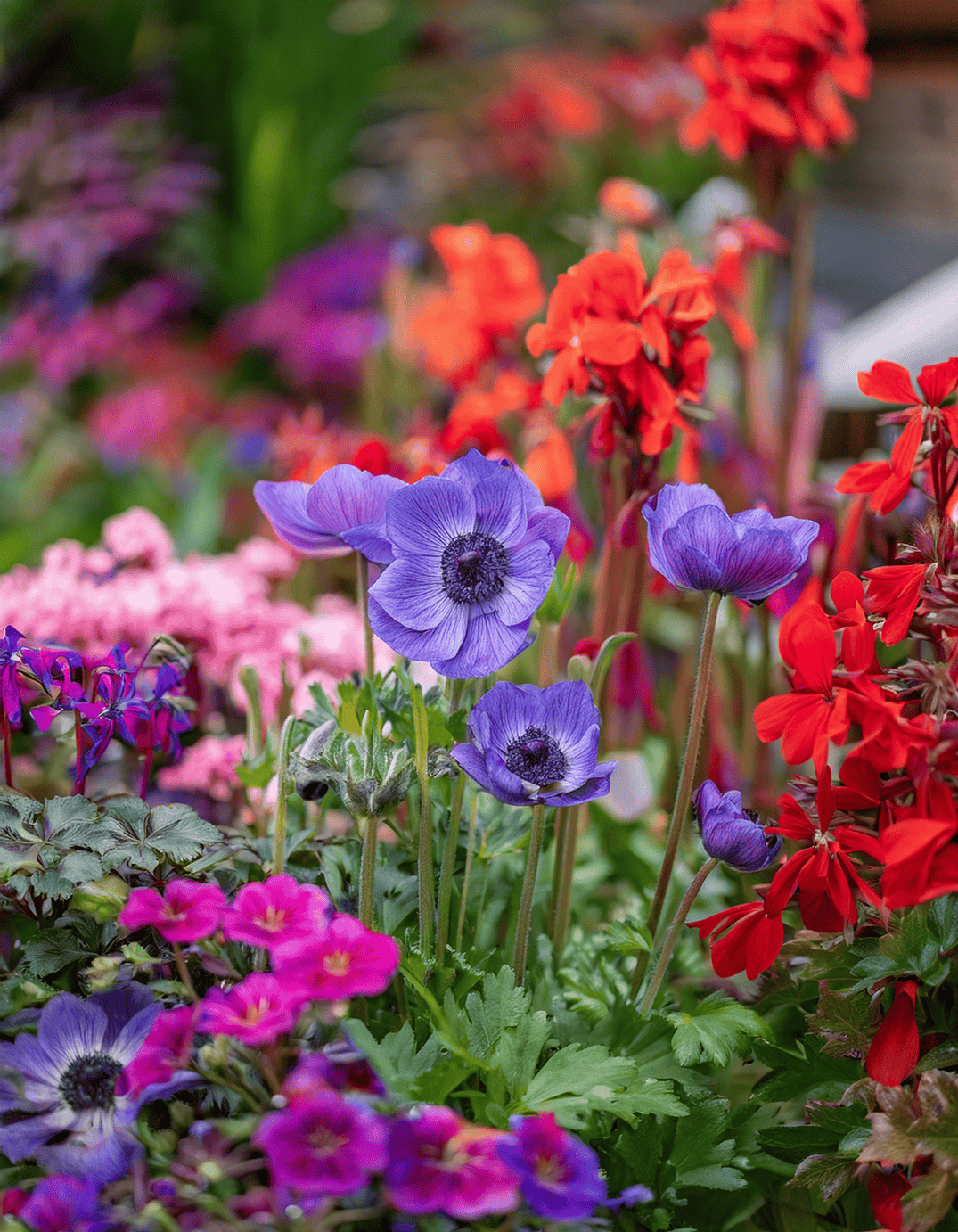
Hardy geraniums, also known as cranesbill, are useful for filling the lower layer of an anemone bed. They form spreading mounds of deeply lobed foliage and produce small flowers in shades of blue, violet, pink, magenta, and white.
Their dense growth helps cover bare soil, reduce weeds, and keep the root zone cooler during warm weather. This makes them particularly helpful around fall-blooming anemones, which appreciate consistent moisture through summer. Choose a well-behaved variety that will spread without overwhelming nearby plants.
6. Foxglove
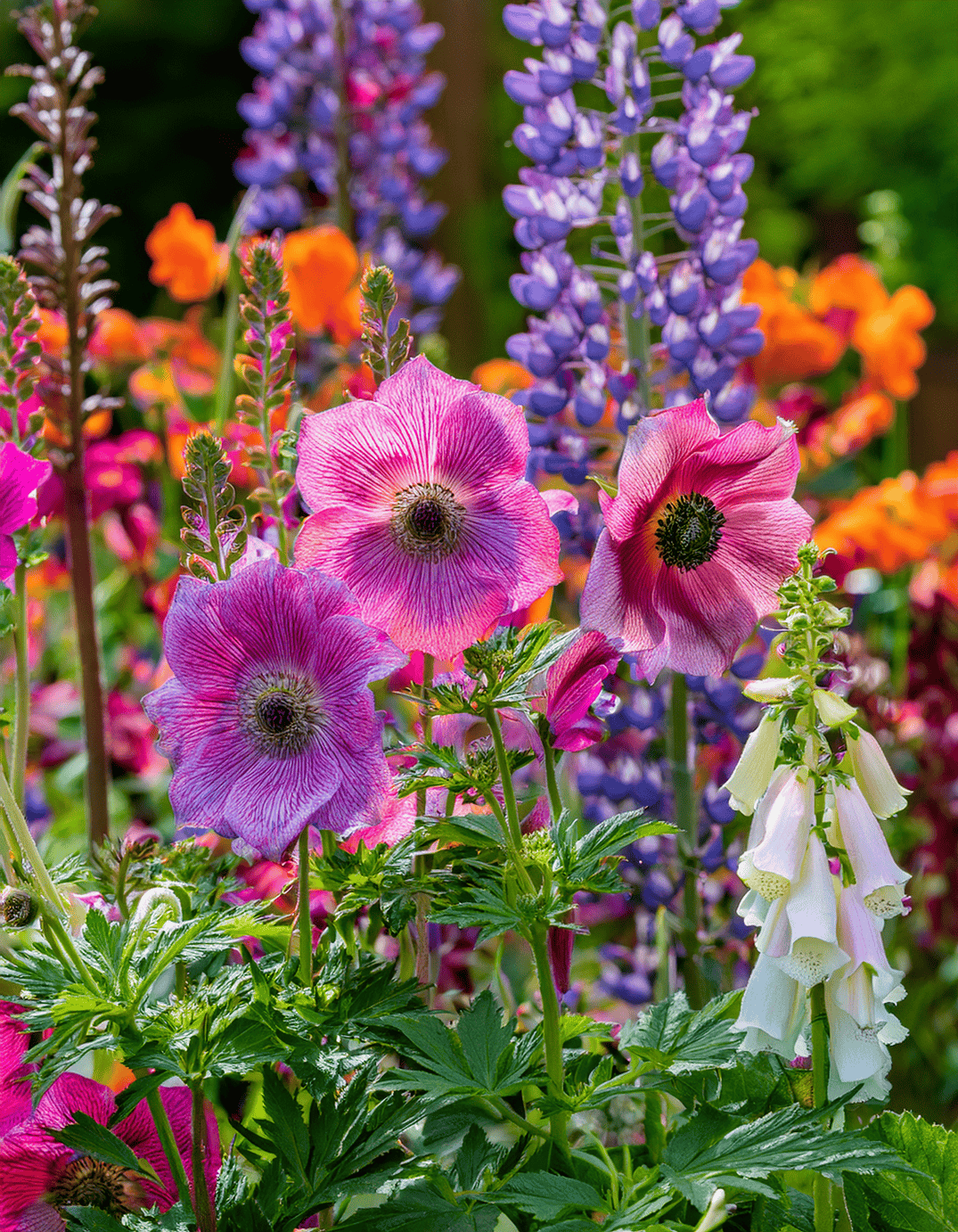
Foxgloves add the height that many anemone plantings need. Their tall flower spikes create a strong backdrop behind shorter spring anemones and help draw the eye through the garden bed.
The tubular flowers are also popular with bees and hummingbirds. Plant foxgloves toward the back of the border, where they can rise above the anemones without blocking them. Their vertical shape works especially well in cottage gardens and informal woodland plantings.
Keep in mind that many foxgloves are biennial or short-lived perennials. Allowing a few flowers to go to seed can help them return in future years.
7. Coral Bells
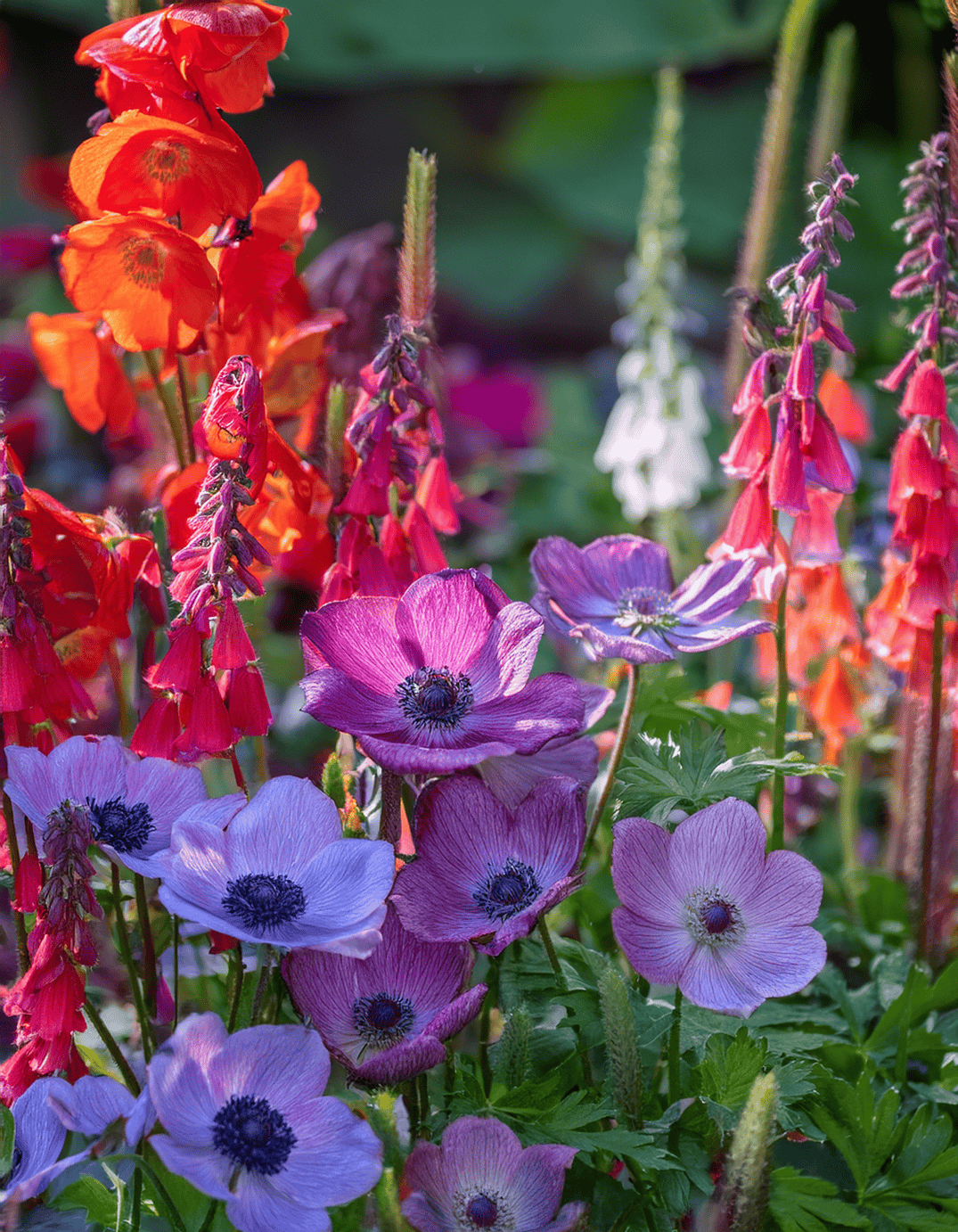
Coral bells are grown mainly for their colorful foliage, making them a good choice for adding interest after the anemone flowers fade. Depending on the variety, their leaves may be lime green, caramel, silver, burgundy, purple, or nearly black.
Their tidy, mounding growth habit makes them easy to place along the front of a border. I especially like using them around taller Japanese anemones, where the foliage helps cover the base of the stems. Choose a leaf color that either echoes the anemone flowers or creates a noticeable contrast.
Coral bells grow best in well-draining soil and usually prefer morning sun or partial shade. In warmer gardens, protection from the afternoon sun will help prevent the leaves from scorching.
8. Hostas
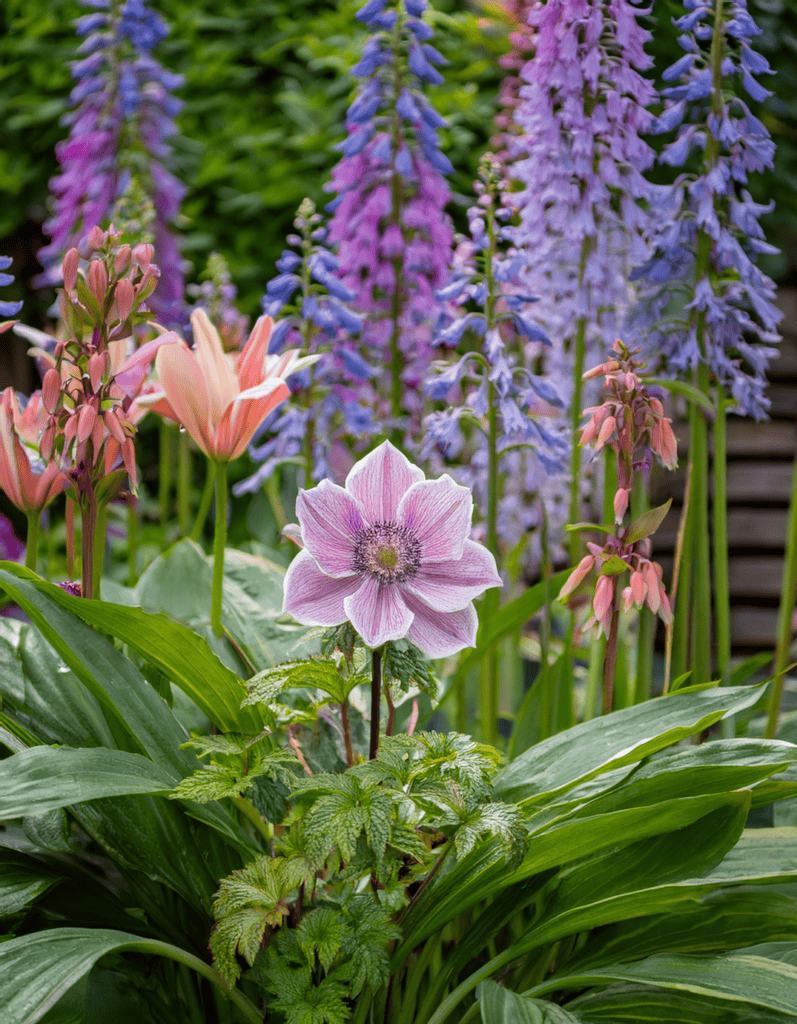
Hostas provide one of the strongest foliage contrasts for anemones. Their broad, substantial leaves balance the thin stems, fine foliage, and delicate flowers of the anemone plant.
This combination works best in partially shaded beds with rich soil and consistent moisture. Blue-green hostas create a calm backdrop for white or pink anemones, while chartreuse varieties can brighten a darker corner of the garden.
Place hostas beside or slightly in front of taller anemones. Be sure to leave enough room for the hostas to reach their mature size, since larger varieties can eventually crowd smaller plants.
Anemone Companion Plant Growing Guide
Use this guide to compare the general growing conditions, bloom times, and mature heights of each companion plant.
| Companion Plant | Sun Exposure | Soil Moisture | Typical Bloom Time | Mature Height |
|---|---|---|---|---|
| Hellebores | Part shade to full shade | Moderate | Late winter to early spring | 12 to 18 inches |
| Daffodils | Full sun to part shade | Moderate in spring, drier in summer | Early to mid-spring | 12 to 18 inches |
| Tulips | Full sun | Moderate in spring, drier in summer | Mid to late spring | 12 to 24 inches |
| Bleeding Heart | Part shade to full shade | Consistently moist | Mid-spring to early summer | 24 to 36 inches |
| Hardy Geranium | Full sun to part shade | Moderate | Late spring through summer | 12 to 24 inches |
| Foxglove | Full sun to part shade | Moderate to moist | Early to mid-summer | 36 to 60 inches |
| Coral Bells | Part shade | Moderate | Early summer, with season-long foliage | 10 to 18 inches |
| Hostas | Part shade to full shade | Consistently moist | Mid to late summer | 12 to 36 inches |
Creating a Fuller Anemone Garden
The best anemone companions do more than flower at the same time. They help hide fading foliage, protect the soil, attract pollinators, and add structure before and after the anemones bloom.
For the most natural-looking garden bed, combine plants from several layers. Use hardy geraniums or coral bells near the front, place anemones through the middle, and add foxgloves or taller perennials toward the back. This simple approach will give the planting more depth while keeping something interesting in the garden throughout the season.