


There’s a particular kind of frustration that comes from staring at a brand-new privacy fence. You put it up for a reason — a little visual breathing room, some definition in the yard — and then you stand back and realize it looks like the side of a storage unit. Stark. Flat. Aggressively beige.
This is exactly the problem clematis was born to solve.
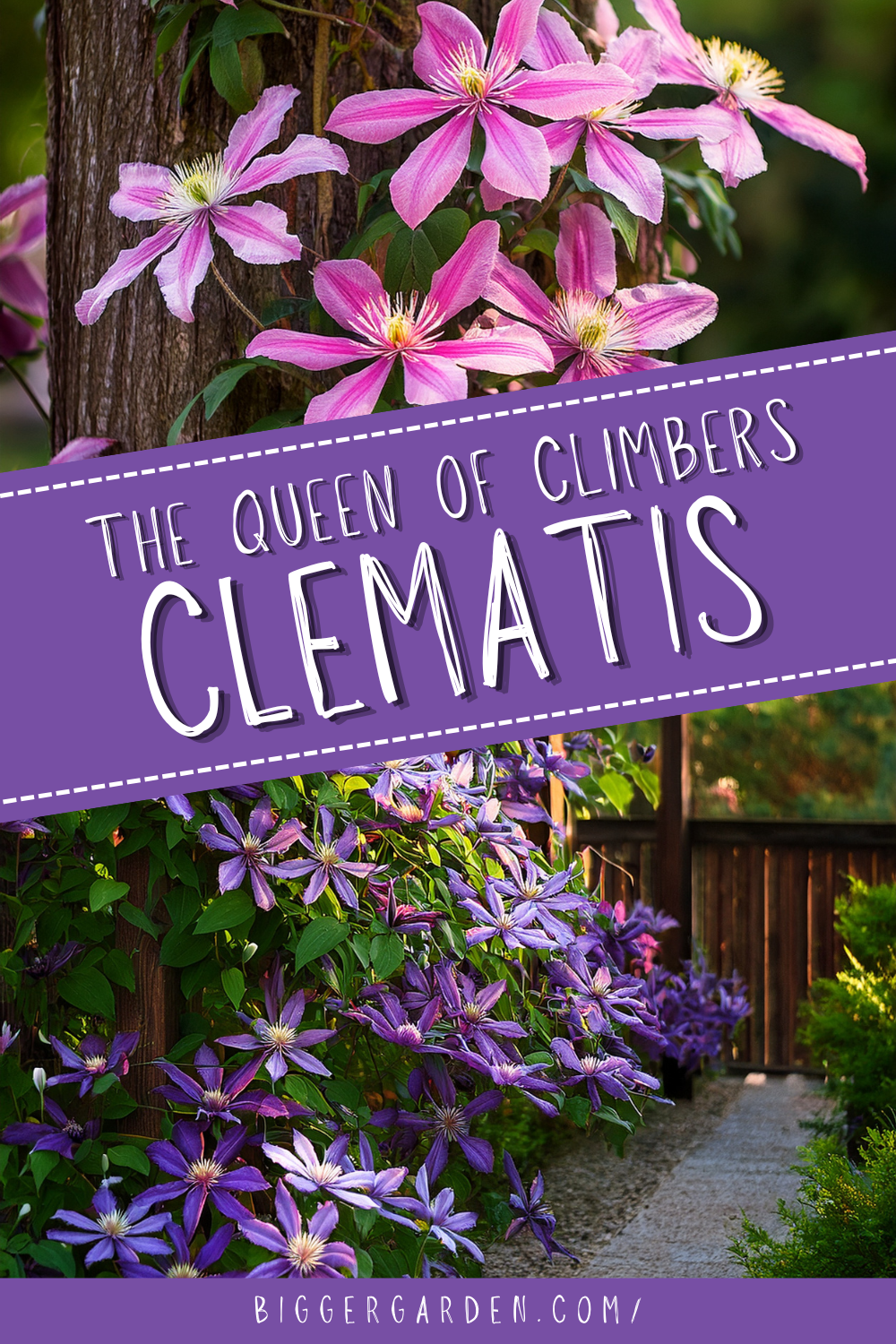
Called the “Queen of Climbers” for good reason, clematis is the garden’s most reliable fence transformer. A single established plant can cover eight to ten feet of panel with blooms so large and dramatic they look like they were placed there on purpose — because, eventually, they are. And despite its regal reputation, clematis doesn’t require expert-level skill. It just requires knowing its one non-negotiable rule, which we’ll get to in about sixty seconds.
Quickly Find Clematis Tips:
Clematis 101: The One Rule That Changes Everything
Clematis has a reputation for being finicky. Garden forums are full of cautionary tales: planted it, it died, never again. But spend a little time with this plant and you quickly realize it isn’t finicky so much as specific. It wants one particular growing environment, and once you give it that, it rewards you with almost zero effort in return.
The rule is this: feet in the shade, head in the sun.
Let’s break that down.
The “head” — the upper portion of the plant with all those vines and blooms — needs a minimum of six hours of direct sunlight per day. This is the non-negotiable part. Clematis grown in too much shade produces weak, leggy growth and very few flowers. If your fence doesn’t get good sun exposure, clematis isn’t your plant (yet — more on companion planting below).
The “feet” — the root zone at the base of the plant — are the opposite. Clematis roots hate being hot and dry. In full afternoon sun with bare soil, they’ll struggle, sulk, and sometimes give up entirely.
The fix is simple. Tuck the base of your clematis plant underneath a low companion plant — a hosta, a mounded shrub, a clump of ornamental grasses — to shade the root zone naturally. If that’s not possible, spread a thick two-to-three inch layer of mulch around the base of the plant, keeping it a few inches away from the stem itself. That mulch layer insulates the roots, retains moisture, and keeps the soil temperature from spiking on hot summer days.
Master feet-in-shade, head-in-sun, and you’ve essentially mastered clematis.
Why Clematis Is Made for Privacy Fences

Not every climbing plant plays well with fences. English ivy is the obvious example — beautiful in theory, destructive in practice. It grips surfaces with tiny adhesive roots that work their way into wood grain and vinyl seams, trapping moisture and eventually causing real structural damage.
Clematis climbs completely differently. Instead of adhesive roots or tendrils that wrap around things, it climbs via its leaf stalks — the small stems that connect each leaf to the vine. Those leaf stalks gently coil around whatever support is available, which means they grip without damaging. No suction cups. No moisture traps. No wood rot.
The catch? Because the leaf stalks are relatively delicate, clematis can’t climb a flat fence panel on its own. It needs something to wrap around — a trellis, wire grid, or mesh — installed with a small gap between the support and the fence itself. That gap matters: it allows airflow around the plant, which dramatically reduces the risk of powdery mildew, one of the few real problems clematis can encounter.
The good news is that this support system is cheap and easy to install. Wooden trellis panels are readily available at most garden centres and can be mounted with simple spacers to create that critical one-inch gap. Wire grids or heavy-gauge netting are even more affordable and nearly invisible once the plant fills in.
A quick colour-matching cheat sheet for fence pairing:
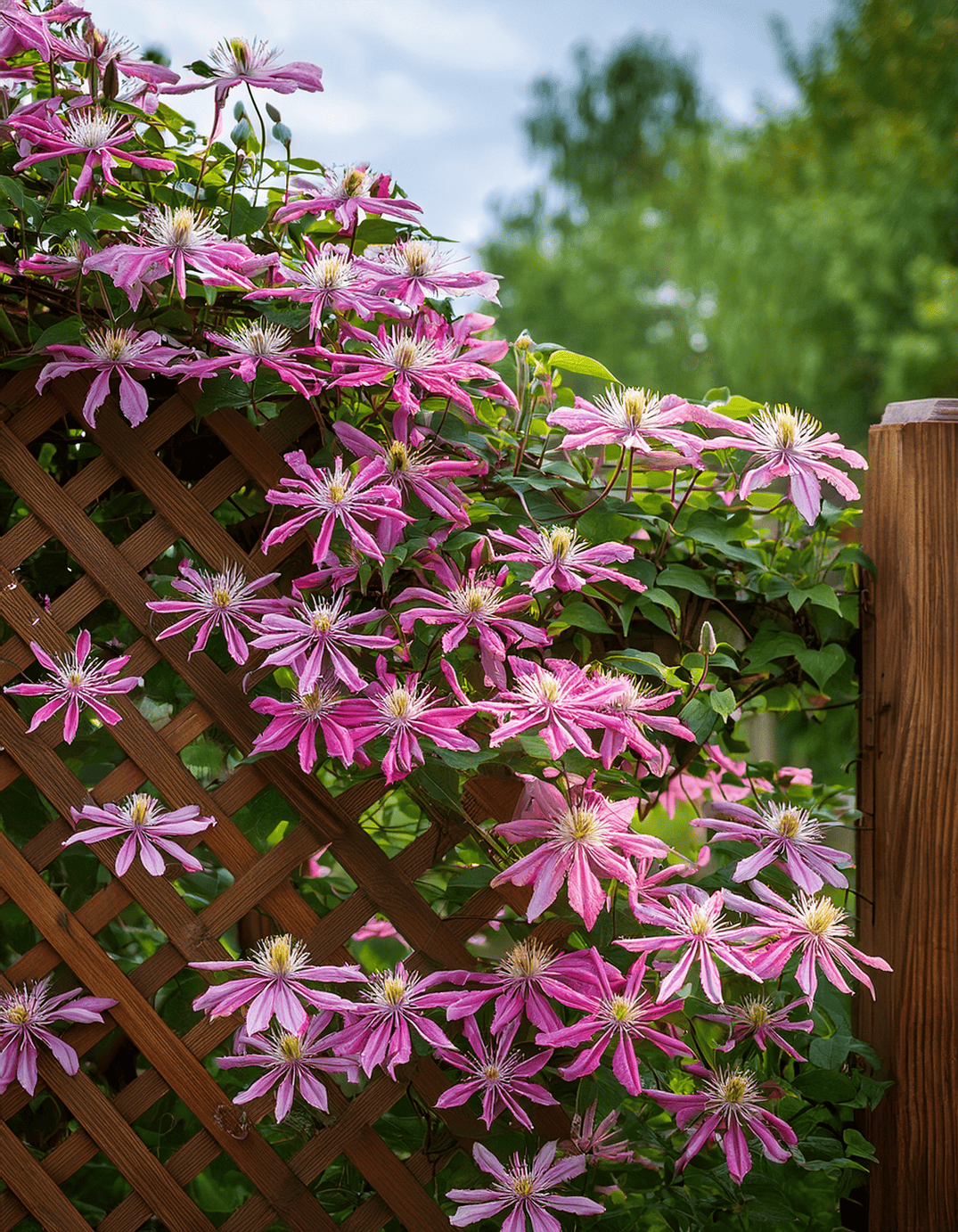
- Dark wood or black fences: Go with vibrant pinks or soft whites. The variety ‘Nelly Moser’ — pale pink with a deep rosy centre stripe — is extraordinary against a dark backdrop.
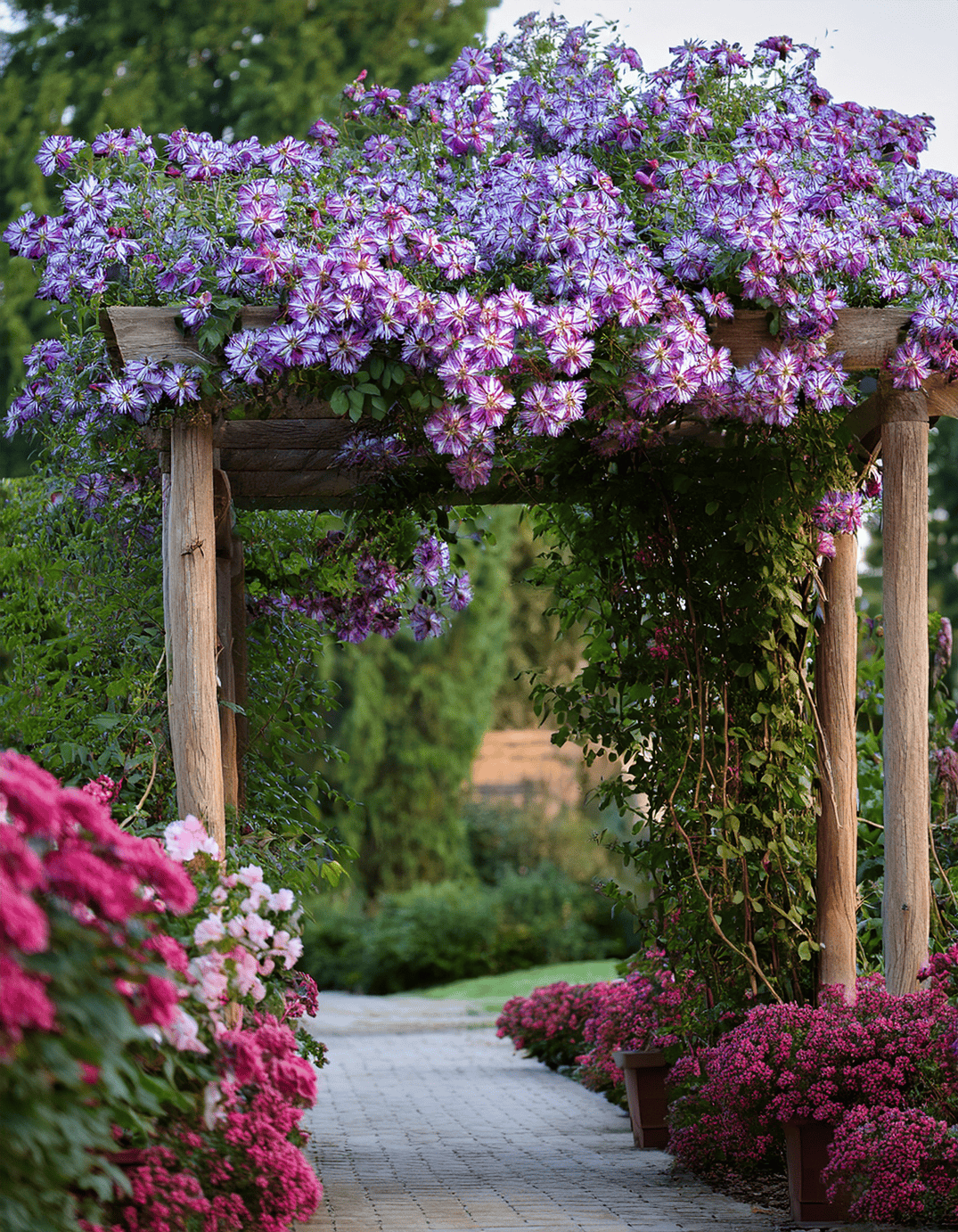
- White vinyl fences: Deep, saturated purples are the move. ‘Jackmanii’ is the classic choice: reliable, vigorous, and so purple it almost looks fake.
The Lazy Gardener’s Guide to Pruning
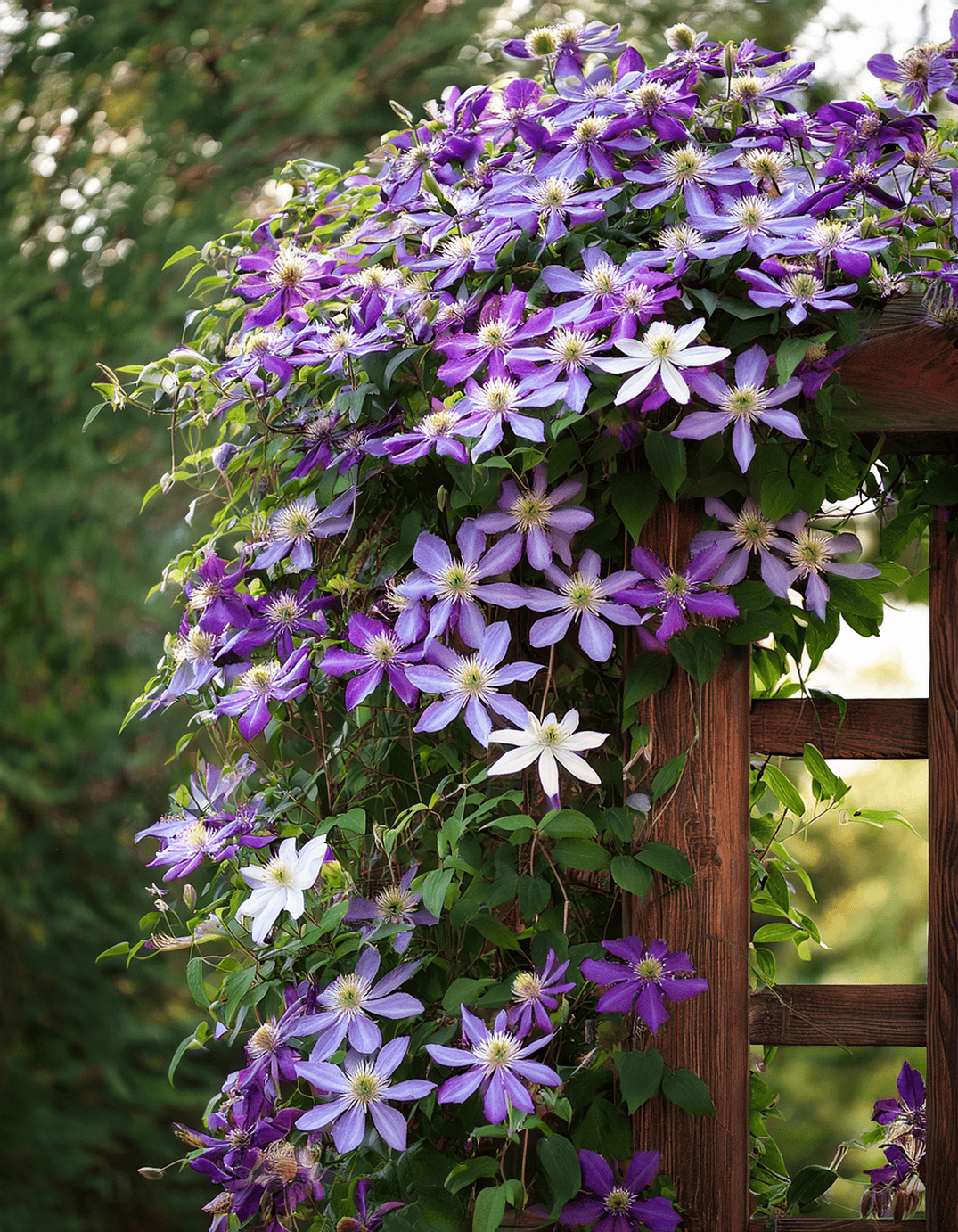
If you’ve ever looked into growing clematis and stumbled across “pruning groups,” you may have closed the browser tab. The three-group classification system sounds like something you’d need a horticultural certificate to understand.
Here’s the honest version: if you’re growing clematis on a privacy fence, just choose Group 3 varieties and ignore the rest.
Group 3 clematis — sometimes called late-flowering clematis — bloom on new growth each year. That means every spring, you simply cut the entire plant down to about twelve inches from the ground. No finessing. No hunting for old wood versus new wood. Just chop it all back and walk away.
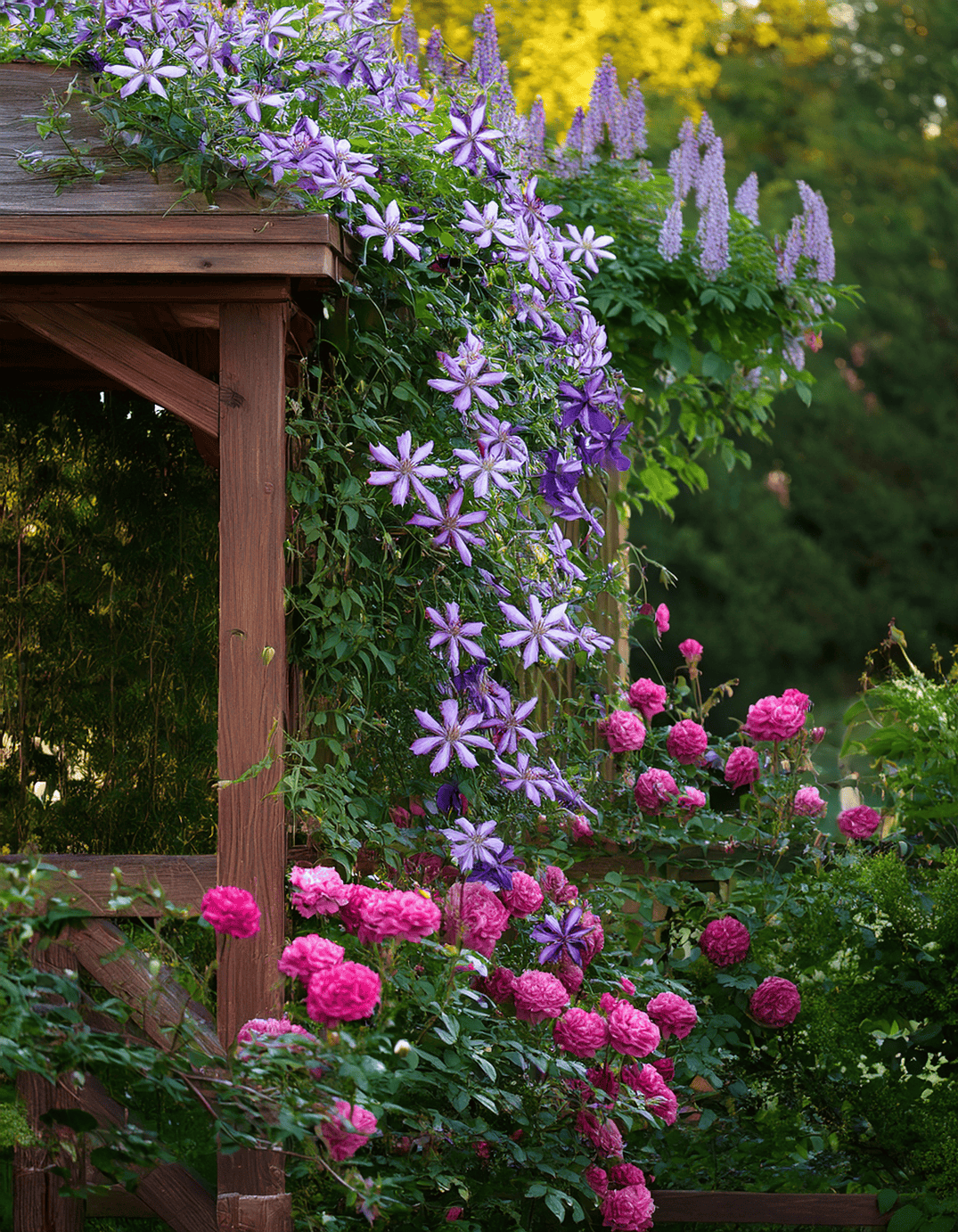
The plant responds by sending up vigorous new growth that covers your fence by mid-summer and blooms reliably through late summer into fall. It’s a complete reset, every single year, and it keeps the plant from turning into a tangled mess of old stems at the bottom and new growth at the top.
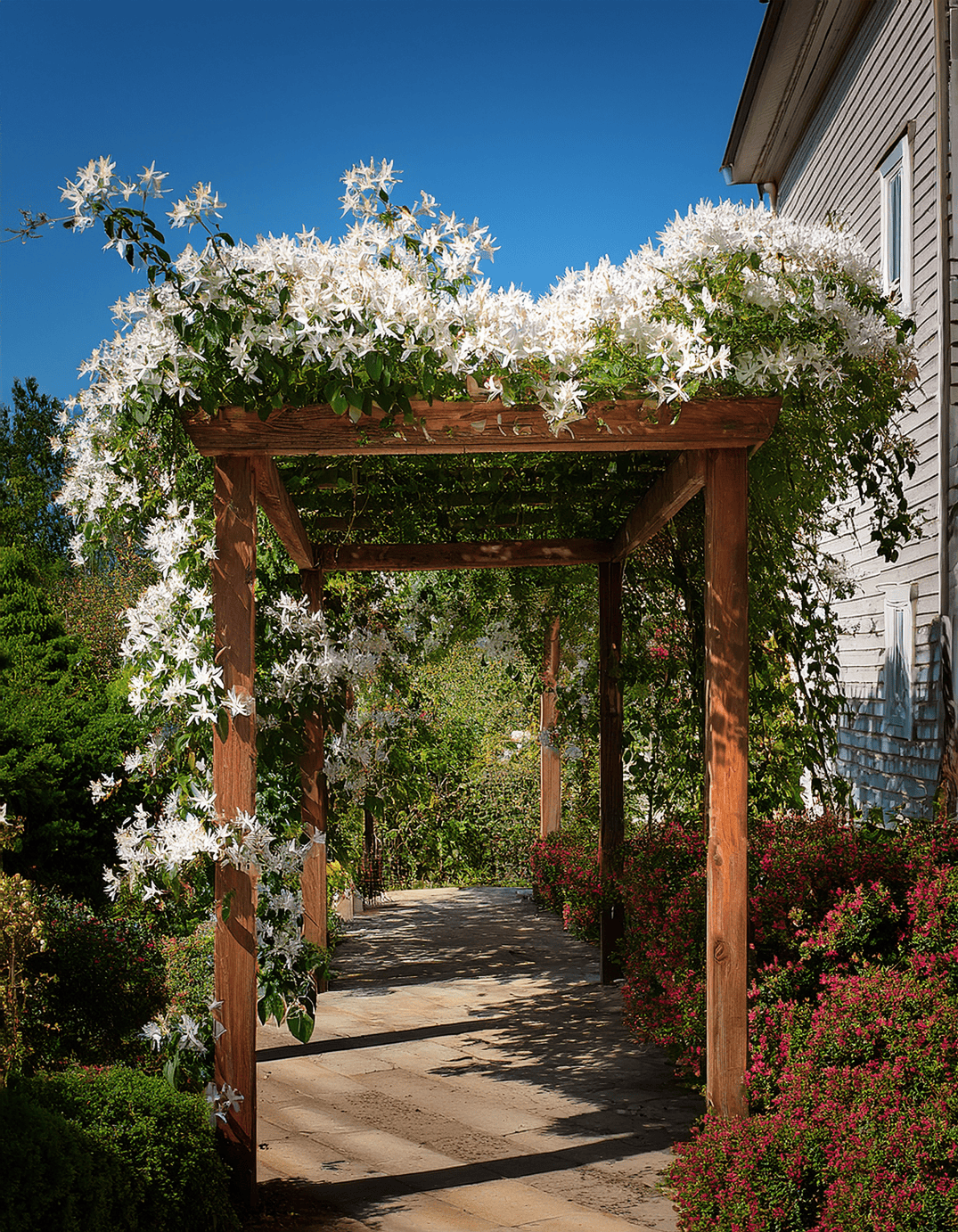
‘Jackmanii’ is a Group 3. So are ‘Ville de Lyon’ (rich red), ‘Duchess of Albany’ (tubular pink), and the sweet autumn clematis varieties if you want something more delicate and fragrant. Any of these will thrive under the chop-and-grow approach.
3 Mistakes That Trip Up New Growers
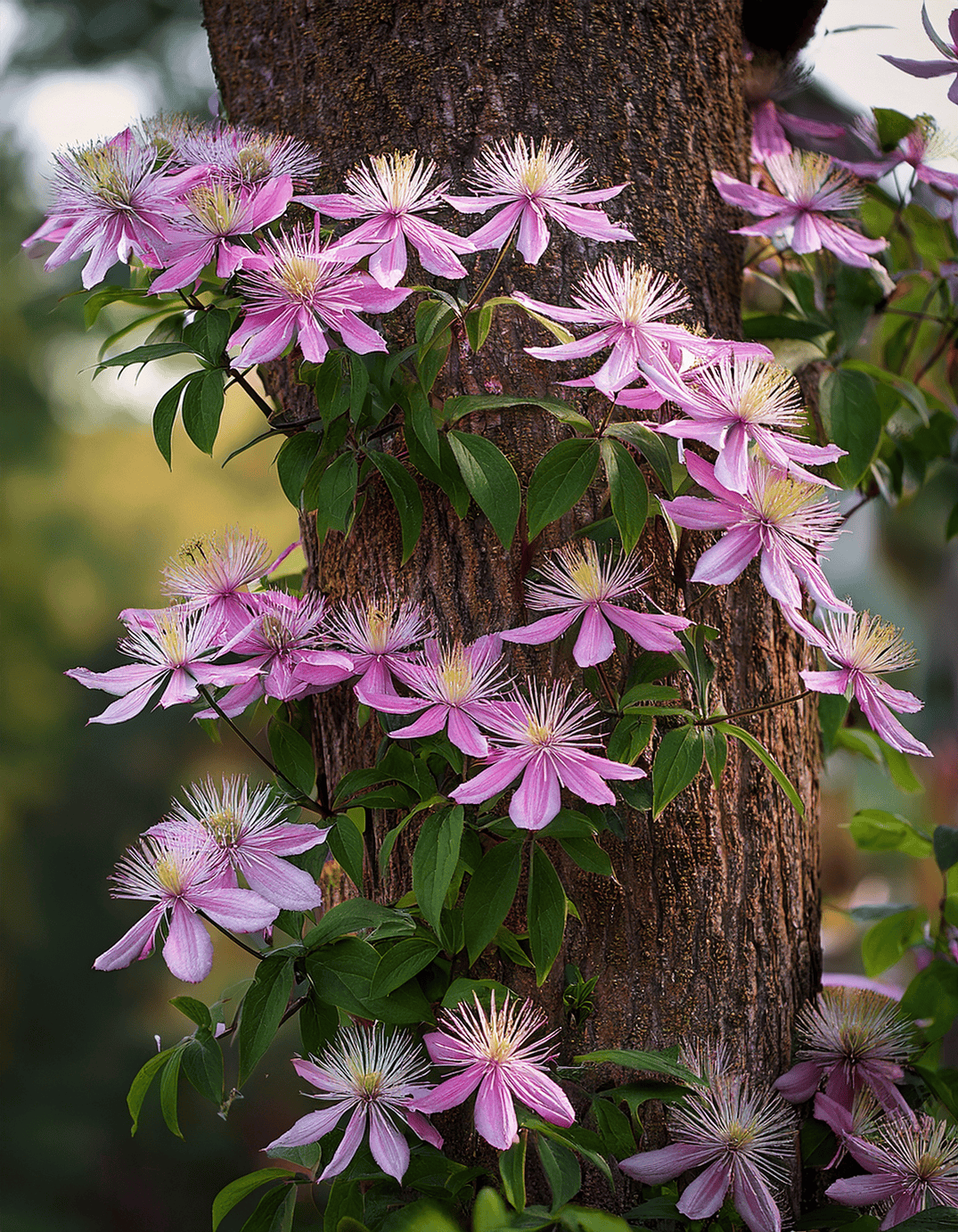
Even with good information, there are a few pitfalls worth knowing about before you plant.
Planting flush against the fence. It seems logical to get the plant as close to its support as possible, but a clematis planted directly against the fence has no airflow around its base. Poor airflow is the primary cause of powdery mildew — a fungal issue that turns leaves dusty white and weakens the plant over time. Plant at least six to twelve inches out from the fence, and let the plant reach back toward the trellis naturally.
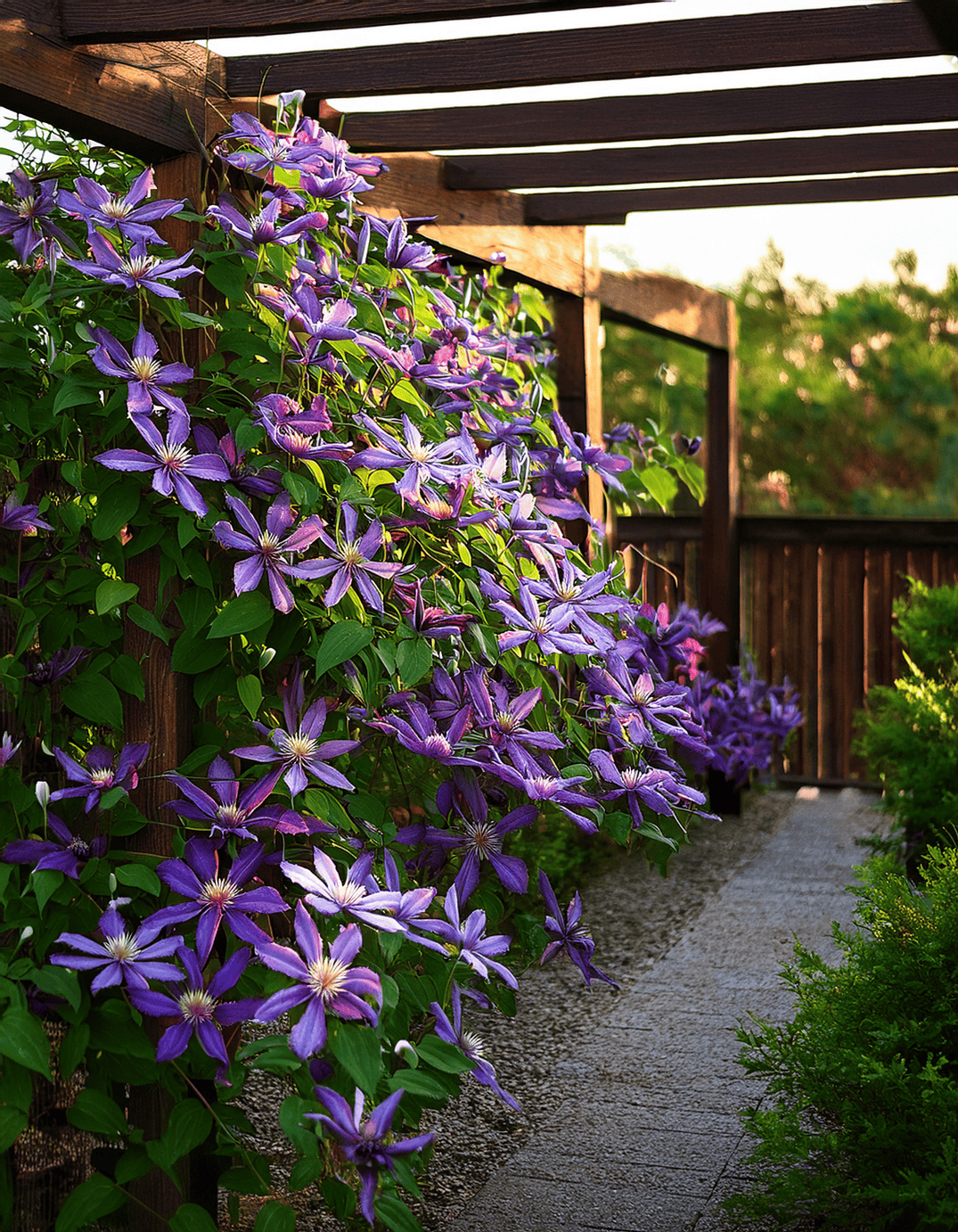
Expecting instant results. Clematis has a well-known growth pattern summed up in an old gardener’s rhyme: first year it sleeps, second year it creeps, third year it leaps. The first season, most of the plant’s energy goes underground to establish its root system. The second year, you’ll see meaningful vine growth but modest blooms. By year three, you’re looking at the plant you imagined when you bought it — full, lush, loaded with flowers. Patience is the real secret ingredient.
Forgetting to water. Clematis is not a drought-tolerant plant, especially in that first critical year when roots are establishing. In the absence of rain, a deep watering once or twice a week at the base of the plant (not overhead) makes a significant difference. Once it’s established, it becomes more resilient, but that first season it needs consistent moisture to build the root system that will carry it for years.
Your Fence, Transformed
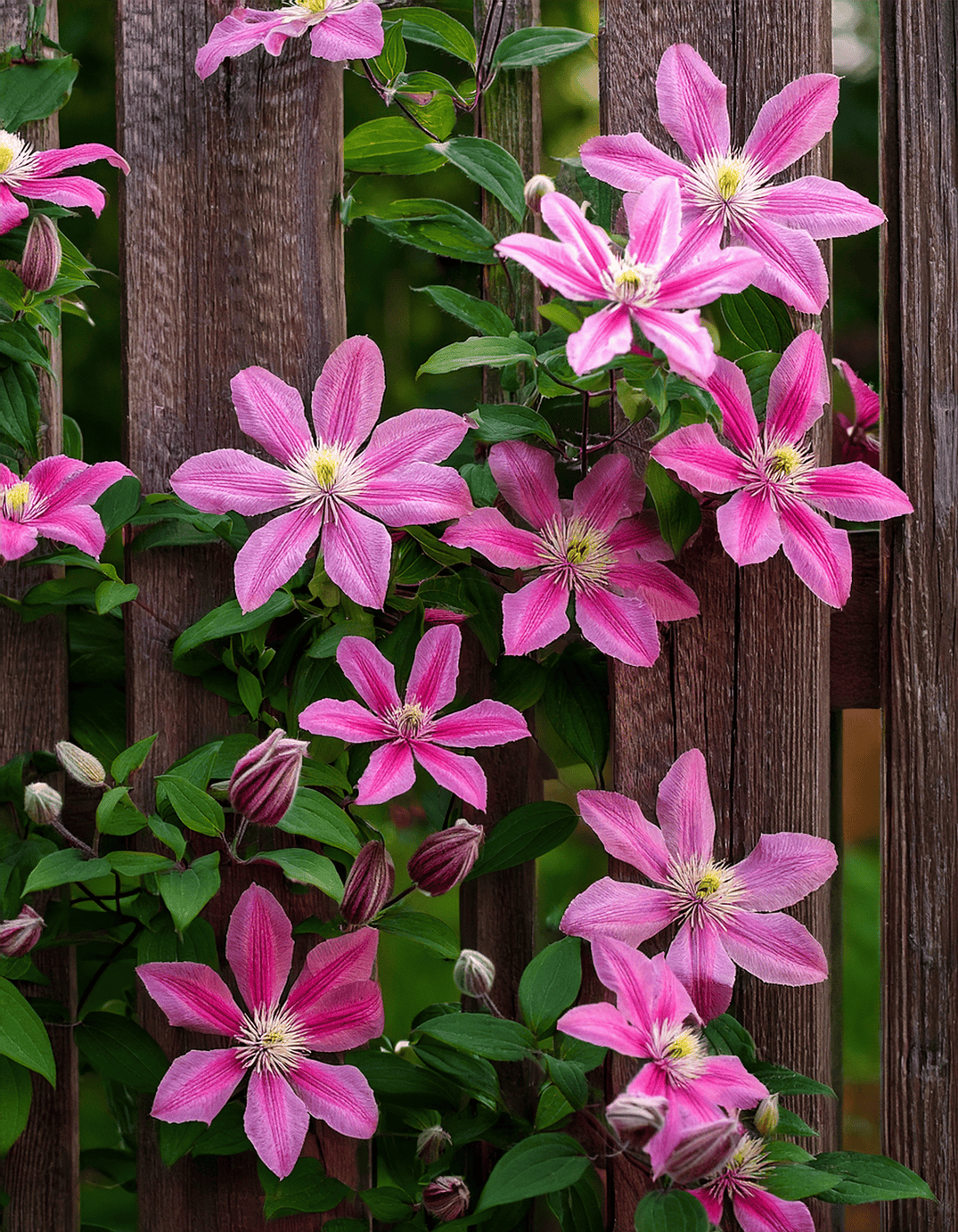
A privacy fence that feels like a wall becomes something entirely different once a clematis finds its footing. By the third year, you’re looking at a genuine living backdrop — a cascade of colour that shifts through the seasons, draws pollinators, and genuinely improves the view from every angle of your yard.
The Queen of Climbers earns that title. And with cool roots, a little support structure, and the patience to let it establish, it’s well within reach for any gardener — green thumb optional.
Looking for garden signs that celebrate what’s growing in your yard? Browse the Bigger Garden shop — every sign is hand-illustrated, made from recycled aluminum, and ships with a tree planted in the Monarch Corridor. Shop Our Signs →