


From Principles to Practice
In 2022, ORRAA and partners (including Salesforce, Conservation International, the World Economic Forum, and The Nature Conservancy) launched the High-Quality Blue Carbon Principles and Guidance. These principles are now being adopted globally by developers, investors, and intermediaries as the basis for development, investment and deployment.

But principles only matter when they’re practiced. That’s why we also developed the High-Quality Blue Carbon Practitioners Guide with Conservation International, released in October 2024, with support from the UK Government’s Blue Planet Fund.
And to solve the supply-demand gap, we’re developing a new digital tool: The Octopus Platform. Powered by Salesforce’s agentic AI and in partnership with 2050 and unveiled at the Blue Economy and Finance Forum (BEFF) in June 2025, the Octopus Platform will be a global marketplace that connects investors, project developers, and SMEs working on ocean solutions, helping ensure the right money meets the right projects.
A Step-change for a Sea-change
Finally, working from the top-down, ORRAA’s Sea Change Impact Financing Facility (SCIFF) is developing financial instruments that bridge the ‘valley of death’ between grant funding and investment-readiness by providing a funnel through which they can progress, leading to bankable propositions and investment opportunities across the capital stack.
Just like a small skiff, or fishing boat, rarely sails alone, the financial instruments being developed are a flotilla working together to deliver the cornerstone elements of a capital market for the Ocean. They include impact funds that invest into Small Island Developing States, a Blue Guarantee Facility, a Blue Bond Accelerator and blended finance vehicle for marine protected areas.
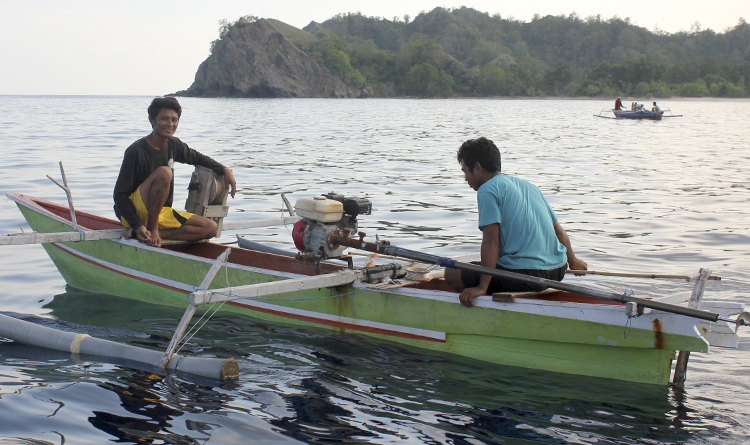
And through our #BackBlue Ocean Finance commitment, which now includes over USD$3.45 trillion in assets under management, we are providing the Ocean with a seat at the table when finance and insurance decisions are made. Those decisions must include stopping financing destructive activities — and not starting new potentially destructive ones, like deep sea mining — and investing for our common future and long-term financial, social and environmental returns. Institutional investors and asset managers need to mobilize across the capital stack — grants, concessional, patient and return-seeking — mobilizing the development of financial instruments which allow millions, billions and then trillions of dollars to flow.
A Wave of Momentum: UNOC3 and the BEFF
In June 2025, we saw two landmark events: the third United Nations Ocean Conference (UNOC3) in Nice, and the BEFF in Monaco. Together, they signal a new chapter in ocean finance. At the BEFF, over €8.7 billion in public–private and philanthropic investment was committed to 2030, with €1 billion being deployed or investment ready in 2025. Leaders from business, finance, and government outlined a vision for a blue economy that is just, regenerative, and investable.

Then, at UNOC3, the Nice Ocean Action Plan was announced, with key pledges including €1 billion from the European Commission for ocean science and conservation, USD$3.5 billion from development banks to tackle plastic pollution, the creation of the world’s largest marine protected area in French Polynesia, and major funding for ocean governance from Germany, New Zealand, Spain, and Costa Rica. In addition, 19 more countries committed to ratify the High Seas Treaty, bringing us within reach of the 60 needed for it to enter into force, finally offering an international agreement governing the conservation and sustainable use of marine biological diversity in areas beyond national jurisdiction. These binding commitments are reformulating how the global financial system engages with our most vital shared resource.

Looking Ahead: Toward COP30
As we look to COP30 in November in Brazil, hosted under President Lula’s leadership, we expect that climate, nature and ocean finance will come together in the heart of the Amazon, connecting climate justice, biodiversity, and community resilience. The time is now to shift from viewing the Ocean as a resource to be exploited, to understanding it as a regenerative engine for people and planet.
The wave is building. And it’s going to take all of us — investors, scientists, policymakers, and communities — to ride it together.
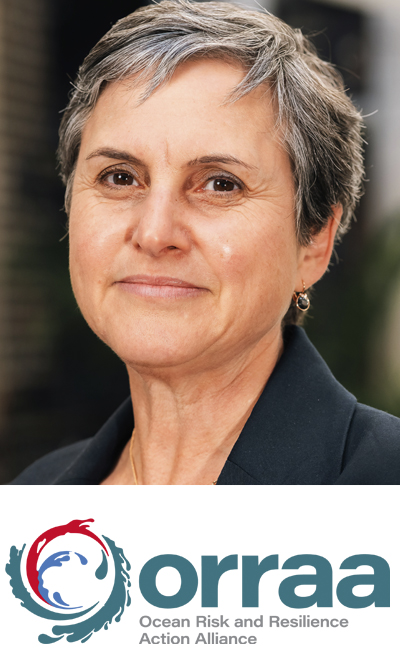
Article by Karen Sacks, executive director and president of Ocean Risk and Resilience Action Alliance (ORRAA). Karen has worked on ocean conservation, law and policy for the past three decades. Karen previously served as CEO of Ocean Unite, co-founded with Sir Richard Branson and José María Figueres.
Previously, she held senior roles at The Pew Charitable Trusts and Greenpeace International. Karen has spearheaded global campaigns to secure a new UN high seas biodiversity treaty, establish large marine reserves and end illegal fishing and high seas bottom trawling. She initiated the Global Ocean Commission. Karen is originally from South Africa and now lives in the United States.