


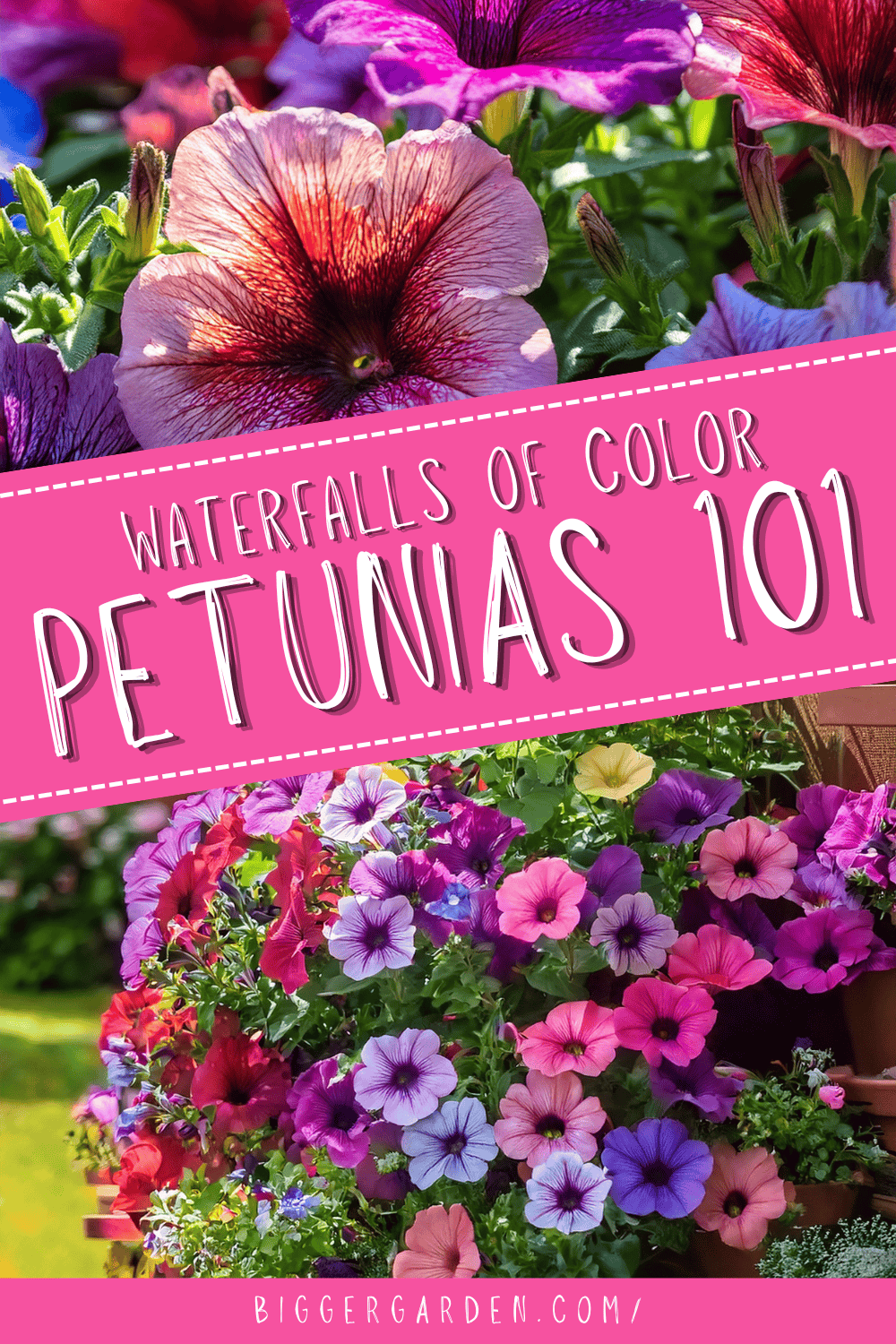
Want those massive, neighborhood-envy hanging baskets that look like an actual waterfall of flowers? The kind that make people slow down their cars in front of your house? You need petunias — and you need to know three things to keep them performing all summer long.
The good news: forget the fussy, sticky little flowers your grandmother used to deadhead every morning. Modern petunia varieties are genuinely unstoppable blooming machines. They’ll fill a hanging basket, cascade over a window box, and spill down a stone wall from spring until first frost — as long as you treat them the way they actually want to be treated.
At a Glance
- Modern trailing petunias (such as the Wave and Supertunia series) are vigorous, low-maintenance annuals engineered for dramatic, cascading color in containers, urns, and hanging baskets.
- They are high-performance plants requiring a minimum of 6 hours of direct sunlight daily, alongside a baseline slow-release fertilizer and routine liquid feedings every 1 to 2 weeks.
- Unlike older grandiflora varieties, popular modern spreading petunias are completely self-cleaning, meaning they drop old blooms automatically without requiring tedious deadheading.
- Overcoming the common midsummer slump requires daily soil moisture checks and a firm one-third pruning in mid-July to reverse leggy growth and stimulate fresh, dense blooming.
Quickly Find Petunia Growing Tips
What Are Petunias?
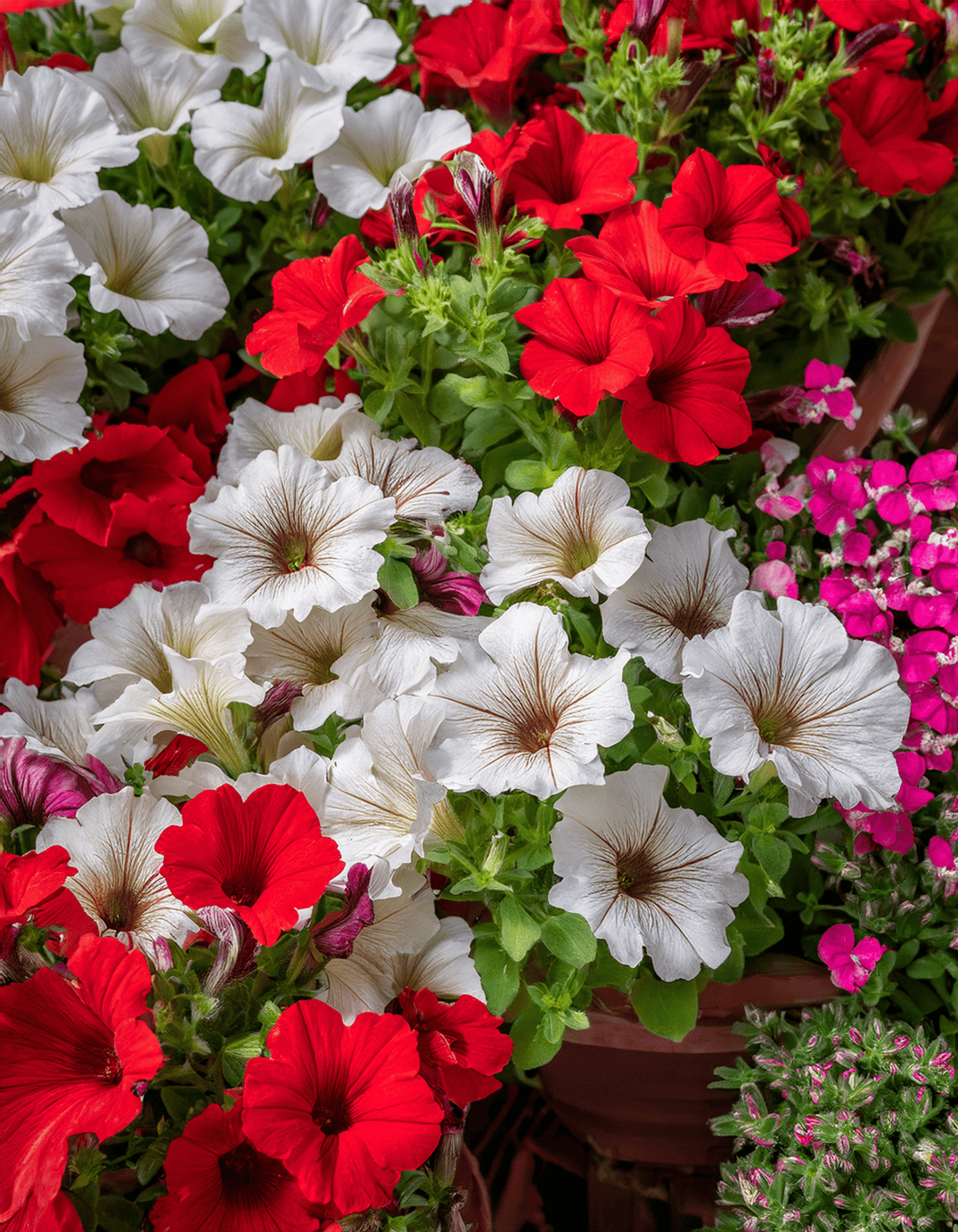
Petunias are warm-season annual flowering plants in the Petunia genus, originally native to South America. In the garden, they’re grown for their trumpet-shaped blooms in nearly every color imaginable — from classic white and hot pink to deep burgundy and near-black. Modern hybrid varieties, including the popular Wave and Supertunia series, are bred for aggressive trailing growth, high bloom output, and low maintenance. Most petunias grow 6 to 18 inches tall and can spread 2 to 4 feet wide, making them one of the most effective spiller plants for containers, hanging baskets, and window boxes.
Section 1: The “Athlete” Mindset — Sun and Food Are Everything
Think of your petunias like Olympic athletes. They’re not decorative. They’re performers. A mature Wave petunia can produce 150 or more blooms per plant in a single week during peak summer — and producing that volume of flowers burns through energy at an extraordinary rate.
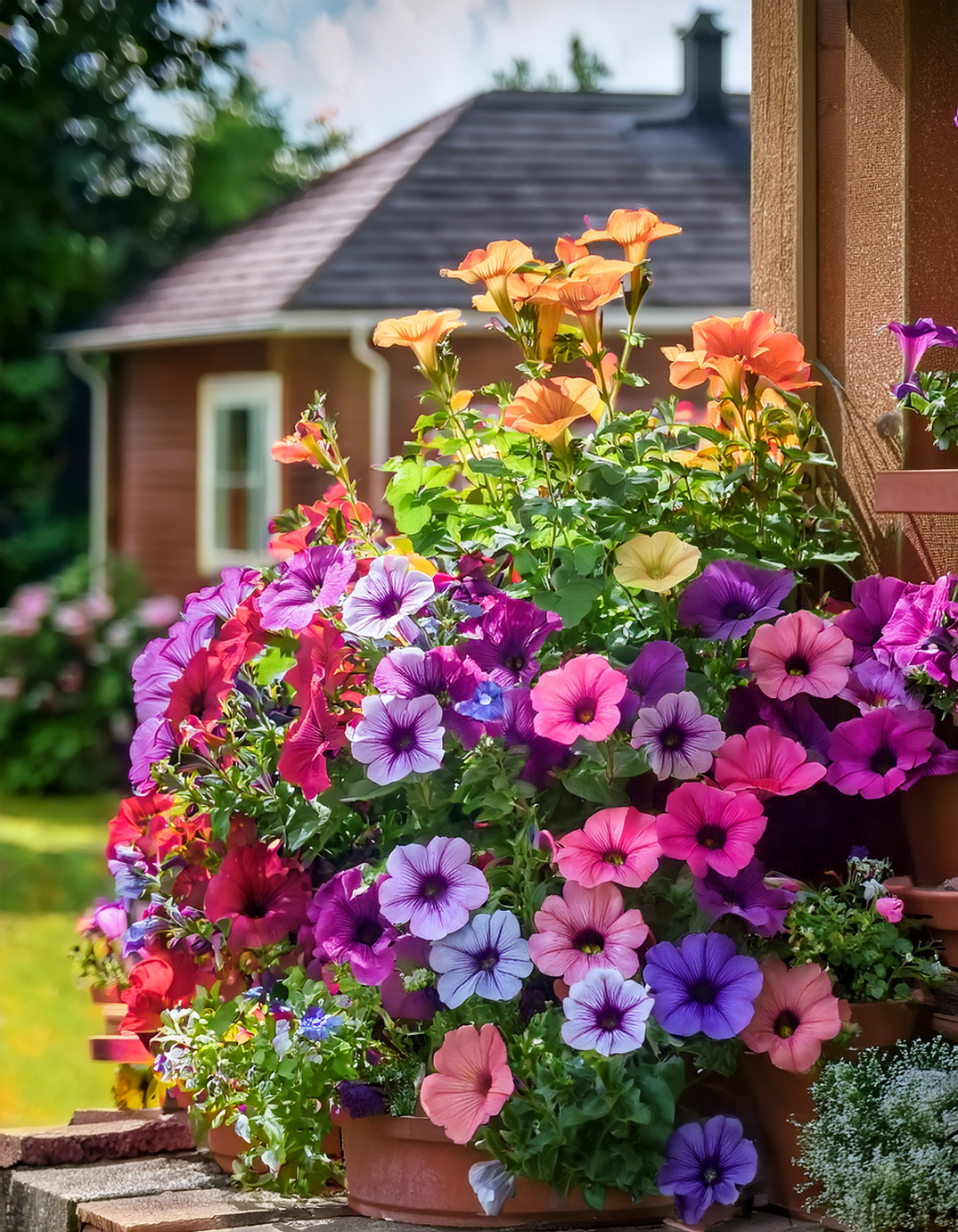
That energy has to come from somewhere. And if it doesn’t come from you, your petunias will tell you about it. The blooms get smaller. The color fades. The trailing stems start to look wiry and bare. What you’re seeing isn’t a pest problem or a watering problem — it’s a plant running on empty.
The solution is simple, but it has to be consistent:
Sun: 6+ hours of direct sunlight, minimum. Petunias are not a “bright indirect light” plant. They want full sun — the more, the better. In a partially shaded spot, they’ll survive but they won’t perform. Every hour of direct sun above the minimum translates directly to more blooms.
Food: Feed constantly, not occasionally. Potting mix alone, even a premium one, doesn’t have enough nutrients to sustain a heavy-blooming petunia past the first few weeks. Start with a slow-release granular fertilizer worked into the soil at planting time. Then follow up with a water-soluble liquid fertilizer every one to two weeks throughout the season. The slow-release provides a steady baseline; the liquid feedings are the performance fuel.
Skip the fertilizer and you’ll have a mediocre petunia. Nail the sun and food, and you’ll have the hanging basket your neighbors ask about.
The Spiller Effect — Your Container Design Cheat Code
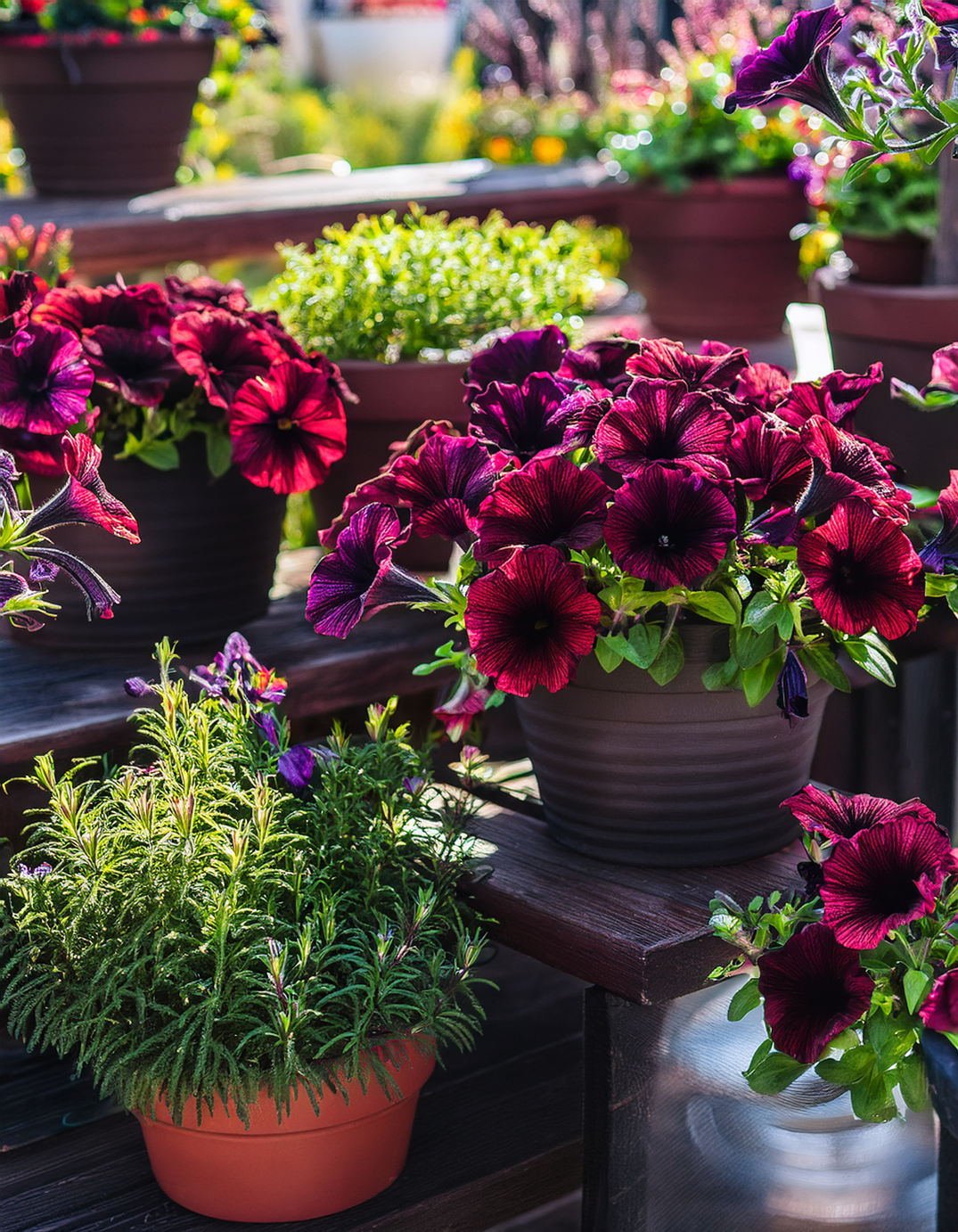
If you’ve ever wondered how professional garden designers make containers look effortlessly lush, here’s the formula: Thriller, Filler, Spiller.
Every strong container planting has a thriller — a tall, bold plant that draws the eye upward. A filler — a mounding plant that fills out the middle. And a spiller — a trailing plant that cascades over the edge and softens the hard lines of the pot.
Petunias are the ultimate spiller. By midsummer, a well-fed Wave or Supertunia will completely hide the plastic hanging basket it came in, transforming the container into a living sphere of color. That’s not an accident — it’s the biology of the plant working in your favor.
Where to Use Petunias as a Spiller

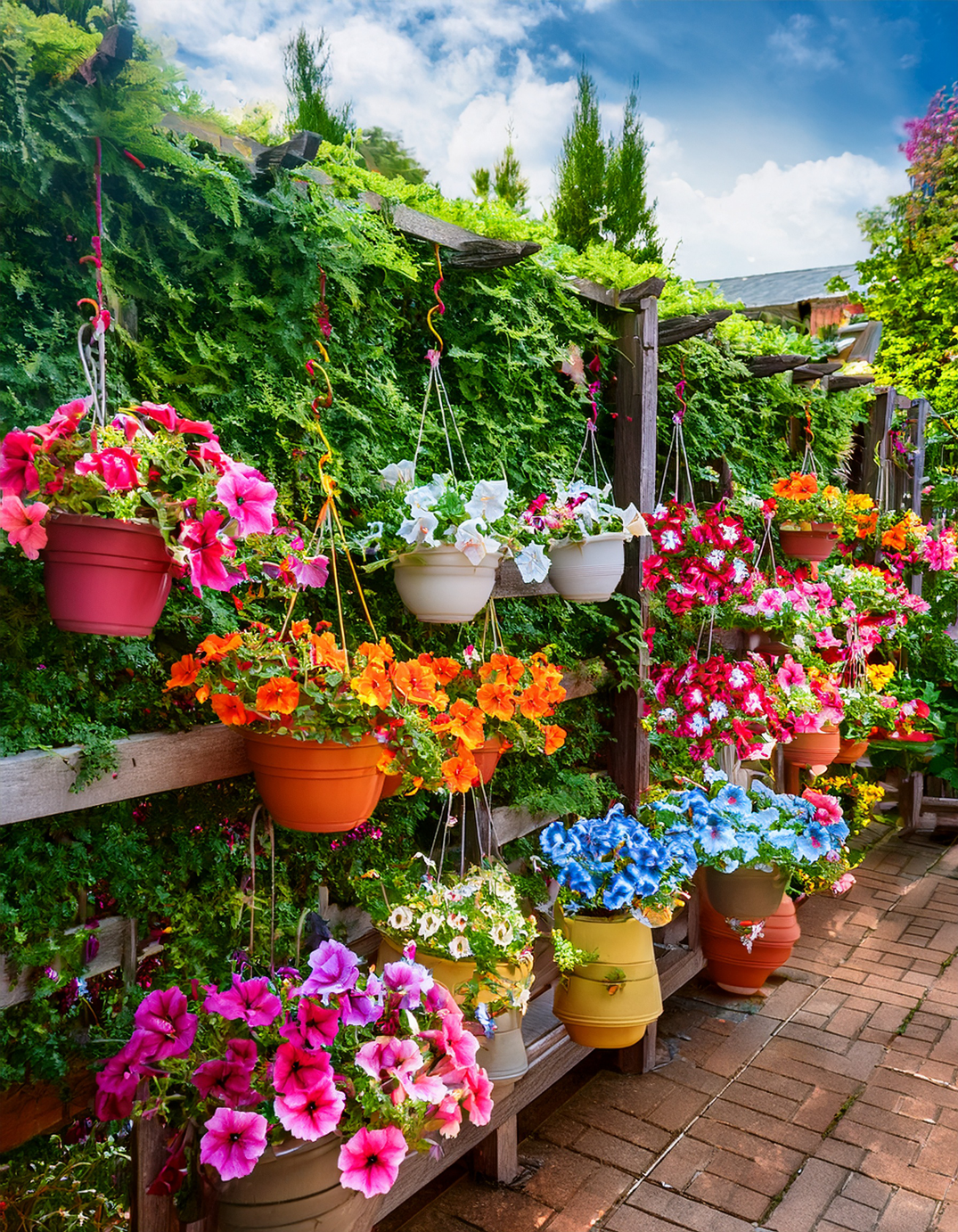
Hanging baskets and window boxes are the classic application. Plant a bold upright grass or dwarf canna as the thriller, add a compact annual like lobularia or calibrachoa as the filler, and let petunias trail over every edge. By July, the basket disappears and all you see are flowers.
Tall urns and planters flanking a front door benefit enormously from a generous spiller. The hard, geometric edge of a tall urn can look stiff without something trailing over the lip. Petunias soften that edge and pull the eye downward, grounding the whole composition.
Stone retaining walls are an underused opportunity. Plant petunias at the very top edge of a stone wall and let them cascade down the face of the stone. The contrast of the soft, billowing blooms against rough natural stone is one of the most striking combinations in container gardening.
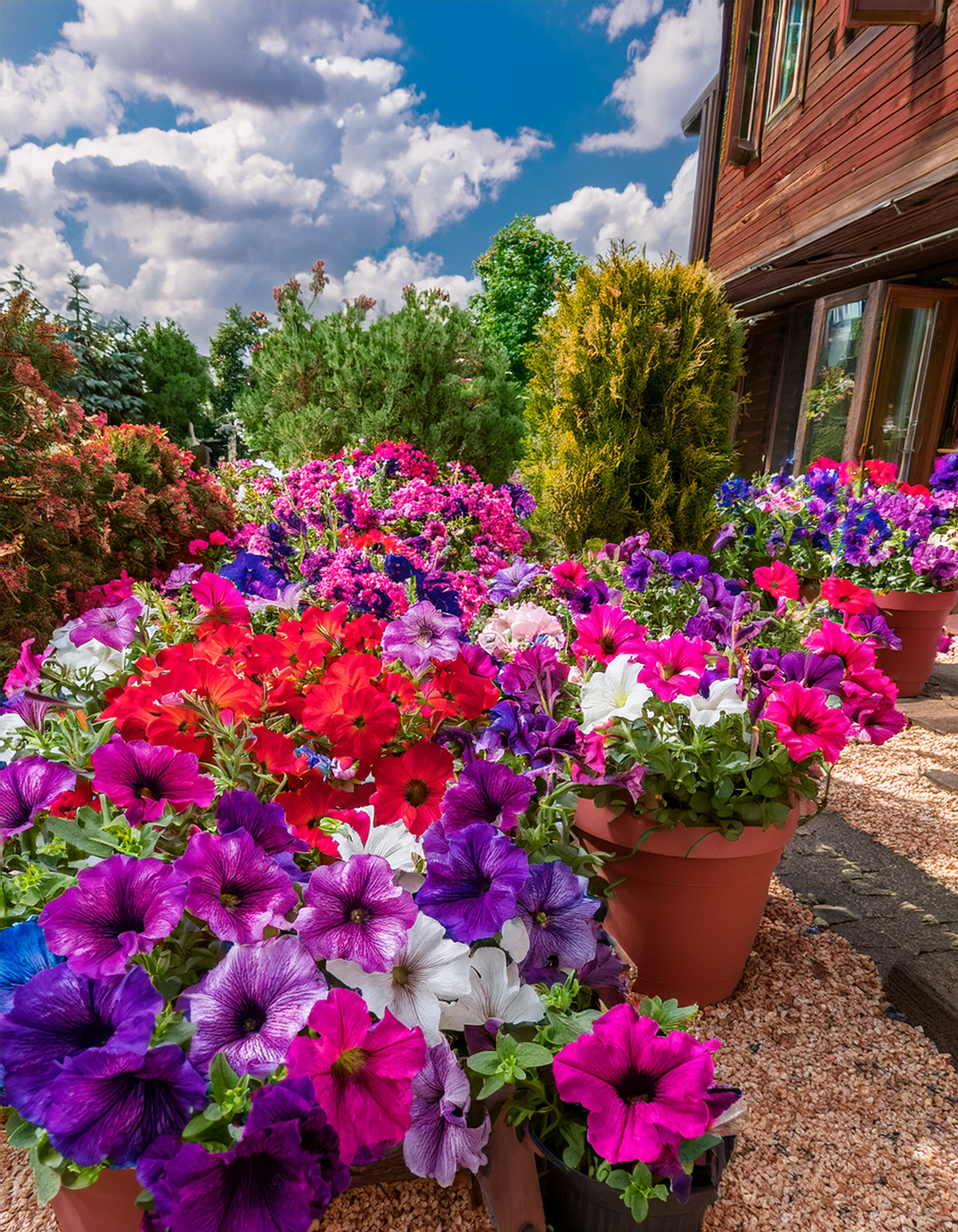
Color and Variety Pairings
| Look | Petunia | Pair With |
|---|---|---|
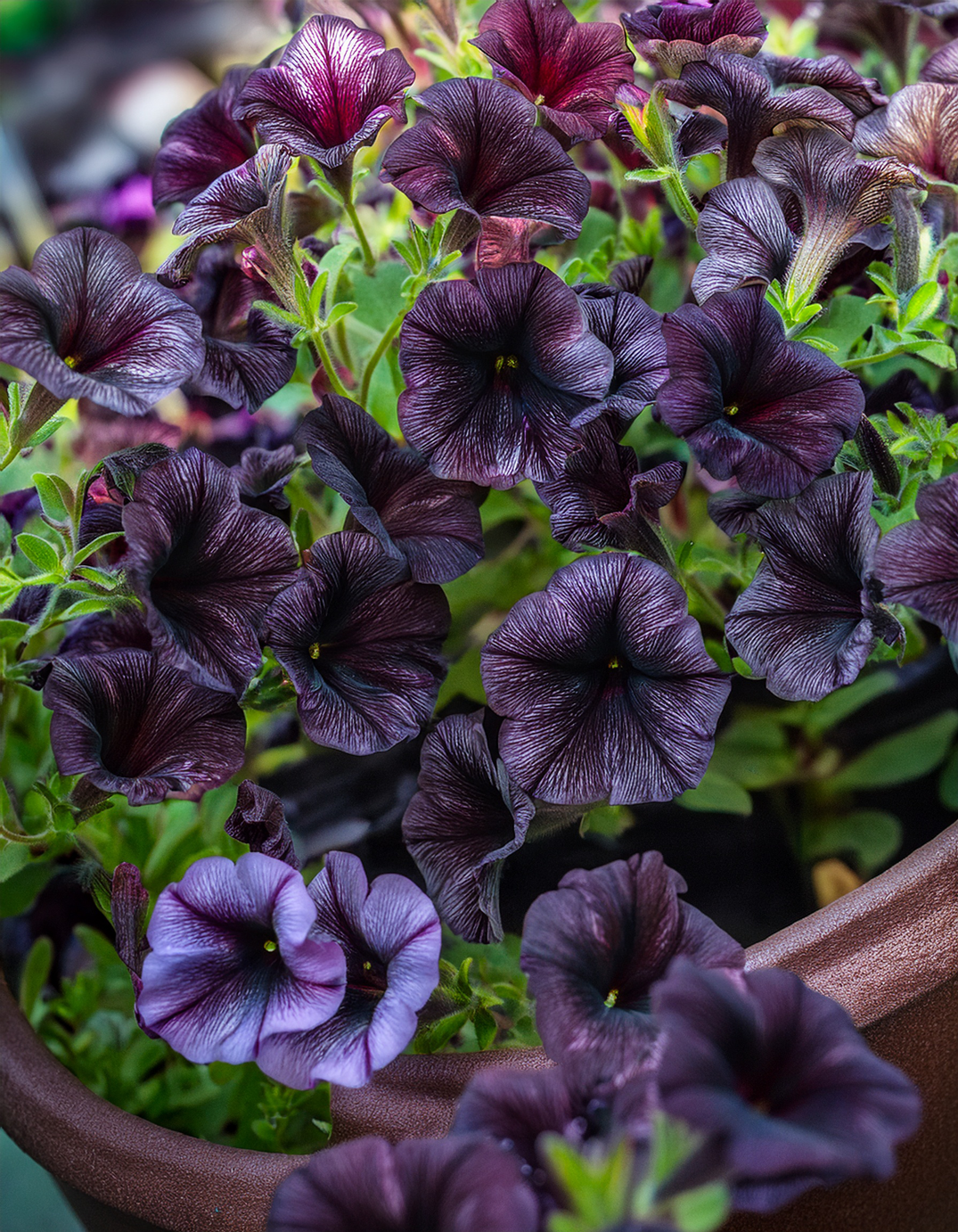
| High contrast / modern | ‘Black Mamba’ (deep purple-black) | Chartreuse sweet potato vine |
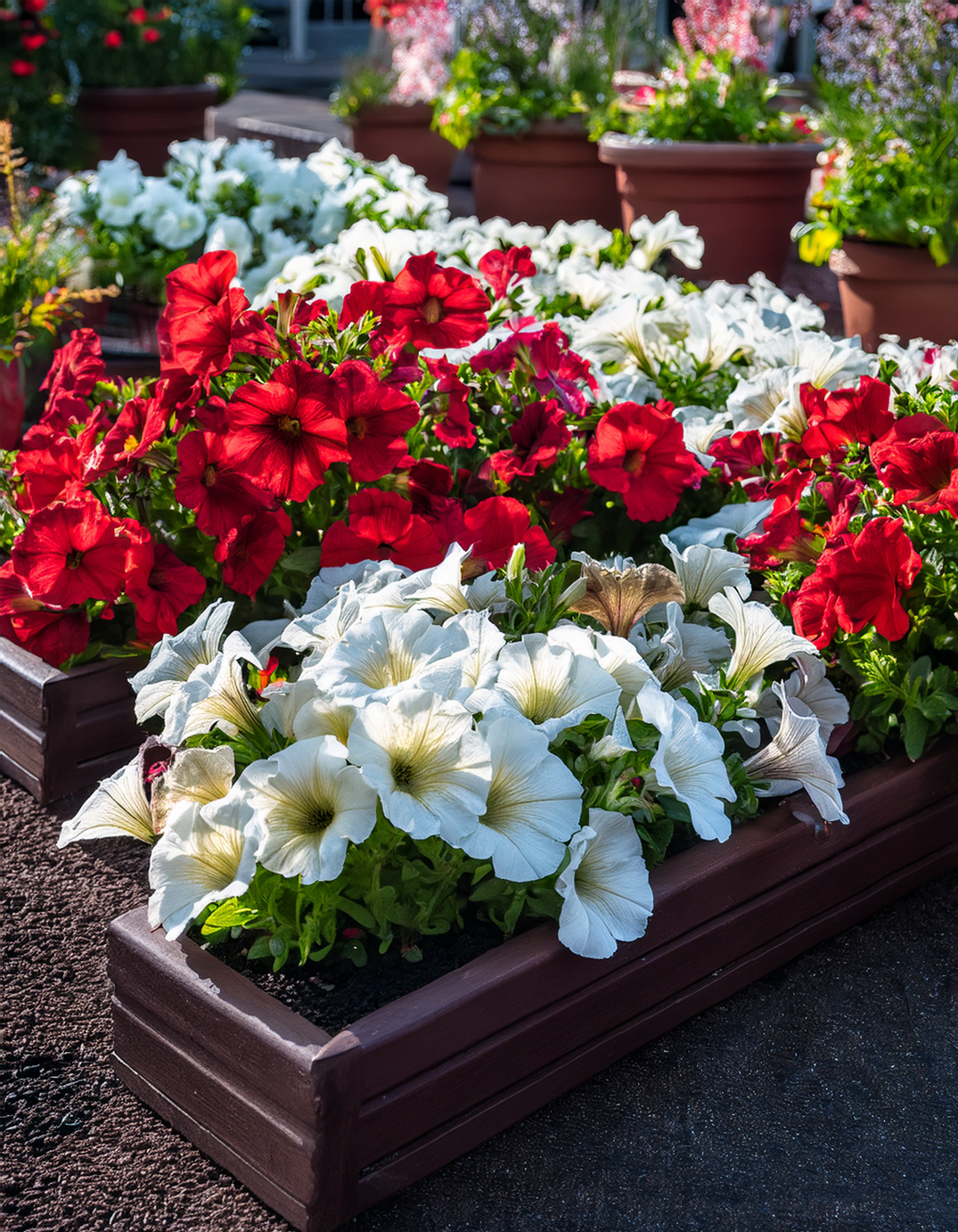
| Classic cottage | Bubblegum pink or white | Dusty miller |
| Bold tropical | ‘Supertunia Vista Fuchsia’ | Chartreuse coleus or lime-green caladium |
| Soft romantic | Lavender or blush pink | Silver licorice plant |
The Lazy Gardener’s Guide to Deadheading
Here’s the thing about deadheading petunias: for most modern varieties, you don’t have to do it at all.
Traditional grandiflora petunias — the large-flowered types with blooms up to four inches across — do benefit from regular pinching. The spent blooms can turn mushy and cling to the plant, and removing them encourages the plant to redirect energy toward new buds. If you’re growing a classic grandiflora, a light weekly pinch will keep it looking tidy.
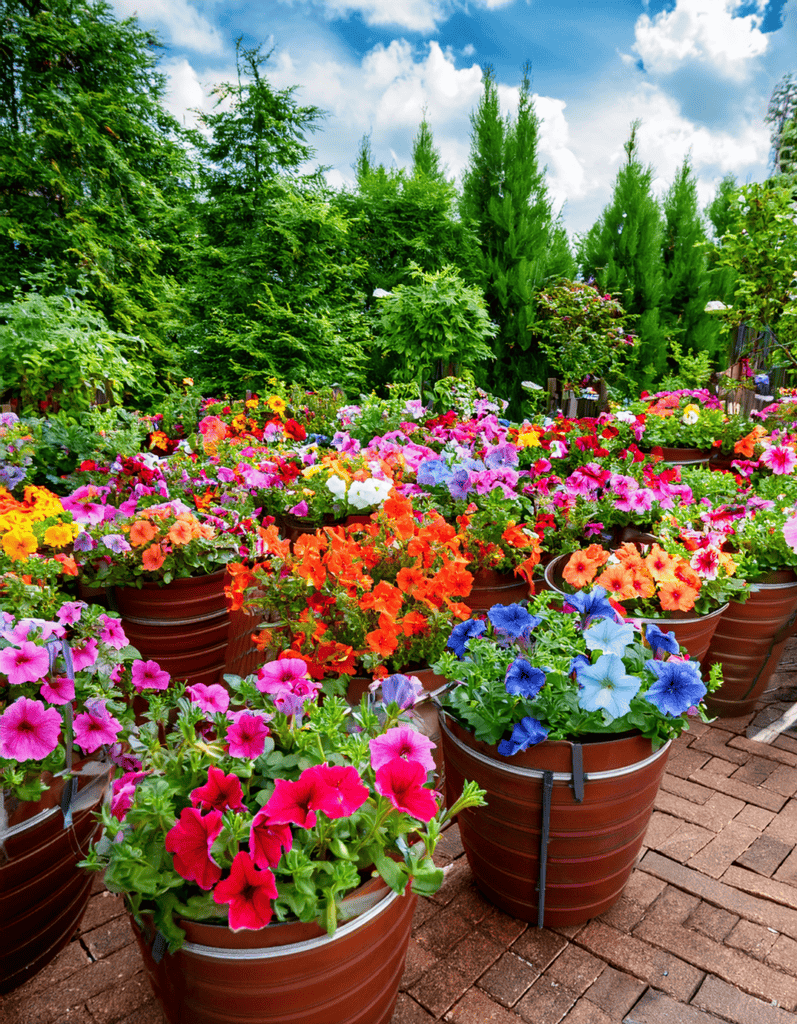
But the vast majority of petunias you’ll find at a garden center today are self-cleaning trailing varieties. Wave petunias, Supertunia varieties, and most other spreading types are specifically bred so that old blooms dry up, detach, and blow away on their own. The plant naturally branches outward as it grows, constantly producing new flowering stems without any help from you.
The practical implication: if you want a true no-deadhead petunia, look for any plant labeled Wave, Supertunia, Cascadia, or Easy Wave. These varieties are engineered for continuous bloom without maintenance. ‘Supertunia Vista Bubblegum,’ for example, is one of the most popular trailing petunias for exactly this reason — it blooms relentlessly from spring to frost with zero deadheading required.
4 Mistakes That Cause the Midsummer Slump
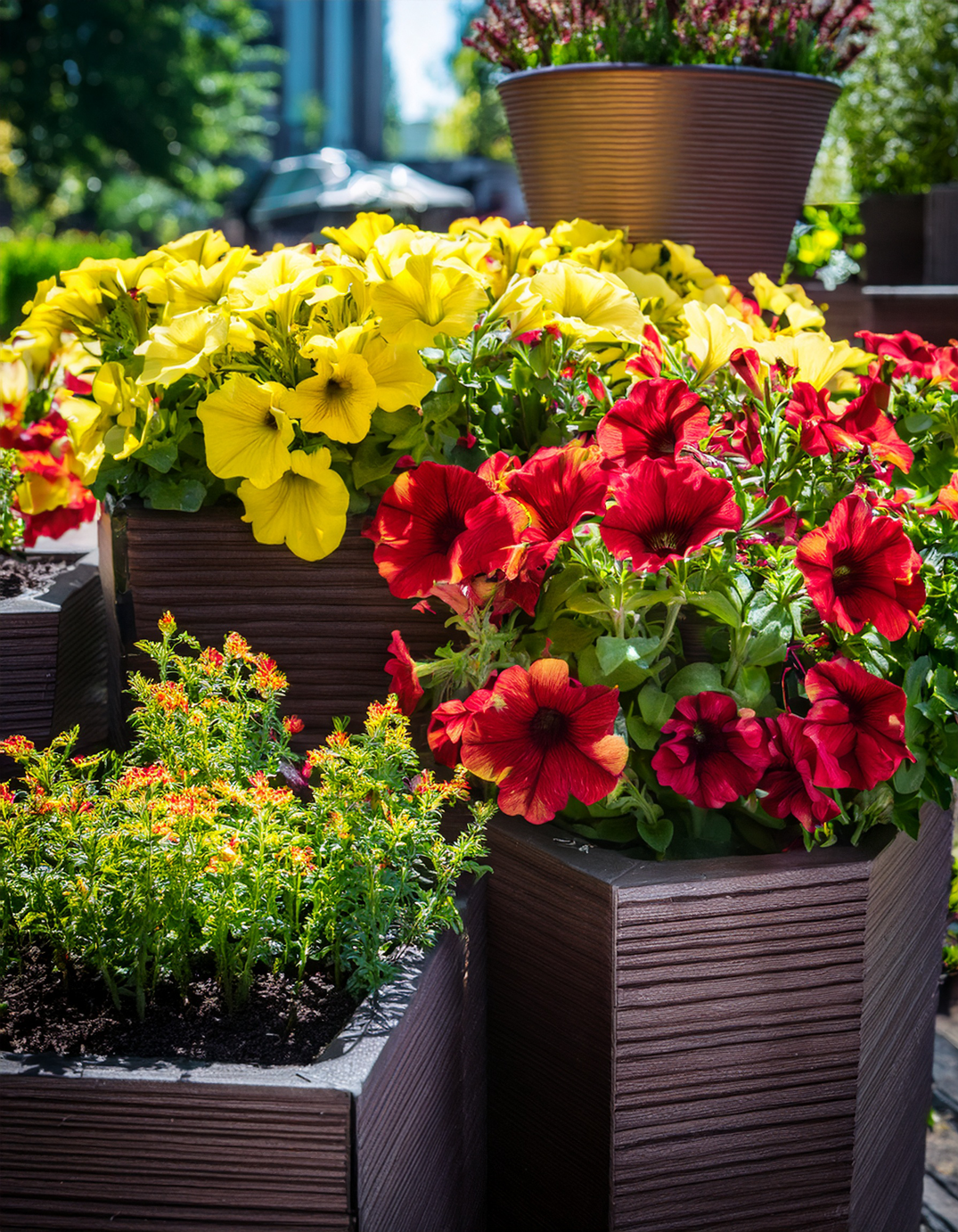
Most petunias start the season looking great. Then, sometime around mid-July, they start to look tired — bare at the top, leggy, fewer blooms, less color. This is the midsummer slump, and it’s almost always caused by one of these four mistakes.
Mistake 1: Letting Them Go Leggy
What it looks like: All the flowers are hanging at the ends of long, bare stems. The top of the pot or basket is mostly leaves and stems, with blooms only at the very tips.
What’s happening: The plant is putting all its energy into extending existing stems rather than branching and producing new growth. It’s not slowing down — it’s just going in the wrong direction.
The fix: Give them a hard haircut in mid-July. Cut back roughly one-third of the stems, down to a leaf node. It feels drastic. Do it anyway. Within two weeks, you’ll have dense new growth and a flush of fresh blooms from the base of the plant.
Mistake 2: Inconsistent Watering — Too Dry or Too Wet
What it looks like: Wilting in the afternoon, crispy leaf edges, or conversely, yellowing leaves and root rot.
What’s happening: Hanging baskets dry out remarkably fast — far faster than in-ground plantings. In peak summer heat with wind, a hanging basket may need water every single day. But overwatering is equally damaging; petunias need soil that’s consistently moist, not saturated.
The fix: Water when the top inch of soil is dry. For hanging baskets in full sun during a heat wave, check daily. Stick your finger into the soil every morning — it takes five seconds and prevents both failure modes.
Mistake 3: Stopping Fertilization After Planting
What it looks like: Smaller blooms, muted color, slower growth beginning around six weeks after planting.
What’s happening: The slow-release fertilizer you added at planting time isn’t inexhaustible. In a container, nutrients get depleted through watering and root uptake faster than in garden beds. Once they’re gone, the plant has nothing left to fuel bloom production.
The fix: Keep up the liquid fertilizer every one to two weeks, all season long. It’s the single easiest thing you can do to prevent a midsummer slump.
Mistake 4: Forgetting to Deadhead Grandifloras
What it looks like: Soggy, brown, papery blooms clinging to the plant and never dropping off.
What’s happening: If you’re growing a large-flowered grandiflora variety (not a Wave or Supertunia), the old blooms won’t self-clean. They stay on the plant and signal to it that seed production is underway — which slows down new bloom production.
The fix: Check your variety. If it’s a grandiflora, a five-minute weekly pass to pull spent blooms is all it takes. If it’s a Wave or trailing variety, skip this entirely.
Best Petunia Varieties by Use Case
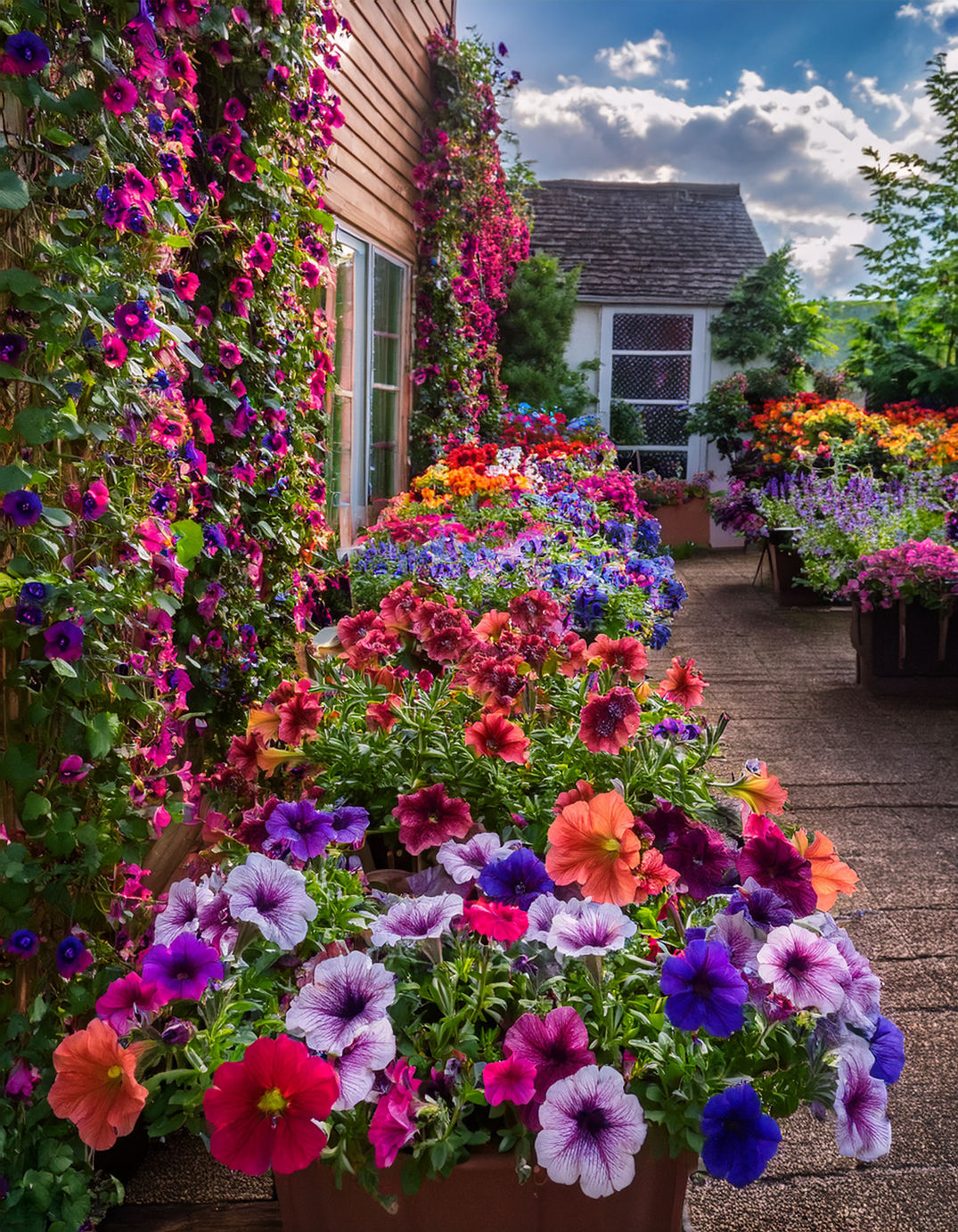
Not all petunias are created equal. The variety you choose determines how much work the plant will do for you.
| Use Case | Variety | Why It Works |
|---|---|---|
| Hanging baskets | Wave Series | Vigorous trailing growth, self-cleaning, widely available |
| Window boxes | Supertunia Vista | Compact spread, reblooms without deadheading, heat-tolerant |
| Color drama / bold contrast | ‘Black Mamba’ | Deep purple-black blooms, striking against silver or lime |
| Cottage garden style | ‘Prism Sunshine’ | Soft yellow, pairs beautifully with white and blush pink |
| Large urns or tall planters | Supertunia Vista Bubblegum | Long trailing stems, reliable bloom from spring to frost |
| Low-maintenance beginner | Easy Wave Series | Self-cleaning, forgiving of inconsistent watering |
Frequently Asked Questions
Do petunias need deadheading?
Modern trailing varieties like Wave and Supertunia are self-cleaning — their spent blooms dry up and fall away on their own. Traditional large-flowered grandiflora petunias benefit from weekly deadheading to maintain continuous bloom. When buying, look for “self-cleaning” or “trailing” on the label if you want a no-deadhead variety.
How often should I water petunias in hanging baskets?
In peak summer, petunias in hanging baskets may need water every single day, especially in full sun or windy conditions. Check daily by pressing a finger into the top inch of soil. Water when it feels dry. Consistent moisture — not soggy, not bone dry — is the goal.
Why are my petunias leggy?
Leggy petunias are producing long, bare stems with blooms only at the tips. This happens naturally around mid-July and the fix is straightforward: cut back roughly one-third of the stems to a leaf node. The plant will respond with dense new bushy growth and a fresh flush of blooms within two weeks.
How much sun do petunias need?
Petunias require a minimum of six hours of direct sunlight per day. More sun means more blooms. In partial shade, petunias will survive but produce significantly fewer flowers and stretch toward available light, leading to a leggy appearance.
What fertilizer is best for petunias?
A two-part approach works best: a slow-release granular fertilizer worked into the soil at planting time, plus a water-soluble liquid fertilizer applied every one to two weeks throughout the growing season. The granular provides a consistent baseline; the liquid feedings fuel peak bloom production.
When do petunias stop blooming?
Petunias bloom continuously from planting until the first hard frost. In most of North America, that means a full growing season of color — typically May through October. Unlike many spring annuals, petunias actually perform better as summer heats up, as long as they’re receiving adequate sun, water, and fertilizer.
Final Thoughts
Petunias are the kings of instant gratification in the annual garden. Unlike perennials that take a season or two to establish, or climbing vines that spend their first year putting down roots, petunias hit the ground running. Plant them in full sun, feed them consistently, keep the soil moist, and give them a haircut if they get leggy in July — and they will reward you with color from the last frost date straight through until fall.
Pair them with a bold thriller like canna lilies or ornamental grasses and a compact filler, and you’ll have the kind of container combination that looks designed rather than accidental. The cascading blooms will do the rest.
Sun. Food. Water. That’s the whole secret.