


here is a brief, tragic window in late summer that every gardener knows too well. The early summer stars have faded, seed heads are drying out, and beds start looking tired and patchy long before the foliage officially turns for fall. If you want color that carries from late spring all the way to that first hard frost, the fix isn’t complicated. It’s succession planting.
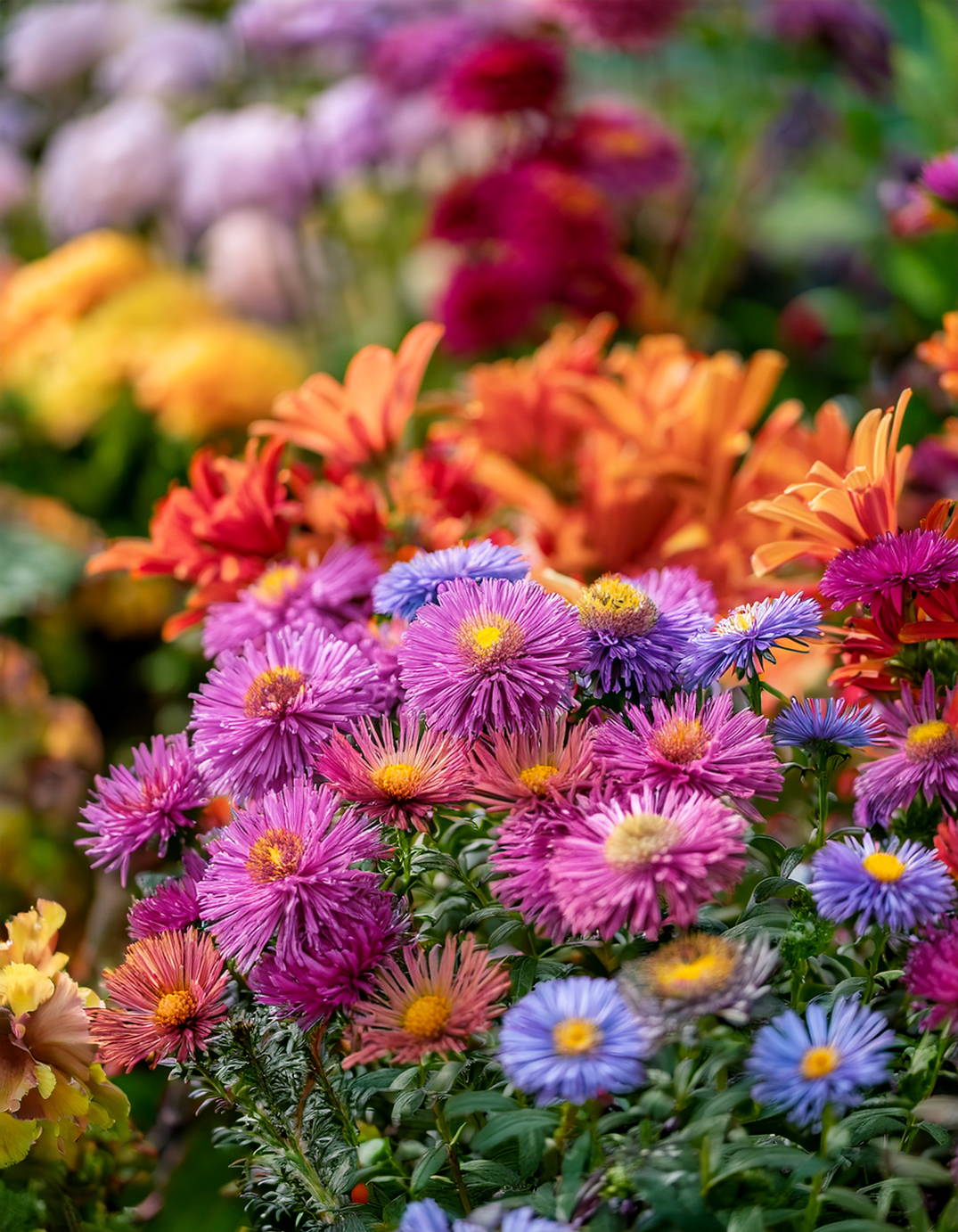
Asters are the undisputed heroes of the late season garden, with their starry, daisy like blooms in cool purples, blues, and electric pinks. But they take their time waking up, and they often develop “bare legs,” dropping their lower leaves as the stems stretch upward. That means they need strong companions to share the stage. Pair asters with plants that bloom before them, alongside them, and right underneath them, and you get a seamless relay of color from spring through frost. Here are ten to build your border around.
At a Glance
- Asters are late-season stars that thrive in full sun and well-draining soil, blooming from late summer straight through the first hard frost.
- Hide the “bare legs”: Asters naturally drop their lower leaves as stems stretch upward. Plant bushy, low-growing companions like marigolds at the base to seamlessly cover these gaps.
- Pinch for more blooms: Pinch back your aster stems by an inch or two in early June to encourage a bushier, more compact plant with roughly twice as many flowers.
- Prevent powdery mildew: Asters are susceptible to mildew in still, humid air. Pair them with open, wispy companions like Russian sage to keep airflow moving through the bed.
- Plan for succession: To avoid a mid-summer slump, pair asters with early bloomers (catmint, daylilies) and autumn heavyweights (goldenrod, garden mums) for a continuous relay of color.
Phase 1: The Early Season Setup (Late Spring to Mid Summer)
While your asters are quietly building foliage in the background, these early bloomers kick off the season with style.
1. Catmint (Nepeta)
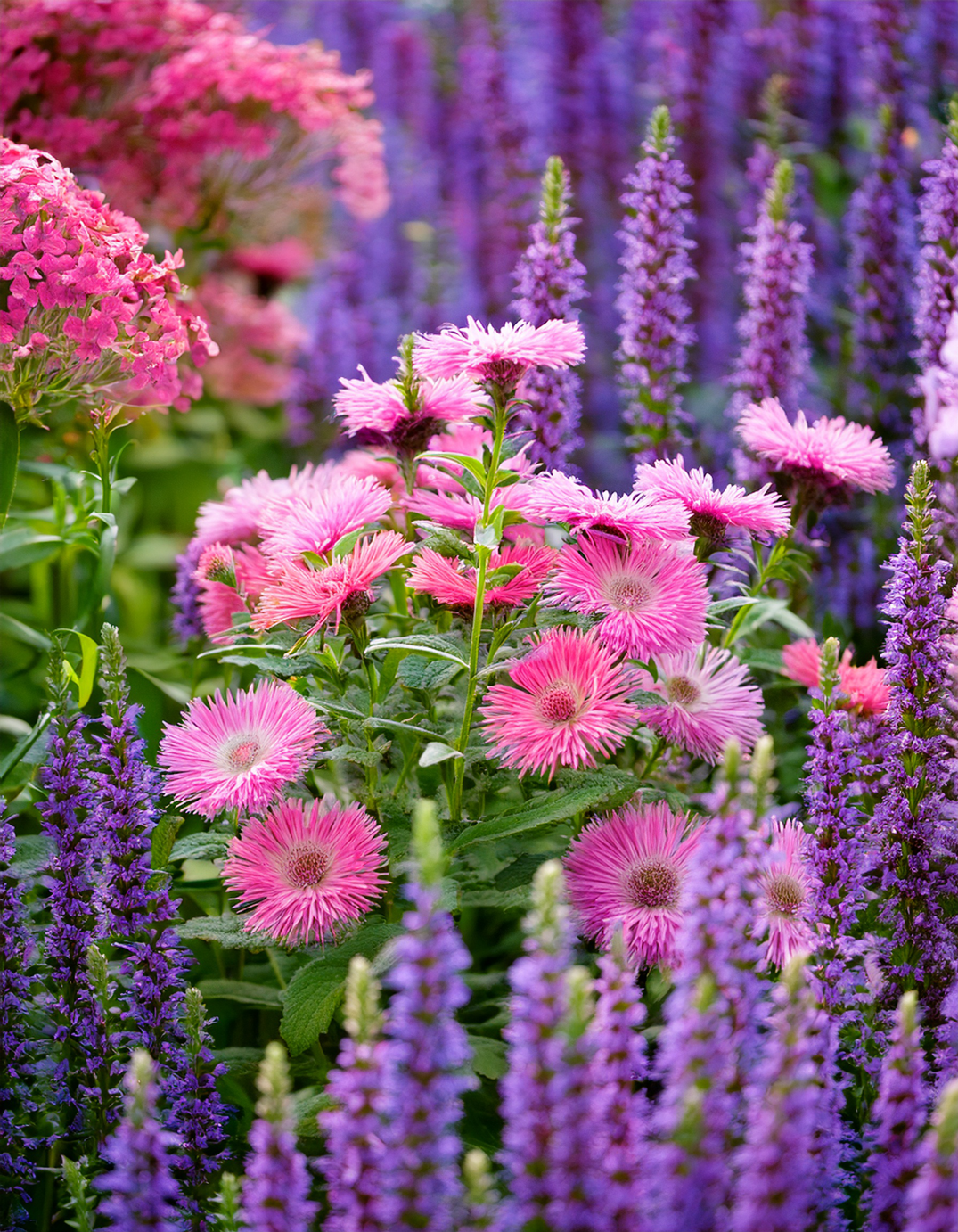
Catmint starts the party early, sending up soft mounds of aromatic grey green foliage topped with spires of lavender purple flowers. Planted near the front of the border, it anchors the whole bed while the asters behind it are still just leafy green mounds.
🐝 Fan Favorite
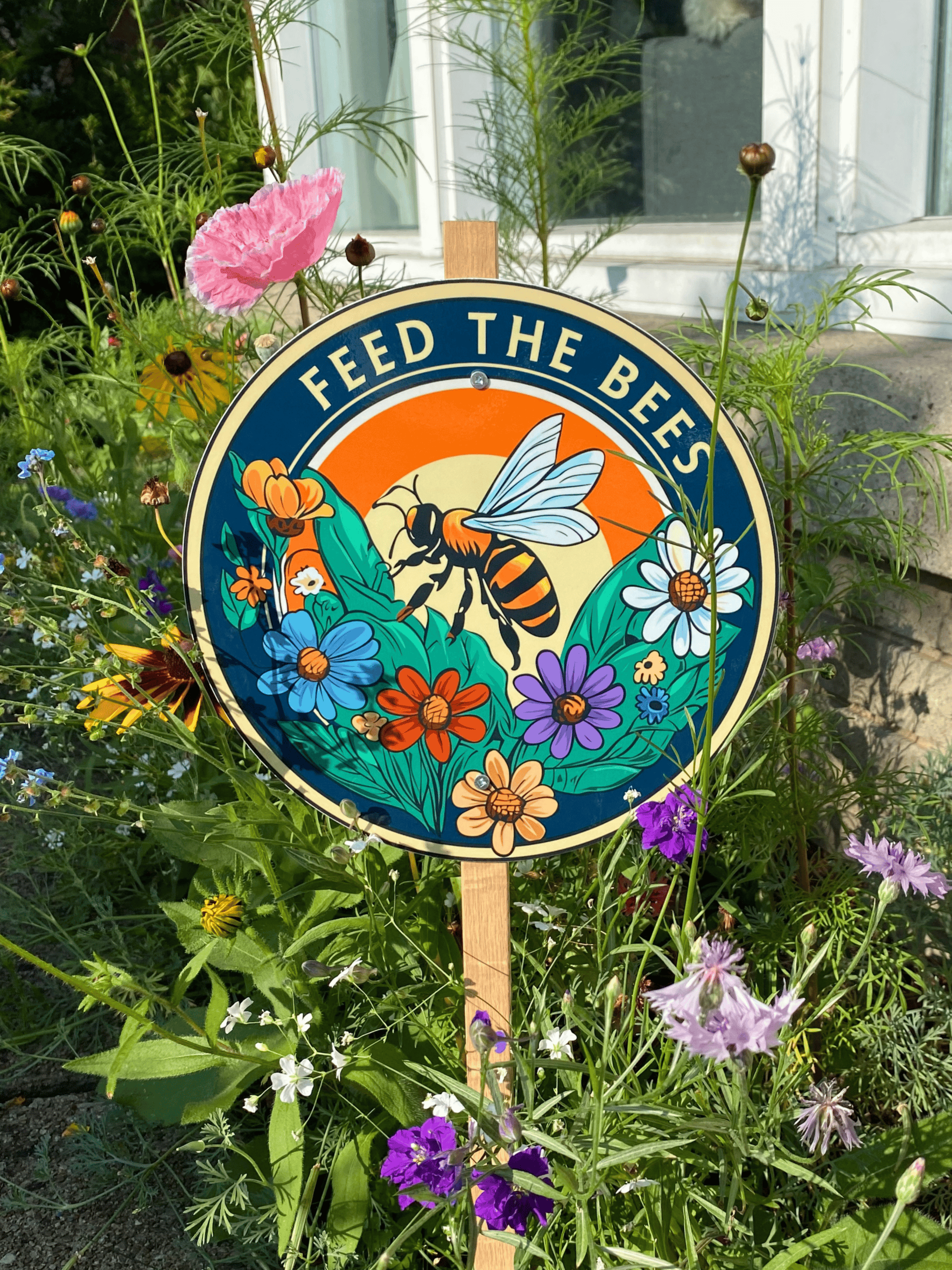
“Feed the Bees” Garden Sign
Give your wildflower patch a pop of color and let your neighbors know there’s purpose in your plants.
Delivered in 5–7 days
- Hand-illustrated design
- Recycled aluminum — won’t fade, rust, or crack
- Plants 1 real tree in the Monarch Corridor
🦋 Every sign funds a tree planted in the North American Monarch Corridor — at no extra cost to you.
Shear catmint back by half after its first big flush in early summer. It will bounce back with fresh leaves and a second round of blooms right around the time your asters start setting buds, so you never get a gap.
2. Yarrow (Achillea)
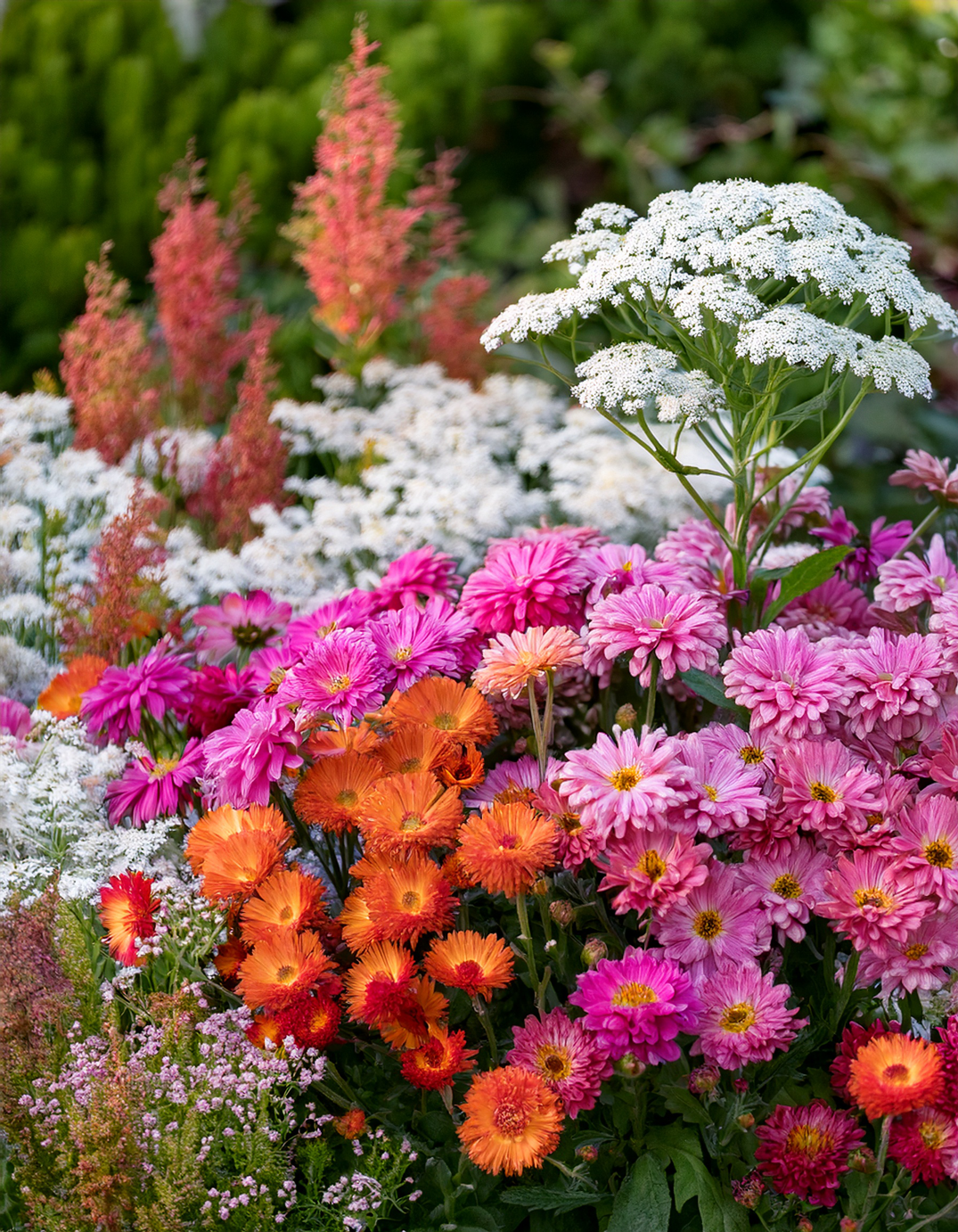
Long before asters flower, yarrow adds texture with its feathery, fern like foliage and broad, flat flower clusters. It fills that early summer stretch when most of the bed is still waiting to peak.
Those wide, horizontal flower heads are a magnet for beneficial insects, and they play beautifully against the airy, branching habit asters develop later. Think of yarrow as the stage the rest of the border gets built on.
3. Daylilies (Hemerocallis)
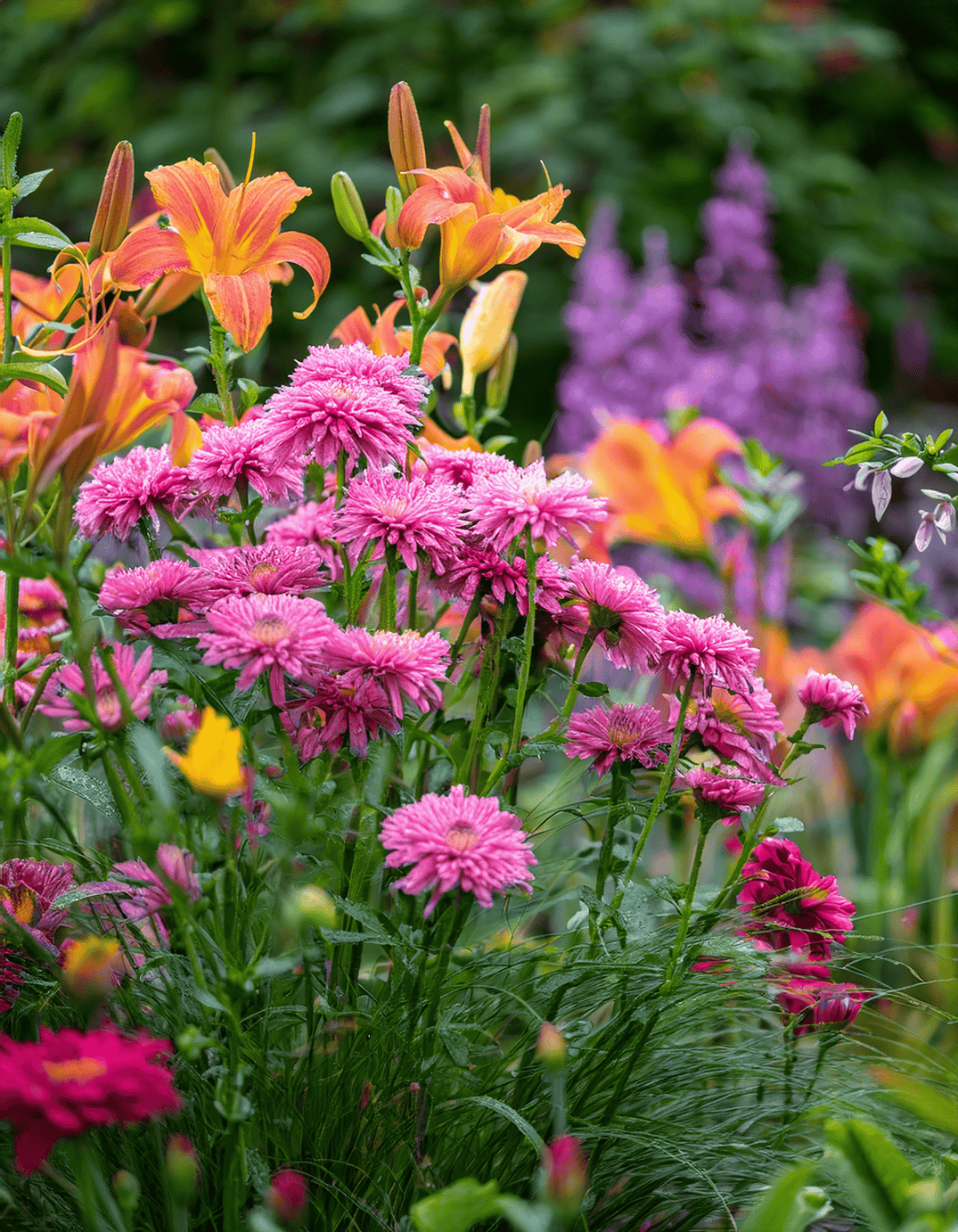
Daylilies carry the visual weight of early summer with their trumpet shaped blooms and arching, grass like leaves. They give the bed a full, established look while asters are still bulking up underneath.
As daylily blooms taper off in mid to late summer, asters step in and take over the focal point. The handoff is nearly invisible if you plant the two close together, which is exactly the point.
Phase 2: The High Summer Hand-Off (Mid to Late Summer)
As summer peaks, these mid season favorites bridge the gap between warm weather brights and the cooler tones of fall.
4. Coneflower (Echinacea)
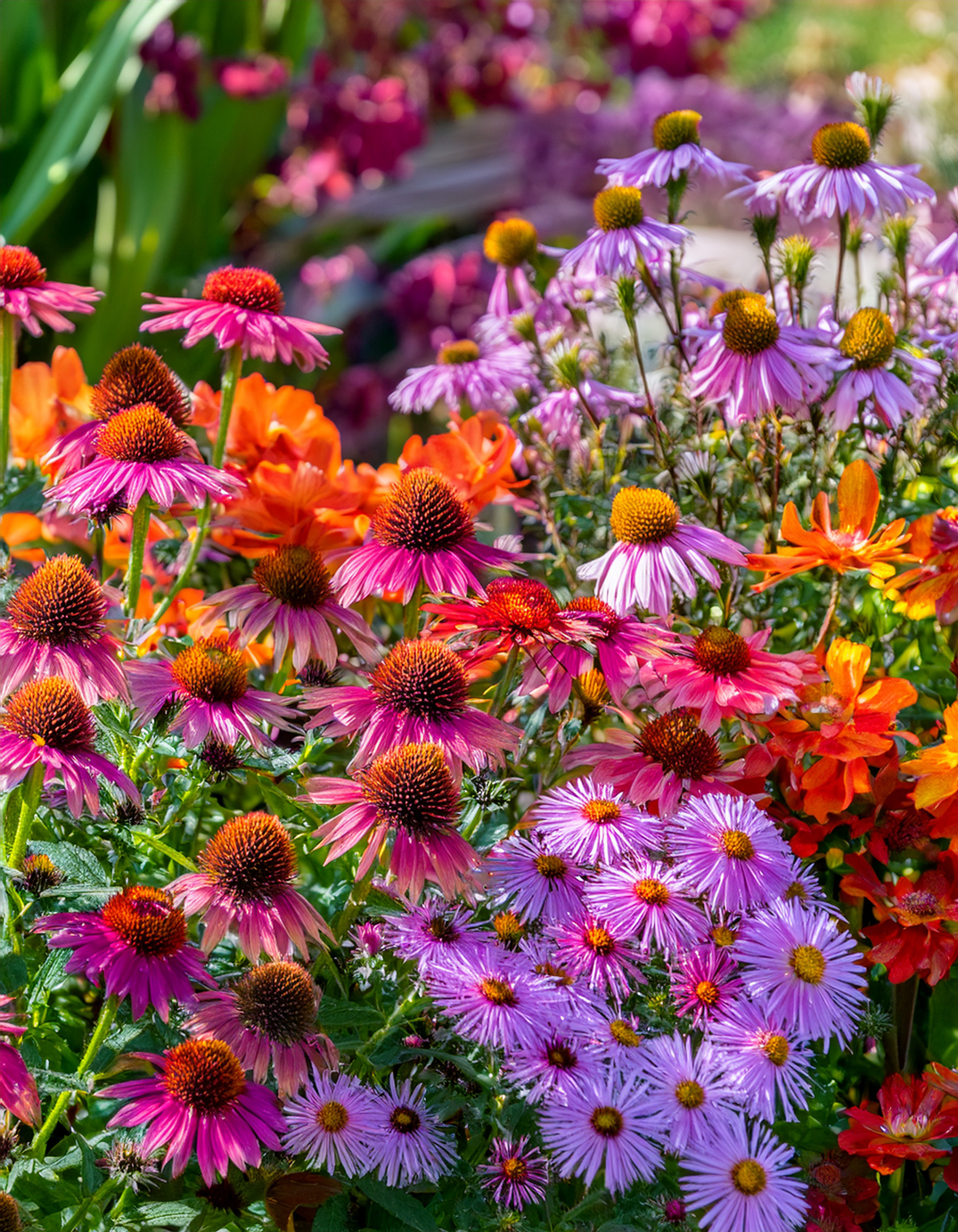
Coneflowers bring bold structure and sturdy, wide petals to the garden right when high summer heat has flattened a lot of softer bloomers. They hold their shape and color even through dry spells.
Skip deadheading some of your coneflowers late in the season. Their dark seed cones stay standing right alongside blooming asters, adding architecture to the bed and free seed for hungry goldfinches through fall.
5. Black-Eyed Susan (Rudbeckia)
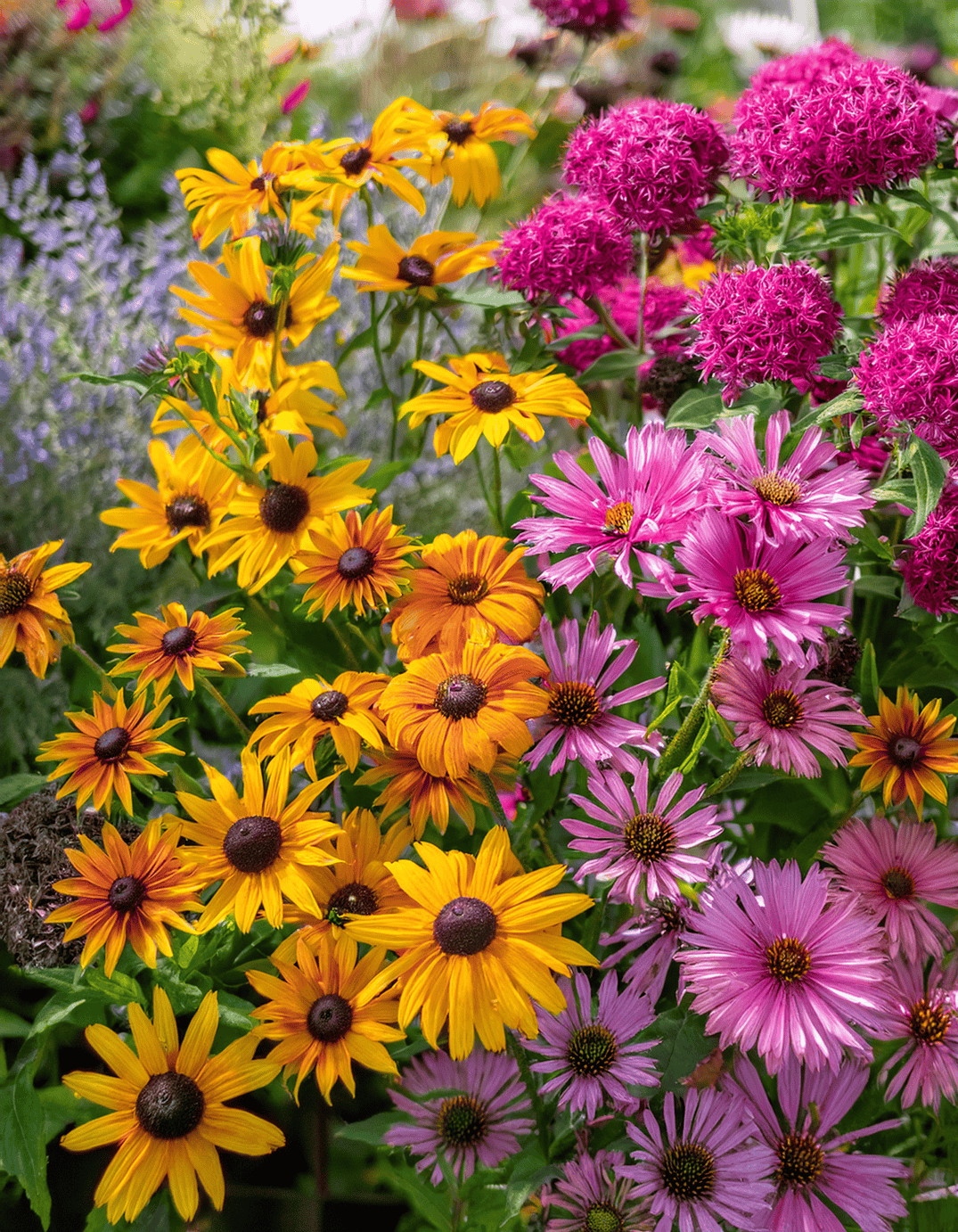
With warm golden petals and dark button centers, Black Eyed Susans throw a sunny, high contrast punch against the cool purples and pinks of asters. The two colors make each other look sharper.
They also happen to want the exact same growing conditions as asters, full sun and well draining soil, so you can plant them side by side without babying either one differently.
Phase 3: The Season-Long All-Stars (Continuous Bloomers)
If you need guaranteed color while you wait for asters to reach their peak, these hardworking annuals never take a break.
6. Marigolds (Tagetes)
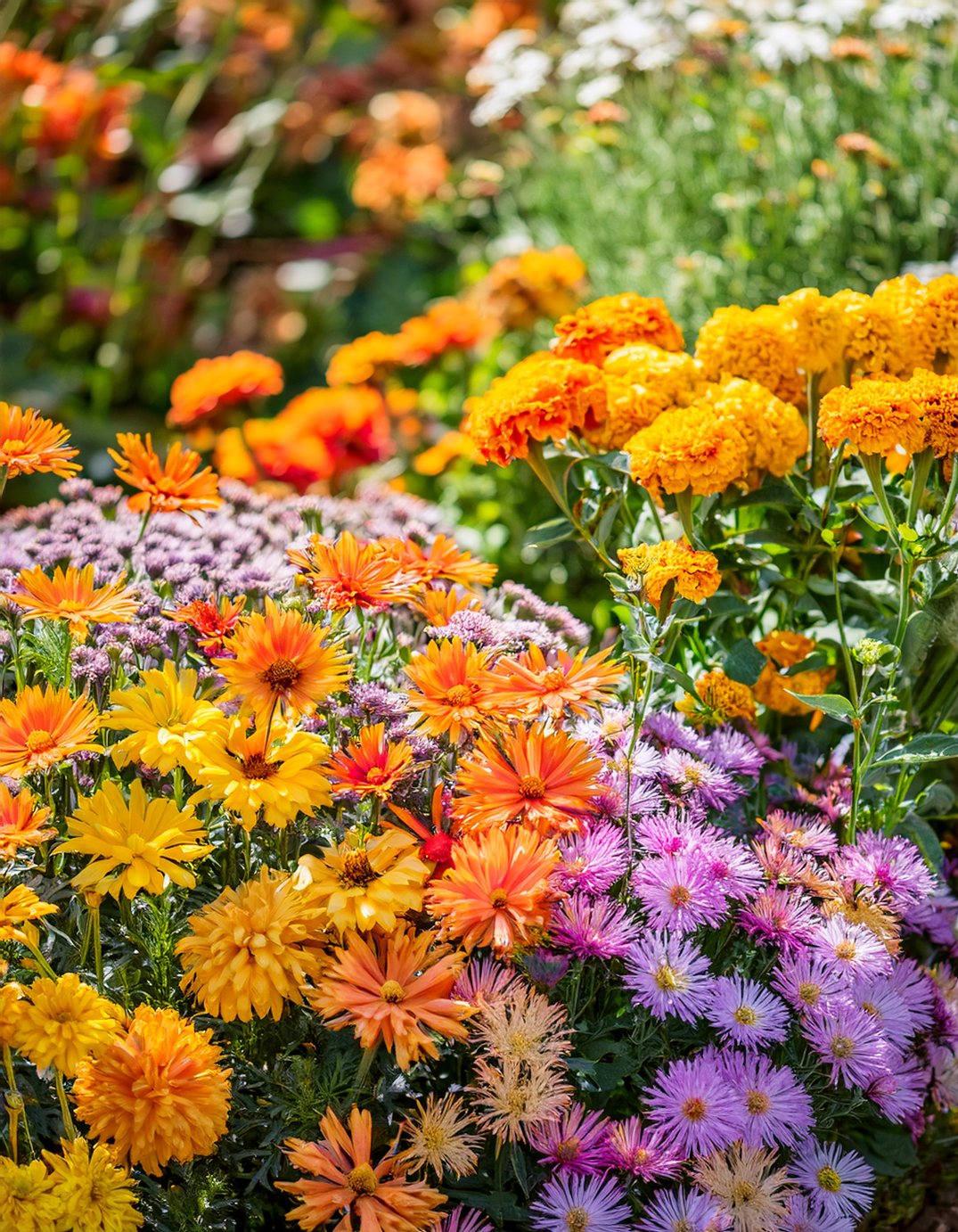
Lower growing marigolds are the secret weapon for hiding the sparse, woody “bare legs” asters develop near the base of their stems. Their tight, bushy habit fills that gap right at soil level.
In fiery oranges and yellows, marigolds bloom continuously from early summer straight through frost, so there’s never a dull stretch at the front of the border while you wait on the show behind them.
7. Zinnias
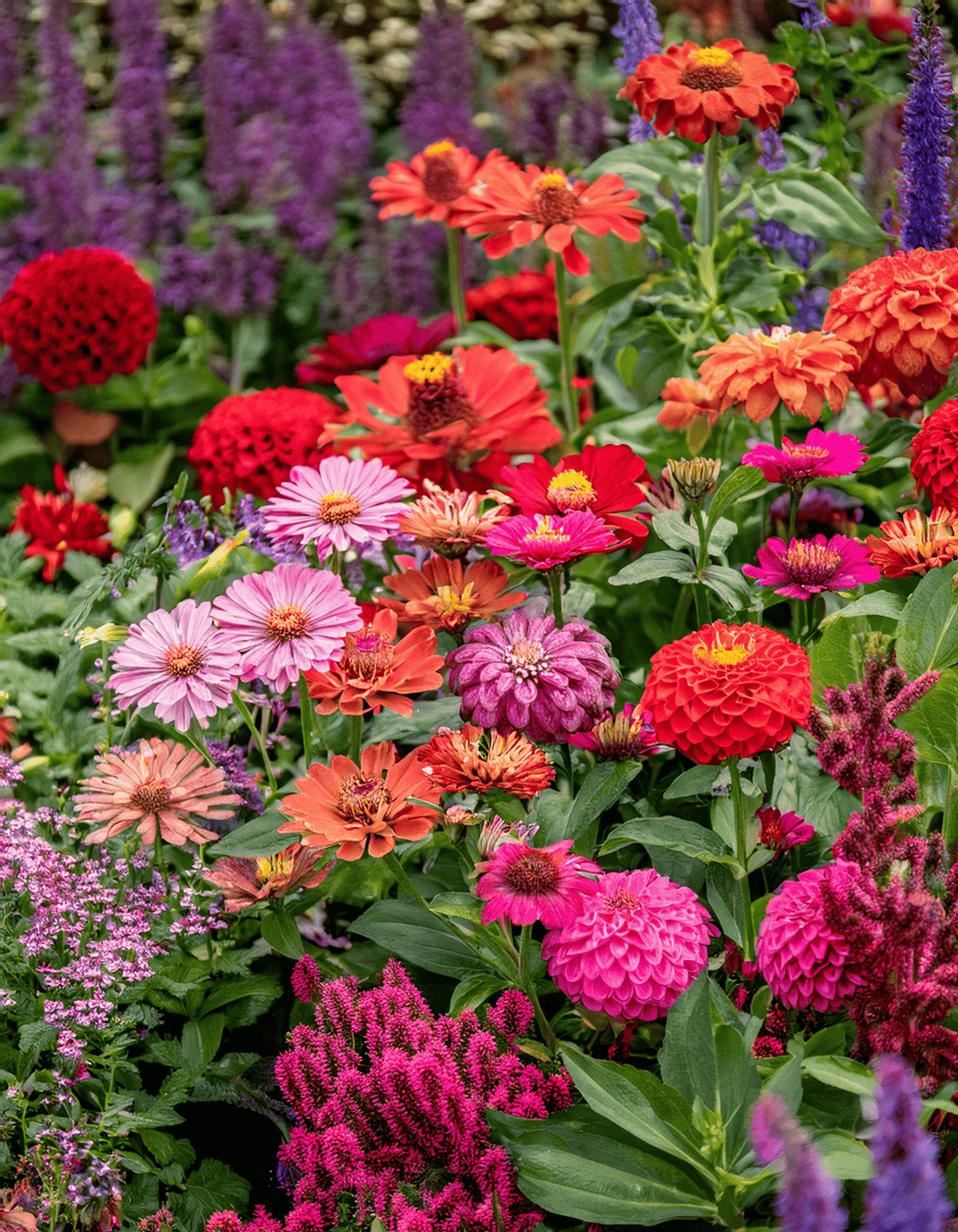
Zinnias are tough, dependable annual fillers that don’t ask for much and rarely quit. Available in fiery corals, bright reds, and vibrant oranges, they hold their own in the heat of midsummer.
Planted near late season asters, zinnias create an energetic color clash rather than a soft blend, which is a great option if you want your border to feel lively rather than matched.
Phase 4: The Grand Autumn Finale (Peak Fall Explosion)
When late September arrives, these two heavyweights join asters for a glorious, high impact finish to the growing year.
8. Goldenrod (Solidago)
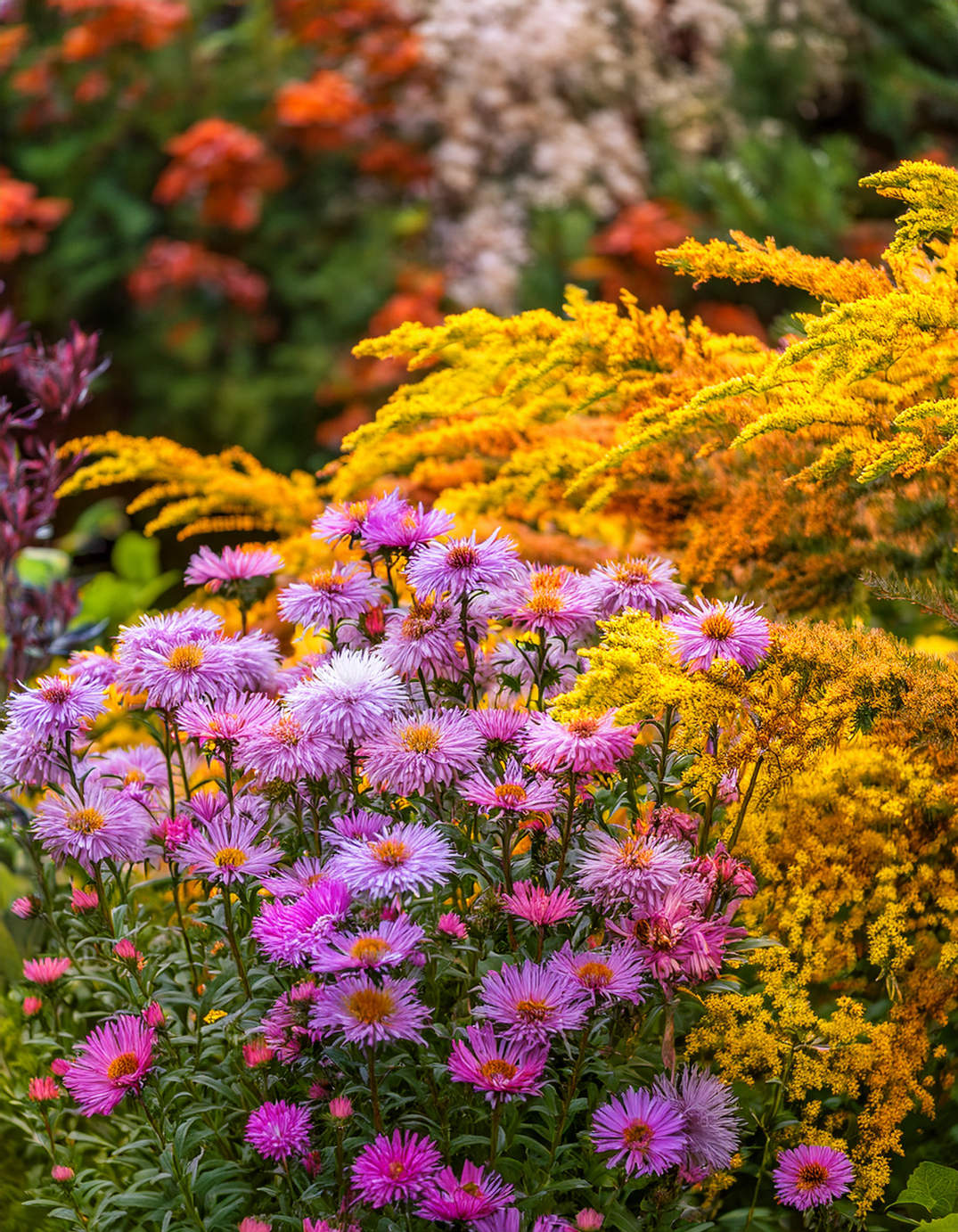
Goldenrod and asters are the power couple of the fall garden. The feathery, electric yellow plumes of goldenrod sit directly across the color wheel from asters’ rich purples, blues, and pinks.
Despite its reputation, goldenrod isn’t the allergy culprit it gets blamed for (that’s usually ragweed blooming at the same time). Plant it freely for one of the boldest contrasts you’ll get in any fall bed.
9. Garden Mums (Chrysanthemum)
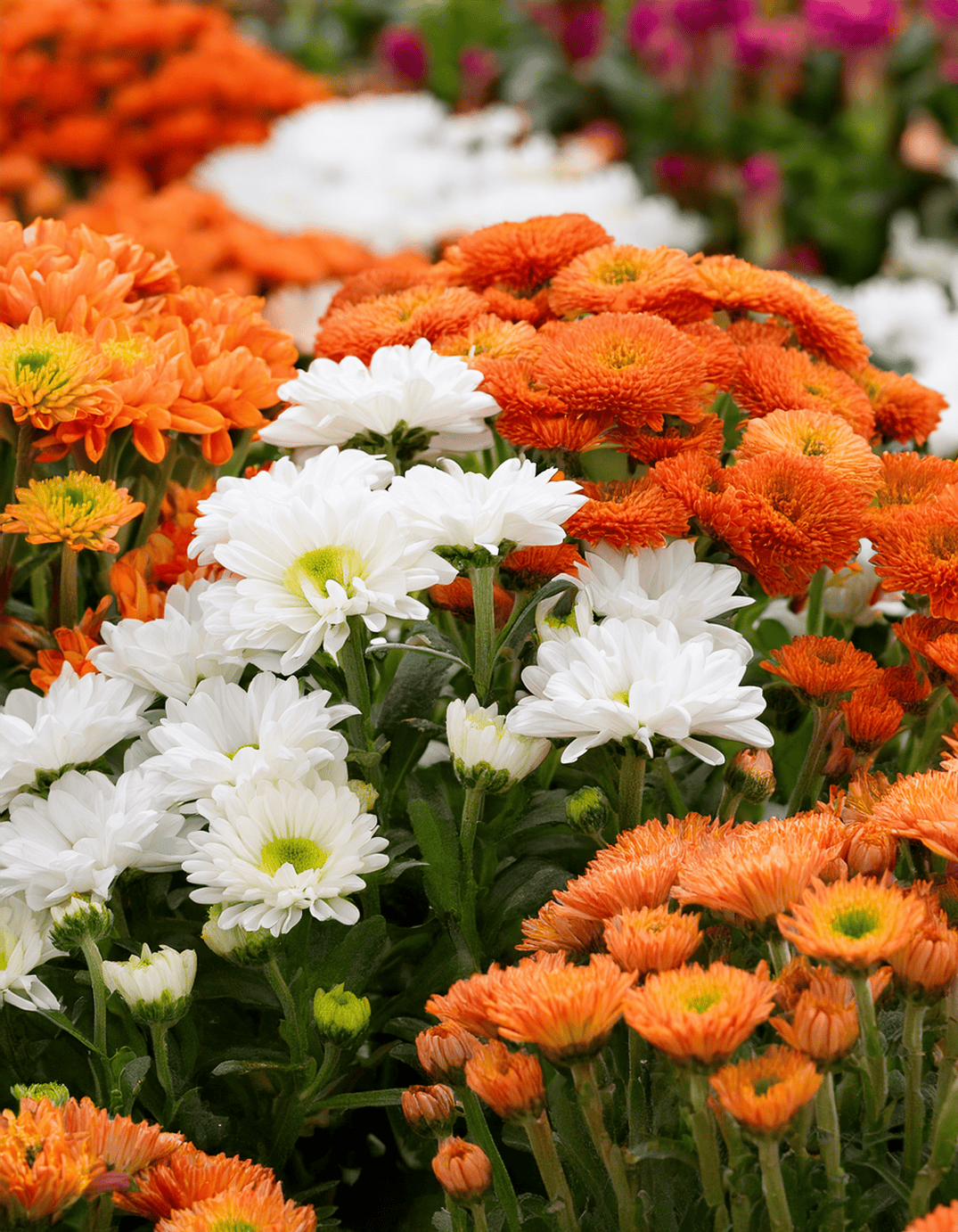
Mums bloom right in step with late asters, which makes them one of the most reliable fall pairings you can plant. While asters bring a whimsical, airy, cottage garden feel, mums counter with tight, button like, neat mounds.
That contrast in form, loose and wild next to structured and full, keeps a fall border from looking either too messy or too stiff. Together they carry the bed right up to frost.
Quick Design Tips for Seamless Succession
Layer by height: keep low growers like marigolds and catmint at the front edge, mid height fillers like zinnias, coneflowers, and yarrow in the middle, and tall anchors like asters, Russian sage, and goldenrod toward the back.
Pinch your asters and mums back by an inch or two in early June for bushier, more compact plants with roughly twice the flower count. And keep conditions consistent: every plant on this list wants full sun, at least six hours a day, and soil that drains well.
Aster Growing Guide
| Category | Details |
|---|---|
| Sun | Full sun, 6+ hours daily (light afternoon shade in hot climates) |
| Soil | Rich, well draining, evenly moist |
| Bloom time | Late summer through the first hard frost |
| Height | 1 to 4 feet, depending on variety |
| Spacing | 18 to 24 inches apart |
| Watering | 1 inch per week; more during dry spells |
| Pinching | Pinch tips in early June for bushier growth and more blooms |
| Deadheading | Optional; spent blooms can be left for winter interest and birds |
| Common issues | Powdery mildew in still, humid air; improve airflow with airy companions |
| Hardiness | Most varieties hardy in USDA zones 3-8 |
Final thoughts
Autumn isn’t the end of the garden’s story. It’s the crescendo. Pair your late season asters with companions that bloom across spring and summer, and your beds will stay lush, dynamic, and full of life from frost to frost.