


If there’s one flower that converts skeptical gardeners into obsessed ones, it’s the zinnia. Vibrant, fast-growing, and surprisingly forgiving, zinnias are the kind of plant that gives back more than you put in — which makes them a natural fit for container gardening. The good news? If you’re reading this in mid-May, you’re sitting right in the sweet spot to get started.
Here’s everything you need to know to grow container zinnias that stop people in their tracks.
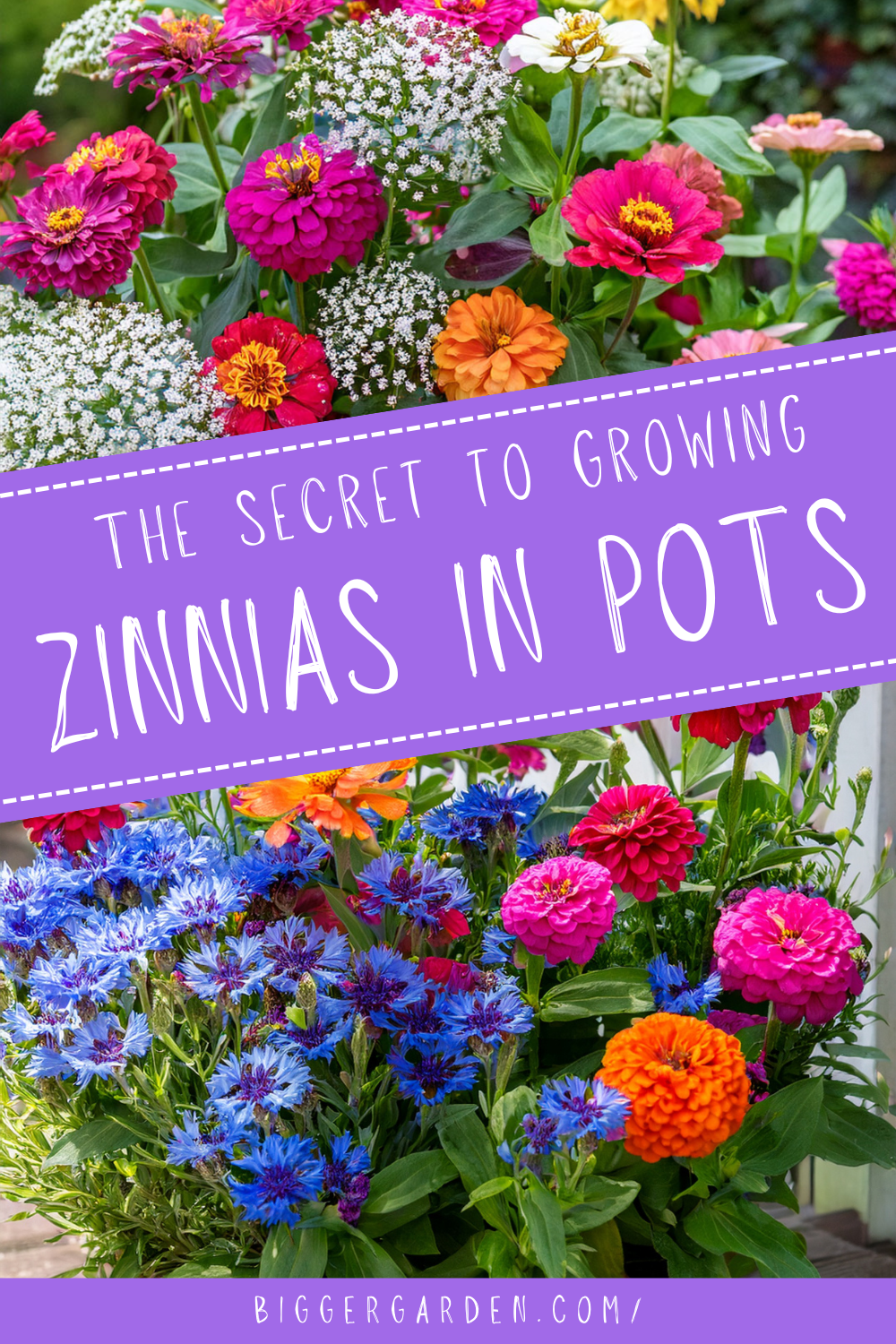
Growing zinnias in planters
A practical guide to containers, varieties, and bloom secrets
Best varieties
Profusion, Zahara, Dreamland, Thumbelina
Minimum pot size
2 gal (1 plant) · 5 gal (3–4 plants)
Fertilize
Every 2 weeks once budding (10-30-20)
Best planting window
Mid-May through June
What you need to know
-
🌱
Zinnias grow well in containers when you choose compact varieties like Profusion, Zahara, or Dreamland — tall varieties tend to get top-heavy and flop.
-
🪣
Use a minimum 2-gallon pot for a single plant or a 5-gallon for 3–4 plants, always with a quality potting mix and multiple drainage holes.
-
✂️
Pinch early — snip the top inch of the main stem at 8–12 inches tall to trigger branching and far more blooms.
-
🌸
Deadhead regularly — removing spent flowers prevents the plant from going to seed and keeps new blooms coming all season.
-
💧
Water at the base — wet foliage causes powdery mildew. Water in the morning and keep leaves dry.
-
🌿
Feed with a bloom-boosting fertilizer (10-30-20) every two weeks once buds appear — nutrients leach out of pots fast.
Choose the Right Variety First
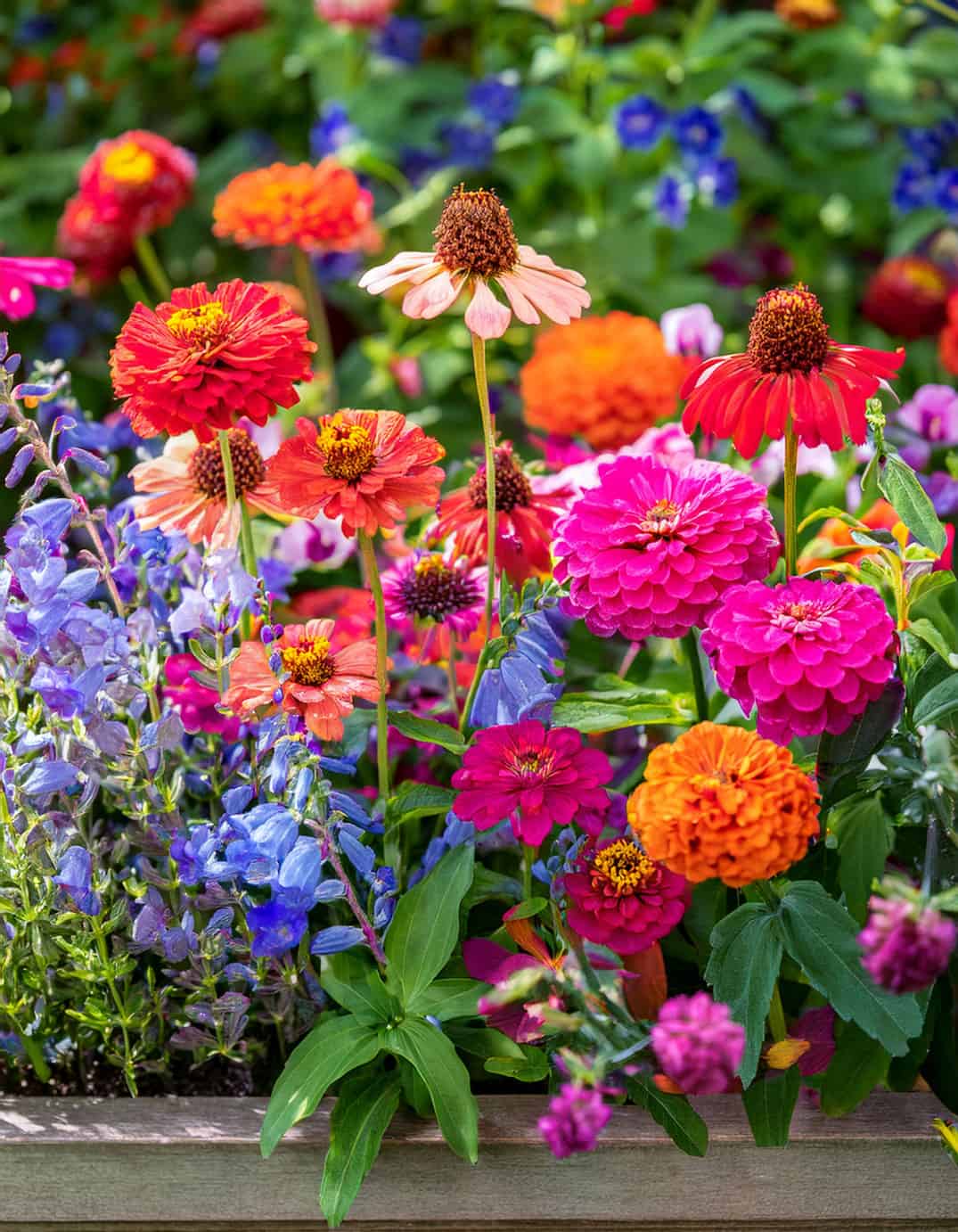
Not all zinnias are built for life in a pot. The big, dramatic varieties like Benary’s Giants can hit four feet tall — beautiful in a garden bed, but a top-heavy disaster in a container. They’ll flop over the moment there’s a good breeze, and you’ll spend more time staking than enjoying them.
For containers, stick to dwarf or compact varieties. Here are four that consistently deliver:
Profusion Series — This is the workhorse of container zinnias. Disease-resistant, naturally bushy, and available in a wide range of colors. It’s a hard one to mess up.
Zahara Series — If your pots are going to bake in full afternoon sun, the Zahara is your friend. It’s been bred specifically for heat tolerance and stays in a tidy 12–18 inch range.
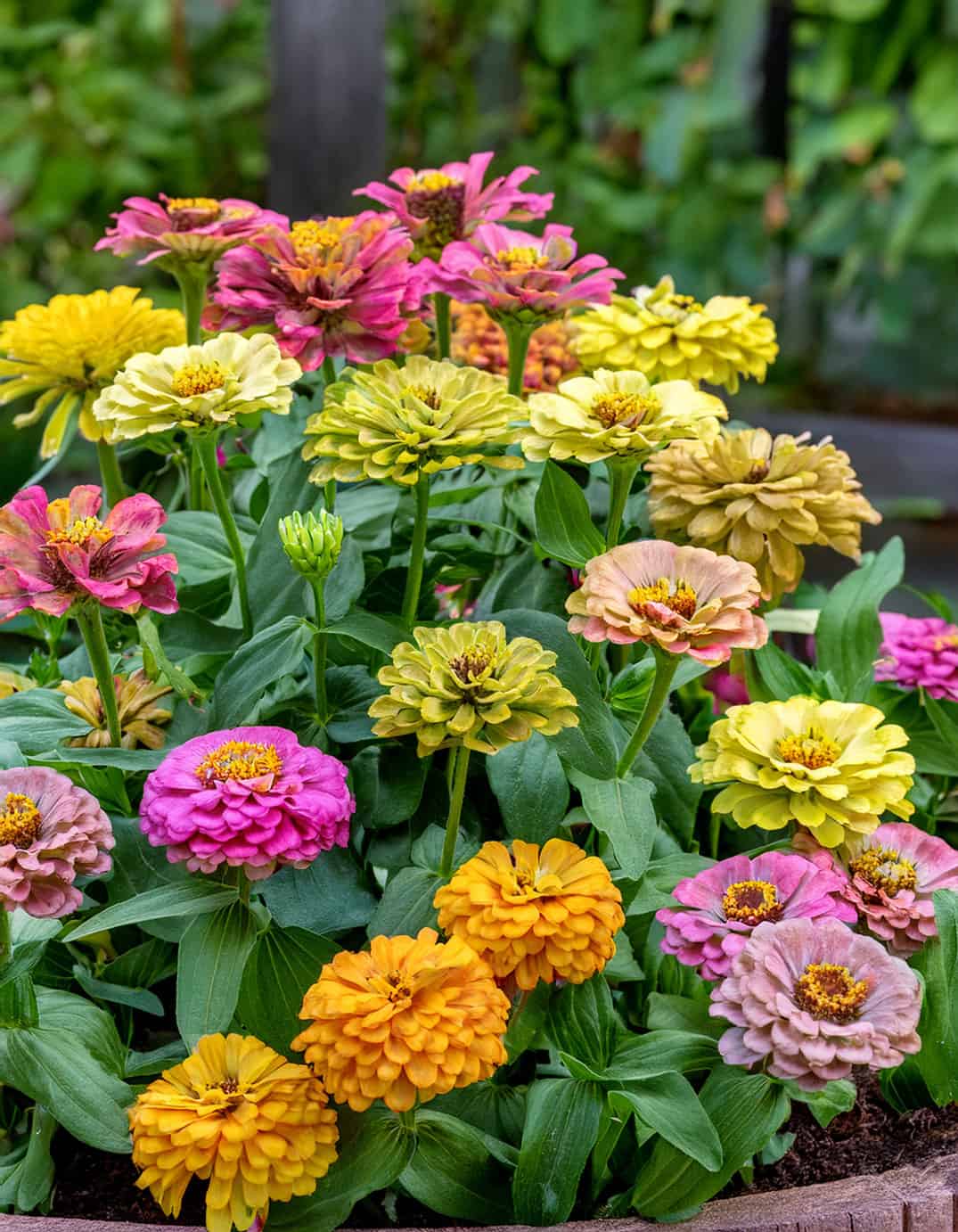
Thumbelina — At only 6 inches tall, these are almost comically tiny, but they’re perfect for window boxes or the front edge of a larger planter. Great for adding pops of color where taller plants would overwhelm.
Dreamland — If you want that big, dahlia-like flower on a plant that stays manageable, Dreamland delivers. Sturdy 10-inch stems that hold up without flopping, and blooms that look like they belong in a florist’s bouquet.
Get the Container Basics Right
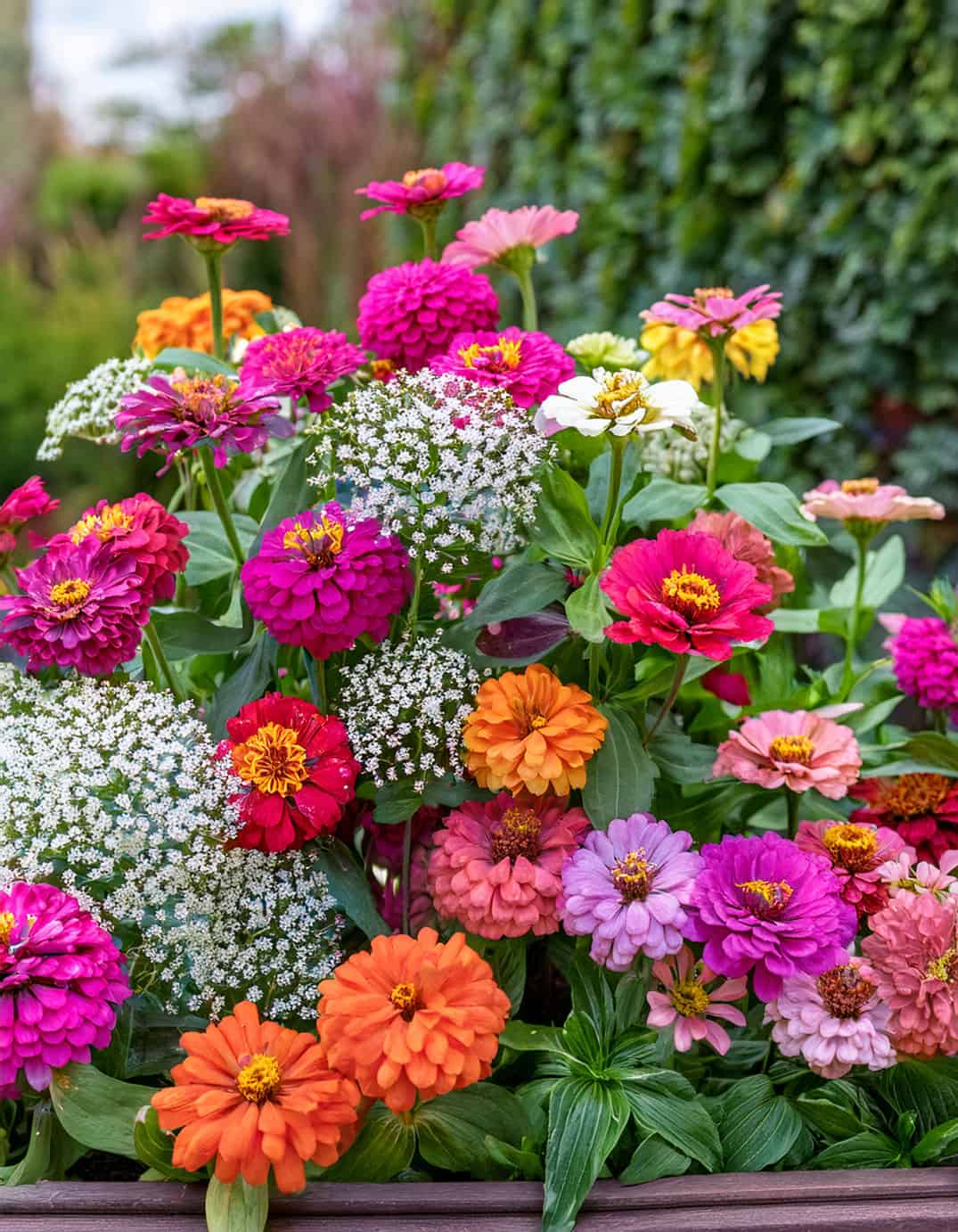
Zinnias are relatively easygoing, but they have one non-negotiable requirement: they cannot tolerate soggy roots. Poor drainage will kill them faster than anything else.
Pot size matters. For a single larger plant, you’ll want at least a 2-gallon pot. If you’re doing a mixed arrangement with three or four smaller plants, aim for a 5-gallon bucket or equivalent. More root room means more blooms.
Drainage holes are mandatory. Multiple holes, not just one. If you’re repurposing a decorative container that doesn’t have drainage, either drill some or use it as a cachepot with a properly drained nursery pot inside.
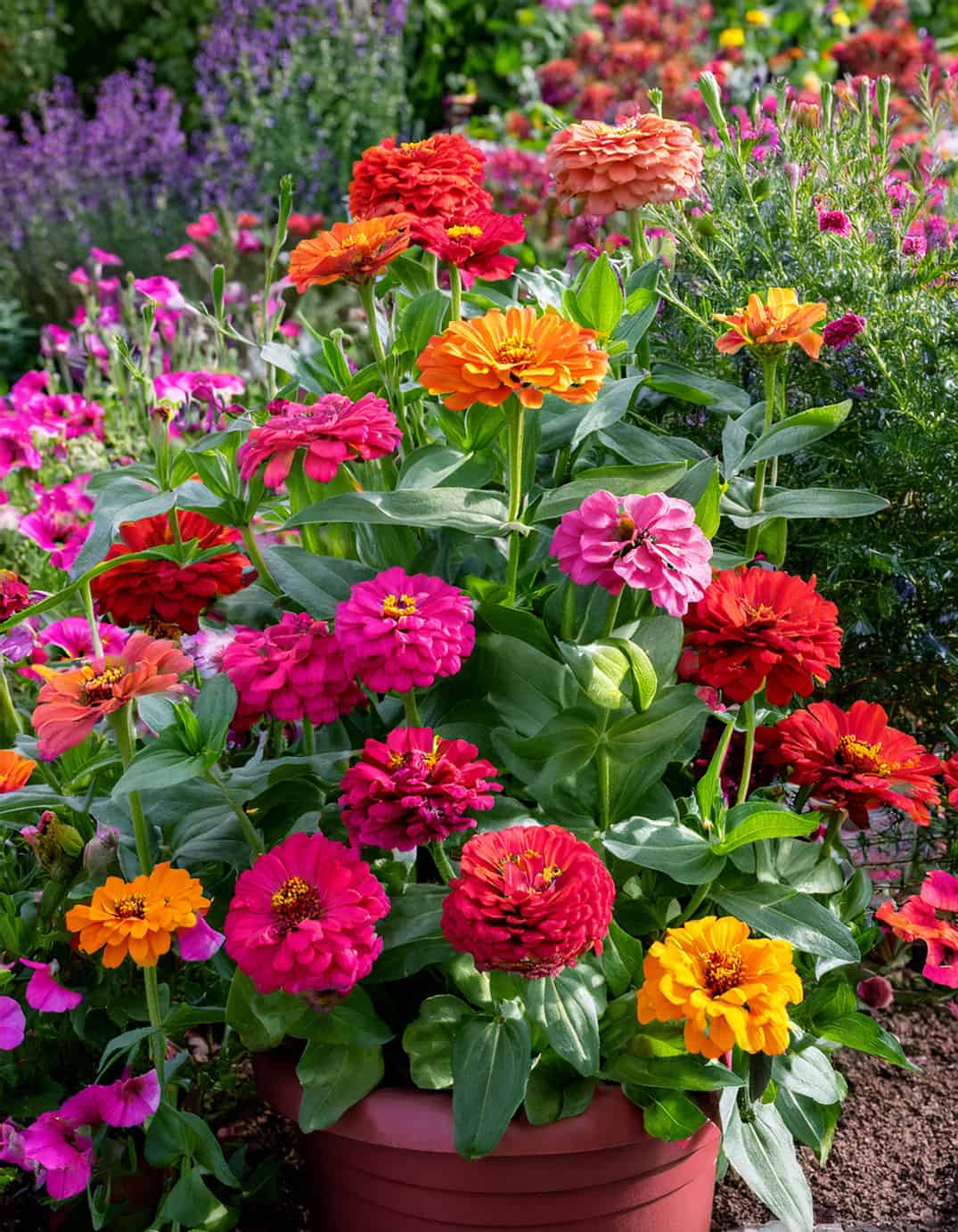
Skip the garden soil entirely. This is a mistake a lot of new container gardeners make — grabbing a bag of topsoil or scooping from the backyard. Garden soil is too dense for containers. It compacts under repeated watering and essentially suffocates the roots. Use a quality potting mix designed for containers and you’ll be in good shape.
Three Secrets That Keep Zinnias Blooming All Season
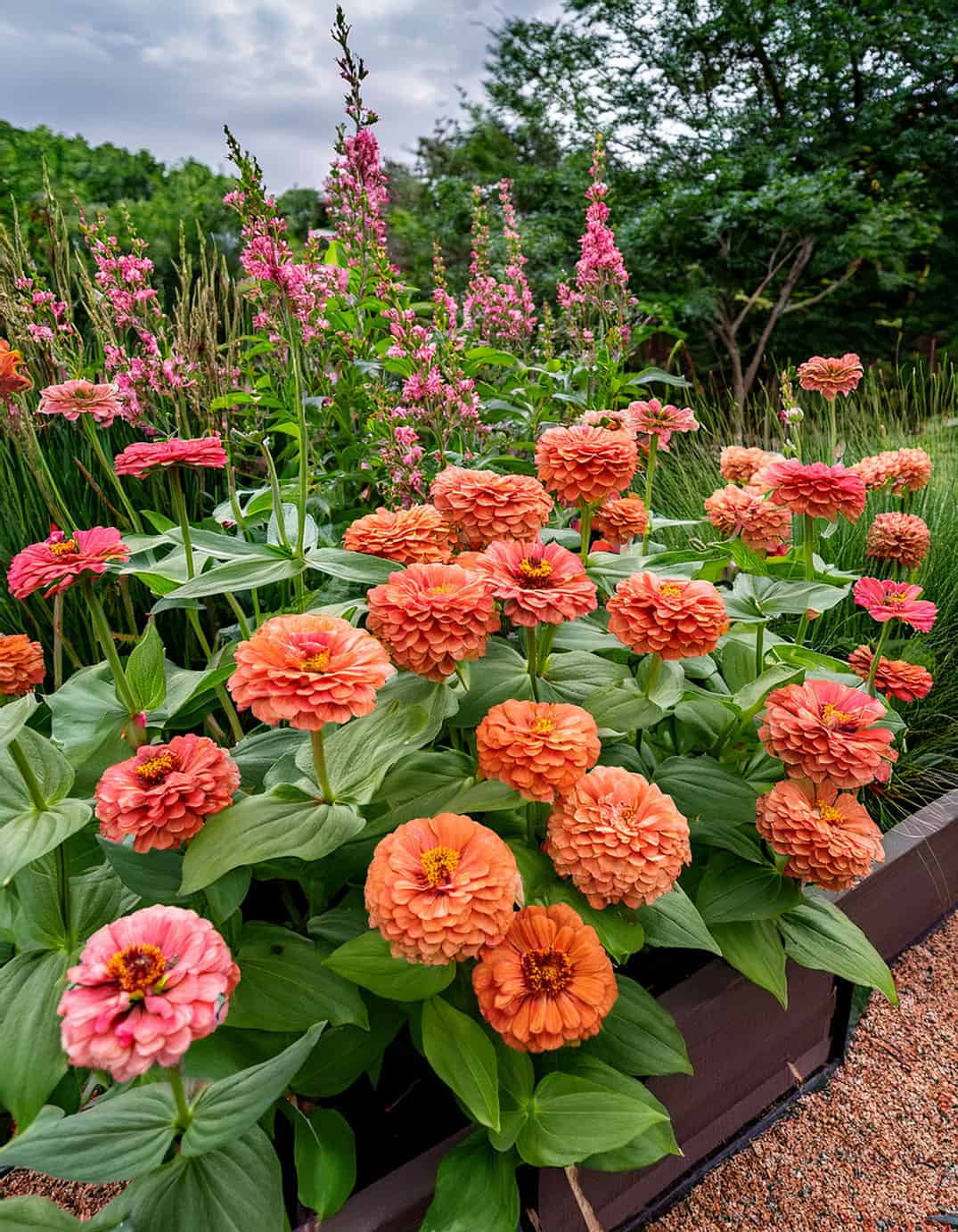
Getting zinnias to bloom once is easy. Getting them to keep blooming from now until the first frost takes a bit of know-how. These three practices make all the difference.
Pinch Them Early
When your zinnia reaches 8–12 inches tall and has a few sets of leaves, take your scissors and snip off the top inch of the main stem. It feels wrong — almost destructive — but it’s one of the best things you can do for the plant. Left alone, a zinnia tends to grow as one central stalk with a single flower on top, like a lollipop. Pinching forces it to branch out and become a full, bushy plant with many more blooms. One cut, dramatically better results.
Deadhead Relentlessly

A zinnia is on a mission to reproduce. The moment a flower fades and you leave it on the plant, the zinnia interprets that as “job done” and starts putting its energy into making seeds rather than new blooms. Remove spent flowers regularly — either by snipping them off or by cutting fresh bouquets for the house — and the plant will keep pushing out new flowers in an attempt to complete its goal. This is the single biggest lever you have for extending the bloom season.
Water the Soil, Not the Leaves
Zinnias are prone to powdery mildew, which shows up as a white, flour-like coating on the leaves. It’s largely preventable with a few simple habits. Water at the base of the plant rather than overhead, water in the morning so any accidental splashes evaporate quickly, and don’t crowd your plants — airflow matters. Good air circulation between plants dramatically reduces mildew problems, especially in humid weather.
Design Idea: The Thriller, Filler, Spiller Combo

If you want your container to look like it was designed rather than just planted, use the classic thriller-filler-spiller framework. The idea is simple: every great container planting has something tall and dramatic, something that fills in the middle, and something that trails over the edge.
Thriller (the focal point): A tall zinnia variety is ideal here. It provides the height and the “wow” factor that draws the eye from across the yard.
Filler (the body): Lantana or salvia work beautifully alongside zinnias. They fill in the gaps, complement the colors, and as a bonus, both are absolute magnets for butterflies and bees.
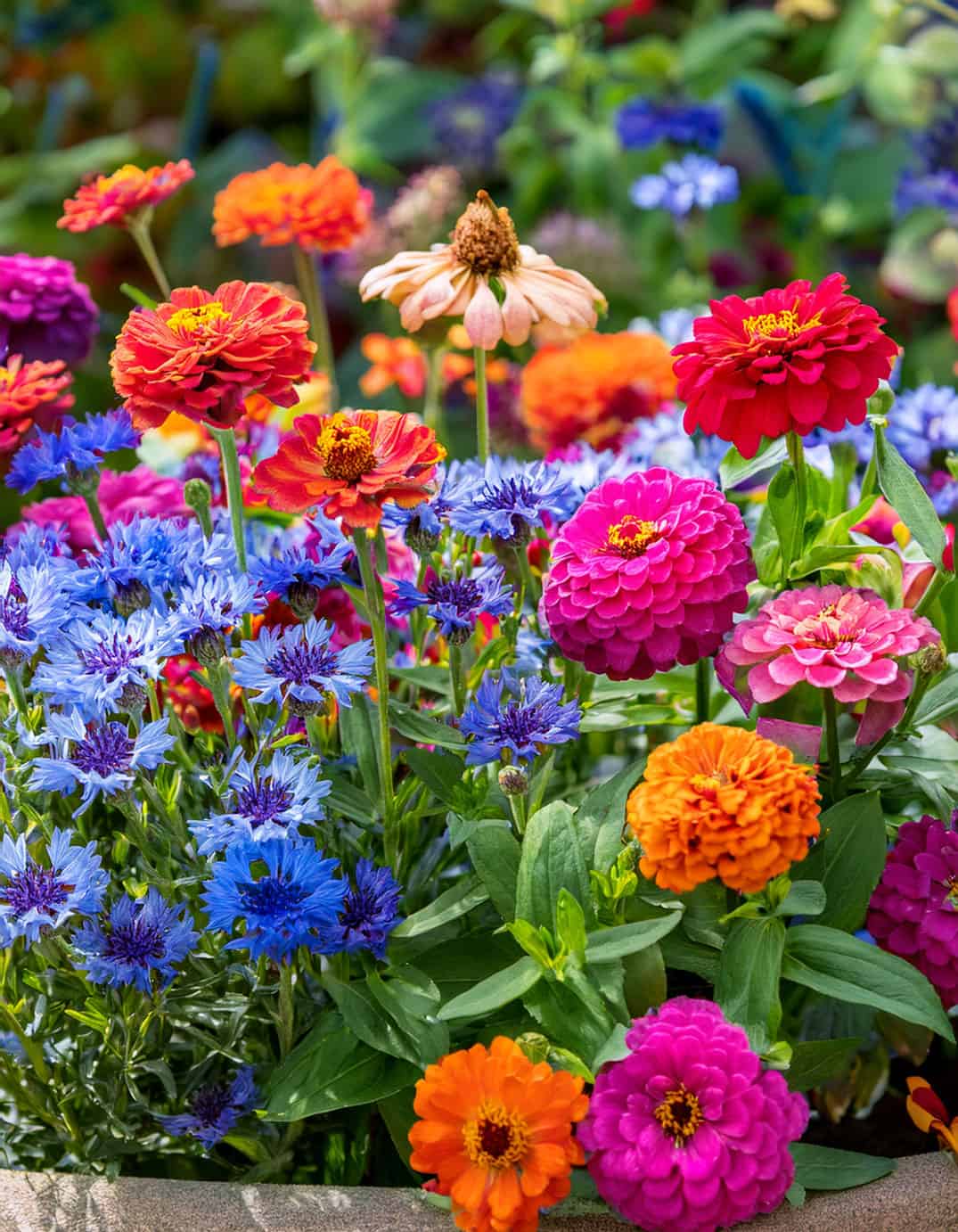
Spiller (the drape): Creeping Jenny or sweet potato vine trailing over the edge of the pot softens the whole look and gives the arrangement a lush, finished quality. The contrast between the bright zinnia blooms up top and the trailing greenery below is hard to beat.
One more thing on feeding: zinnias are heavy feeders, and containers lose nutrients fast — every time you water, some of those nutrients wash out the drainage holes. Once your plants start budding, feed them with a water-soluble fertilizer every two weeks. Look for something with a bloom-boosting formula, typically higher in phosphorus (the middle number on the label, like a 10-30-20). It makes a noticeable difference in bloom size and frequency.
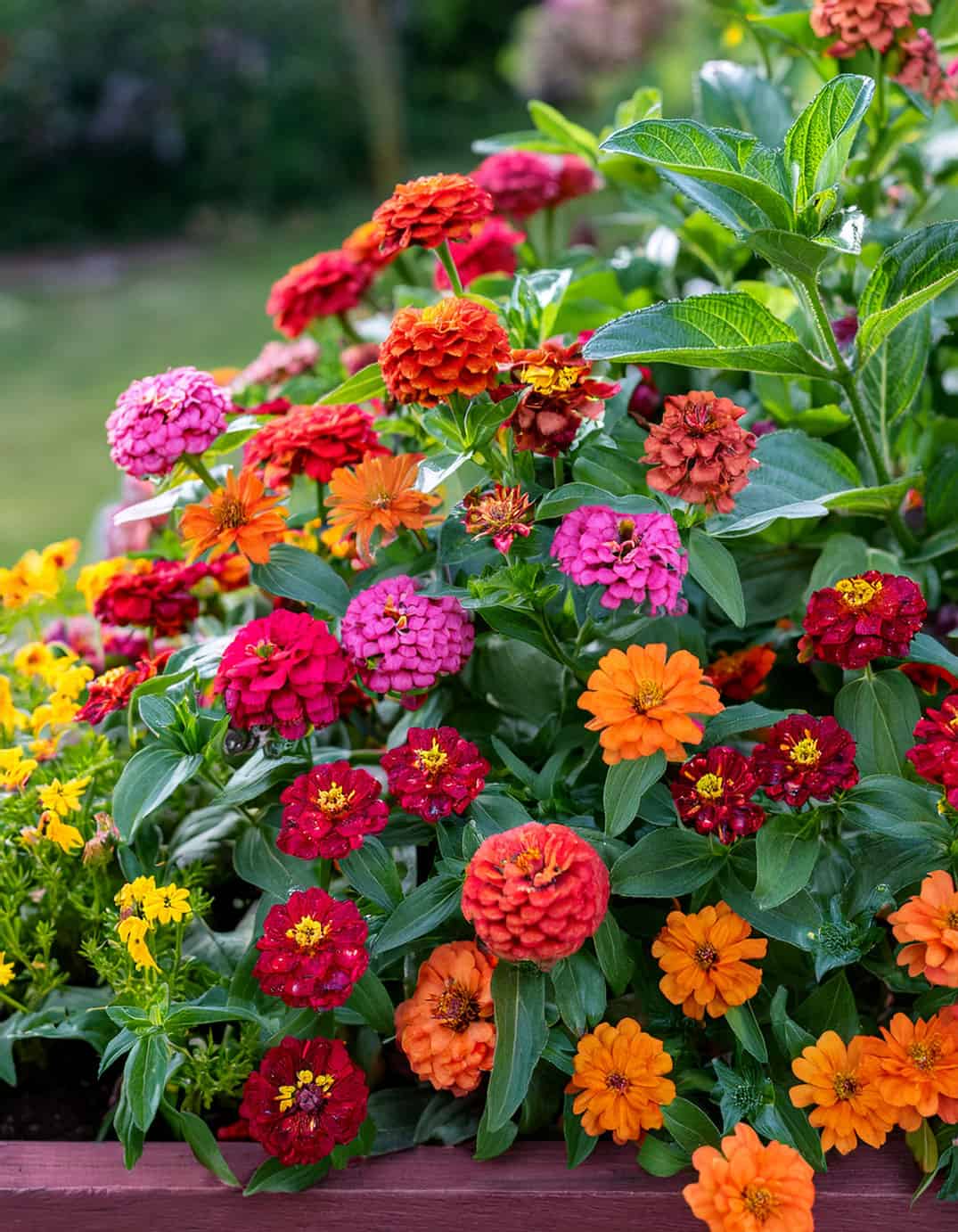
You’re Already in the Right Window
Mid-May is genuinely the ideal time to get zinnias going in containers. The soil is warming up, the risk of late frost is behind us, and these plants grow fast enough that you’ll have blooms well before summer is in full swing.
Whether you’re starting from seed or picking up established starts from your local nursery, you’ve got options. Seeds are more economical and give you access to a wider range of varieties — and zinnias germinate quickly, often in under a week in warm conditions. Nursery starts get you to blooms faster with less hands-on work. Either way works.
The main thing is to get something in a pot and enjoy the process. With zinnias, the payoff comes quickly.