

Onions are fairly good at announcing when they have finished growing. Their upright green tops begin to soften, yellow and eventually fold over at the neck. The tricky part is knowing whether those changes mean the bulbs are mature—or whether wind, drought, disease or another problem has simply knocked the leaves down.
This distinction matters if you want onions that will keep through fall and winter. Harvesting too early can reduce their storage life, while leaving mature bulbs in wet soil for too long can encourage decay.
Here’s how to recognize when your onions are ready, lift them without causing damage and begin the curing process properly.
The Short Answer
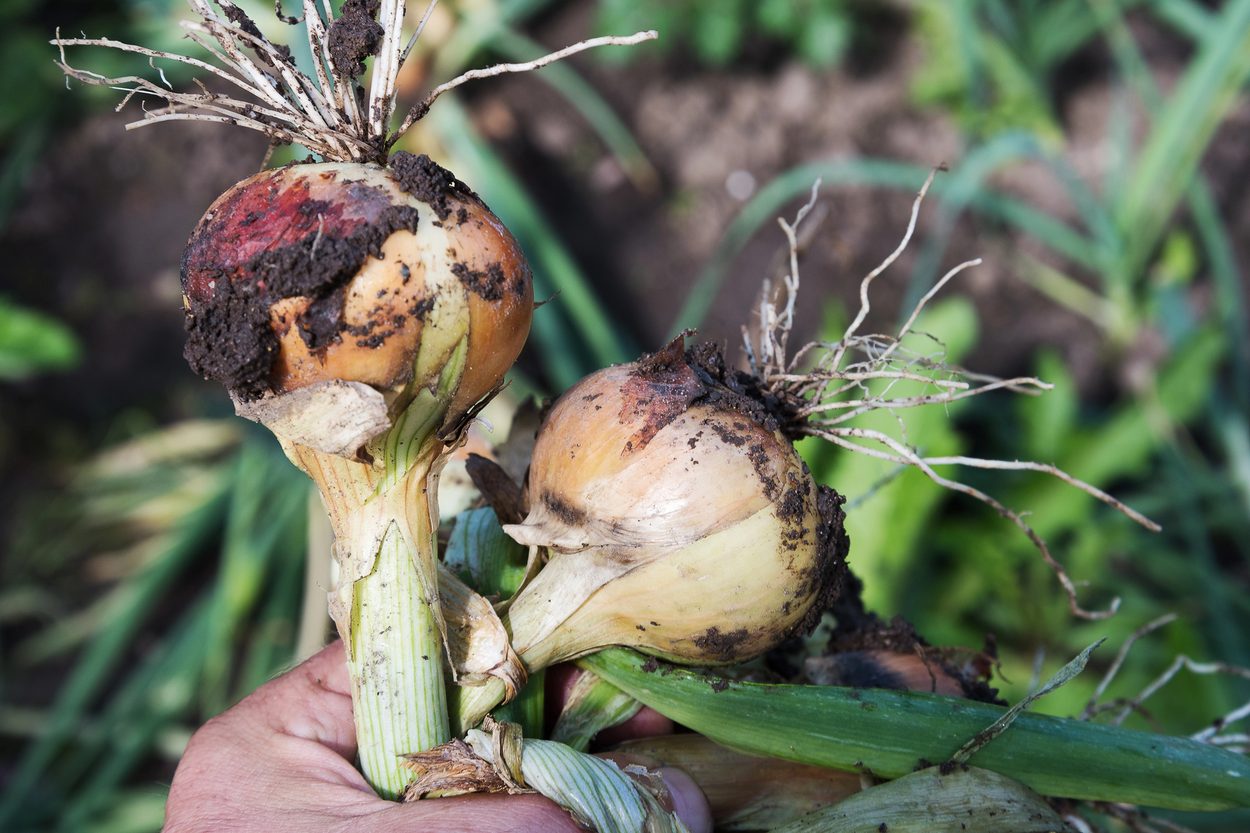
Bulb onions are generally ready to harvest when approximately half to two-thirds of their tops have fallen over naturally. The foliage should be yellowing, the necks should feel soft and narrow, and the visible portion of the bulbs should feel firm.
🐝 Fan Favorite
“Feed the Bees” Garden Sign
Give your wildflower patch a pop of color and let your neighbors know there’s purpose in your plants.
Delivered in 5–7 days
- Hand-illustrated design
- Recycled aluminum — won’t fade, rust, or crack
- Plants 1 real tree in the Monarch Corridor
🦋 Every sign funds a tree planted in the North American Monarch Corridor — at no extra cost to you.
The British Columbia dry bulb onion production guide recommends digging when about two-thirds of the tops are down.
Don’t rely on the calendar alone. Onion varieties, planting dates, daylight hours and weather can all move the harvest forward or backward.
In much of Canada and the northern United States, storage onions are commonly harvested from late summer into early fall. What the plants are doing will always tell you more than the date.
Quickly Find Onion Harvest Tips
1. Most of the Onion Tops Have Fallen Over
The clearest sign of maturity is when the tops bend naturally near the neck and fall toward the ground.
This happens as bulb growth finishes and the plant begins moving toward dormancy. The neck can no longer support the leaves, so the foliage folds over without your help.
You don’t need every onion in the bed to fall at exactly the same time. Once roughly 50% to 70% of the crop is down, begin checking the other signs.
Pay attention to where the leaves bend. Mature onion tops usually collapse close to the bulb as the neck softens. Leaves bent halfway up may simply have been damaged by wind, animals or foot traffic.
Don’t Bend the Tops Yourself
It’s an old gardening trick, but manually bending onion tops does not make the bulbs grow larger.
In fact, Washington State University Extension advises gardeners not to knock or bend onion tops to encourage bulbing. Damaging the neck can interfere with natural maturation and may create an entry point for rot.
Let the onions fall over on their own.
2. The Leaves Are Yellowing and Drying
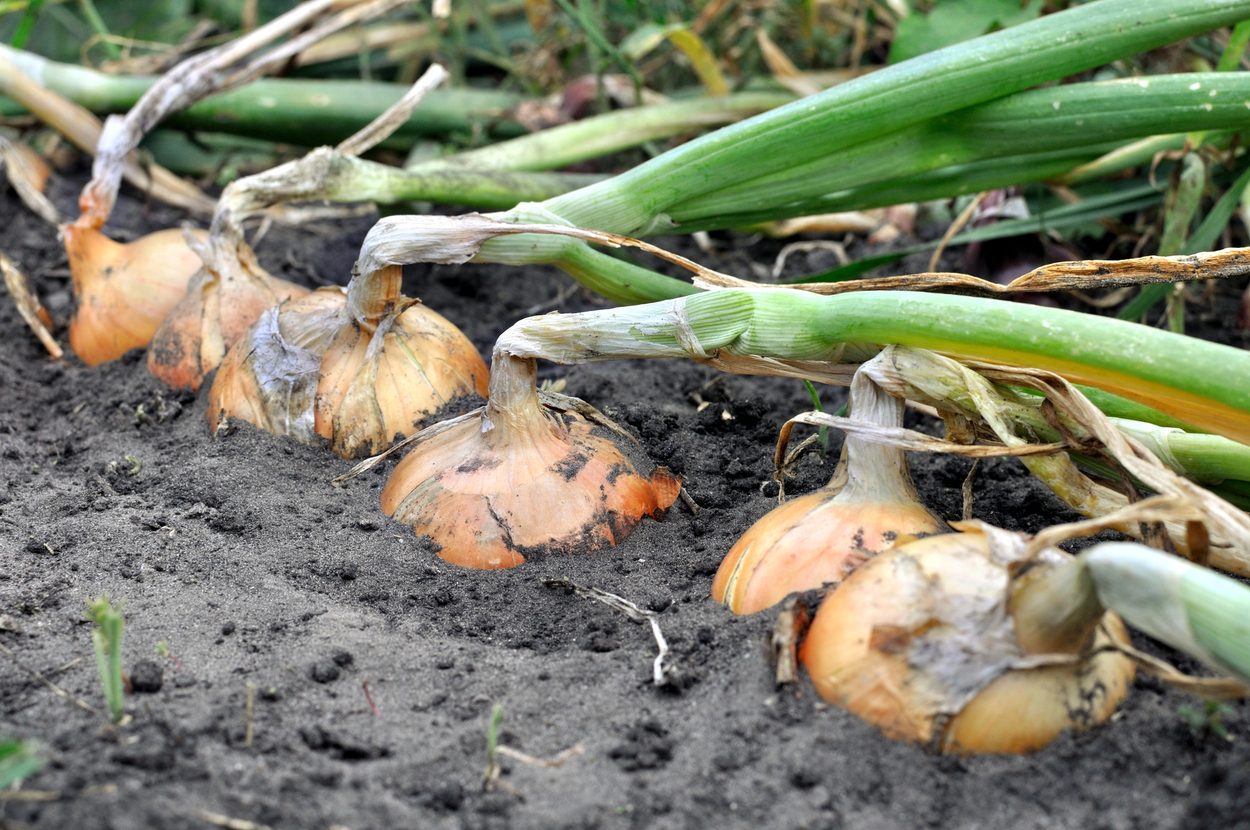
Mature onion foliage gradually loses its deep green colour. Yellowing commonly begins near the tips and works its way down the leaves.
A few yellow tips during the growing season don’t necessarily mean the onion is ready. Heat, insufficient water, excessive water, pests and nutrient problems can all damage individual leaves.
At harvest time, you’re looking for a broader change across the plant:
- Several leaves are yellowing or browning.
- The foliage is no longer producing vigorous new growth.
- The tops feel less succulent and more straw-like.
- Yellowing is occurring alongside natural neck fall.
The combination of fallen tops and drying foliage is much more reliable than either sign on its own.
3. The Neck Feels Soft and Narrow
The neck is the area where the leaves meet the top of the bulb. On an immature onion, this area feels thick, firm and rigid.
As the onion matures, the neck becomes narrower, softer and more flexible. It may feel almost hollow when gently pinched.
This is an especially helpful test after heavy wind or rain. If the tops are lying down but the necks remain thick and stiff, the onions may have been knocked over before reaching full maturity.
Avoid squeezing hard enough to bruise the tissue. A gentle pinch is enough to compare a few plants across the bed.
Thick-necked onions can still be eaten, but they generally do not cure or store as reliably. Set them aside after harvest and use them before your best storage bulbs.
4. The Bulbs Are Full-Sized and Firm
As onions mature, the bulbs should feel firm and look reasonably developed for the variety you planted.
The final size can vary enormously. A fully mature pickling onion may be much smaller than an immature Spanish onion, so size alone isn’t a reliable test.
Instead, look for bulbs that:
- Have a recognizable rounded or flattened shape
- Feel firm rather than soft
- Are no longer rapidly increasing in size
- Match the approximate characteristics of the variety
The shoulders of some onions naturally rise above the soil as the bulbs expand. You don’t need to mound soil over them, and you shouldn’t pull soil aggressively away from their roots.
5. The Outer Skin Is Beginning to Turn Papery
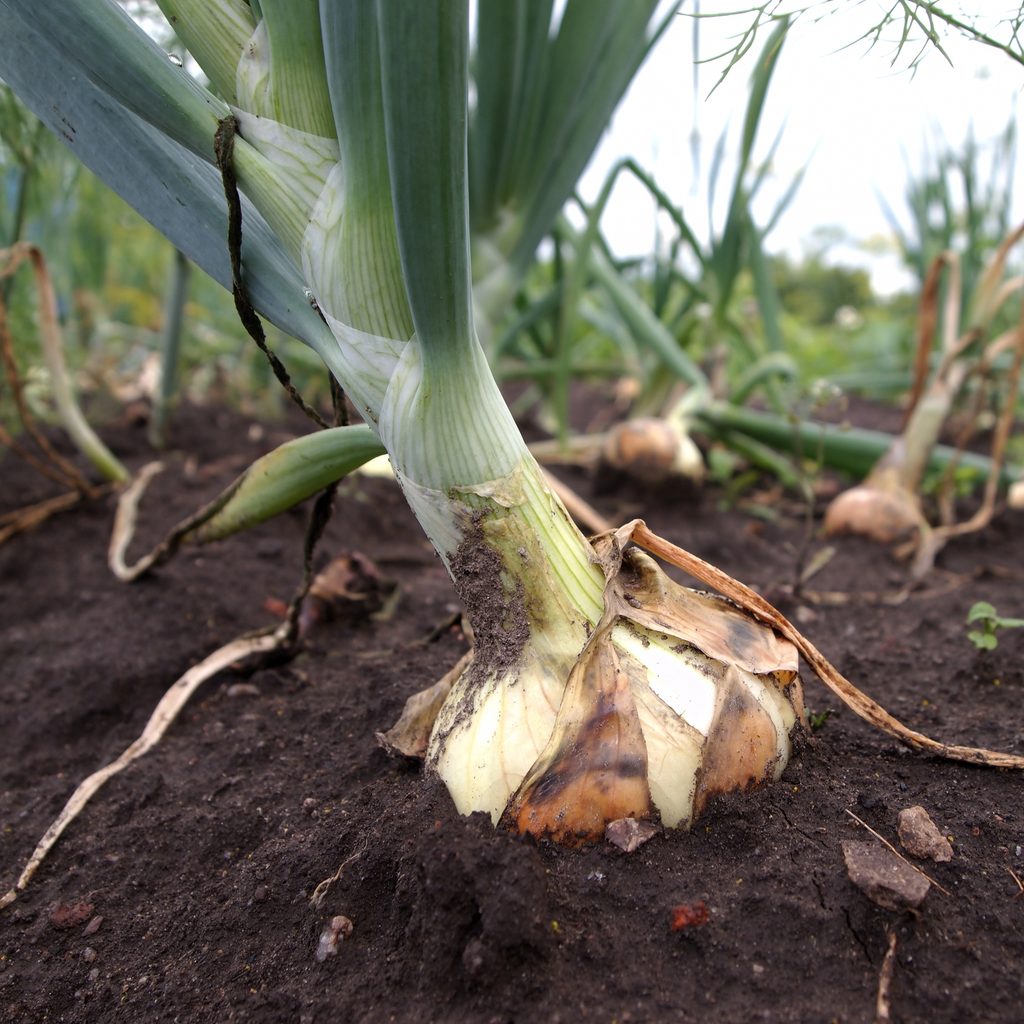
The exposed outer layers may begin changing from moist and fleshy to thin and papery as the onion approaches maturity.
Colour will depend on the variety. Yellow onions may develop tan or golden skins, while red onions deepen to burgundy or purple.
The skin does not need to be completely dry before you harvest. Most of that drying happens during curing. At this stage, you’re simply looking for the beginning of a protective outer wrapper.
A bulb that is soft, watery, discoloured or unpleasant-smelling is not displaying normal maturity. Remove it from the garden and keep it separate from healthy onions.
6. New Leaf Growth Has Slowed or Stopped
Each healthy onion leaf helps create a layer within the developing bulb. During active growth, onions continue producing upright green foliage while the bulb expands.
As maturity approaches, that new growth slows. Existing leaves begin to age rather than being replaced by fresh ones.
This sign can be subtle, so don’t use it by itself. It is most useful when combined with soft necks, fallen tops and yellowing foliage.
If the plants are still producing vigorous green leaves, give them more time unless disease, severe weather or an approaching hard freeze makes an earlier harvest necessary.
7. You Have a Stretch of Dry Weather for Harvesting
Dry weather doesn’t make an immature onion ready, but it helps determine the best day to lift mature bulbs.
Harvesting onions from saturated soil can leave them coated in mud and carrying extra moisture into the curing area. Agriculture and Agri-Food Canada notes that harvesting after rainfall or during high humidity increases susceptibility to post-harvest diseases.
Once the first onions begin falling naturally, reduce or stop supplemental watering if conditions allow. Watch the forecast and aim for a dry harvesting window.
If most of the crop is mature and several days of heavy rain are coming, I would rather lift the onions before the storm than leave mature bulbs sitting in waterlogged soil.
How to Harvest Onions Without Damaging Them
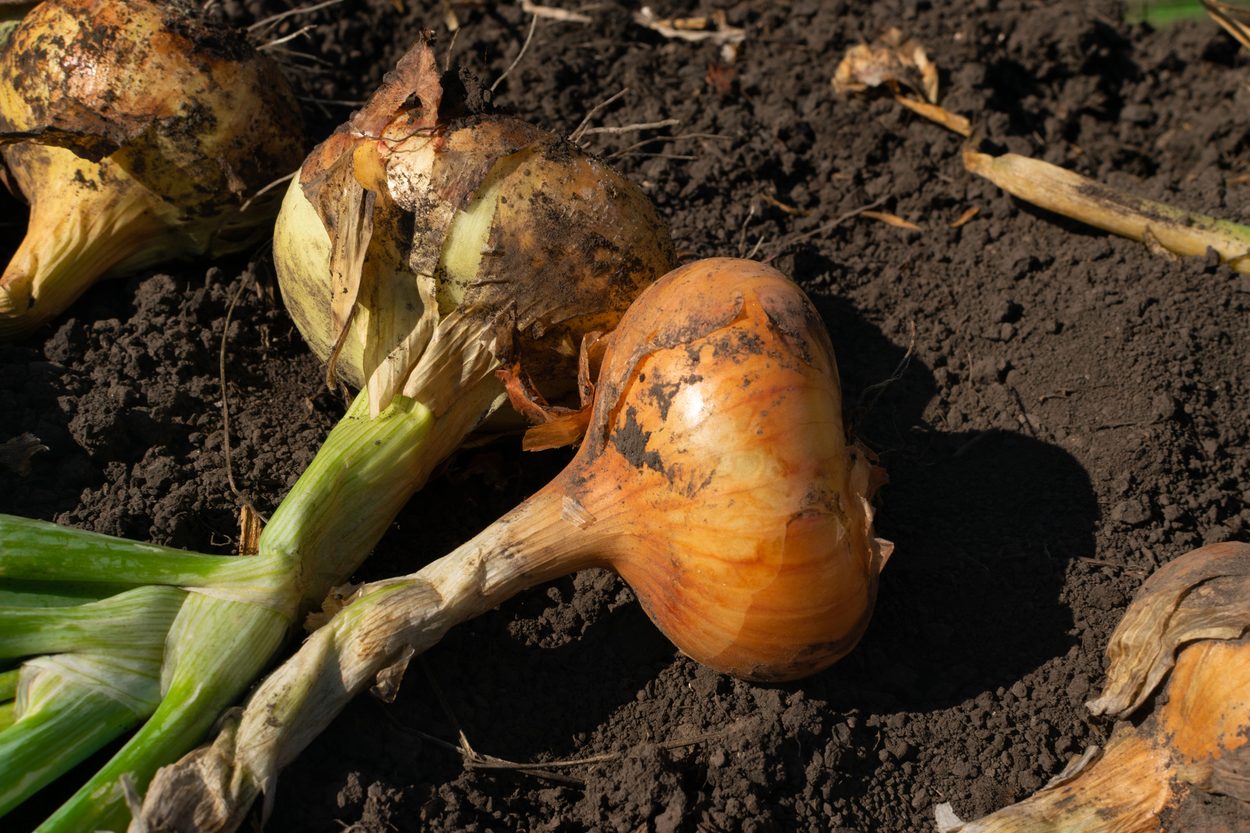
Onions may look sturdy, but even a small cut or bruise can shorten their storage life.
Choose a dry day and follow these steps:
- Insert a garden fork or hand fork several inches away from the bulb.
- Gently loosen and lift the surrounding soil.
- Hold the onion near the base of its foliage.
- Ease the bulb out without yanking or twisting it.
- Shake off loose soil without striking bulbs together.
- Leave the tops and roots attached for curing.
- Move the onions into shade or a protected, ventilated area.
In very loose soil, onions may pull easily by hand. In clay or compacted beds, loosen them first so the roots and base plate aren’t torn.
Don’t wash onions intended for storage. Moisture trapped around the neck and outer scales works against the drying process. Allow clinging soil to dry and then brush it away gently.
Any onion that is cut, bruised, split, soft or damaged by pests should be used first rather than placed into long-term storage.
What If It Rains Before You Can Harvest?
A little rain does not ruin an onion crop. The goal is simply to avoid lifting and handling bulbs while everything is saturated.
If rain arrives before harvest:
- Wait until the soil is workable rather than muddy.
- Lift the onions gently instead of pulling against heavy soil.
- Move them under cover immediately.
- Spread them in a single layer.
- Provide generous airflow around the bulbs.
- Don’t stack or trim wet onions.
If an extended wet period is forecast and the majority of the tops are already down, harvesting before the rain is often the safer choice.
How Long Can Mature Onions Stay in the Ground?
You don’t need to rush outside the moment the first leaf bends. The onions in one bed will rarely mature on the same day.
However, once most tops have fallen and the foliage is drying, the bulbs are no longer gaining much from remaining in the soil. Extended exposure to wet conditions can increase disease pressure, while excessive sun exposure can damage uncovered bulbs.
Harvest promptly once the crop has reached maturity and you have suitable weather.
What About Onions That Haven’t Fallen Over?
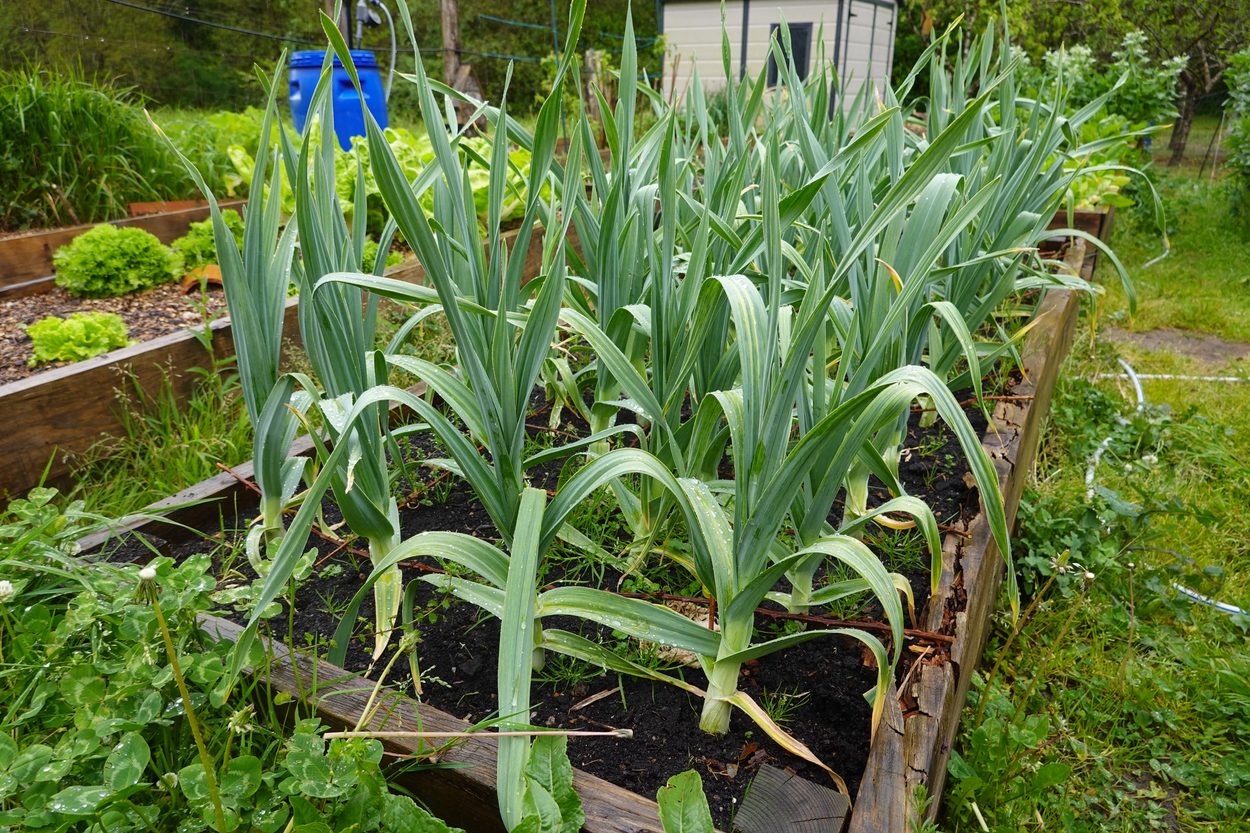
Some onions remain upright longer than the rest of the crop.
Check the neck before deciding what to do. If it is still rigid and the leaves remain green, the bulb may need more time. You can harvest the mature onions individually and return for the others later.
If the neck is soft, the foliage is yellowing and the bulb appears mature, it can be harvested even if the leaves haven’t completely collapsed.
Don’t force the remaining tops down to make the bed look uniform.
Can You Harvest Onions Early?
Onions are edible at almost every stage. You can pull an immature bulb and use it fresh whenever you need one.
The tradeoff is storage life. Early onions generally contain more moisture and have not developed the dry neck and protective outer scales required for long storage.
If you harvest an onion early, treat it like a fresh vegetable: refrigerate it and use it soon.
What Should You Do With Bolted Onions?
An onion has bolted when it produces a firm central flower stalk. Bolting can be triggered by temperature stress and is especially common with onion sets.
Bolted onions are still edible, but they won’t store as well. The flower stalk passes through the bulb and can leave a tough or hollow centre.
Harvest bolted onions separately and use them first. Don’t include them with your long-term storage crop.
A Quick Introduction to Curing Onions
Harvesting and curing are two separate stages. Harvesting removes the mature bulb from the soil; curing dries the neck, roots and outer scales so the onion can be stored.
Spread freshly harvested onions in a single layer somewhere warm, dry and well ventilated. A covered porch, shed, garage or airy outbuilding can work well.
Keep the tops attached while they dry. Depending on the temperature and humidity, homegrown onions may need approximately two to three weeks to cure.
According to Iowa State University Extension, curing is complete when the tops and necks are thoroughly dry and the outer scales rustle.
Once cured:
- Brush away remaining dry soil.
- Trim the roots.
- Cut the foliage approximately 1 inch above the bulb, or leave dry tops intact for braiding.
- Discard onions showing decay.
- Place the sound bulbs in mesh bags, crates or baskets that allow airflow.
The USDA’s commercial storage guidance also emphasizes that storage onions must be thoroughly dried and cured before being moved into storage.
A complete curing guide will cover indoor and outdoor setups, wet-weather curing and the signs that tell you an onion is ready for storage.
Frequently Asked Questions
Should I stop watering onions before harvesting?
Once the tops begin falling naturally and harvest is approaching, stop supplemental irrigation if the weather permits. This encourages drier harvest conditions. Don’t allow actively growing, immature plants to become severely drought-stressed simply to force the tops down.
Should onions be harvested before frost?
Try to harvest storage onions before a hard freeze. Frost-damaged bulbs can become soft and watery and are more likely to decay. If cold weather is approaching and the onions are substantially mature, lift them and finish drying them under cover.
Can I leave freshly harvested onions in the sun?
A brief period of mild sun can help dry surface moisture, but strong late-summer sun can cause sunscald. A warm, shaded location with excellent airflow is safer for the main curing period.
Can I eat onions immediately after harvesting?
Yes. Freshly harvested onions are completely usable. Curing is necessary for storage, not for immediate eating.
Why are some onion necks still thick?
A thick neck may indicate that the onion was harvested before it fully matured, received excessive nitrogen late in the season or experienced uneven growing conditions. Use thick-necked onions first because they are more difficult to dry completely.
Final Thoughts
The best time to harvest onions is determined by a group of signs rather than one date on the calendar.
Wait until most tops have fallen naturally, then check for yellowing foliage, soft necks, firm bulbs and developing papery skins. Choose a dry day, loosen the soil carefully and protect the bulbs from cuts and bruises.
Most importantly, don’t force the process by bending the tops. When onions are ready, they will usually tell you themselves.
Harvesting at the right stage gives you a better starting point, but curing is what determines whether those bulbs last a few weeks or well into winter.